Louis Mandrin vs. The Fermiers Généraux - A Political Testament
- by Thibault Ehrengardt
Histoire de Louis Mandrin.
As I was reading the Life of Mandrin the other day, I started to wonder why this villain (1725-1755) had become so popular a myth in France. Tracking down the hypothetical truth, I was led from one old book to another, until I reached Corinne Townley, author of La Véritable Histoire de Mandrin (The True Story of Mandrin, 2005) on the phone. “Mandrin was a very mean and violent man,” she confirmed. “But he was portrayed as a French Robin Hood because he was used as a political tool against the famous Fermiers Généraux, who collected taxes during the Ancien Régime.” Now, that put me on the right track.
A Peddling Book
Sign of his popularity, Louis Mandrin made it to the peddling books of the early 19th century. Usually short, they dealt with popular and light topics, as they aimed at a wide audience. They were poor quality books printed in huge quantities. Nevertheless, those dedicated to Mandrin, for instance, have become quite rare. The other day, I had to fight harder than expected to win a copy of La Vie de Mandrin printed in 1827 in Paris. It’s actually a reprint of Histoire de Louis Mandrin, attributed to Abbé Regley (Holland, 1756 for the second edition—I couldn’t spot the first one). Both editions feature a portrait of the villain as a frontispiece; but the one of 1827 is different, it looks like a charcoal drawing with Mandrin wearing a uniform and the famous hat he stole from one of his many victims. He looks handsome and serious—the book gives his physical description: “Said to be tall, with black and curly hair, Mandrin had an aquiline nose and regular features, a broad chest, and a well-shaped thigh; he was unusually strong.” To reduce the cost, the publisher turned an in-12° volume of 140 pages into an in-18° of 79 pages—a tour de force. This copy has a contemporary half-morocco binding, which is quite unusual as these books were usually sold and stored in their original wrappers—another way to cut down the price. It contains several incorrect “facts,” of course, and was probably hastily put together while the iron was hot—right after Mandrin’s execution in 1755. The idea was to attract the readers with dark and thrilling stories, but the printer made sure he didn’t hurt neither the King nor morality: “The lives of villains who have declared war to the society at large,” reads the preface, “(...) show the young persons the horrible consequences of a life of crime and vice.” Obviously, this book wasn’t the starting point of Mandrin’s good reputation.
A Violent Man
The book portrays Mandrin as a bloodthirsty psychopath. A young an innocent woman, who was looking for her lost dog, unwittingly stepped into Mandrin’s cave one day—his legendary hideout in the mountains. He tied her to a pole and undressed her totally. “He insulted and mistreated her numerous times,” reads the book. He then forced one of his reluctant men to stab her to death: “He put the knife into his hand, saying: “You’re not experienced yet, I want to instruct you. (...) See this other knife? I’ll stab you if you do not obey. (...) Stab her at the tip of her breast.” But the poor boy was too moved by his victim, so Mandrin grabbed his hand and plunged the knife into the girl’s chest. Blood spurred and the wretched victim uttered a high-pitched cry. What a dramatic scene! I found it a little bit too much, to be honest—and yet. “Mandrin’s popularity lasted less than two years, from 1753 to 1755,” said Corinne Townley. “But he was convicted many times before, and accused of several horrible crimes, including the murder of a little girl.”
One day, Mandrin broke into the house of one Moret, employee of the Ferme Générale, whom he knew was responsible for the arrest—and, consequently, execution—of one of his brothers. “In order to soften his aggressor, Moret presented him his 18 months old son. “You arrested my brother and you beg for mercy?” retorted the villain. “Perish, you and your child! May your entire race disappear.”He repeatedly hit them with his sword, not stopping until their cut off bodies lay in a pool of blood.” Now, that was too much—right? Well, in fact, it wasn’t either. The Jugement Souverain of May 24, 1755, that officially condemned Mandrin to death, relates this story. It took place in Mandrin’s native town of Saint Geoirs where, on his way to Switzerland, he killed the said Sigismond-Jacques Moret, employee, and a child of 18 months he was holding in his arms. According to the same document, Mandrin and his men killed over 22 persons between 1753 and 1755, including a pregnant woman. The latter was killed in Saint-Rome de Tharn after a bourgeois, or a rich merchant, had escaped through her house. The official Jugement doesn’t clearly state that Mandrin killed her himself, but the peddling book does: “Mandrin stabbed her in the belly with his bayonet. (...) Thus an infant felt the iron before even seeing the light.”
Though people tend to consider criminals like some sort of popular heroes who revenge them from an oppressive system, this book gives no reason to consider Mandrin as a lovable rascal. “People don’t know the real story of Mandrin,” underlined Corinne Townley. “They only know about the popular myth who opposed the Ferme Générale.”
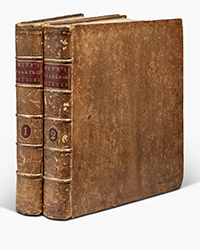
Sotheby’s, June 25: Smith, Adam. The Wealth of Nations, on its 250th anniversary. $180,000 to $250,000.
Sotheby’s, June 17: Fontana, Lucio. Concetto Spaziale. 1967. Leporello en papier doré. Bel exemplaire signé. €4,000 to $€,000.
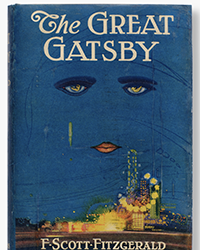
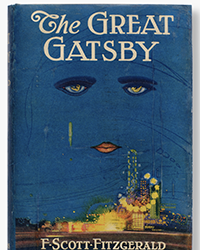
Sotheby’s, June 25: Fitzgerald, F. Scott. "So we beat on, boats against the current, borne back ceaselessly into the past”. $150,000 to $200,000.
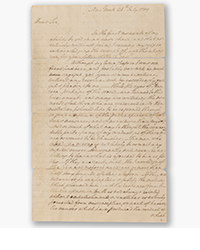
Sotheby’s, June 25: Washington, George (as First President). Washington decries “an ostentatious imitation, or mimickry of Royalty” in his Presidency. $250,000 to $500,000.
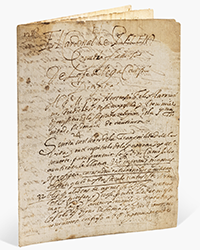
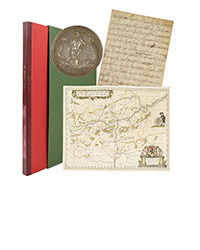
Sotheby’s, June 17: Lope de Vega. Rare manuscrit autographe signé de la préface dédicatoire de "El Cardenal de Belen" (le cardinal de Bethléem), pièce composée en 1610. €40,000 to €60,000.
June 23rd, 24th & 25th 2026
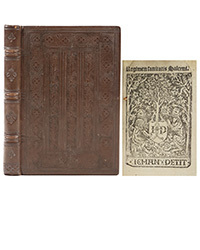
Fonsie Mealy’s, June 23-25: Medical Incunabula: Petit (Jean)publisher & Kerver (Thielman)printer. Regimen Sanitatis Salernitanum, sm. 8vo, Paris [1498]
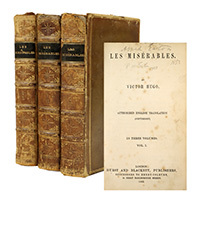
Fonsie Mealy’s, June 23-25: Hugo (Victor) [Wraxall (Lascelles)]. Les Miserable, 3 vols., 8vo, L. (Hurst & Blackett) 1862, First Authorized English Translation (copyright).
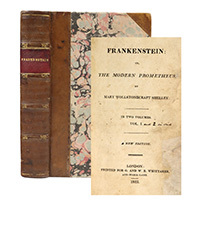
Fonsie Mealy’s, June 23-25: Shelley (Mary Wollstonecraft). Frankenstein: or The Modern Prometheus, 8vo, 2 vols. in one, L. (G. & W.B. Whittaker, Ave-Maria-Lane) 1823.
June 23rd, 24th & 25th 2026
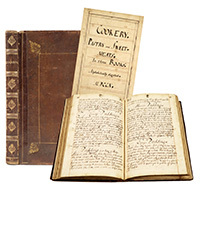
Fonsie Mealy’s, June 23-25: Cuisine: Anon. Cookery, Pastry, and Sweet Meats in three Books, Alphabetically Digested, 8vo 1710.
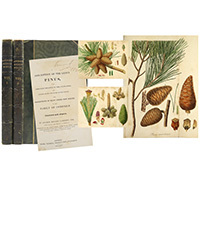
Fonsie Mealy’s, June 23-25: Lambert (Aylmer Bourke). A Description of the Genus Pinus, with Directions Relative to the Cultivation…, 2 vols. Sm. folio L. (Messrs. Weddell) 1832.
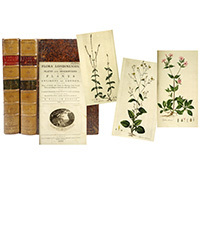
Fonsie Mealy’s, June 23-25: Botany: Curtis (William). Flora Londinensis: or Plates and Descriptions of such Plants as Grow Wild in the Environs of London, 2 vols. folio, London (B. White) 1777 – 1798.
June 23rd, 24th & 25th 2026
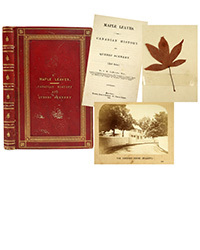
Fonsie Mealy’s, June 23-25: Le Moire (J.M.) Maple Leaves, Canadian History and Quebec Scenery (Third Series) 8vo Quebec (Hunter, Rose & Co.) 1865. First Edn.
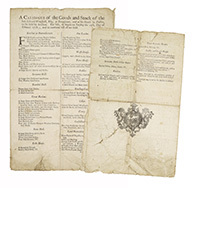
Fonsie Mealy’s, June 23-25: The Earliest Extant Printed House Contents Sale Catalogue in Ireland: Baillie, Auctioneer, Abby Street. A Catalogue of the Goods and Stock of the late Edward Wingfield…
Fonsie Mealy’s, June 23-25: William III King of England. Autograph Letter Signed ("William R") to an unnamed correspondent [possibly Charles-Henri de Lorraine] discussing his strategy against the French forces during the siege of Namur.
June 23rd, 24th & 25th 2026
Fonsie Mealy’s, June 23-25: [Austen (Jane) (1785-1817]. Pride and Prejudice, 3 vols. sm. 8vo, L. (T. Egerton) 1813.
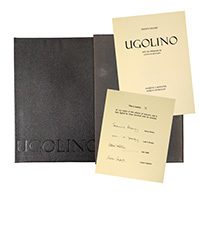
Fonsie Mealy’s, June 23-25: Heaney (Seamus). Ugolino, sm. folio D. (Dolmen) 1979, Limited Edn. No. 78/125 Copies, Signed by Seamus Heaney, Louis le Brocquy, Liam Miller and Andrew Carpenter.
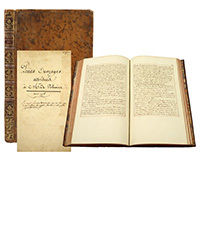
Fonsie Mealy’s, June 23-25: Voltaire (F.M. Avouet de). Petits Ouvrages, attribues a M. de Voltaire, sm. folio manuscript, dated 1776, containing 9 works.
Bonhams, June 14-23: Franklin D. Roosevelt Presentation Gold Pocket Watch. Estimate: $20,000 - 30,000
Bonhams, June 14-23: Presentation Copy of the First Issue of the Lincoln Douglas Debates Signed by Abraham Lincoln in Pencil to a Sangamon County Illinois Republican. Estimate: $150,000 - 250,000
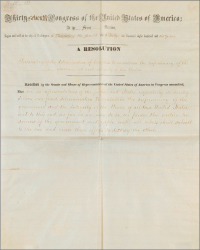
Bonhams, June 14-23: A Senate Resolution Signed in the Tense Days After the Union's Humiliating Defeat at the First Battle of Bull Run. Estimate: $80,000 - $120,000
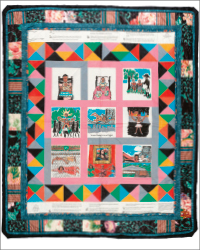
Bonhams, June 14-23: Seven Passages to a Flight, an Artists Book with a Story Quilt by Faith Ringgold, the Publisher's Own Copy. Estimate: $80,000 - 120,000
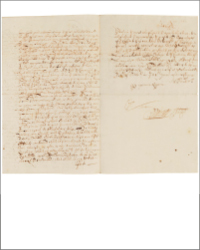
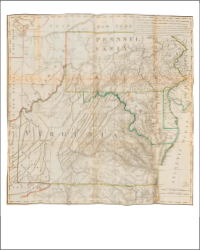
Bonhams, June 14-23: A New Charter for Virginia, A Response to the First Armed Rebellion in the American Colonies. Estimate: $15,000 - 25,000
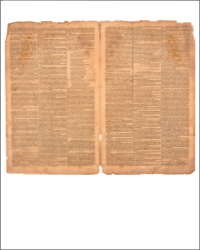
Bonhams, June 14-23: Earliest obtainable printing of the Bill of Rights. Estimate: $8,000 - 12,000
Bonhams, June 14-23: Edward Curtis Orotone. Estimate: $7,000 - 9,000
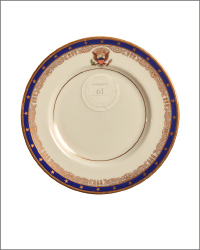
Bonhams, June 14-23: Owned by Jacqueline Kennedy Onassis: A Butter or Dessert Plate from FDR's State Dinner Service. Estimate: $3,000 - 5,000
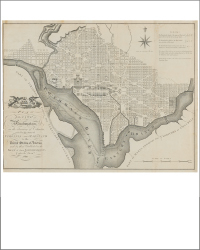
Bonhams, June 14-23: An Early Large-Format Plan of the City of Washington. Estimate: $1,500 - 2,500
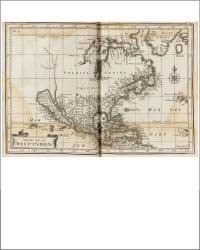
Bonhams, June 14-23: Containing the First Map to Name the Hudson River. Estimate: $20,000 - 30,000
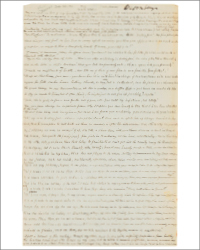
Bonhams, June 14-23: America's First Major Novelist, a Complete Chapter in Autograph Manuscript by James Fenimore Cooper. Estimate: $15,000 - 20,000
Bonhams, June 14-23: The Only Full-Length Book by Jefferson, with the Justly Famous Map. Estimate: $12,000 - 18,000
June 25, 2026
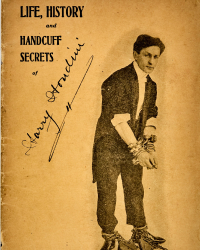
Doyle, June 25: Houdini's biography, boldly signed. $3,000 to $5,000.
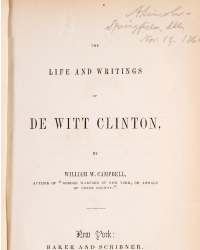
Doyle, June 25: A volume from Abraham Lincoln's library, signed just before heading to Washington for his inauguration. $20,000 to $30,000.
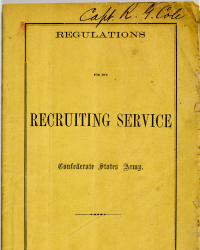
Doyle, June 25: A very early Confederate recruiting manual belonging to the chief commissary in Lee's Army. $600 to $800.
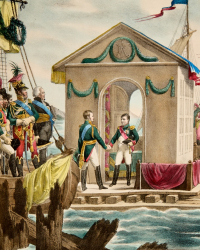
Doyle, June 25: Rare hand-colored lithographs of the life of Napoleon. $20,000 to $30,000.
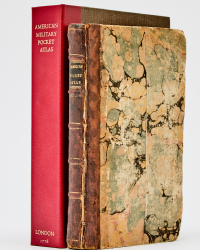
Doyle, June 25: The "Holster Atlas" of the American Revolution. $5,000 to $8,000.
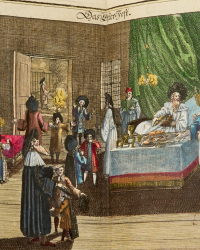
Doyle, June 25: Jewish ceremonies in fine hand-colored engravings. $7,000 to $10,000.
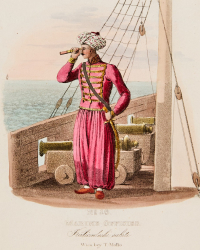
Doyle, June 25: A very rare work on Turkish military costume. $1,000 to $1,500.
June 25, 2026
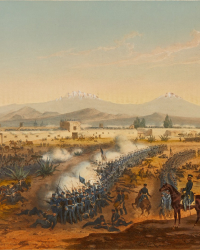
Doyle, June 25: The most important illustrated work on the Mexican-American War. $10,000 to $15,000.
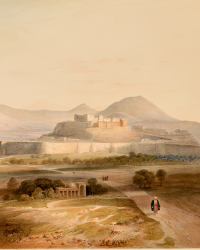
Doyle, June 25: The finest illustrated book on Afghanistan. $10,000 to $15,000.
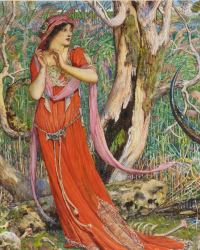
Doyle, June 25: Henry Justice Ford St. George rescues the Princess from the horrible Dragon. $2,000 to $3,000.
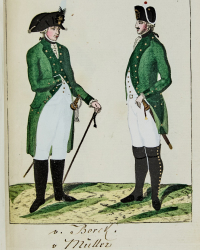
Doyle, June 25: A rare work of Prussian Army uniforms under Frederick William II, with exquisite hand-colored engravings. $800 to $1,200.
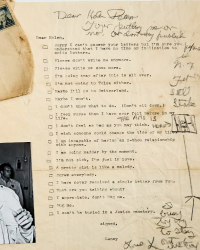
Doyle, June 25: Lenny Bruce typed letter signed to a Village bohemian during his obscenity trials, with a manuscript note and drawing. $300 to $500.
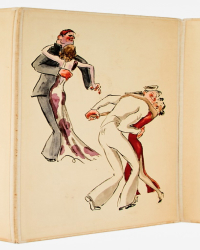
Doyle, June 25: Schiff's scarce Shanghai Sketchbook. $300 to $500.
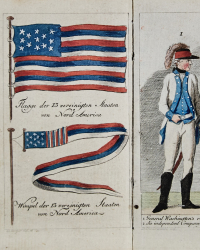
Doyle, June 25: The first accurate published representation of the American flag. $2,000 to $4,000.
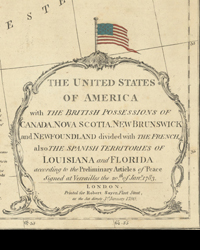
Old World Auctions (June 17): Lot 123. Celebrate 250 Years of Independence with Original Stars and Stripes (1790) Est. $1,400 - $1,700
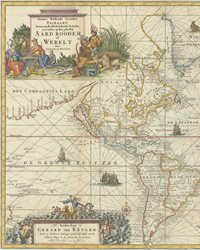
Old World Auctions (June 17): Lot 20. Keulen's Spectacular Chart of the World Featuring California as an Island (1728) Est. $12,000 - $15,000
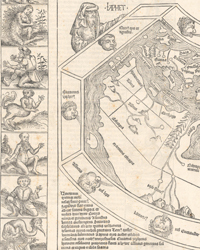
Old World Auctions (June 17): Lot 42. Schedel's Ancient World Map with Fantastic Humanoid Creatures (1493) Est. $14,000 - $17,000
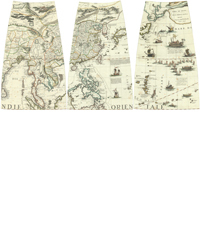
Old World Auctions (June 17): Lot 591. Matching Set of 3 Stunning Globe Gores of Eastern Asia from Coronelli's 3.5 Foot Globe (1688) Est. $5,500 - $7,000
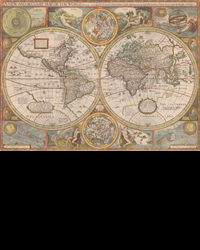
Old World Auctions (June 17): Lot 9. Speed's Popular World Map with Allegorical Representations of the Elements (1651) Est. $14,000 - $17,000
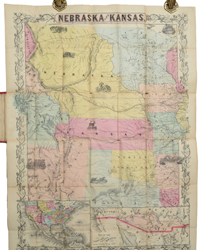
Old World Auctions (June 17): Lot 168. First Separate Map of Kansas & Nebraska Territories (1854) Est. $5,500 - $7,000
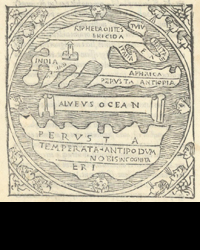
Old World Auctions (June 17): Lot 43. Only Macrobius Map with Britain Attached to Europe (1515) Est. $800 - $950
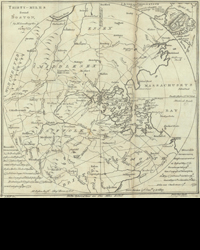
Old World Auctions (June 17): Lot 250. Rare Map of Boston and One of the Earliest Maps of the Revolutionary War (1775) Est. $2,000 - $2,300
Old World Auctions (June 17): Lot 79. Schenk's Uncommon Map Featuring Two Figurative Title Cartouches (1696) Est. $1,200 - $1,500
Old World Auctions (June 17): Lot 681. Hand-Colored Image of the Annunciation to the Shepherds (1502) Est. $800 - $950