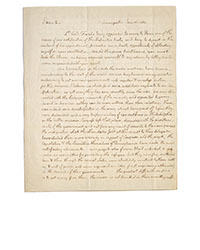
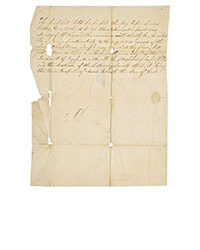

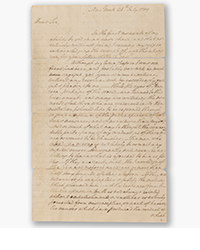
• Freeman’s, June 30. Thomas Jefferson’s “Birth of the New Nation” letter, carried to Paris with the Treaty of Peace, by a Jewish patriot. $100,000-200,000.
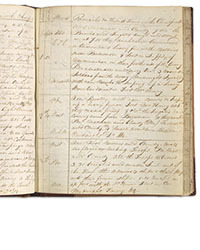
    Freeman’s, June 30. “The rockets’ red glare.” A British midshipman’s log recording the bombardment of Fort McHenry. $60,000-80,000.
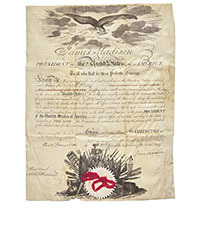
    Freeman’s, June 30. The Critical Promotion of a Naval Hero, Oliver Hazard Perry Commission signed by James Madison, 1812. $40,000-60,000.
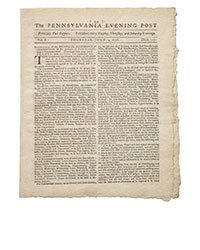
    Freeman’s, June 30. Born in the USA: First Day of Printing in the United States, July 4, 1776. $15,000-25,000.
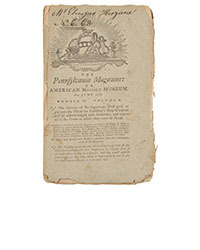
    Freeman’s, June 30. One of the Earliest Printed Announcements of American Independence, in the Exceedingly Rare Original Wrappers, 1776. $10,000-15,000.
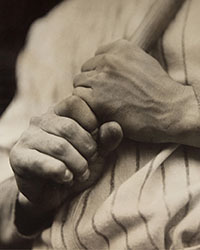
    Freeman’s, June 30. "The Two Big Guns of the N.Y. Yanks": A Striking Type 1 Press Photograph of Lou Gehrig's Hands. $8,000-12,000.
    Freeman’s, June 30. A Unique Contemporary Manuscript Account of Joseph Smith's Final Words to His Followers, the Day Before his Violent Death. $8,000-12,000.
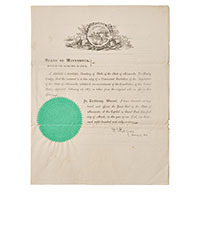
    Freeman’s, June 30. The State of Minnesota Officially Certifies the Fourteenth Amendment to the Constitution Of the United States. $8,000-12,000.
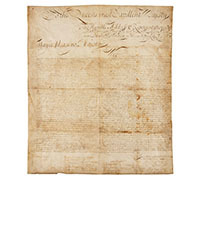
    Freeman’s, June 30. Extraordinarily Large Manuscript Petition Signed by a Who's Who of Colonial New York to Queen Anne from the Colony of New York. $8,000-12,000.
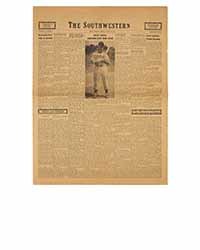
    Freeman’s, June 30. Mickey Mantle's First Cover: The Earliest Front-Page Newspaper Image of Mickey Mantle, "Something Good from Joplin". $8,000-12,000.
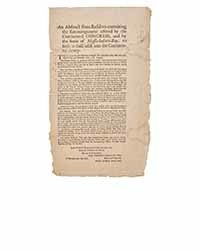
    Freeman’s, June 30. A Call to Arms in the Months Following the Declaration of Independence: An Early Continental Army Recruitment Poster. $6,000-9,000.
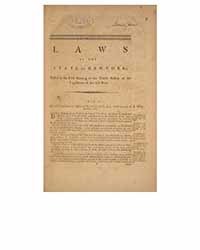
    Freeman’s, June 30. Samuel Jones, the Statesman Behind the Newly Discovered "Jones Declaration": His Annotated Set Used in His Working Law Library. $6,000-9,000.
  • Sotheby's Book Week
    2 June - 9 July
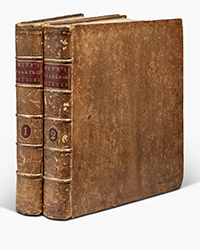
    Sotheby’s, June 25: Smith, Adam. The Wealth of Nations, on its 250th anniversary. $180,000 to $250,000.
    Sotheby’s, June 17: Fontana, Lucio. Concetto Spaziale. 1967. Leporello en papier doré. Bel exemplaire signé. €4,000 to $€,000.
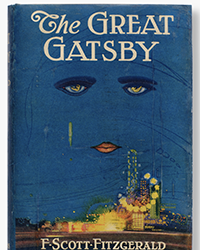
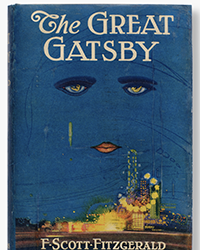
    Sotheby’s, June 25: Fitzgerald, F. Scott. "So we beat on, boats against the current, borne back ceaselessly into the past”. $150,000 to $200,000.
    Sotheby’s, June 25: Washington, George (as First President). Washington decries “an ostentatious imitation, or mimickry of Royalty” in his Presidency. $250,000 to $500,000.
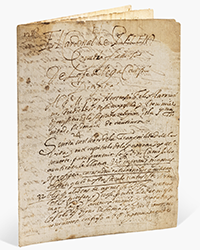
    Sotheby’s, June 17: Lope de Vega. Rare manuscrit autographe signé de la préface dédicatoire de "El Cardenal de Belen" (le cardinal de Bethléem), pièce composée en 1610. €40,000 to €60,000.
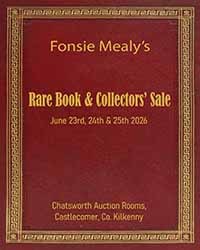
  • June 23rd, 24th & 25th 2026
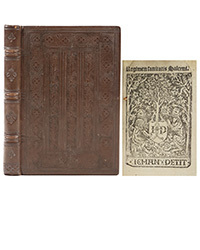
    Fonsie Mealy’s, June 23-25: Medical Incunabula: Petit (Jean)publisher & Kerver (Thielman)printer. Regimen Sanitatis Salernitanum, sm. 8vo, Paris [1498]
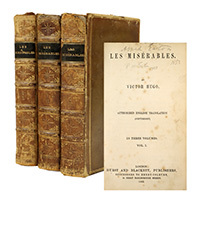
    Fonsie Mealy’s, June 23-25: Hugo (Victor) [Wraxall (Lascelles)]. Les Miserable, 3 vols., 8vo, L. (Hurst & Blackett) 1862, First Authorized English Translation (copyright).
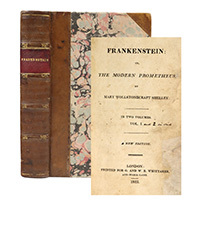
    Fonsie Mealy’s, June 23-25: Shelley (Mary Wollstonecraft). Frankenstein: or The Modern Prometheus, 8vo, 2 vols. in one, L. (G. & W.B. Whittaker, Ave-Maria-Lane) 1823.
    June 23rd, 24th & 25th 2026
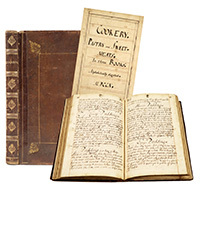
    Fonsie Mealy’s, June 23-25: Cuisine: Anon. Cookery, Pastry, and Sweet Meats in three Books, Alphabetically Digested, 8vo 1710.
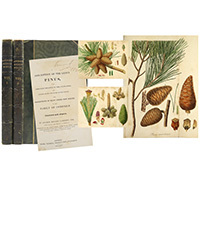
    Fonsie Mealy’s, June 23-25: Lambert (Aylmer Bourke). A Description of the Genus Pinus, with Directions Relative to the Cultivation…, 2 vols. Sm. folio L. (Messrs. Weddell) 1832.
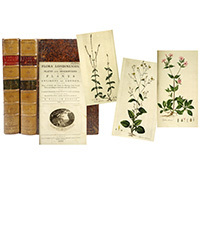
    Fonsie Mealy’s, June 23-25: Botany: Curtis (William). Flora Londinensis: or Plates and Descriptions of such Plants as Grow Wild in the Environs of London, 2 vols. folio, London (B. White) 1777 – 1798.
    June 23rd, 24th & 25th 2026
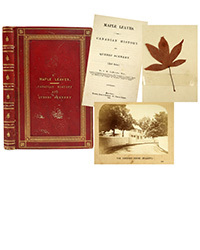
    Fonsie Mealy’s, June 23-25: Le Moire (J.M.) Maple Leaves, Canadian History and Quebec Scenery (Third Series) 8vo Quebec (Hunter, Rose & Co.) 1865. First Edn.
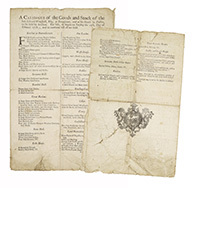
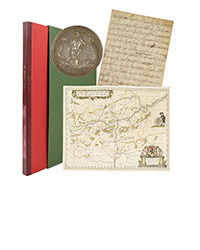
    Fonsie Mealy’s, June 23-25: The Earliest Extant Printed House Contents Sale Catalogue in Ireland: Baillie, Auctioneer, Abby Street. A Catalogue of the Goods and Stock of the late Edward Wingfield…
    Fonsie Mealy’s, June 23-25: William III King of England. Autograph Letter Signed ("William R") to an unnamed correspondent [possibly Charles-Henri de Lorraine] discussing his strategy against the French forces during the siege of Namur.
    June 23rd, 24th & 25th 2026
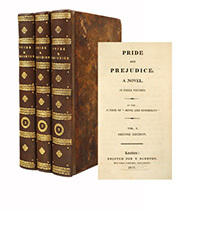
    Fonsie Mealy’s, June 23-25: [Austen (Jane) (1785-1817]. Pride and Prejudice, 3 vols. sm. 8vo, L. (T. Egerton) 1813.
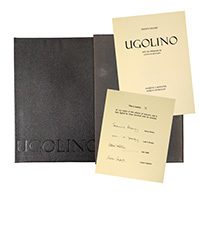
    Fonsie Mealy’s, June 23-25: Heaney (Seamus). Ugolino, sm. folio D. (Dolmen) 1979, Limited Edn. No. 78/125 Copies, Signed by Seamus Heaney, Louis le Brocquy, Liam Miller and Andrew Carpenter.
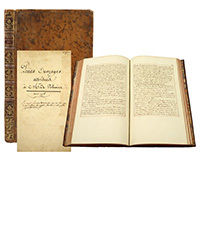
    Fonsie Mealy’s, June 23-25: Voltaire (F.M. Avouet de). Petits Ouvrages, attribues a M. de Voltaire, sm. folio manuscript, dated 1776, containing 9 works.
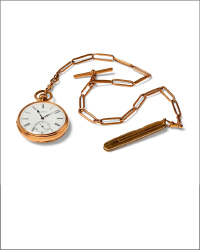
  • Bonhams, June 14-23: Franklin D. Roosevelt Presentation Gold Pocket Watch. Estimate: $20,000 - 30,000
    Bonhams, June 14-23: Presentation Copy of the First Issue of the Lincoln Douglas Debates Signed by Abraham Lincoln in Pencil to a Sangamon County Illinois Republican. Estimate: $150,000 - 250,000
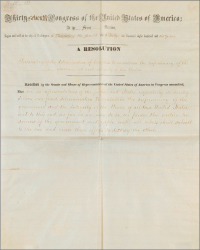
    Bonhams, June 14-23: A Senate Resolution Signed in the Tense Days After the Union's Humiliating Defeat at the First Battle of Bull Run. Estimate: $80,000 - $120,000
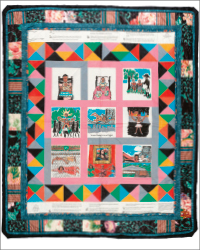
    Bonhams, June 14-23: Seven Passages to a Flight, an Artists Book with a Story Quilt by Faith Ringgold, the Publisher's Own Copy. Estimate: $80,000 - 120,000
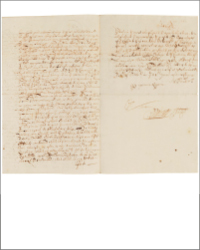
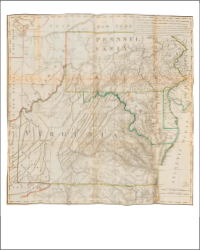
    Bonhams, June 14-23: A New Charter for Virginia, A Response to the First Armed Rebellion in the American Colonies. Estimate: $15,000 - 25,000
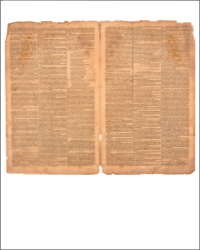
    Bonhams, June 14-23: Earliest obtainable printing of the Bill of Rights. Estimate: $8,000 - 12,000
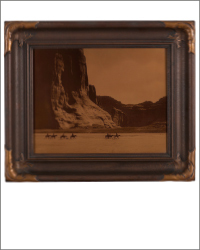
    Bonhams, June 14-23: Edward Curtis Orotone. Estimate: $7,000 - 9,000
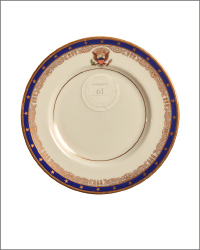
    Bonhams, June 14-23: Owned by Jacqueline Kennedy Onassis: A Butter or Dessert Plate from FDR's State Dinner Service. Estimate: $3,000 - 5,000
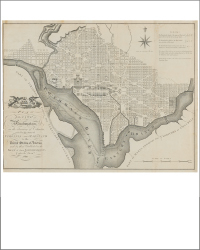
    Bonhams, June 14-23: An Early Large-Format Plan of the City of Washington. Estimate: $1,500 - 2,500
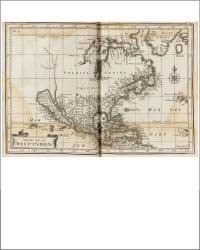
    Bonhams, June 14-23: Containing the First Map to Name the Hudson River. Estimate: $20,000 - 30,000
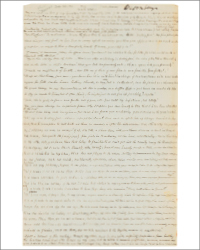
    Bonhams, June 14-23: America's First Major Novelist, a Complete Chapter in Autograph Manuscript by James Fenimore Cooper. Estimate: $15,000 - 20,000
    Bonhams, June 14-23: The Only Full-Length Book by Jefferson, with the Justly Famous Map. Estimate: $12,000 - 18,000

Rare Book Monthly

Articles - April - 2003 Issue

Slavery in the United States <br> Chapter 9

none

none

SLAVERY IN THE UNITED STATES
By J. K. Paulding
Published in New York in 1836

CHAPTER IX.

Of the Domestic and Social relations between the Master and Slave in the United States, and of the relative condition of African Freemen; African Slaves in their Native Land; American Slaves; English Labourers; European Peasantry, and various Classes of White Men in the United States.

23,895 words


IT is only from the outward condition of men that men can judge of the happiness of each other. There are certain physical wants common to all mankind; some special necessities, that must be supplied, and are indispensable to human existence. Of these, all are equally qualified to form an estimate. There are other sources of enjoyment and suffering, which must be left to the Great Being who alone enters into the recesses of the heart, and detects its secret workings.

The most common error of mankind is that of estimating the happiness of others by their own standard of enjoyment, not considering the old proverb, that "One man's meat is another man's poison," and that the endless diversities of habits, character, feeling, intellect, taste, and physical organization, create similar varieties in the sources from whence happiness is derived. One thing, however, is certain, that though mankind differ in so many points, there is one on which they all think alike. They all agree that hunger, thirst, cold, and overtasked labour, are real substantial evils; that, in proportion as we are free from these, we enjoy life, and partake of happiness; and that, on the contrary, no diversity of habit, character, education, feeling, taste, or intellect, can reconcile us to either one or the other. There is not the same degree of unanimity or certainty with regard to the enjoyments and sufferings of the mind; neither is it possible to form an estimate of the happiness of any one from his station in life, the degree of knowledge or ignorance he may rise or sink into, or the wealth or power he, may possess. We might be miserable in the situation of a man who is in fact happier than ourselves. In short, after all the flourishing harangues and declamations of sentimental philosophers and philanthropic Quixotes, all reasoning and all experience only bring us to the conclusion of Paley, that "All that can be said is, that there remains a presumption in favour of those conditions of life in which men generally appear most cheerful and contented. For though the apparent happiness of mankind be not always a true measure of their real happiness, it is the best we have."

And this standard of happiness accords best with our ideas of a wise and beneficent Providence, because all experience brings to us the conviction, that the class of human beings which is by far the most numerous, namely, the labouring class, is the merriest and most cheerful, when possessed of the ordinary comforts of life, which, as before observed, are indispensable to human existence in a civilized state. It would ill accord with the attributes of the Supreme Being, to presume, that the exceeding small portion of mankind which is free from the necessity of labour, should enjoy greater happiness than the vast majority, and that without any claim to superior virtue, or perhaps superior intellect.

Of all the varieties of the human race and of human condition that have ever fallen under our observation, the African slave of the South best realizes the idea of happiness, according to the definition of Archdeacon Paley; for he is, or rather was, a few years ago, the most light-hearted, sportive, dancing, laughing being in the world. It will be seen in the letters which will presently be produced, that a great change has lately taken place in this respect, inconsequence of the labours of the abolitionists to enlighten him to a proper sense of his miserable condition. This cheerful, contented disposition, will doubtless be ascribed by that over-zealous fraternity to ignorance. Be it so. That which destroys our happiness may be called knowledge, but can claim none of the honours of wisdom, whose sole office is to increase the happiness of mankind. In this respect, ignorance and wisdom often go hand in hand; for nothing is more certain than that, if a portion of mankind were to become as enlightened as the angels, and yet be obliged to inhabit the earth, they would be the most wretched of all beings. So with the slaves of the South. Teach them to be happy, and let this be the extent of their wisdom; for that knowledge which conduces to the happiness of freemen, is a curse to the slave.

All those who have visited the states in which slavery prevails, whatever may have been their previous impressions of the horrors of that condition, must have been struck with the uniform hilarity and cheerfulness which prevail among the blacks. Labouring generally in large numbers together, they partake of the influence which companionship always exercises over man, the most social of all beings. In the meadows and harvest-fields they lighten their labours by songs, the measures of which accord with the strokes of the cradle and scythe; and in whatever employment they may be associated, they are always joking, quizzing, or bantering each other. The children enjoy a life of perfect ease, and are maintained, by the products of the land which belong to them and theirs. The parents, being freed from all anxiety or exertion for the present or future support of their offspring, are never beset by the gnawing cares of the free white man, whose whole life is one continued effort to provide for himself and his children. The aged and infirm are also taken care of by the master, either from the dictates of his own humanity, or the obligation imposed on him by the law. None of them ever become wretched paupers, a disgrace to their race and a burden on society; and if a philanthropist were to visit their quarters during one of their holydays, he might behold a picture of careless, thoughtless hilarity, which would neutralize much of his horror of that state, which, in every age and nation of the world, has been the lot of millions of human beings, of all shades and colours.

This may indeed be the "bliss of ignorance;” but, whatever be its source, happiness is still happiness, all the world over. That knowledge which only makes us discontented with our situation, is not a possession to be coveted; nor can any acquisition which diminishes our enjoyments be an object of envy or desire to a wise man. The situation of the slave will indeed be wretched, should the abolitionists succeed in implanting in his mind the same views and feelings which freemen entertain with respect to bondage. But it should be borne in mind, that the sense of degradation, and the impatience of restraint, which result from education and habit, are beyond the comprehension of those who have never known, or ever aspired to, any other condition of life. The error of those who insist on the miseries of the slave, consists in placing themselves, with all their experience of the enjoyments of personal liberty, in his situation, and then imagining what he feels from what they would suffer in his place.

In comparing the sources of happiness within the reach of a well-treated slave with those of a free white hireling, the disadvantages will not all be found on one side. If they were, it might impeach the justice of Providence; for, let it be recollected, that millions of human beings are, and have been, from the earliest periods of history, subjected to this state, without any fault of their own, so far as we know. Why, then, should they be more miserable, as a matter of necessity, than those who have escaped this fate without any merit of their own? We cannot bring our minds to such a conclusion, and shall proceed to give our reasons why we believe there is not that wide disparity in regard to the enjoyments of this world between the slave and the freeman, which has lately called forth such 3 burst of philanthropy.

In casting about for the great and universal motives and excitements to human action, at least in a state of civilization, we shall find that the two principal objects of the exertions of man are, first, to acquire the means of enabling him innocently to gratify that passion which is essential to the great scheme of Providence, and in the absence of which the world would be a lifeless desert; and, secondly, to guard against the usual consequences resulting from such gratification; in other words, to maintain his wife and children, and provide for their subsistence after his death.

Hence the first exertions of a free civilized man are devoted to preparing himself, by the habits of labour, the acquisition of a trade or profession of some kind or other, for acquiring the means of marrying and settling down in life, without entailing distress on his wife and children; and the second, to save enough to support them in case he should be Suddenly called away. There are exceptions to these universal motives of action, yet still it cannot be denied that a vast majority of civilized men come under the above description. Their whole lives are spent in qualifying and exerting themselves to sustain the relations of husband and father. For this their early childhood is subjected to the confinement and discipline of schools; for this their youth is consumed in the acquisition of a trade, or in the acquirement of that knowledge which is necessary to some profession or business ; for this a great portion of grown-up men labour incessantly from manhood to old age, often, very often, without success, and always with a ceaseless anxiety, which robs those labours of their wholesome influence on body and mind — and, after all his cares, his industry, and economy, he dies, perhaps, leaving his children destitute of provision, to the mercy of the world, and the protection of Heaven.
Rare Book Monthly

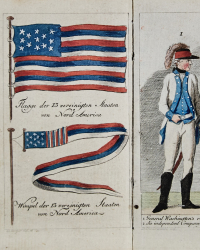
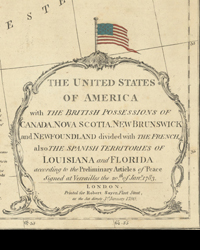
  • Old World Auctions (June 17): Lot 123. Celebrate 250 Years of Independence with Original Stars and Stripes (1790) Est. $1,400 - $1,700
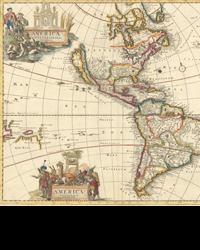
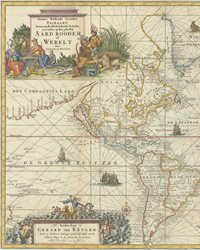
    Old World Auctions (June 17): Lot 20. Keulen's Spectacular Chart of the World Featuring California as an Island (1728) Est. $12,000 - $15,000
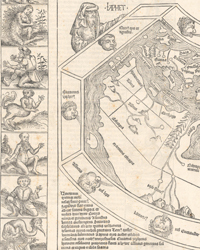
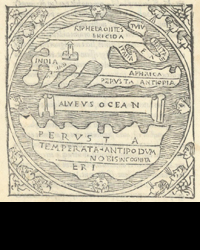
    Old World Auctions (June 17): Lot 42. Schedel's Ancient World Map with Fantastic Humanoid Creatures (1493) Est. $14,000 - $17,000
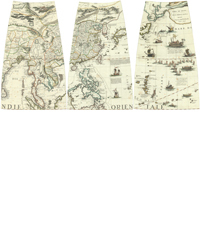
    Old World Auctions (June 17): Lot 591. Matching Set of 3 Stunning Globe Gores of Eastern Asia from Coronelli's 3.5 Foot Globe (1688) Est. $5,500 - $7,000
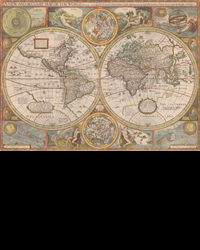
    Old World Auctions (June 17): Lot 9. Speed's Popular World Map with Allegorical Representations of the Elements (1651) Est. $14,000 - $17,000
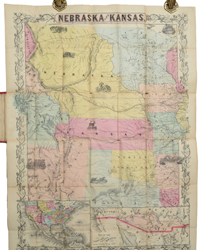
    Old World Auctions (June 17): Lot 168. First Separate Map of Kansas & Nebraska Territories (1854) Est. $5,500 - $7,000
    Old World Auctions (June 17): Lot 43. Only Macrobius Map with Britain Attached to Europe (1515) Est. $800 - $950
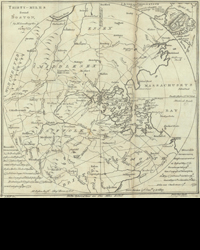
    Old World Auctions (June 17): Lot 250. Rare Map of Boston and One of the Earliest Maps of the Revolutionary War (1775) Est. $2,000 - $2,300
    Old World Auctions (June 17): Lot 79. Schenk's Uncommon Map Featuring Two Figurative Title Cartouches (1696) Est. $1,200 - $1,500
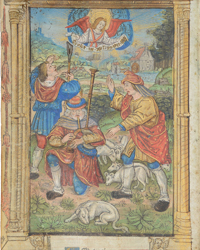
    Old World Auctions (June 17): Lot 681. Hand-Colored Image of the Annunciation to the Shepherds (1502) Est. $800 - $950
  • June 25, 2026
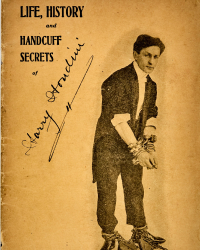
    Doyle, June 25: Houdini's biography, boldly signed. $3,000 to $5,000.
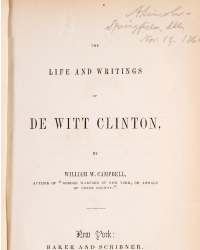
    Doyle, June 25: A volume from Abraham Lincoln's library, signed just before heading to Washington for his inauguration. $20,000 to $30,000.
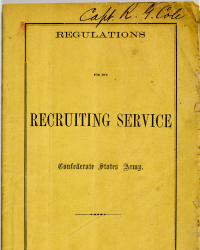
    Doyle, June 25: A very early Confederate recruiting manual belonging to the chief commissary in Lee's Army. $600 to $800.
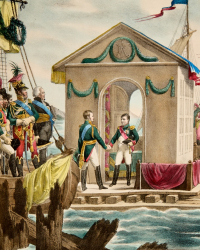
    Doyle, June 25: Rare hand-colored lithographs of the life of Napoleon. $20,000 to $30,000.
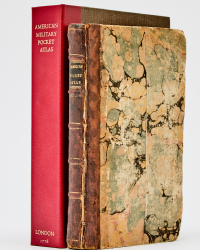
    Doyle, June 25: The "Holster Atlas" of the American Revolution. $5,000 to $8,000.
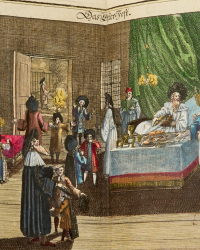
    Doyle, June 25: Jewish ceremonies in fine hand-colored engravings. $7,000 to $10,000.
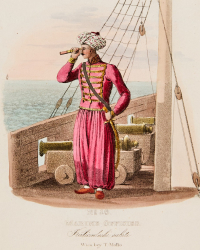
    Doyle, June 25: A very rare work on Turkish military costume. $1,000 to $1,500.
    June 25, 2026
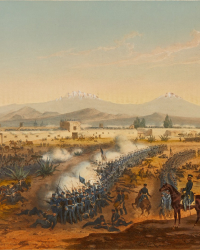
    Doyle, June 25: The most important illustrated work on the Mexican-American War. $10,000 to $15,000.
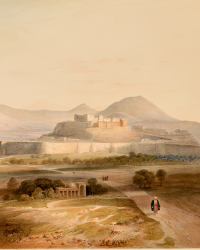
    Doyle, June 25: The finest illustrated book on Afghanistan. $10,000 to $15,000.
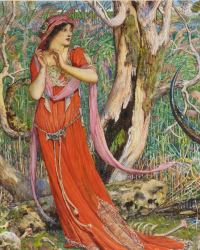
    Doyle, June 25: Henry Justice Ford St. George rescues the Princess from the horrible Dragon. $2,000 to $3,000.
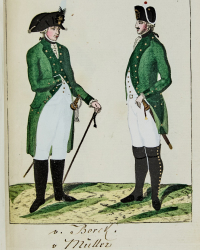
    Doyle, June 25: A rare work of Prussian Army uniforms under Frederick William II, with exquisite hand-colored engravings. $800 to $1,200.
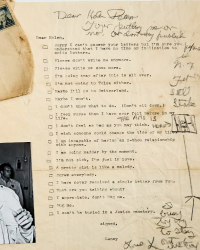
    Doyle, June 25: Lenny Bruce typed letter signed to a Village bohemian during his obscenity trials, with a manuscript note and drawing. $300 to $500.
    Doyle, June 25: Schiff's scarce Shanghai Sketchbook. $300 to $500.
    Doyle, June 25: The first accurate published representation of the American flag. $2,000 to $4,000.
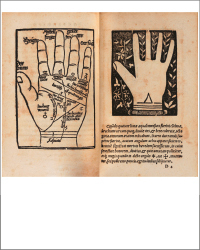
  • Bonhams, June 14-23: Palm-reading, astrology, and more. Estimate: $2,000 - 3,000
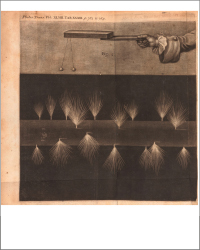
    Bonhams, June 14-23: Benjamin Franklin. Sammelband of 45 papers on electricity. Estimate: $8,000 - 12,000
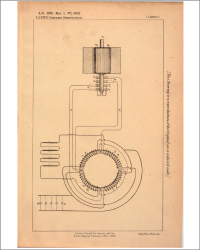
    Bonhams, June 14-23: The basis for the whole modern electric-power industry. Estimate: $4,000 - 6,000
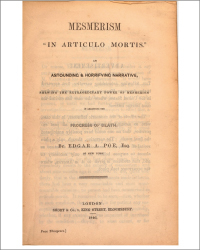
    Bonhams, June 14-23: Edgar Allen Poe. Poe on Mesmerism. Estimate: $2,500 - 3,500
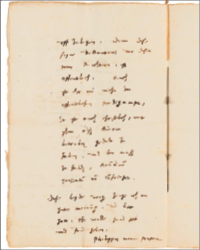
    Bonhams, June 14-23: Reformation - The Architect of Lutheranism on Church Unity and Dissent. Estimate: $100,000 - 150,000
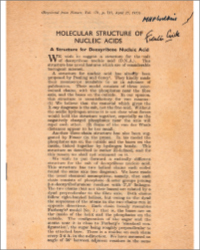
    Bonhams, June 14-23: The Rare 3-Paper Offprint Identifying the Double Helix Structure of DNA, Signed by Crick, Wilkins, Wilson, Stokes and Gosling. Estimate: $40,000 - 60,000
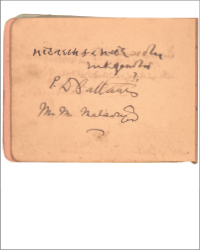
    Bonhams, June 14-23: Autograph book and Report from the Thirtieth Indian National Congress, featuring the signatures of Mahatma Gandhi, Rabindranath Tagore, and Dadabhai Naoroji. Estimate: $6,000 - 8,000
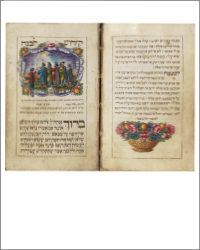
    Bonhams, June 14-23: An Illustrated Miniature Hebrew Prayerbook Manuscript. Estimate: $30,000 - 50,000
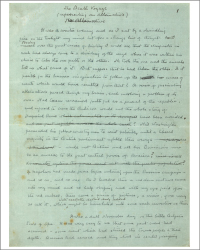
    Bonhams, June 14-23: Autograph Working Draft of Arthur Conan Doyle's The Death Voyage. Estimate: $30,000 - 50,000
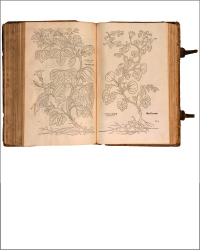
    Bonhams, June 14-23: "Perhaps the most celebrated and most beautiful herbal ever published." Estimate: $15,000 - 20,000
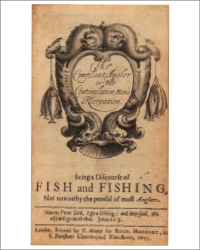
    Bonhams, June 14-23: Izaak Walton. The Compleat Angler or the Contemplative man's Recreation. Being a Discourse of Fish and Fishing. Estimate: $12,000 - 18,000
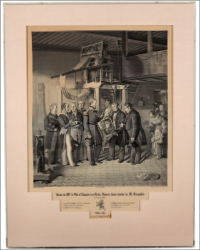
    Bonhams, June 14-23: A rare product of the Jaquard loom. Estimate: $8,000 - 12,000

Article Search

Archived Articles