
Rare Book Monthly
Articles - January - 2004 Issue
Eccentricity At the Top:<br>Richard Mentor Johnson

non
Perhaps as good a place to go to understand Johnson’s thoughts is a speech he gave during debates over the Missouri Compromise. Enacted in 1820, this compromise limited the extension of slavery into the new territories. During these debates, Johnson defended the extension of slavery. His basic argument is one southerners would use again in the years to come, but I suspect far more disingenuously than Richard Johnson. It’s the one that compares the conditions of poor, working Whites in the North to that of black slaves in the South. It’s hard to believe the sincerity of the argument when espoused by wealthy white southern plantation owners and politicians, but there’s an air of believability in the words of Johnson, who truly sympathized with those workers who would one day become some of his greatest supporters.
Unlike the typical wealthy southern slave owner who welcomed it, Johnson was offended by distinctions of class. Nowhere did he see this as more prevalent than in the North. He recalled arriving in Washington where he saw wealthy citizens riding in luxurious coaches obediently attended by white servants. He was shocked, he recounts, as he thought only black slaves were so servile. On the frontier, there were no such distinctions of class, at least not among Whites. All had to be treated equally. In the cities, however, he saw the precursors of an aristocracy in America.
Johnson looks at the condition of the working poor in the North and asks what is the difference between them and the slaves of the South. He concludes that the difference is only nominal, not one of reality. In one case, servitude is called involuntary because it is imposed by others; in the other it is called voluntary because it is imposed by necessity. To Johnson, that was no real distinction at all. In either case, servitude is forced upon its victim.
Johnson then goes on to say that in some ways the slave is better off. The so-called “free” servant must deal with all the vicissitudes of the marketplace. They must find work, pay their debts, manage illness, find food and clothing, deal with old age, and when poverty turns them astray, suffer imprisonment. The slave, on the other hand, had none of these concerns. He was fed, sheltered, clothed and had no money worries. Considering that finances were a major concern for Johnson throughout his life, this argument must have had some ring of truth to his ears. Johnson points to the white beggars he constantly encountered in the cities. “Among the slaves are no beggars; no vagrants: none idle for want of employ, or crying for want of bread.” And, he had nothing but contempt for the wealthy who condemned black slavery while effectively imposing, in his view, an even worse form of slavery upon poor Whites.
Johnson was not so callous as were many others who were proslavery. He did not paint pictures of happy black slaves, enjoying carefree lives provided by their generous masters. He still said that he could only admit that slavery was a “bitter draught.” Still, he could turn a blind eye to instances of cruelty by comparing them to instances of cruelty by a parent to a child, which does not thereby condemn the institution of family.
Rare Book Monthly
-
 Old World Auctions (Sept 16):
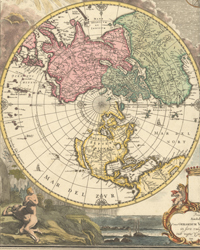
Lot 11. Blaeu's Superb World Map on a Polar Projection (1695) Est. $5,500 - $7,000Old World Auctions (Sept 16):
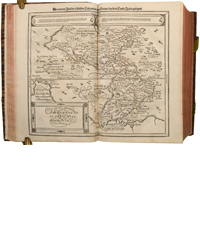
Lot 702. Munster's Largest 16th Century Edition, with Over 220 Woodcut Maps (1598) Est. $18,000 - $20,000Old World Auctions (Sept 16):
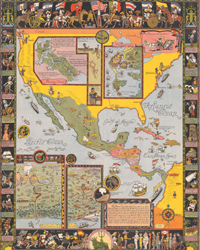
Lot 101. Rare Jo Mora "Carte" Showing a NYC-to-Seattle Route through Panama Canal (1933) Est. $900 - $1,100Old World Auctions (Sept 16):
Lot 65. The Waldseemuller/Fries "Admiral's Map" (1541) Est. $8,000 - $9,500Old World Auctions (Sept 16):
Lot 46. Contains all 30 Plates from Atlas Coelestis in Full Original Color (1742) Est. $16,000 - $18,000Old World Auctions (Sept 16):
Lot 129. The First Map to Name New Scotland and Cape Cod (1625) Est. $8,000 - $9,500Old World Auctions (Sept 16):
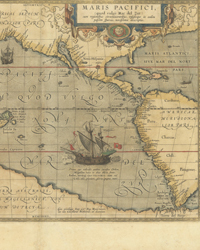
Lot 663. The First Printed Map Devoted to the Pacific in Full Contemporary Color (1589) Est. $7,500 - $9,000Old World Auctions (Sept 16):
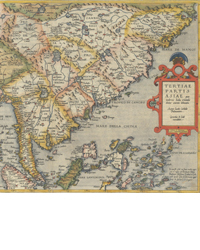
Lot 629. De Jode's Rare Map of Eastern Asia (1593) Est. $7,500 - $9,000Old World Auctions (Sept 16):
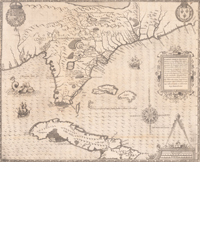
Lot 171. De Bry's Influential Map of Colonial North America (1591) Est. $11,000 - $13,000Old World Auctions (Sept 16):
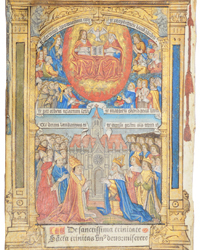
Lot 691. Superb Hand-Colored Image of the Holy Trinity (1502) Est. $800 - $950Old World Auctions (Sept 16):
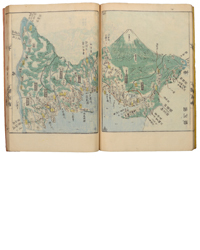
Lot 606. Important, Early Atlas of Japan with 75 Woodcut Maps in Printed Color (1837) Est. $2,000 - $2,300 -
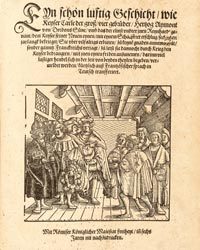
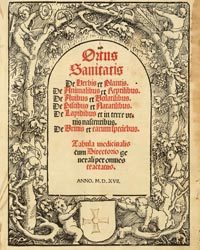
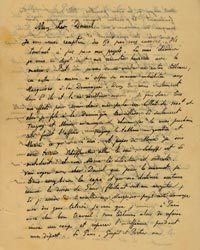 Koller, Sep. 16: FRANZÖSISCHE REVOLUTION - ASSEMBLÉE NATIONALE - Extrait des Procès-Verbaux de L'Assemblée Nationale, Des 20, 21, 22, 23, 24, 26 Août & premier Octobre 1789.Koller, Sep. 16: MOURADJA D'OHSSON, IGNACE. Tableau général de l'Empire Othoman, divisé en deux parties dont l'une comprend la Législation Mahométane, l'autre l'histoire de l'Empire Othoman [... ]Koller, Sep. 16: BOTANIK - Blackwell, Elisabeth. A curious herbal, containig five hundred cuts, of the most useful plants, which are now used in the practice of physick.Koller, Sep. 16: SCHEUCHZER, JOHANN JAKOB. Physica Sacra. Iconibus Aeneis illustrata procurante & sumtus suppeditante.Koller, Sep. 16: HAIMONSKINDER – Eyn schön lustig Geschicht, wie Keyser Carle der groß, vier gebrüder, Hertzog Aymont von Dordons Süne [...]Koller, Sep. 16: KRÄUTERBÜCHER - HORTUS SANITATIS - [H]ortus Sanitatis. De herbis et plantis. De animalibus et reptilibus. De avibus et volatilibus. De piscibus et natalibus…Koller, Sep. 16: GAUGUIN, PAUL, MALER (1848-1903). Eigenhändiger Brief mit Unterschrift und Couvert. An den Künstler und Freund Daniel de Monfreid in Paris.
 -
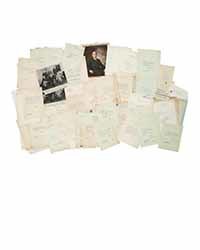
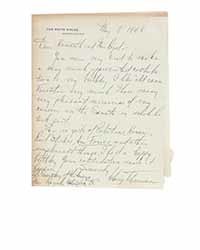
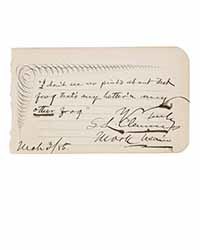

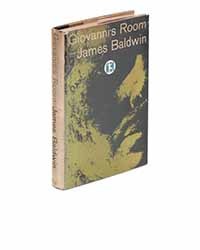

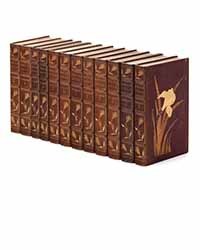
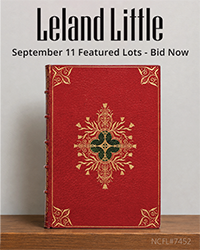

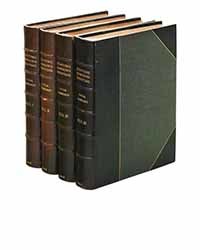
 Leland Little, September 11: Kenneth Claiborne Royall (1894-1971), Large Archive with Letters from Harry S. Truman and Dwight D. Eisenhower.Leland Little, September 11: Harry S. Truman, Scarce Autograph Letter Signed as 33rd U.S. President.Leland Little, September 11: Mark Twain (Samuel Clemens) (1835-1910), Autograph Quotation Signed.Leland Little, September 11: The History of North America, the Extremely Scarce Deluxe "Edition of the Presidents."Leland Little, September 11: Scarce First Edition of Krafft's The American Distiller.Leland Little, September 11: Inscribed First Edition of James Baldwin's Giovanni's Room.Leland Little, September 11: A Signed Limited Edition of Love in the Time of Cholera.Leland Little, September 11: The Extremely Scarce Limited and Extra-Illustrated Edition of The Works of Charles Dickens.Leland Little, September 11: A Beautifully Bound Limited Edition of Émile Zola's The Rougon-Macquart.Leland Little, September 11: The Elaborately Bound and Extremely Scarce The Shakespeare Gallery.Leland Little, September 11: Hunting, Hawking, Shooting, A Signed Limited Edition Four Volume Set.Leland Little, September 11: Signed Limited Edition of Salmon-Salmon with a Chapter on Iceland.
 -
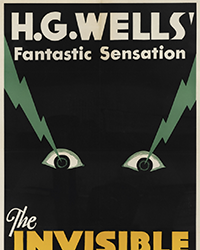
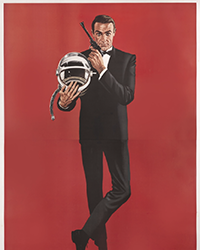
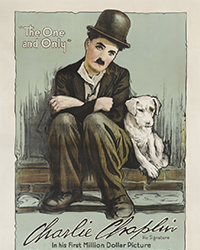


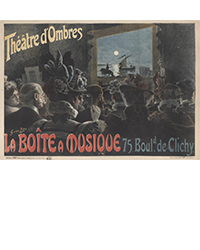
Sotheby’s
Original Film Posters
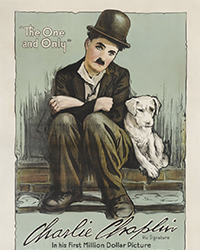
10 September 2026Sotheby’s, Sep. 10: The Invisible Man (1933). Extremely Rare US Leader Press One Sheet. £20,000 to £26,000.Sotheby’s, Sep. 10: You Only Live Twice (1967). Italian Advance Quattro Fogli. £10,000 to £15,000.Sotheby’s, Sep. 10: A Dog's Life (1918). Extremely Rare US One Sheet. £50,000 to £70,000.Sotheby’s, Sep. 10: La Belle et la Bête/Beauty and the Beast (1946). French Style A Grande. £12,000 to £18,000.Sotheby’s, Sep. 10: Harry Potter and the Prisoner of Azkaban (2004). US Lenticular Prototype One Sheet. £10,000 to £15,000.Sotheby’s, Sep. 10: Théâtre d’Ombres (1897). Exceptionally Rare French Poster. £8,000 to £12,000.