
Rare Book Monthly
Articles - October - 2003 Issue
The Value of AE Services

none
By Bruce McKinney
For many the idea of buying at book auctions is a daunting enterprise. What many dealers regularly do all others will have to learn to handle. You can buy flowers at the florist or the flower market. The proliferation of books for sale on the net is creating a log jam of listings that will be partly resolved in the years ahead by the sale of books at auction in a variety of auction formats. This is the polar opposite of buying on the net where the price is fixed and the theoretical single variable is time. At traditional book auctions the time is fixed and the variable is price. Of course it is possible to negotiate with those who list online and you won’t know until you ask but generally people assume the price is the price. At auction material comes up on a schedule and sells to the highest bidder. Sometimes lots go high and sometimes they go low. It’s uncertain and that is one of the reasons it is so interesting. Participation requires knowledge, confidence and restraint.
Most auction material will not require representation, particularly if you are building a collection by developing a collection list based on Æ keyword searches. For example there is Selma, the city in Alabama. In running that search on Æ you create an instant bibliography of material relating to Selma. Today there are 54 matches in the priced records and 20 in the bibliographical records. In a year that number will double but for now you have the only bibliography of Selma, Alabama, in existence and it is already an excellent basis for building a Selma collection. Poughkeepsie finds 340 priced records and a hundred more in the bibliographical records. In time there may be a thousand Poughkeepsie items. This suggests that almost any subject, place, author or event will ultimately yield a substantial bank of related materials upon which to center your collecting strategy. You simply run KEYWORD searches and click ADD TO WISH LIST. Generally your choices of collecting subjects are going to be highly personal and probably not of significant interest to others until you have built and explicated your collection. Most collecting choices lean toward obscure subjects and that is going to make building a collection unique and generally inexpensive. It will be your challenge and it will be fun.
Rare Book Monthly
-
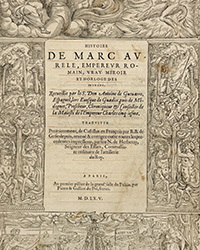
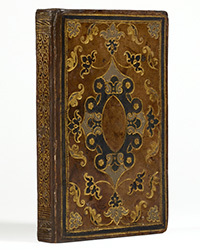
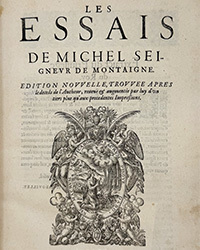
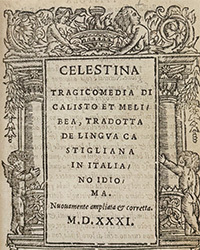
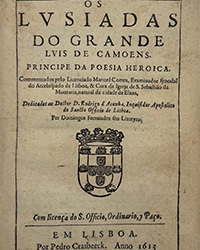
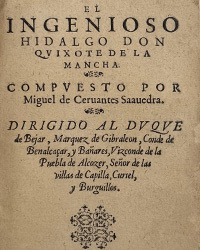
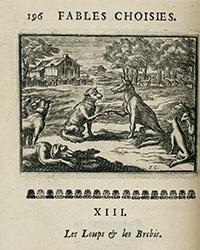
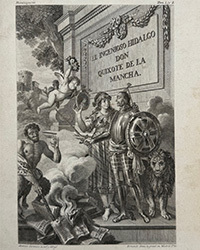
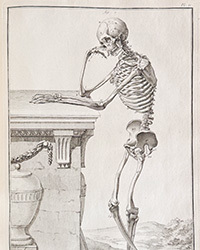
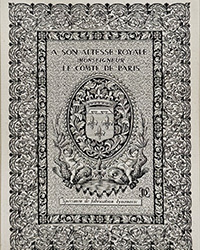
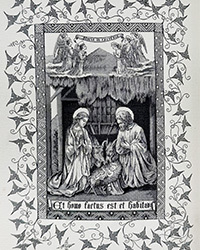 ALDE, Apr. 8: GUEVARA (ANTONIO DE). Histoire de Marc-Aurèle, Empereur Romain, vray miroir et horloge des Princes. Paris, Pierre et Galliot du Pré, frères, 1565. €3,000 to €4,000.ALDE, Apr. 8: HEURES DE LA VIERGE. Horæ in laudem beatissimæ virginis Mariæ ad usum Romanum. Paris, Charles L'Angelier, 1556. €4,000 to €5,000.ALDE, Apr. 8: MONTAIGNE (MICHEL DE). Les Essais. Édition nouvelle, trouvée après le deceds de l'autheur… Paris, Abel L'Angelier, 1595. €6,000 to €8,000.ALDE, Apr. 8: [ROJAS (FERNANDO DE)]. Celestina, tragicomedia di Calisto et Melibea, tradotta de lingua castigliana in italiano idioma… Venise, 1531. €2,000 to €3,000.ALDE, Apr. 8: CAMÕES (LUÍS DE). Os Lusiadas. Lisbonne, Pedro Crasbeeck, 1613. €2,000 to €3,000.ALDE, Apr. 8: CERVANTES (MIGUEL DE). El Ingenioso hidalgo Don Quixote de la Mancha. Bruxelles, Roger Velpius & Huberto Antonio, 1611. €6,000 to €8,000.ALDE, Apr. 8: LA FONTAINE (JEAN DE). Fables choisies, mises en vers. Paris, Denys Thierry et Claude Barbin, 1678-1694. €6,000 to €8,000.ALDE, Apr. 8: CERVANTES (MIGUEL DE). El Ingenioso hidalgo Don Quixote de la Mancha. Madrid, Joaquin Ibarra, 1780. €3,000 to €4,000.ALDE, Apr. 8: DIDEROT (DENIS) ET JEAN LE ROND D'ALEMBERT. Encyclopédie, ou dictionnaire raisonné des sciences, des arts et des métiers. Paris, 1751-1765. €15,000 to €20,000.ALDE, Apr. 8: [LIVRE TISSÉ]. LAMARTINE (Alphonse de). Les Laboureurs. Poème tiré de Jocelyn… Lyon, J. A. Henry, 1883. €8,000 to €10,000.ALDE, Apr. 8: [LIVRE TISSÉ]. Livre de prières tissé d'après les enluminures des manuscrits du XIVe au XVIe siècle. Lyon, [A. Roux], 1886. €5,000 to €6,000.
 -
Sotheby’s
Books, Manuscripts & Objects from Three Important Collections
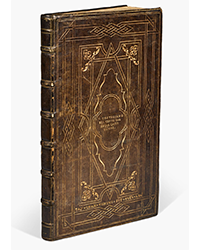
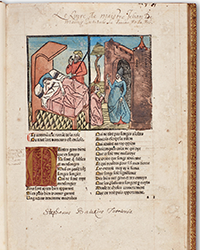
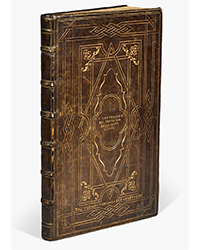
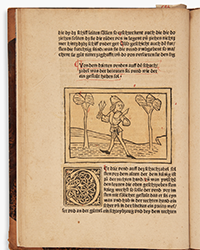
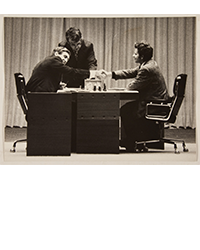
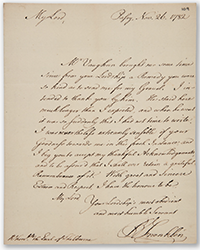
Open for Bidding 2-17 AprilSotheby’s, Apr. 2-17: [Guillaume de Lorris and Jean de Meun]. Le Roman de la Rose, [Geneva or Lyons, c.1481], first printed edition of the most important medieval French vernacular poem. £200,000 to £300,000.Sotheby’s, Apr. 2-17: Castiglione. Il libro del cortegiano. [Venice], April 1528, first edition, in a magnificent binding by Jean Picard for Jean Grolier. £100,000 to £150,000.Sotheby’s, Apr. 2-17: Jacobus de Cessolis. Schachzabelbuch, Strasbourg, 1483, von der Lasa copy. £50,000 to £70,000.Sotheby’s, Apr. 2-17: World Championship, 1972. A collection of 84 press photographs of the famed match between Spassky and Fischer. £2,000 to £3,000.Sotheby’s, Apr. 2-17: Ben Franklin. Autograph letter signed, to Lord Shelburne, British Prime Minister, during peace negotiations, November 1782. £15,000 to £20,000.