
Rare Book Monthly
Articles - August - 2009 Issue
USF: Collecting Dust

GLA: the prestigious Sir Thomas More Medal
Still, the numbers do not lie. Rare book collections are expensive to maintain, and little used. What use they do receive is rarely by the student body, which pays the bulk of university fees. With annual tuition and expenses chasing $50,000 at some private colleges, and at historic highs at state universities, there is little more blood to be drawn from this stone. Endowments have been decimated by the collapse of the stock and real estate markets. Alumni and other contributors are maxed out as a result of the recession, and in the case of state schools, taxpayers are not likely to assent to being taxed further to support facilities that see limited use. The University of San Francisco may have resolved its immediate problem with a small, one-time sale, but its library, and rare book room in particular, will remain an ongoing and growing expense, even as usage continues to drop. The heaters, air conditioners, dehumidifiers and lights will continue to draw power as energy costs rise, and competent staff, security, maintenance and insurance will not come cheaply. In time, recent upgrades will deteriorate and require renewed capital investments. USF, as a Jesuit university, may be the exception in having greater access to funding that does not come tied with strings, but other schools, facing budgetary shortfalls across the board, will be forced to justify their expenditures on a cost-benefit basis. Arguments based on noble concepts, such as preservation of history, through rarely used documents, are not likely to carry the day over immediate needs of a university, such as professors, classrooms, and laboratories. This may be shortsighted, but libraries will have to deal with the world as it is, not as it ideally should be.
One visitor a day, three a day, five a day... These are the telling numbers. When the number of people riding trains fell to small numbers, the passenger railways disappeared. When the number of visitors patronizing shops on Main Street fell to small numbers, the shops were shuttered. Each had its defenders, who believed the fall of such institutions would signal the death knell of our culture. Attempts were made to artificially salvage these institutions even as they became economically nonviable. This only served to delay the day of reckoning. Survival of the libraries and rare book rooms to see the next century will not result from even the strongest, most principled of arguments. They will only survive if these institutions continue to serve a need in a world where most of the information within their books can be accessed more easily from the screen of a computer at home. This may sound harsh or crass, and perhaps it is, but reality is often harsh and crass. It is important for libraries to reposition and repurpose themselves to fit the reality of a changing world if they are to avoid the fate of other institutions that were unable to adapt to changing times.
What changes might we see? University collections are often the casual accumulations of valuable material that would be better organized and aggregated in other institutions' collections. But such material tends to be land-locked by donation into the places that donors choose rather than left to skilled librarians and administrators to decide where and how to aggregate. Over the next 25 years, institutional collections are going to be shifted to other institutions to create greater concentrations by subject and region. Along the way, perhaps half of all special collections will atrophy from disuse, be sold or traded. Wherever these collections are, representative examples will be accessible online to the scholar and the curious. They will fulfill a greater need and achieve a greater good and in so doing hew more closely to the line of original and better intent to do the greatest good for the greatest number.
Some people will not welcome such change, or any change at all. We do not raise this point out of a desire to see the libraries become different. We raise it from the Darwinian perspective that institutions must adapt or die. We prefer the former. Technology has hit this earth like a giant meteor, and libraries can either face this changing environment as lumbering dinosaurs or become swift, compact mammals. This is neither good nor bad. As Joe Friday might say, "these are just the facts, ma'am."
Writer's Note: Based on the explanation provided, the university has, without reservation, committed itself to maintaining the Donohue Rare Book Room. Such rooms and departments elsewhere will close for all the many reasons mentioned in this article: declining interest, rising cost and better [less expensive and more useful] ways of accessing the full texts online. The Donohue will be among the survivors and may in time wish it wasn't.
For letters to the editor from Bill Reese and Wally Jansen of the Gleeson Library Associates, click here.
Rare Book Monthly
-
![<b>Forum, Mar. 25:</b> Botany.- [Robin (Jean)]. <i>Histoire des Plantes, nouv...](https://ae-files.s3.amazonaws.com/AdvertisementPhotos/9a2a2dbe-8edf-4091-9a08-800f7aba747e.jpg "<b>Forum, Mar. 25:</b> Botany.- [Robin (Jean)]. <i>Histoire des Plantes, nouvellement trouvées en l'Isle Virgine…,</i>, 1620; with Geoffrey Linocier <i>L'Histoire des plantes,</i> second edition, 1619-20. £3,000 - £4,000.")
Forum Auctions
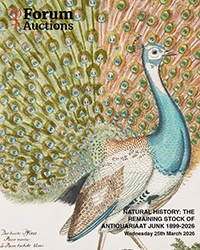
Natural History: The remaining stock of Antiquariaat Junk, 1899-2026
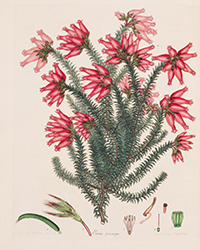
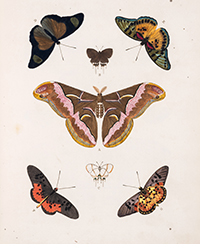
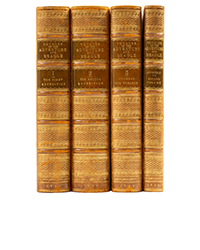
25 March 2026Forum, Mar. 25: Botany.- Andrews (H.C.) Coloured Engravings of Heaths, 4 vol. in 2, first edition, [1710,--94]-1802-1809-[1830]. £10,000 - £15,000.Forum, Mar. 25: Butterflies.- Cramer (Pierre) and Caspar Stoll. De Uitlandsche Kapellen voorkomende in de drie Waereld-Deelen…,, 5 vol., Amsterdam & Utrecht, 1779-91. £8,000 - £12,000.Forum, Mar. 25: Voyages.- Darwin (Charles) and others. Narrative of the Surveying Voyages of His Majesty's Ships Adventure and Beagle, 3 vol. in 4, including Appendix to vol.2, first edition, 1839. £8,000 - £12,000.Forum, Mar. 25: Butterflies.- de Graaf (Willem Diederik Vincent). [Inlandsche Kapellen in beeld], 170 fine original watercolours, [Enkhuizen], [1800-40]. £8,000 - £12,000.Forum Auctions
Natural History: The remaining stock of Antiquariaat Junk, 1899-2026
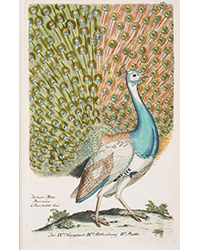
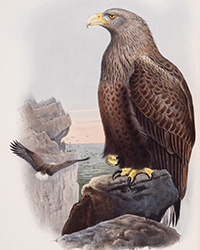
25 March 2026Forum, Mar. 25: Birds.- Dresser (Henry Eeles). A History of the Birds of Europe, 9 vol., including supplement, first edition, by the author, 1871-96. £6,000 - £8,000.Forum, Mar. 25: Zoology.- Felines.- Elliot (Daniel Giraud). A Monograph of the Felidæ or Family of the Cats, first edition, for the Subscribers, by the Author, [1878]-1883. £25,000 - £30,000.Forum, Mar. 25: Birds.- Frisch (Johann Leonard). Vorstellung der Vögel Deutschlandes, 2 vol., first edition, Berlin, Friedr. Wilhelm Birnsteil, [1736]-1763. £40,000 - £60,000.Forum, Mar. 25: Birds.- Gould (John). The Birds of Great Britain, 5 vol., first edition, by the author, 1862-1873. £30,000 - £40,000.Forum Auctions
Natural History: The remaining stock of Antiquariaat Junk, 1899-2026
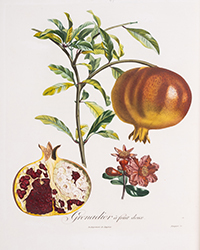
25 March 2026Forum, Mar. 25: Pomology.- France.- Poiteau (A.) Pomologie Française. Recueil des Plus Beaux Fruits cultivés en France, 4 vol., Paris, 1846. £30,000 - £40,000.Forum, Mar. 25: Botany.- [Robin (Jean)]. Histoire des Plantes, nouvellement trouvées en l'Isle Virgine…,, 1620; with Geoffrey Linocier L'Histoire des plantes, second edition, 1619-20. £3,000 - £4,000.Forum, Mar. 25: Asia.- Japan.- Siebold (P.F. von). Nippon. Archiv zur Beschreibung von Japan, 7 parts in 6 vol., first edition, Leyden, [1832]-1852. £35,000 - £45,000.Forum, Mar. 25: Asia.- Valentijn (Francois). Oud en Nieuw Oost-Indiën..., 5 vol. in 8, first edition, Dordrecht [&] Amsterdam, 1724-26. £8,000 - £12,000.Forum, Mar. 25: Botany.- Australia.- Redouté (P.J.).- Ventenat (Étienne Pierre). Jardin de la Malmaison, 2 vol.,, Paris, 1803-04[-05]. £30,000 - £40,000. -


-
Books & Autographs
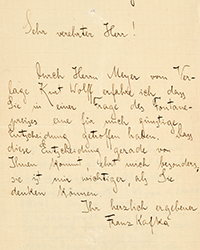
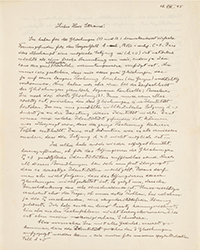
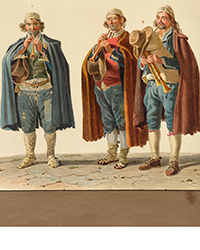
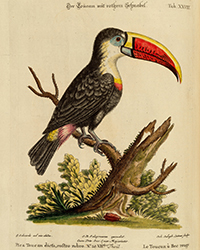
Wednesday 25 MarchKoller, Mar. 25: KAFKA, FRANZ, SCHRIFTSTELLER. Eigenh. Brief mit Unterschrift. Prag, 20. Oktober [19]15. CHF 30,000-40,000.Koller, Mar. 25: EINSTEIN, ALBERT. Zwei eigenhändige Briefe an Ernst Gabor Straus, unterschrieben "A.E" bzw. "A. Einstein". [Princeton], [19]45. und [1950]. CHF 30,000-40,000.Koller, Mar. 25: HORTENSE DE BEAUHARNAIS, MUTTER VON NAPOLEON III. Album aus ihrem Besitz mit 69 Aquarellen und Pinselzeichnungen in Sepia oder Grau… CHF 14,000-18,000.Koller, Mar. 25: ZOOLOGIE - ORNITHOLOGIE - Seligmann, Johann Michael. Verzameling van uitlandsche en zeldzaame Vogelen. Teile 1-8 (von 9) in 2 Bänden. Mit 421 prächtig altkolorierten Kupfertafeln. CHF 14,000-20,000Koller, Mar. 25: BOTANIK - Berlèse, Lorenzo und Johann Jakob Jung. Iconographie du genre camellia... 3 Bände. Mit 300 Farbstichtafeln "a la poupée.” Paris, [1839-]1841-1843. CHF 12,000-18,000.