
Rare Book Monthly
Articles - August - 2009 Issue
USF: Collecting Dust

Columbia: As busy as it gets
This explanation, if accepted, may quell the controversy swirling around USF. Perhaps a one-time sale of a few items will resolve their issues and enable the Gleeson to preserve the rest of their books for generations to come. Time will tell. However, this solution is unlikely to resolve the issues facing libraries in general, and rare book rooms in particular. San Francisco may prove to be the exception rather than the test, but the issue of the viability of the rare book library is likely to play itself out many times in the years ahead. This is a far bigger issue than what happens at the University of San Francisco, and it is an issue other libraries must be ready to handle before it is thrust upon them unprepared.
Within educational institutions today, economic reality, and the current economic downturn in particular, is focusing attention on the library because information distribution is experiencing quantum leaps in efficiency while decentralizing access and diminishing the library's place in it. Succinctly stated, information is ever more important while the library's physical role and presence in the process is declining. Libraries are being repurposed and find themselves on the fault lines of fast evolving change.
Their investments in library electronics are increasing even as their audiences' expectations are changing and many of their traditional roles and functions declining. They are connecting to the world, incorporating more databases, adding their voices to the push for more, faster and broader distributed electronic access and discovering that faster distributed services have an absolute price: reduced in person use in the library including declining interest and use of special collections. Even the college library's bread and butter - "on reserve at the library" readings - are increasingly available electronically. Taken together, these revolutionary changes, higher costs and reduced traffic are leading institutions to reevaluate the library's mission, shifting budget to technology at the expense of less-used services and sections. To all this the economic downturn adds the complex calculus of too few dollars at the very moment more is needed. It is in fact a rare and urgent moment.
To maintain their budgeting priority within the library's general allocations, rare book rooms and special collections at colleges and universities are responding, as is the case at Columbia University's Rare Book & Manuscript Library [the RBML], by working to increase traffic and involvement by integrating rare book materials into course curricula where possible. But Columbia has an extraordinary rare book library; more than 500,000 printed books and 14 miles of manuscripts, personal papers and records. Most universities have much less. The University of San Francisco has 20,000 items, 4% of Columbia's elephantine number. On a recent visit to Columbia, I was permitted to count the number of persons signing in to the rare book library's daily register. On busy summer days it reaches 18, on winter days it's closer to 8. At NYU, at the other end of Manhattan, the rare book room has 4 or 5 visitors a day year round. At USF, it is about 1 a day. Considering the cost of staff and fixed expenses it is easy to see allocated overheads per visit running from $350 per guest at Columbia to over a $1,000 at the Donohue Rare Book Room. Such services are, for some institutions, already a luxury and prospects for further declines in use and support suggest a growing imbalance between needed investment and return. This is a sorry situation but more a comment on our culture than a statement about rare books or the institutions that house them.
Rare Book Monthly
-



![<b>Forum, Mar. 25:</b> Botany.- [Robin (Jean)]. <i>Histoire des Plantes, nouv...](https://ae-files.s3.amazonaws.com/AdvertisementPhotos/9a2a2dbe-8edf-4091-9a08-800f7aba747e.jpg "<b>Forum, Mar. 25:</b> Botany.- [Robin (Jean)]. <i>Histoire des Plantes, nouvellement trouvées en l'Isle Virgine…,</i>, 1620; with Geoffrey Linocier <i>L'Histoire des plantes,</i> second edition, 1619-20. £3,000 - £4,000.")
Forum Auctions
Natural History: The remaining stock of Antiquariaat Junk, 1899-2026
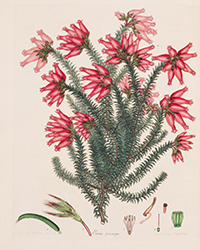
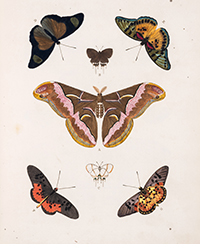
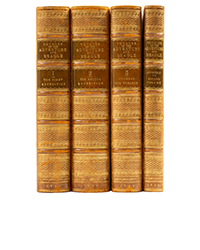
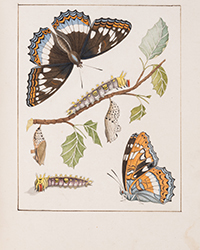
25 March 2026Forum, Mar. 25: Botany.- Andrews (H.C.) Coloured Engravings of Heaths, 4 vol. in 2, first edition, [1710,--94]-1802-1809-[1830]. £10,000 - £15,000.Forum, Mar. 25: Butterflies.- Cramer (Pierre) and Caspar Stoll. De Uitlandsche Kapellen voorkomende in de drie Waereld-Deelen…,, 5 vol., Amsterdam & Utrecht, 1779-91. £8,000 - £12,000.Forum, Mar. 25: Voyages.- Darwin (Charles) and others. Narrative of the Surveying Voyages of His Majesty's Ships Adventure and Beagle, 3 vol. in 4, including Appendix to vol.2, first edition, 1839. £8,000 - £12,000.Forum, Mar. 25: Butterflies.- de Graaf (Willem Diederik Vincent). [Inlandsche Kapellen in beeld], 170 fine original watercolours, [Enkhuizen], [1800-40]. £8,000 - £12,000.Forum Auctions
Natural History: The remaining stock of Antiquariaat Junk, 1899-2026
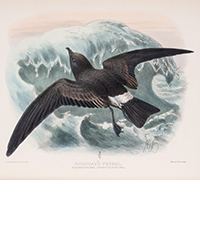
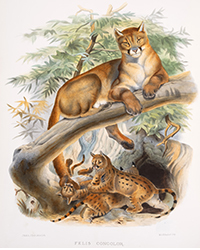
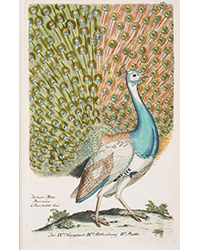
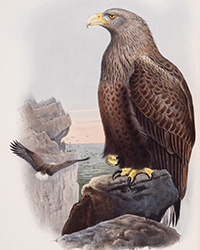
25 March 2026Forum, Mar. 25: Birds.- Dresser (Henry Eeles). A History of the Birds of Europe, 9 vol., including supplement, first edition, by the author, 1871-96. £6,000 - £8,000.Forum, Mar. 25: Zoology.- Felines.- Elliot (Daniel Giraud). A Monograph of the Felidæ or Family of the Cats, first edition, for the Subscribers, by the Author, [1878]-1883. £25,000 - £30,000.Forum, Mar. 25: Birds.- Frisch (Johann Leonard). Vorstellung der Vögel Deutschlandes, 2 vol., first edition, Berlin, Friedr. Wilhelm Birnsteil, [1736]-1763. £40,000 - £60,000.Forum, Mar. 25: Birds.- Gould (John). The Birds of Great Britain, 5 vol., first edition, by the author, 1862-1873. £30,000 - £40,000.Forum Auctions
Natural History: The remaining stock of Antiquariaat Junk, 1899-2026
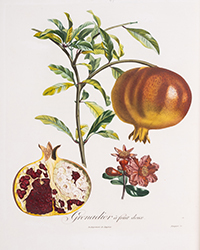
25 March 2026Forum, Mar. 25: Pomology.- France.- Poiteau (A.) Pomologie Française. Recueil des Plus Beaux Fruits cultivés en France, 4 vol., Paris, 1846. £30,000 - £40,000.Forum, Mar. 25: Botany.- [Robin (Jean)]. Histoire des Plantes, nouvellement trouvées en l'Isle Virgine…,, 1620; with Geoffrey Linocier L'Histoire des plantes, second edition, 1619-20. £3,000 - £4,000.Forum, Mar. 25: Asia.- Japan.- Siebold (P.F. von). Nippon. Archiv zur Beschreibung von Japan, 7 parts in 6 vol., first edition, Leyden, [1832]-1852. £35,000 - £45,000.Forum, Mar. 25: Asia.- Valentijn (Francois). Oud en Nieuw Oost-Indiën..., 5 vol. in 8, first edition, Dordrecht [&] Amsterdam, 1724-26. £8,000 - £12,000.Forum, Mar. 25: Botany.- Australia.- Redouté (P.J.).- Ventenat (Étienne Pierre). Jardin de la Malmaison, 2 vol.,, Paris, 1803-04[-05]. £30,000 - £40,000. -


-
Books & Autographs
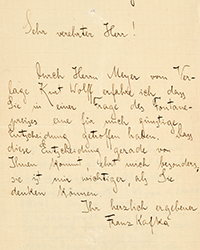
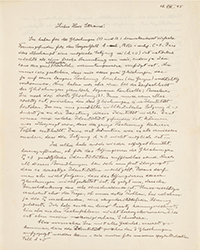
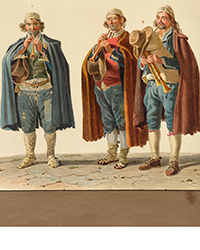
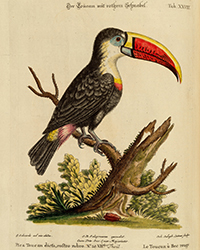
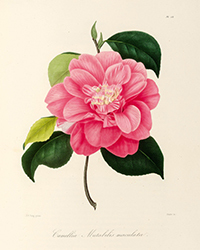
Wednesday 25 MarchKoller, Mar. 25: KAFKA, FRANZ, SCHRIFTSTELLER. Eigenh. Brief mit Unterschrift. Prag, 20. Oktober [19]15. CHF 30,000-40,000.Koller, Mar. 25: EINSTEIN, ALBERT. Zwei eigenhändige Briefe an Ernst Gabor Straus, unterschrieben "A.E" bzw. "A. Einstein". [Princeton], [19]45. und [1950]. CHF 30,000-40,000.Koller, Mar. 25: HORTENSE DE BEAUHARNAIS, MUTTER VON NAPOLEON III. Album aus ihrem Besitz mit 69 Aquarellen und Pinselzeichnungen in Sepia oder Grau… CHF 14,000-18,000.Koller, Mar. 25: ZOOLOGIE - ORNITHOLOGIE - Seligmann, Johann Michael. Verzameling van uitlandsche en zeldzaame Vogelen. Teile 1-8 (von 9) in 2 Bänden. Mit 421 prächtig altkolorierten Kupfertafeln. CHF 14,000-20,000Koller, Mar. 25: BOTANIK - Berlèse, Lorenzo und Johann Jakob Jung. Iconographie du genre camellia... 3 Bände. Mit 300 Farbstichtafeln "a la poupée.” Paris, [1839-]1841-1843. CHF 12,000-18,000.