
Rare Book Monthly
Articles - September - 2008 Issue
A Traditional Cataloguer in Search of the New Collector

A Magnus letterhead image of Albany c. 1854
At shows collectors meet dealers, gather business cards and the occasional catalogue. Having a hard copy to offer is an excellent way for dealers to introduce themselves. Most collectors instinctively understand that serious cataloguers are interesting sources for both material and knowledge. The catalogue conveys that. The same catalogue in electronic form extends the seller's ability to describe and illustrate and the online reader's capacity to delve more deeply into the material. Shows are themselves ephemeral, the internet perpetual. Shows last a day or two; the internet is searched 24.7 year-round.
In its electronic form the catalogue is a more versatile document. Printed catalogues are limited to a specified number of pages. Type size and the number of items listed can be adjusted, the length of descriptions shortened and images omitted - all to meet the constraints imposed by the printed format. Postage too is a factor so the number of pages and their weight come into play. In the electronic version these factors go out the window because the catalogue has no physical constraints. Descriptions truncated for the printed version can be elaborated online. Color images can be added and for serious sellers, footnote files attached. Links to related articles can be included. In other words, what is a straightforward traditional description in print becomes the starting point for more elaborate presentation on line. The next generation of book collectors understands this. In Tom's case this is born out in his elaborated online presentation.
It comes down to this. There are three reasons to make this effort. The first is that a dealer's expense is primarily in cost of acquisition. What the dealer then spends cataloguing is amortized over all forms of presentation and the incremental cost to create elaborate online catalogues very small, in fact deminimus. The second reason is that online presentations are easy to create - a day at most to create an online catalogue with images and footnotes. The third reason is to enhance the opportunity to connect with the new collector. If they don't fish in your pond fish in theirs.
Now let's take a look at Tom's effort. I already have and I've purchased several items.
The Rockland Bookman Catalogue No. 45.
The Magnus Images.
AE's review of his printed catalogue.
Rare Book Monthly
-
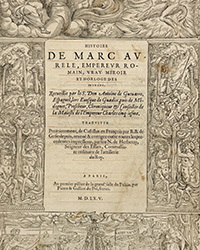
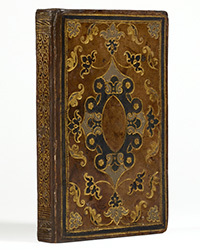
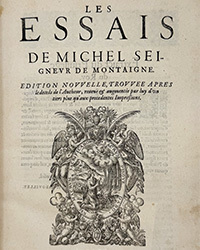
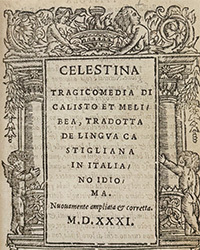
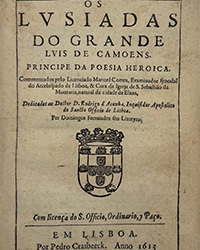
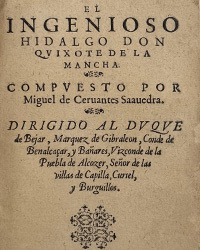
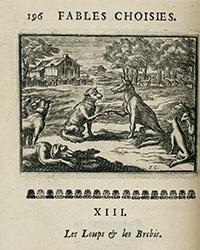
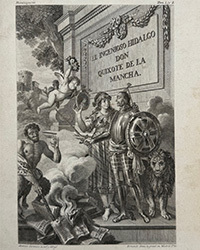
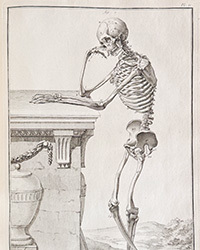
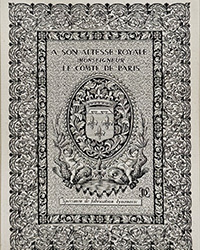
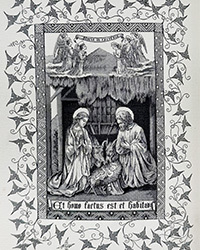 ALDE, Apr. 8: GUEVARA (ANTONIO DE). Histoire de Marc-Aurèle, Empereur Romain, vray miroir et horloge des Princes. Paris, Pierre et Galliot du Pré, frères, 1565. €3,000 to €4,000.ALDE, Apr. 8: HEURES DE LA VIERGE. Horæ in laudem beatissimæ virginis Mariæ ad usum Romanum. Paris, Charles L'Angelier, 1556. €4,000 to €5,000.ALDE, Apr. 8: MONTAIGNE (MICHEL DE). Les Essais. Édition nouvelle, trouvée après le deceds de l'autheur… Paris, Abel L'Angelier, 1595. €6,000 to €8,000.ALDE, Apr. 8: [ROJAS (FERNANDO DE)]. Celestina, tragicomedia di Calisto et Melibea, tradotta de lingua castigliana in italiano idioma… Venise, 1531. €2,000 to €3,000.ALDE, Apr. 8: CAMÕES (LUÍS DE). Os Lusiadas. Lisbonne, Pedro Crasbeeck, 1613. €2,000 to €3,000.ALDE, Apr. 8: CERVANTES (MIGUEL DE). El Ingenioso hidalgo Don Quixote de la Mancha. Bruxelles, Roger Velpius & Huberto Antonio, 1611. €6,000 to €8,000.ALDE, Apr. 8: LA FONTAINE (JEAN DE). Fables choisies, mises en vers. Paris, Denys Thierry et Claude Barbin, 1678-1694. €6,000 to €8,000.ALDE, Apr. 8: CERVANTES (MIGUEL DE). El Ingenioso hidalgo Don Quixote de la Mancha. Madrid, Joaquin Ibarra, 1780. €3,000 to €4,000.ALDE, Apr. 8: DIDEROT (DENIS) ET JEAN LE ROND D'ALEMBERT. Encyclopédie, ou dictionnaire raisonné des sciences, des arts et des métiers. Paris, 1751-1765. €15,000 to €20,000.ALDE, Apr. 8: [LIVRE TISSÉ]. LAMARTINE (Alphonse de). Les Laboureurs. Poème tiré de Jocelyn… Lyon, J. A. Henry, 1883. €8,000 to €10,000.ALDE, Apr. 8: [LIVRE TISSÉ]. Livre de prières tissé d'après les enluminures des manuscrits du XIVe au XVIe siècle. Lyon, [A. Roux], 1886. €5,000 to €6,000.
 -
Sotheby’s
Books, Manuscripts & Objects from Three Important Collections
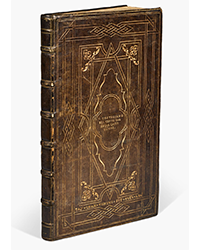
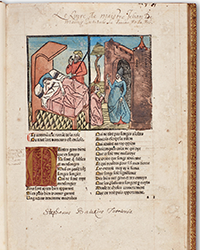
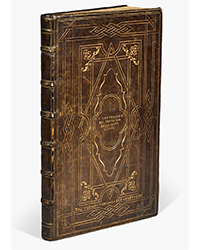
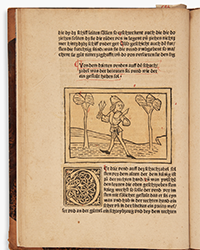
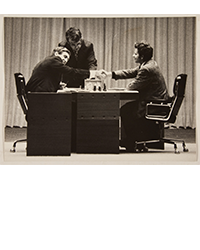
Open for Bidding 2-17 AprilSotheby’s, Apr. 2-17: [Guillaume de Lorris and Jean de Meun]. Le Roman de la Rose, [Geneva or Lyons, c.1481], first printed edition of the most important medieval French vernacular poem. £200,000 to £300,000.Sotheby’s, Apr. 2-17: Castiglione. Il libro del cortegiano. [Venice], April 1528, first edition, in a magnificent binding by Jean Picard for Jean Grolier. £100,000 to £150,000.Sotheby’s, Apr. 2-17: Jacobus de Cessolis. Schachzabelbuch, Strasbourg, 1483, von der Lasa copy. £50,000 to £70,000.Sotheby’s, Apr. 2-17: World Championship, 1972. A collection of 84 press photographs of the famed match between Spassky and Fischer. £2,000 to £3,000.Sotheby’s, Apr. 2-17: Ben Franklin. Autograph letter signed, to Lord Shelburne, British Prime Minister, during peace negotiations, November 1782. £15,000 to £20,000.