Will the Yale Library Deliberately Suffocate You if There is a Fire?
- by Michael Stillman
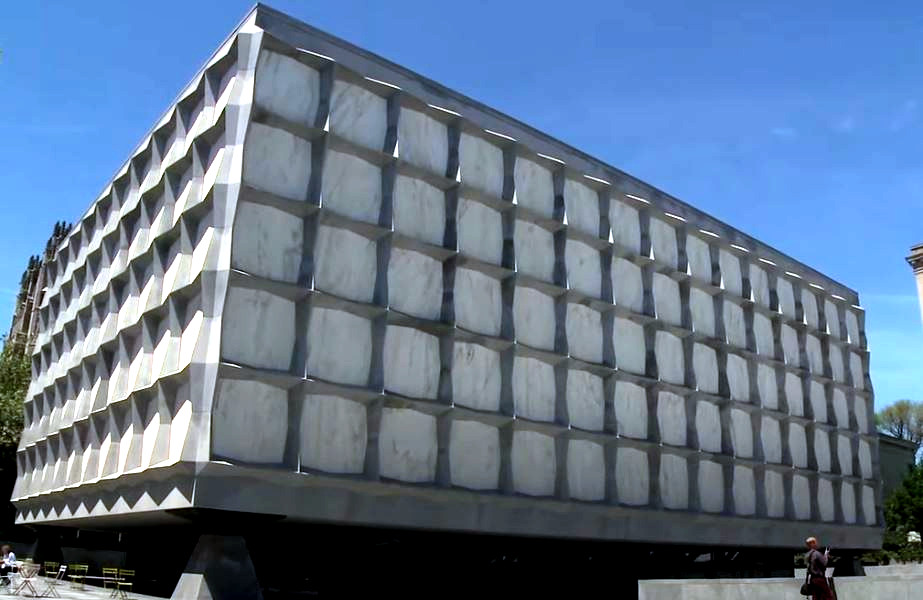
The Beinecke Library at Yale University.
Will the Yale University Library deliberately suffocate its patrons if there's a fire? Do we even need to ask this question? Yes. Many people believe it. This is an old story that recently made the viral rounds on Facebook and Twitter, with tens of thousands of people spreading the rumor anew.
It is based on a kernel of truth, but nothing like the claims that some have made. The Beinecke Library building is well-sealed to protect their books, along with their famous collection of rare manuscripts, such as the Osborn Collection of literary and historical manuscripts, commonplace books, grand tour diaries, etc.; some 20,000 individual items. It is climate-controlled, which requires it have less natural leaking of air with the outside world. Secondly, the usual way of protecting books – sprinklers – is not suitable for a place filled with old, rare and valuable books. They don't react well to water.
According to the rumor, if there is a fire, the library has a system that sucks all of the oxygen out of the air. Without oxygen, a fire cannot burn. Unfortunately, without oxygen, a library patron cannot breathe. It's a trade-off. Books are forever, but humans are not. Sounds like a fair trade, no?
Fortunately, the Yale Library is not quite so mercenary. It not only needs books to survive, it needs patrons. As a result, it has struck a balance to protect both.
In the 1980s, the library installed a system that pumps carbon dioxide into the building in case of a fire. Carbon dioxide dilutes the concentration of oxygen, making it more difficult for a fire to burn. It can also make it more difficult to breathe, but the concentration of carbon dioxide was never sufficient to suffocate you. However, too much carbon dioxide can create some health concerns so it was replaced in the late 1980s.
Since then, various inert gasses have been used instead of carbon dioxide to deplete the concentration of oxygen. Early on, halon was used, as this is not harmful to humans. Unfortunately, it is harmful to the atmosphere as it depletes the protecting ozone layer. The result is this has been replaced a few times, the current gas being used known as ECARO-25. This also depletes the concentration of oxygen, is not harmful to humans, and does not impact the ozone layer. It may require you to breathe a little more deeply in case of a fire, but there is still sufficient oxygen to easily survive as you escape. It may also protect the patrons as well as the books as fire is dangerous itself for depleting the supply of oxygen, as well as deadly for other, obvious reasons. Stopping the spread of fire protects visitors as much as books.
This isn't the only crazy rumor that has come out about the Yale Library over the years. An even better one is that the building is retractable in case of a nuclear attack. In can sink into the ground and become a fallout shelter. Those Eli's are really clever, but this one strikes me as a bit of a stretch even for them.
So, the conclusion here is it is safe to go to the Yale Library. They take extraordinary steps to prevent a fire from happening in the first place, but if it does, they won't sacrifice you for the books. They love you. They need you. They will protect you too.
Old World Auctions (Sept 16): Lot 11. Blaeu's Superb World Map on a Polar Projection (1695) Est. $5,500 - $7,000
Old World Auctions (Sept 16): Lot 702. Munster's Largest 16th Century Edition, with Over 220 Woodcut Maps (1598) Est. $18,000 - $20,000
Old World Auctions (Sept 16): Lot 101. Rare Jo Mora "Carte" Showing a NYC-to-Seattle Route through Panama Canal (1933) Est. $900 - $1,100
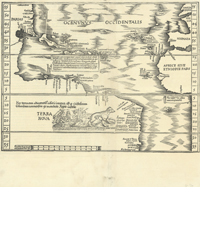
Old World Auctions (Sept 16): Lot 65. The Waldseemuller/Fries "Admiral's Map" (1541) Est. $8,000 - $9,500
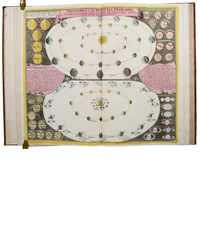
Old World Auctions (Sept 16): Lot 46. Contains all 30 Plates from Atlas Coelestis in Full Original Color (1742) Est. $16,000 - $18,000
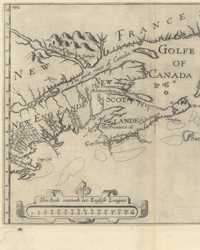
Old World Auctions (Sept 16): Lot 129. The First Map to Name New Scotland and Cape Cod (1625) Est. $8,000 - $9,500
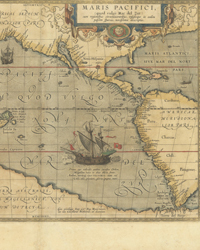
Old World Auctions (Sept 16): Lot 663. The First Printed Map Devoted to the Pacific in Full Contemporary Color (1589) Est. $7,500 - $9,000
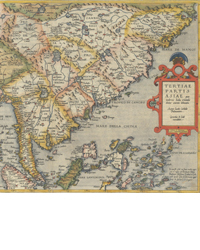
Old World Auctions (Sept 16): Lot 629. De Jode's Rare Map of Eastern Asia (1593) Est. $7,500 - $9,000
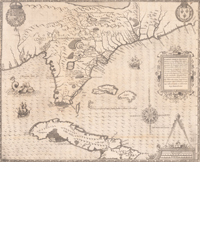
Old World Auctions (Sept 16): Lot 171. De Bry's Influential Map of Colonial North America (1591) Est. $11,000 - $13,000
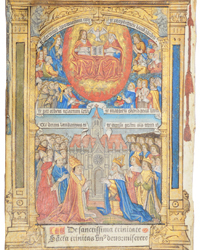
Old World Auctions (Sept 16): Lot 691. Superb Hand-Colored Image of the Holy Trinity (1502) Est. $800 - $950
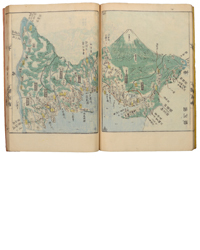
Old World Auctions (Sept 16): Lot 606. Important, Early Atlas of Japan with 75 Woodcut Maps in Printed Color (1837) Est. $2,000 - $2,300
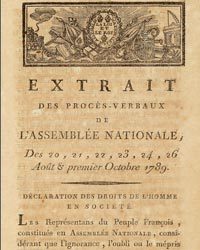
Koller, Sep. 16: FRANZÖSISCHE REVOLUTION - ASSEMBLÉE NATIONALE - Extrait des Procès-Verbaux de L'Assemblée Nationale, Des 20, 21, 22, 23, 24, 26 Août & premier Octobre 1789.
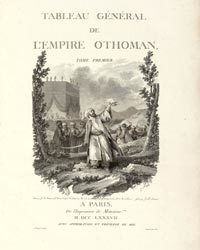
Koller, Sep. 16: MOURADJA D'OHSSON, IGNACE. Tableau général de l'Empire Othoman, divisé en deux parties dont l'une comprend la Législation Mahométane, l'autre l'histoire de l'Empire Othoman [... ]
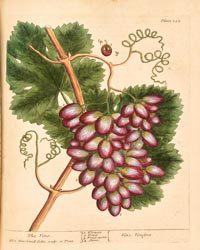
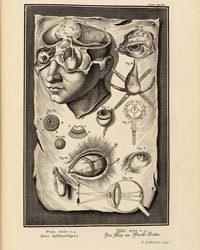
Koller, Sep. 16: BOTANIK - Blackwell, Elisabeth. A curious herbal, containig five hundred cuts, of the most useful plants, which are now used in the practice of physick.
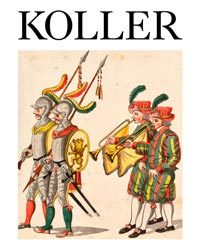
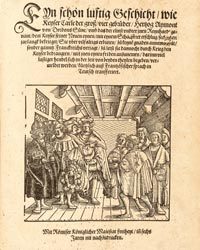
Koller, Sep. 16: HAIMONSKINDER – Eyn schön lustig Geschicht, wie Keyser Carle der groß, vier gebrüder, Hertzog Aymont von Dordons Süne [...]
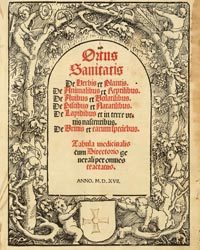
Koller, Sep. 16: KRÄUTERBÜCHER - HORTUS SANITATIS - [H]ortus Sanitatis. De herbis et plantis. De animalibus et reptilibus. De avibus et volatilibus. De piscibus et natalibus…
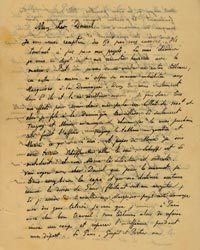
Koller, Sep. 16: GAUGUIN, PAUL, MALER (1848-1903). Eigenhändiger Brief mit Unterschrift und Couvert. An den Künstler und Freund Daniel de Monfreid in Paris.
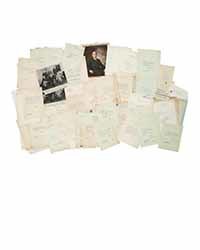
Leland Little, September 11: Kenneth Claiborne Royall (1894-1971), Large Archive with Letters from Harry S. Truman and Dwight D. Eisenhower.
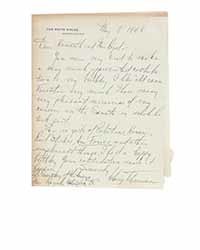
Leland Little, September 11: Harry S. Truman, Scarce Autograph Letter Signed as 33rd U.S. President.
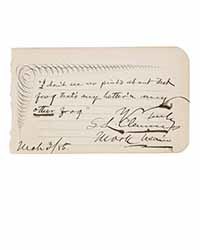
Leland Little, September 11: Mark Twain (Samuel Clemens) (1835-1910), Autograph Quotation Signed.
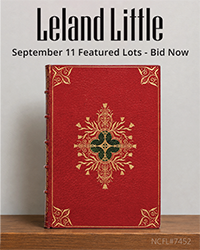
Leland Little, September 11:The History of North America, the Extremely Scarce Deluxe "Edition of the Presidents."
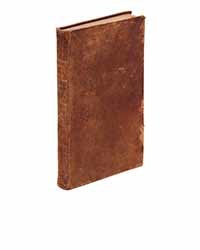
Leland Little, September 11: Scarce First Edition of Krafft's The American Distiller.
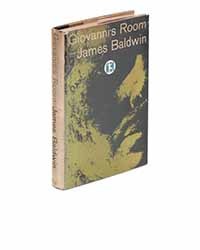
Leland Little, September 11: Inscribed First Edition of James Baldwin's Giovanni's Room.
Leland Little, September 11: A Signed Limited Edition of Love in the Time of Cholera.
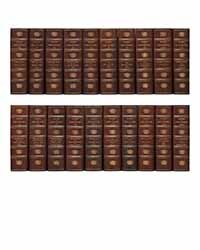
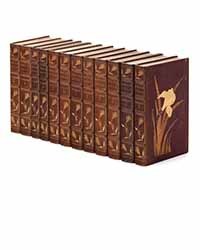
Leland Little, September 11: The Extremely Scarce Limited and Extra-Illustrated Edition of The Works of Charles Dickens.
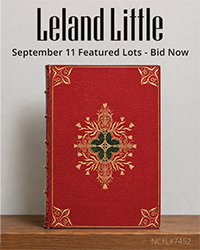
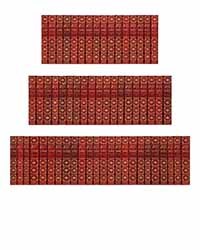
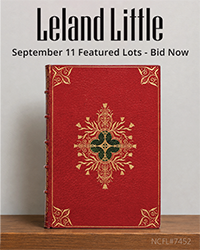
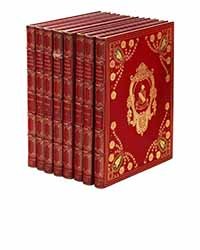
Leland Little, September 11: A Beautifully Bound Limited Edition of Émile Zola's The Rougon-Macquart.
Leland Little, September 11: The Elaborately Bound and Extremely Scarce The Shakespeare Gallery.
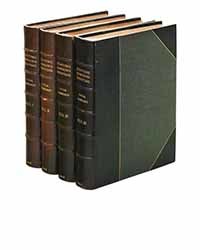
Leland Little, September 11:Hunting, Hawking, Shooting, A Signed Limited Edition Four Volume Set.
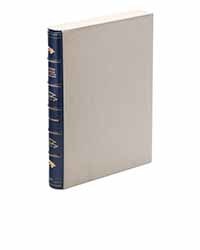
Leland Little, September 11: Signed Limited Edition of Salmon-Salmon with a Chapter on Iceland.
Sotheby’s Original Film Posters 10 September 2026
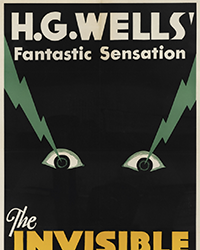
Sotheby’s, Sep. 10: The Invisible Man (1933). Extremely Rare US Leader Press One Sheet. £20,000 to £26,000.
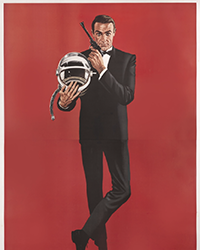
Sotheby’s, Sep. 10: You Only Live Twice (1967). Italian Advance Quattro Fogli. £10,000 to £15,000.
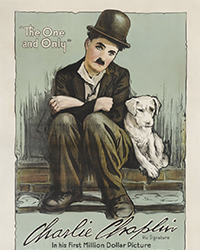
Sotheby’s, Sep. 10: A Dog's Life (1918). Extremely Rare US One Sheet. £50,000 to £70,000.
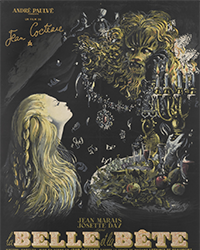
Sotheby’s, Sep. 10: La Belle et la Bête/Beauty and the Beast (1946). French Style A Grande. £12,000 to £18,000.
Sotheby’s, Sep. 10: Harry Potter and the Prisoner of Azkaban (2004). US Lenticular Prototype One Sheet. £10,000 to £15,000.
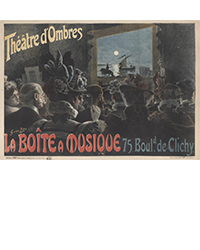
Sotheby’s, Sep. 10: Théâtre d’Ombres (1897). Exceptionally Rare French Poster. £8,000 to £12,000.