Hard to Fool the Fingers - Paper & Printing through the Ages
- by Susan Halas
Holding an 18th century sheet of rag paper up to the light a watermark and chain lines are visible.
Wood Pulp Paper
From about the 1850s to now we see mostly wood pulp based paper. It comes in many grades and finishes but as almost anyone who has picked up an older book or newspaper knows, it can be brittle. It may chip and crack easily and can also yellow and discolor. That is because wood pulp has no long strong fibers holding it together as fabric does. Thus no matter how fancy looking or thick it started out, wood pulp paper eventually becomes fragile and hard to conserve. It can also cause significant damage.
Wood pulp paper is highly acidic. That means the chemistry of the paper causes it to decay, and over time the acid in wood pulp paper can significantly damage anything else it touches.
How often have you seen mat burn when fine art work was matted and backed with cheap mat board? The acid in the mat board and backing migrates into and literally destroys the value of the artwork it was meant to enhance.
Beware!! Do not interleave your good collectibles with cheap acidic paper, it will degrade and damage your valuable items. Use only acid free rag paper for interleaving and other conservation purposes.
How Was It Printed?
Wood, Metal, Stone, Emulsion, Screen, Photomechanical, Digital
Here at AE Monthly we’re mostly interested in books and how they were printed. Just about all the printing methods ever invented were at one time used for printing books, and though many have waned or been replaced by newer methods, it helps to know what they look like and generally what their dates might be.
You need to know them all, if for no other reason than over the centuries there have been many clever and ingenious reproductions, facsimiles, and other kinds of copies that to the eye look very much like originals. It is easy to fool the eye. It’s hard to fool the fingers. Forget about fancy certificates, usually worthless anyway. The best guide to determining authenticity is not how it looks, but how it feels.
This is especially true when buying fine prints, maps or photos. You want to touch the actual piece of paper. You want to examine the surface of the front and the back under a magnifying glass to be sure that it is what it purports to be.
Be cautious about buying matted or framed works of art. It might be a great deal, but if you can not open the mat and see and touch the entire sheet, it could just as easily be a great fake. The difference is often in how it feels.
That said here’s a quick intro to printing & graphic techniques for beginners.
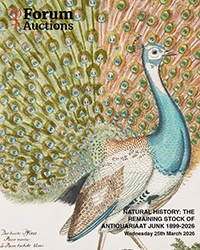
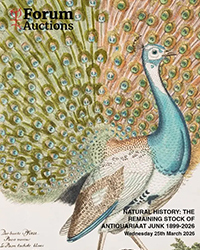
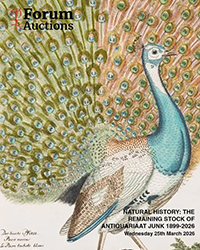
Forum Auctions Natural History: The remaining stock of Antiquariaat Junk, 1899-2026 25 March 2026
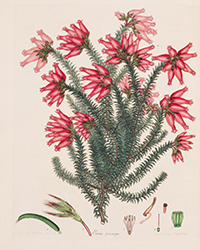
Forum, Mar. 25: Botany.- Andrews (H.C.) Coloured Engravings of Heaths, 4 vol. in 2, first edition, [1710,--94]-1802-1809-[1830]. £10,000 - £15,000.
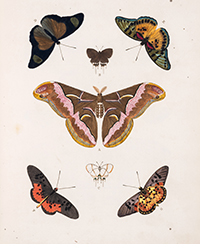
Forum, Mar. 25: Butterflies.- Cramer (Pierre) and Caspar Stoll. De Uitlandsche Kapellen voorkomende in de drie Waereld-Deelen…,, 5 vol., Amsterdam & Utrecht, 1779-91. £8,000 - £12,000.
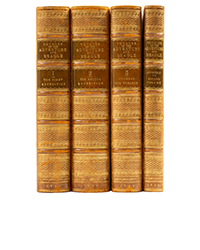
Forum, Mar. 25: Voyages.- Darwin (Charles) and others. Narrative of the Surveying Voyages of His Majesty's Ships Adventure and Beagle, 3 vol. in 4, including Appendix to vol.2, first edition, 1839. £8,000 - £12,000.
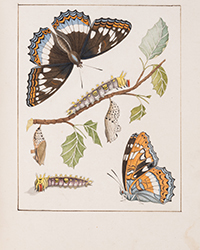
Forum, Mar. 25: Butterflies.- de Graaf (Willem Diederik Vincent). [Inlandsche Kapellen in beeld], 170 fine original watercolours, [Enkhuizen], [1800-40]. £8,000 - £12,000.
Forum Auctions Natural History: The remaining stock of Antiquariaat Junk, 1899-2026 25 March 2026
Forum, Mar. 25: Birds.- Dresser (Henry Eeles). A History of the Birds of Europe, 9 vol., including supplement, first edition, by the author, 1871-96. £6,000 - £8,000.
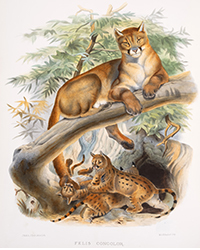
Forum, Mar. 25: Zoology.- Felines.- Elliot (Daniel Giraud). A Monograph of the Felidæ or Family of the Cats, first edition, for the Subscribers, by the Author, [1878]-1883. £25,000 - £30,000.
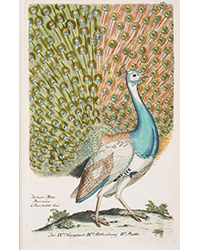
Forum, Mar. 25: Birds.- Frisch (Johann Leonard). Vorstellung der Vögel Deutschlandes, 2 vol., first edition, Berlin, Friedr. Wilhelm Birnsteil, [1736]-1763. £40,000 - £60,000.
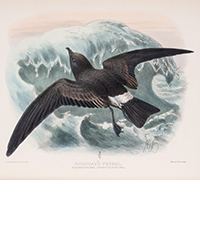
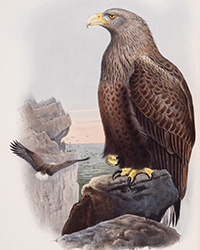
Forum, Mar. 25: Birds.- Gould (John). The Birds of Great Britain, 5 vol., first edition, by the author, 1862-1873. £30,000 - £40,000.
Forum Auctions Natural History: The remaining stock of Antiquariaat Junk, 1899-2026 25 March 2026
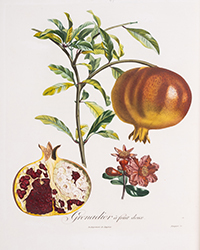
Forum, Mar. 25: Pomology.- France.- Poiteau (A.) Pomologie Française. Recueil des Plus Beaux Fruits cultivés en France, 4 vol., Paris, 1846. £30,000 - £40,000.
Forum, Mar. 25: Botany.- [Robin (Jean)]. Histoire des Plantes, nouvellement trouvées en l'Isle Virgine…,, 1620; with Geoffrey Linocier L'Histoire des plantes, second edition, 1619-20. £3,000 - £4,000.
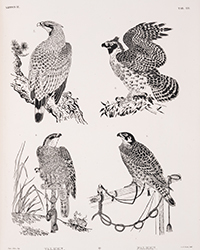
Forum, Mar. 25: Asia.- Japan.- Siebold (P.F. von). Nippon. Archiv zur Beschreibung von Japan, 7 parts in 6 vol., first edition, Leyden, [1832]-1852. £35,000 - £45,000.
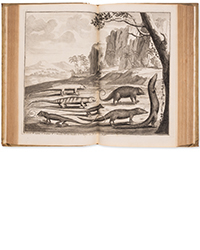
Forum, Mar. 25: Asia.- Valentijn (Francois). Oud en Nieuw Oost-Indiën..., 5 vol. in 8, first edition, Dordrecht [&] Amsterdam, 1724-26. £8,000 - £12,000.
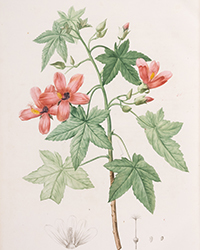
Forum, Mar. 25: Botany.- Australia.- Redouté (P.J.).- Ventenat (Étienne Pierre). Jardin de la Malmaison, 2 vol.,, Paris, 1803-04[-05]. £30,000 - £40,000.
Books & Autographs Wednesday 25 March
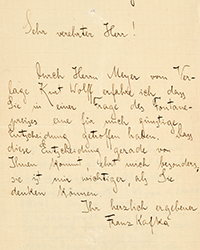
Koller, Mar. 25: KAFKA, FRANZ, SCHRIFTSTELLER. Eigenh. Brief mit Unterschrift. Prag, 20. Oktober [19]15. CHF 30,000-40,000.
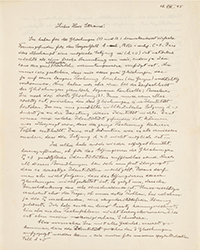
Koller, Mar. 25: EINSTEIN, ALBERT. Zwei eigenhändige Briefe an Ernst Gabor Straus, unterschrieben "A.E" bzw. "A. Einstein". [Princeton], [19]45. und [1950]. CHF 30,000-40,000.
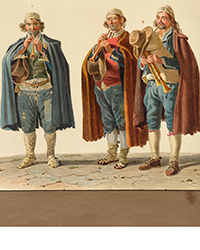
Koller, Mar. 25: HORTENSE DE BEAUHARNAIS, MUTTER VON NAPOLEON III. Album aus ihrem Besitz mit 69 Aquarellen und Pinselzeichnungen in Sepia oder Grau… CHF 14,000-18,000.
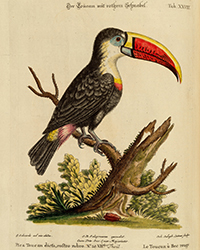
Koller, Mar. 25: ZOOLOGIE - ORNITHOLOGIE - Seligmann, Johann Michael. Verzameling van uitlandsche en zeldzaame Vogelen. Teile 1-8 (von 9) in 2 Bänden. Mit 421 prächtig altkolorierten Kupfertafeln. CHF 14,000-20,000
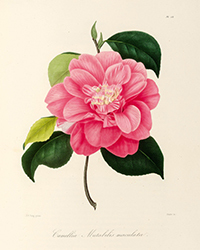
Koller, Mar. 25: BOTANIK - Berlèse, Lorenzo und Johann Jakob Jung. Iconographie du genre camellia... 3 Bände. Mit 300 Farbstichtafeln "a la poupée.” Paris, [1839-]1841-1843. CHF 12,000-18,000.


![<b>Forum, Mar. 25:</b> Botany.- [Robin (Jean)]. <i>Histoire des Plantes, nouv...](https://ae-files.s3.amazonaws.com/AdvertisementPhotos/9a2a2dbe-8edf-4091-9a08-800f7aba747e.jpg "<b>Forum, Mar. 25:</b> Botany.- [Robin (Jean)]. <i>Histoire des Plantes, nouvellement trouvées en l'Isle Virgine…,</i>, 1620; with Geoffrey Linocier <i>L'Histoire des plantes,</i> second edition, 1619-20. £3,000 - £4,000.")