1. The top end of the market is again confirmed. The best, rarest, most exceptional and beautiful material attracts bidders. Images rule. Prose, however early, important and wonderful is simply less appealing than letters from the author or their signed images. We have entered the visual and connected era and prices reflect this.
2. The threshold between desirable and common is rising and this is difficult news for the middle market. Ten years ago material that cost a thousand dollars sat upon the hinge point between highly collectible and common. Today the hinge is higher. What this means is that dealers are bidding for and acquiring ever more valuable material while stepping aside to let larger portions of the broad market fend for themselves. For collectors of mid-level rarities we now know that AED valuation estimates are accurately predicting auction outcomes and the estimates are slipping.
As to why we are experiencing a decline in previously secure mid-level material there are several explanations and factors.
A. When the market was rising between 1990 and 2006 dealers tended to move prices up across the board as important material set records. It's now plausible that higher prices for much of the mid-level material were never justified.
B. Collecting of serious material is primarily the province of the wealthy and there are, by all reports, fewer in this category. The past decade has been for many difficult financially and what was, not so long ago, an entitlement of the upper middle class, may now have become an unsupportable luxury. The evidence of strength at the top and weakness in the middle is consistent with this thinking. The result is declining interest, and declining prices in the vulnerable middle market, particularly in the highly collectible but relatively common important books that commanded $5,000 or so not so long ago but which struggle in the auction rooms today. This suggests an imbalance between copies available and interested buyers at the epicenter of where most valuable books are found: common rarities.
C. There are more options and competition and the economy is difficult. The market is flooded with interesting possibilities. Listing sites today display millions of collectible books. They don't sell fast but leave the misimpression that many collectible books are common. The more correct impression is that they have been listed for years and accumulated because buyers are rarer than the books. For the collector the question should perhaps always be "why should I buy this?" because selling may not be easy.
My sense is that all these factors are involved. Prices for many items went too high and now return to earth. For baby boomers in particular the collecting moment passes. An increasingly adversarial tax code and increasing longevity may also lead to sales of collections and liquidations of inventories. As well, any continuing pronounced down trend in prices may induce further sales. An orderly decline is logical while the market re-prices but the bias may be to the downside.
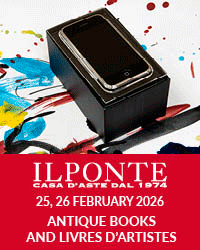
Il Ponte, Feb. 25-26: HAMILTON, Sir William (1730-1803) - Campi Phlegraei. Napoli: [Pietro Fabris], 1776, 1779. € 30.000 - 50.000
Il Ponte, Feb. 25-26: [MORTIER] - BLAEU, Joannes (1596-1673) - Het Nieuw Stede Boek van Italie. Amsterdam: Pieter Mortier, 1704-1705. € 15.000 - 25.000
Il Ponte, Feb. 25-26: TULLIO D'ALBISOLA (1899-1971) - Bruno MUNARI (1907-1998) - L'Anguria lirica (lungo poema passionale). Roma e Savona: Edizioni Futuriste di Poesia, senza data [ma 1933?]. € 20.000 - 30.000
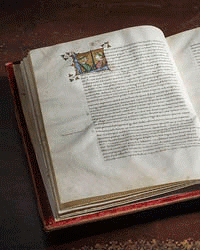
Il Ponte, Feb. 25-26: IL MANOSCRITTO RITROVATO DI IPPOLITA MARIA SFORZA. TITO LIVIO - Ab Urbe Condita. Prima Decade. Manoscritto miniato su pergamena, metà XV secolo. € 280.000 - 350.000
Sotheby's Fine Books & Manuscripts Available for Immediate Purchase
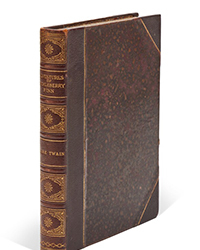
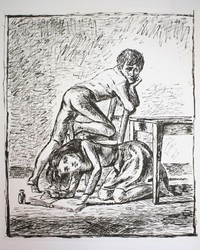
Sotheby’s: Balthus, Emily Brontë. Wuthering Heights, New York: The Limited Editions Club, 1993. 6,600 USD.
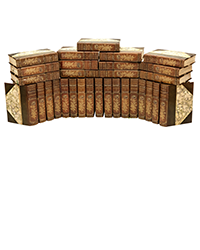
Sotheby’s: Charles Dickens. Complete Works, Philadelphia & London: J.B. Lippincott Company & Chapman & Hall, LD, 1850. Limited Edition set of 30 volumes. 7,500 USD.
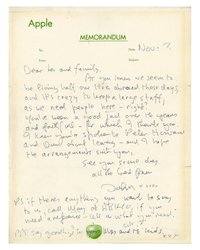
Sotheby’s: John Lennon, Yoko Ono. Handwritten Letter from John Lennon and Yoko Ono to their Chauffer. 1971. 32,500 USD.
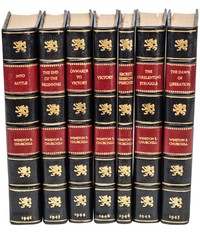
Sotheby’s: Winston Churchill. First edition of War Speeches, Cassell and Company, Ltd., 1941. Set of 7 volumes. 5,500 USD.
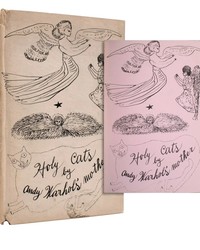
Sotheby’s: Andy Warhol, Julia Warhola. Holy Cats First Edition, Signed by Andy Warhol. 1954. 30,000 USD.
Forum Auctions Online: India Ends 19th February 2026
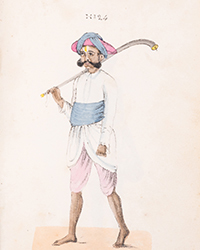
Forum, Feb. 19: Lot 40 Ramasvami (Kavali Venkata). A Digest of the Different Castes of India, 83 charming hand-coloured lithographed plates, Madras, 1837. £5,000-7,000
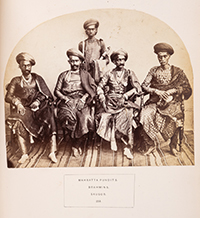
Forum, Feb. 19: Lot 50 Watson (John Forbes) & John William Kaye. The People of India: A Series of Photographic Illustrations...of the Races and Tribes of Hindustan, 8 vol., 480 mounted albumen prints, 1868-75. £4,000-6,000
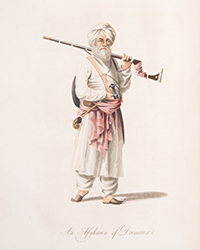
Forum, Feb. 19: Lot 53 Afghanistan.- Elphinstone (Hon. Mountstuart). An Account of the Kingdom of Caubul, first edition, hand-coloured aquatint plates, a fine copy, 1815. £2,000-3,000
Forum, Feb. 19: Lot 57 [Album and Treatise on Hinduism], manuscript treatise on Hinduism in French, 31 watercolours of Hindu deities, Pondicherry, 1865. £3,000-4,000
Forum, Feb. 19: Lot 62 Allan (Capt. Alexander). Views in the Mysore Country,
[1794]. £2,000-3,000
Forum Auctions Online: India Ends 19th February 2026
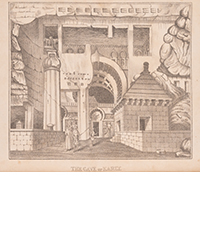
Forum, Feb. 19: Lot 76 Bird (James). Historical Researches on the Origin and Principles of the Bauddha and Jaina Religions..., first edition, lithographed plates, Bombay, American Mission Press, 1847. £3,000-4,000
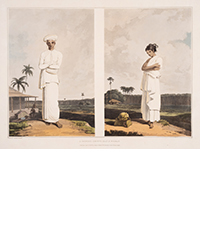
Forum, Feb. 19: Lot 100 Ceylon.- Daniell (Samuel). A Picturesque Illustration of the scenery, animals, and native inhabitants, of the Island of Ceylon: in twelve plates, 1808. £5,000-7,000
Forum, Feb. 19: Lot 123 D'Oyly (Charles). Behar Amateur Lithographic Scrap Book, lithographed throughout with title and 55 plates mounted on 43 paper leaves, [Patna], [1828]. £3,000-5,000
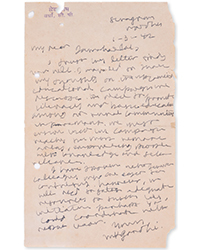
Forum, Feb. 19: Lot 139 Gandhi (known as Mahatma Gandhi,) Fine Autograph Letter signed to Jawaharlal Nehru, Sevagram, Wardha, 1942, emphasising the importance of education in rural communities. £10,000-15,000
Forum Auctions Online: India Ends 19th February 2026
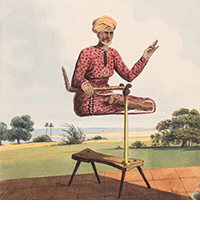
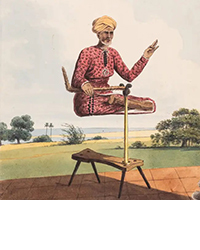
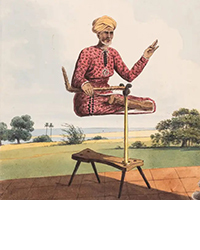
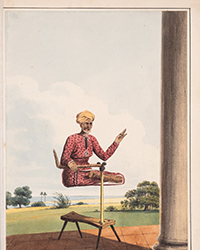
Forum, Feb. 19: Lot 140 Gantz (John). Indian Microcosm, first edition, Madras, John Gantz & Son, 1827. £10,000-15,000
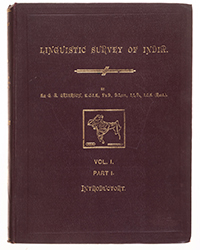
Forum, Feb. 19: Lot 146 Grierson (Sir George Abraham). Linguistic Survey of India, 11 vol. in 20, folding maps, original cloth, Calcutta, Superintendent Government Printing, 1903-28. £2,000-3,000
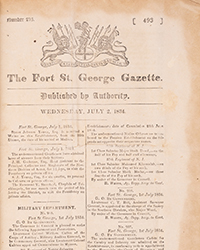
Forum, Feb. 19: Lot 195 Madras.- Fort St. George Gazette (The), No.276-331, pp.493-936 and Index to all of 1834 at end, modern half calf, Madras, 2nd July - 31st December 1834. £2,000-3,000
Forum, Feb. 19: Lot 205 Marshall (Sir John) and Alfred Foucher. The Monuments of Sanchi, 3 vol., first edition, 141 plates, most photogravure, [Calcutta], [1940]. £3,000-4,000


![<b>Il Ponte, Feb. 25-26:</b> HAMILTON, Sir William (1730-1803) - Campi Phlegraei. Napoli: [Pietro Fabris], 1776, 1779. € 30.000 - 50.000](https://ae-files.s3.amazonaws.com/AdvertisementPhotos/0372eeb9-97e1-47b2-baca-b3287d4704ee.jpg "<b>Il Ponte, Feb. 25-26:</b> HAMILTON, Sir William (1730-1803) - Campi Phlegraei. Napoli: [Pietro Fabris], 1776, 1779. € 30.000 - 50.000")
![<b>Il Ponte, Feb. 25-26:</b> [MORTIER] - BLAEU, Joannes (1596-1673) - Het Nieuw Stede Boek van Italie. Amsterdam: Pieter Mortier, 1704-1705. € 15.000 - 25.000](https://ae-files.s3.amazonaws.com/AdvertisementPhotos/8f9ce440-b420-4407-8293-eb8e1b38ca19.jpg "<b>Il Ponte, Feb. 25-26:</b> [MORTIER] - BLAEU, Joannes (1596-1673) - Het Nieuw Stede Boek van Italie. Amsterdam: Pieter Mortier, 1704-1705. € 15.000 - 25.000")
![<b>Il Ponte, Feb. 25-26:</b> TULLIO D'ALBISOLA (1899-1971) - Bruno MUNARI (1907-1998) - L'Anguria lirica (lungo poema passionale). Roma e Savona: Edizioni Futuriste di Poesia, senza data [ma 1933?]. € 20.000 - 30.000](https://ae-files.s3.amazonaws.com/AdvertisementPhotos/71bb9667-5d66-4aa8-96a2-9880c74a7a26.jpg "<b>Il Ponte, Feb. 25-26:</b> TULLIO D'ALBISOLA (1899-1971) - Bruno MUNARI (1907-1998) - L'Anguria lirica (lungo poema passionale). Roma e Savona: Edizioni Futuriste di Poesia, senza data [ma 1933?]. € 20.000 - 30.000")
![<b>Forum, Feb. 19:</b> Lot 57<br>[Album and Treatise on Hinduism], manuscript treatise on Hinduism in French, 31 watercolours of Hindu deities, Pondicherry, 1865. £3,000-4,000](https://ae-files.s3.amazonaws.com/AdvertisementPhotos/f70b3790-9b4a-4990-b402-f0322021c0de.jpg "<b>Forum, Feb. 19:</b> Lot 57<br>[Album and Treatise on Hinduism], manuscript treatise on Hinduism in French, 31 watercolours of Hindu deities, Pondicherry, 1865. £3,000-4,000")
![<b>Forum, Feb. 19:</b> Lot 62 Allan (Capt. Alexander). <i>Views in the Mysore Country,</i>
[1794]. £2,000-3,000](https://ae-files.s3.amazonaws.com/AdvertisementPhotos/ad2cf7b4-4d93-4231-a956-b440583b39b3.jpg "<b>Forum, Feb. 19:</b> Lot 62 Allan (Capt. Alexander). <i>Views in the Mysore Country,</i>
[1794]. £2,000-3,000")
![<b>Forum, Feb. 19:</b> Lot 123<br>D'Oyly (Charles). <i>Behar Amateur Lithographic Scrap Book,</i> lithographed throughout with title and 55 plates mounted on 43 paper leaves, [Patna], [1828]. £3,000-5,000](https://ae-files.s3.amazonaws.com/AdvertisementPhotos/5651043b-3c0d-4e2c-931f-72133bda9b36.jpg "<b>Forum, Feb. 19:</b> Lot 123<br>D'Oyly (Charles). <i>Behar Amateur Lithographic Scrap Book,</i> lithographed throughout with title and 55 plates mounted on 43 paper leaves, [Patna], [1828]. £3,000-5,000")
![<b>Forum, Feb. 19:</b> Lot 205<br>Marshall (Sir John) and Alfred Foucher. <i>The Monuments of Sanchi,</i> 3 vol., first edition, 141 plates, most photogravure, [Calcutta], [1940]. £3,000-4,000](https://ae-files.s3.amazonaws.com/AdvertisementPhotos/8c8244b7-4573-44d3-9c70-e0d3a3ed3cc4.jpg "<b>Forum, Feb. 19:</b> Lot 205<br>Marshall (Sir John) and Alfred Foucher. <i>The Monuments of Sanchi,</i> 3 vol., first edition, 141 plates, most photogravure, [Calcutta], [1940]. £3,000-4,000")