
Rare Book Monthly
Articles - December - 2010 Issue
Follow-up to Better World Books Article

Better World has both supporters and detractors.
By Susan Halas
November's lead story on Better World Books of Mishawaka, Indiana, not only attracted a greater than usual number of readers, but also evoked quite a bit of response both directly to AE and in the form of long running threads on various dealer and collector lists. We are following up with two unedited responses that we hope will help clarify the practices of the firm and the concerns of traditional book dealers.
We thank Better World Books for being kind enough to host our visit and also thank the many dealers, collectors and library patrons who wrote to express their opinion.
Susan Halas
AE Monthly Writer
Reach Susan at halas@hawaii.rr.com
Response to Article from Better World Books
By Tara Gilchrist
Head Antiquarian, Rare and Collectible Department
It was with pleasure that we welcomed Susan and AE readers to our warehouse, and we were happy to show her around and answer her questions. She was able to speak to executives and employees, to dig in our boxes and poke through our shelves.
Her viewpoint is that of a "bookseller", a traditional bookseller from the "old school". We understand and respect that tradition of knowledge and the craft of bookselling, and seek to keep the best of those traditions while using the book to make a powerful social impact. While Susan's article was fairly thorough, we appreciate the opportunity to clarify three points in particular.
It's not clear in the article that the tipper is only used for thrift books - not the books the libraries send us, or from campus book drives. It's used for the books that we purchase outright from the thrift stores, which arrive in big, unwieldy Gaylords. No client is losing any value with the tipper, as we outright own those books. The tipper makes it easier to sort the shoes, belts, and headless Barbie dolls from the actual books. No mention was made in the article of our improving that process, which has been underway for several months.
It was curious to read Susan's comment about the lack of intellectuals in our crowd; if it meant grumpy, tweed-jacketed, pipe-smoking, bushy-browed types, then that would be accurate. We apply our considerable intellect to designing the best programs for libraries, our customers, and those supported by our literacy partners.
As for the sensationalized headline of "Cultural Strip Mining": we are saving many books, every day, which may have otherwise been lost: from the $10 German-language 1940 agriculture report to Peter Force's Declaration of Independence to signed Picasso lithographs, we sell books to the curious, collectors, academics, libraries, and booksellers, at a fair price.
Calling out libraries for "letting these books go" without understanding where they are going is uninformed at best. The needs of academic and public libraries are constantly changing. Their primary directive is to provide relevant books and materials to their constituents, and they excel at this. They operate with a different definition of "value" than booksellers: libraries, without a doubt, value their culture and communities, and they are called to respond to those fluctuating needs in a timely manner. Booksellers value money. Librarians have a different skill set, and a different bottom line, than those of booksellers: they work hard to balance traditional needs with modern demands to best serve their public. Booksellers, on the other hand, work hard to generate the best profit: Susan has been selling books for over 60 years, and she's still learning new things, keeping up with changing markets and sales venues... every good bookseller is always doing these things, and cataloging books, and talking with customers... Librarians are dedicated to keeping up with the needs and values of an entire community; booksellers have other bottom-line priorities.
I believe we need to give the libraries a big round of applause. They are constantly seeking means to support their communities by providing them with a specific kind of immediate, cultural value, and finding homes for the books which no longer suit those needs. They do this under enormous pressure from their directors, under tight budget constraints, and with insufficient time to do the task. I suggest that Susan attend the summer ALA conference; I believe that Susan would do both librarians and booksellers a great service by writing a story about the choices and challenges of today's librarians, both academic and public; perhaps she will not be as critical after listening to librarians from all walks.
Rare Book Monthly
-

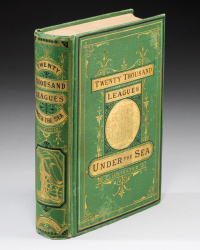 Heritage, May 13: Isaac Asimov. I, Robot. The dedication copy, inscribed to John W. Campbell, Jr.Heritage, May 13: Aldous Huxley. Brave New World. A fine copy, in a brilliant dust jacket.Heritage, May 13: Ray Bradbury. Fahrenheit 451. Presentation copy, inscribed by the author.Heritage, May 13: Robert A. Heinlein. Stranger in a Strange Land. A fine copy, signed by the author.Heritage, May 13: Jules Verne. Twenty Thousand Leagues Under the Seas. Exceedingly rare true first American edition, first issue.
 -
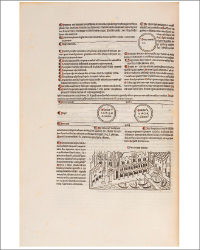
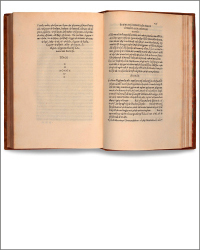
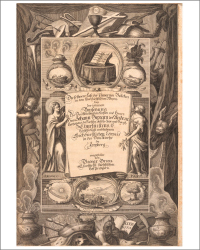 Bonhams, May 5 and Apr. 27 – May 6: 1481 ❧ THE FIRST VIEW OF VENICE. ROLEWINCK, WERNER. 1425-1502. $8,000 - $12,000.Bonhams, May 5 and Apr. 27 – May 6: 1496 ❧ GREEK INCUNABLE. MANUTIUS, ALDUS. 1449-1515. $15,000 - $25,000Bonhams, May 5 and Apr. 27 – May 6: 1544 ❧ THE SQUARING OF THE CIRCLE. FINÉ, ORONCE. 1494-1555. $4,000 - $6,000Bonhams, May 5 and Apr. 27 – May 6: 1544 ❧ ONE OF THE MOST BEAUTIFUL SCIENTIFIC BOOKS OF THE RENAISSANCE. $12,000 - $18,000Bonhams, May 5 and Apr. 27 – May 6: 1544 ❧ RENAISSANCE CYPHERS AND REBUSES. PALATINO, GIOVANNI BATTISTA. 1515-1575. $3,000 - $5,000Bonhams, May 5 and Apr. 27 – May 6: 1588 ❧ "ONE OF THE MOST ELEGANTLY PRODUCED OF ALL TECHNOLOGICAL TREATISES." $15,000 - $25,000Bonhams, May 5 and Apr. 27 – May 6: 1618 ❧ THREE DUTCH EMBLEM BOOKS BY DANIEL HEINSIUS BOUND IN ONE. $5,000 - $8,000Bonhams, May 5 and Apr. 27 – May 6: 1710 ❧ A BEAUTIFULLY COLORED "PRINT BIBLE". BASNAGE, JAKOB. 1653-1723. $12,000 - $18,000Bonhams, May 5 and Apr. 27 – May 6: 1818 ❧ EARLY COLOR LITHOGRAPHY. BARTH, JOHANN AUGUST. 1765-1818. $8,000 - $12,000Bonhams, May 5 and Apr. 27 – May 6: 1896 ❧ KELMSCOTT CHAUCER: THE FINEST BOOK SINCE THE GUTENBERG BIBLE. $60,000 - $90,000Bonhams, May 5 and Apr. 27 – May 6: 1903 ❧ DOVES PRESS MAGNUM OPUS: THE DOVES BIBLE. $10,000 - $15,000Bonhams, May 5 and Apr. 27 – May 6: 1680 ❧ FREIBERG FÊTE BOOKS FROM THE GOURARY COLLECTION. $1,000 - $1,500
 -

One of a Kind Auctions
Tesla, Einstein & The American Presidency: Rare Historical Documents
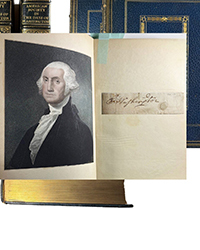
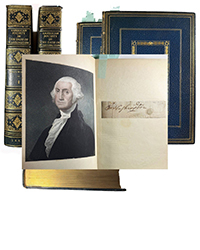
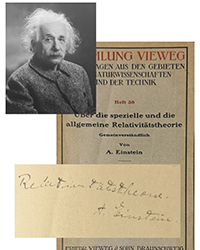
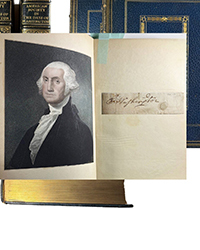
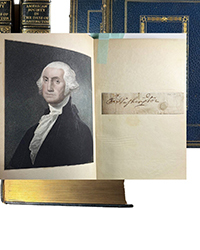
Ending April 30, 2026One of a Kind Auctions, Apr. 30: The Republican Court; Autographs of George Washington, (Signers) Thomas Jefferson, Benjamin Harrison, John Dickinson, Charles Carroll of Carrollton and More!One of a Kind Auctions, Apr. 30: Nikola Tesla Signed Holograph Manuscript Page from "Tidal Wave to Make War Impossible," Describing the World's First Conceived Remotely Operated Weapon of Mass Naval Destruction.One of a Kind Auctions, Apr. 30: Albert Einstein — Incredible possibly Unique Signed & Inscribed Einsteins hand “Relativitätstheorie / A. Einstein” Booklet: Relativitätstheorie, 10th Ed., 1920, Original Wrappers.One of a Kind Auctions
Tesla, Einstein & The American Presidency: Rare Historical Documents
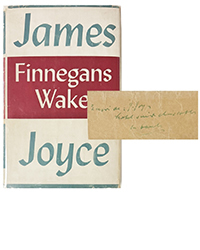
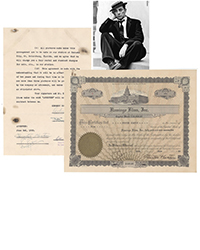
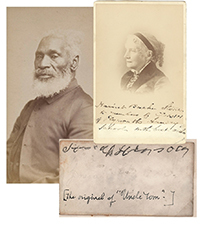
Ending April 30, 2026One of a Kind Auctions, Apr. 30: James Joyce Personal Copy of Finnegan's Wake (With Signature).One of a Kind Auctions, Apr. 30: Buster Keaton Flamingo Films / Kennedy Productions Archive Group, 1933–1937.One of a Kind Auctions, Apr. 30: Extremely rare Josiah Henson (Uncle Tom) Signature & Harriet Beecher Stowe Cabinet Card.One of a Kind Auctions
Tesla, Einstein & The American Presidency: Rare Historical Documents
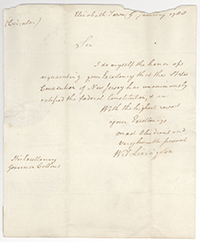
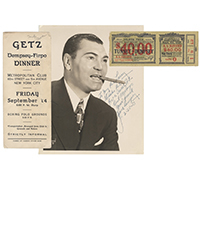
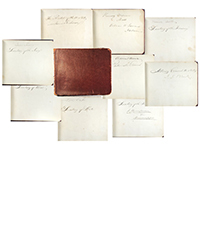
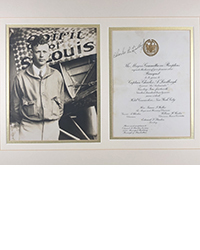
Ending April 30, 2026One of a Kind Auctions, Apr. 30: William Livingston (Signer of DOI), the New Jersey State Convention had unanimously ratified the Federal Constitution.One of a Kind Auctions, Apr. 30: Complete 1927 Tunney-Dempsey "Long Count" Fight Ticket Signed by George Getz, with 1923 Dempsey-Firpo Dinner Card and Jack Dempsey Signed Photograph.One of a Kind Auctions, Apr. 30: James Buchanan Cabinet Signed Autograph albumOne of a Kind Auctions, Apr. 30: CHARLES LINDBERGH SIGNS HIS NEW YORK CITY MAYORAL BANQUET INVITATION, JUNE 14, 1927 — THREE WEEKS AFTER THE TRANSATLANTIC FLIGHT -

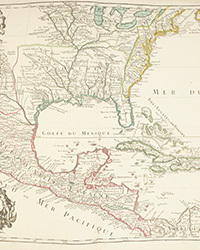
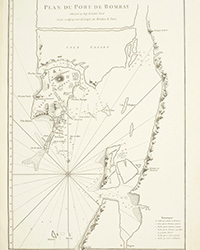
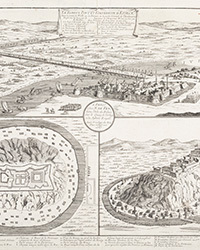

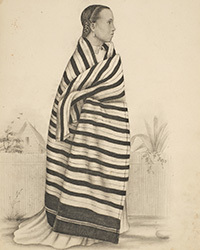
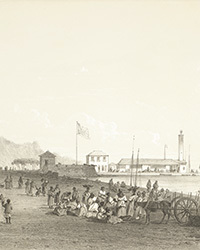 Gros & Delettrez, May 5: APRÈS de MANNEVILLETTE, Jean-Baptiste d’- Le Neptune Oriental.Gros & Delettrez, May 5: DELISLE, Guillaume – Atlas françois,1725.Gros & Delettrez, May 5: HONTER. SOPHOCLE - Recueil composite réunissant deux ouvrages.Gros & Delettrez, May 5: PHÉROTÉE DE LA CROIX, A. - Algemeene weereld-beschryving.Gros & Delettrez, May 5: LA PÉROUSE, Jean-François de Galaup de - Voyage autour du monde.Gros & Delettrez, May 5: BLAEU, Guillaume & Jean -Septième volume de la Géographie Blaviane.Gros & Delettrez, May 5: TATIKIAN, Boğos - Figures et costumes du Levant.Gros & Delettrez, May 5: GIRAULT DE PRANGEY, Joseph-Philibert -Monument arabes et moresques de Cordoue, Séville et Grenade.Gros & Delettrez, May 5: CHAMPOLLION le jeune. Monuments de l’Egypte et de la Nubie.Gros & Delettrez, May 5: CASSAS, Louis-François. - Voyage pittoresque de la Syrie, de la Phénicie, de la Palestine et de la Basse Egypte.Gros & Delettrez, May 5: SONNERAT, Pierre. Voyage aux Indes orientales et à la Chine.Gros & Delettrez, May 5: GARNIER, Francis. Voyage d'exploration en Indo-Chine.Gros & Delettrez, May 5: SUBERBIE, Alix (E. SMITH). Dessins et aquarelles de Madagascar.Gros & Delettrez, May 5: BYRON -Viage del comandante Byron.
 -
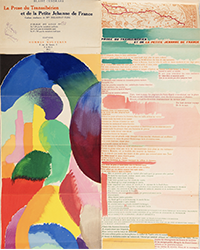

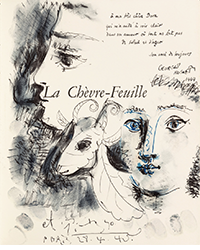

Sotheby’s
Précieuses reliures d’une bibliophile
Collection Georgette J. Salles
Open for bidding 8-29 AprilApr. 8-29: Delaunay, Sonia — Blaise Cendrars. La Prose du Transsibérien. 1913. €120,000 to €180,000.Apr. 8-29: Picasso, Pablo — Georges Hugnet. La Chèvre-feuille. 1943. €80,000 to €120,000.Apr. 8-29: Schmied, François-Louis ─ Joseph-Charles Mardrus. Cantique des cantiques. 1925. €30,000 to €50,000.Apr. 8-29: Bonnard, Pierre — Paul Verlaine. Parallèlement. 1900. €30,000 to €50,000.Apr. 8-29: Derain, André — Guillaume Apollinaire. L’Enchanteur pourrissant. 1909. €20,000 to €30,000.