
Rare Book Monthly
Articles - December - 2010 Issue
Follow-up to Better World Books Article

-"Also very few more traditional booksellers are as young, smart, hip, quick, hard working, coordinated and pleasant to deal with as this fast paced crew." Good point, but I don't know about the "hard working" part, as many of us work hard too in shifts longer than eight hours a day, though in a hand crafted rather than a brute force way; and many pickers are "pleasant" but they are ripping you off at the same time. And that raises another question I always have, about some of these books going home in knapsacks to be sold on the side. This must be an issue for outfits like BWB.
-"In all the years I've been buying and selling antiquarian books, and all the years my parents did it before me, I have never once heard the words "business plan" mentioned..." They should be compared to companies like AbeBooks, Alibris, and especially Amazon - all of which have business plans - rather than to traditional booksellers.
-Are the "funds raised for global literacy" totaling close to $9 million so far in cash, or does the value of donated books count toward that? I am not sure I get the "literacy" part either. Presumably most of these books are in English, going to classes that already speak English, as in the video they provide in which young folks say they want to become doctors, etc. It seems like "education" would be a better word, though it isn't quite as appealing to those who would give to charity.
-"I hope that the decisions to dump thousands of volumes from academic libraries has a rationale behind it that is more substantial than the limited revenue stream these books may eventually generate and the space their absence will make for newer and more recent acquisitions."
Your insightful comments under "Cultural Strip Mining" are the best thing I have read yet about why research and academic libraries in particular should be very hesitant to work with companies like BWB. My biggest surprise as a librarian was the realization that a significant number in the profession (often tending toward administration) are actually not very fond of older books and journals. Budget cuts, digitization, and renting subscription databases have provided cover for not buying new books and weeding out old ones, and now BWB comes along to cart the bodies off. The book is not dead with the advent of these new technologies, of course, but research libraries should hold on to their older materials in original artifact form, as they will be of even greater use and interest in the decades to come as their comrades perish or fall into private hands. Microformat and digital counterparts and subscription databases are rife with problems, including missing and unreadable pages and degraded images and homogenization. Libraries need to start thinking of these items as museums think of their own collections. Libraries will be able to leverage these original materials in the decades to come in ways that can barely be imagined now if they can only hold on through this current onslaught against the printed word.
The other huge issue with BWB is that they seem like charlatans to many of us. The founders say up front that they are for profit, right there in the small print, but they also take great pains to make the whole thing seem like a green charity, and library boards and administrators more interested in expediency than mission or legacy buy right into that. I would feel better about BWB if they could make a living from thrift store rejects and on-campus donation boxes rather than from community donation boxes and the deforestation of tax-supported libraries. It would be interesting to see the salary structures within this corporation too.
BWB has gotten tons of good press because it sounds like (and in many ways is) such a feel-good story, but some day an investigative reporter will get the inside scoop or gain access to the financial records, and we will see that you can't always judge a book by its cover. I agree that we should ignore BWB at our peril--especially at the cultural peril of research library collections--but they thrive under cover of charity and I don't think that is the wave of the future.
Shawn Purcell
Reach Shawn Purcell at mail@balopticon.com
Rare Book Monthly
-

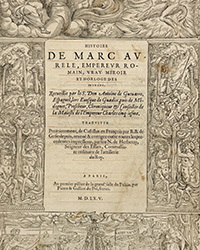
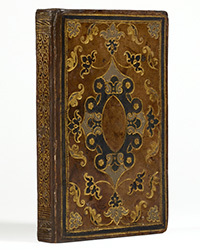
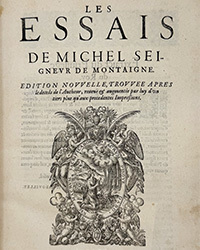

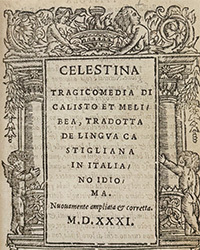
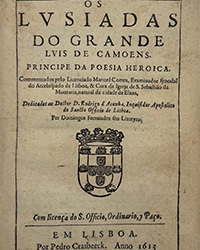
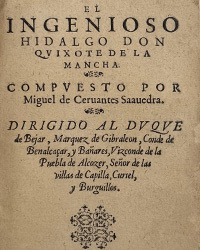

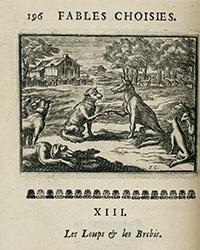
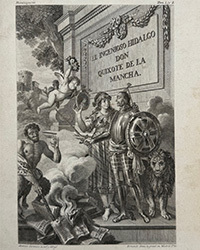

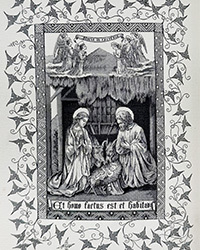 ALDE, Apr. 8: GUEVARA (ANTONIO DE). Histoire de Marc-Aurèle, Empereur Romain, vray miroir et horloge des Princes. Paris, Pierre et Galliot du Pré, frères, 1565. €3,000 to €4,000.ALDE, Apr. 8: HEURES DE LA VIERGE. Horæ in laudem beatissimæ virginis Mariæ ad usum Romanum. Paris, Charles L'Angelier, 1556. €4,000 to €5,000.ALDE, Apr. 8: MONTAIGNE (MICHEL DE). Les Essais. Édition nouvelle, trouvée après le deceds de l'autheur… Paris, Abel L'Angelier, 1595. €6,000 to €8,000.ALDE, Apr. 8: [ROJAS (FERNANDO DE)]. Celestina, tragicomedia di Calisto et Melibea, tradotta de lingua castigliana in italiano idioma… Venise, 1531. €2,000 to €3,000.ALDE, Apr. 8: CAMÕES (LUÍS DE). Os Lusiadas. Lisbonne, Pedro Crasbeeck, 1613. €2,000 to €3,000.ALDE, Apr. 8: CERVANTES (MIGUEL DE). El Ingenioso hidalgo Don Quixote de la Mancha. Bruxelles, Roger Velpius & Huberto Antonio, 1611. €6,000 to €8,000.ALDE, Apr. 8: LA FONTAINE (JEAN DE). Fables choisies, mises en vers. Paris, Denys Thierry et Claude Barbin, 1678-1694. €6,000 to €8,000.ALDE, Apr. 8: CERVANTES (MIGUEL DE). El Ingenioso hidalgo Don Quixote de la Mancha. Madrid, Joaquin Ibarra, 1780. €3,000 to €4,000.ALDE, Apr. 8: DIDEROT (DENIS) ET JEAN LE ROND D'ALEMBERT. Encyclopédie, ou dictionnaire raisonné des sciences, des arts et des métiers. Paris, 1751-1765. €15,000 to €20,000.ALDE, Apr. 8: [LIVRE TISSÉ]. LAMARTINE (Alphonse de). Les Laboureurs. Poème tiré de Jocelyn… Lyon, J. A. Henry, 1883. €8,000 to €10,000.ALDE, Apr. 8: [LIVRE TISSÉ]. Livre de prières tissé d'après les enluminures des manuscrits du XIVe au XVIe siècle. Lyon, [A. Roux], 1886. €5,000 to €6,000.
 -
Sotheby’s
Books, Manuscripts & Objects from Three Important Collections
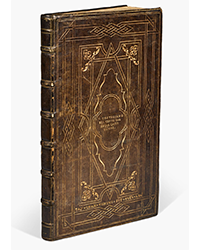
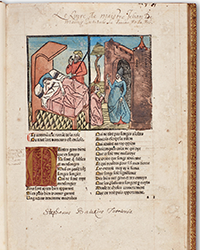
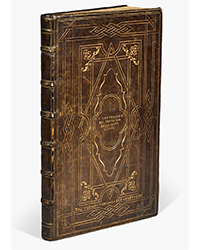
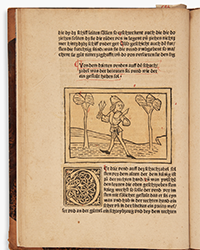
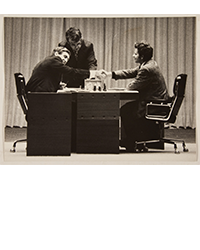
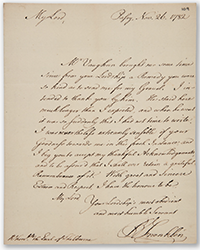
Open for Bidding 2-17 AprilSotheby’s, Apr. 2-17: [Guillaume de Lorris and Jean de Meun]. Le Roman de la Rose, [Geneva or Lyons, c.1481], first printed edition of the most important medieval French vernacular poem. £200,000 to £300,000.Sotheby’s, Apr. 2-17: Castiglione. Il libro del cortegiano. [Venice], April 1528, first edition, in a magnificent binding by Jean Picard for Jean Grolier. £100,000 to £150,000.Sotheby’s, Apr. 2-17: Jacobus de Cessolis. Schachzabelbuch, Strasbourg, 1483, von der Lasa copy. £50,000 to £70,000.Sotheby’s, Apr. 2-17: World Championship, 1972. A collection of 84 press photographs of the famed match between Spassky and Fischer. £2,000 to £3,000.Sotheby’s, Apr. 2-17: Ben Franklin. Autograph letter signed, to Lord Shelburne, British Prime Minister, during peace negotiations, November 1782. £15,000 to £20,000.