Primary Sources Uncharted Americana has issued their Catalogue 8. Primary Sources focuses on obscure and unique items in the field of Americana. They then describe them thoroughly, as it can be hard to understand the obscure without an explanation. Placing them in their context enables you to see the diamond in the rough. If your interest is Americana, you will love this catalogue and the material it presents. Here are a few of the items you will find.
We begin with a broadside printing of a section from Virginia's slave code, the only known copy, most likely from 1831 or 1832. The heading is Extracts from the Laws of the State of Virginia Relating to Slaves, Free Negroes and Mulattoes. The first extract forbids buying any commodity from a slave or dealing with that slave without the consent of his master. Doing so results in a fine or 39 lashes on the back at a public whipping post. The next session provides a fine for buying a commodity on the Sabbath not only from a slave but a free Negro or mulatto. The third applies to corn, wheat, tobacco, flour, fodder, plaster of paris, coal, hay, meal, bacon, rye, oats, barley, palma christi bean, flax and flaxseed, wool or cotton, or other property of his/her master. The fine is $10-$50 and if “necessary,” one to six months in jail. While the exact timing of this printing is uncertain, it likely was a response to Nat Turner's rebellion when 57 whites were killed, the most serious slave revolt in American history. It led to much fear in the white population, but it still did not lead to any serious consideration by the white population to do away with slavery. Item 7. Priced at $4,000.
Many of the men in West Virginia's Sixth Volunteer Cavalry had endured three or four years of the Civil War and were ready to go home when it ended. However, since they had reenlisted, they were ordered to serve out their term on the Plains, fighting the Indians. Many were quite displeased, but George H. Holliday was not one of them. He had enlisted more recently at the age of 15 and was ready for more action. He wrote, “Visions of 'scalps,' wild 'ponies,' 'buffalos,' and love among the little 'squaws' perhaps marriage among some of the daughters of the Rocky Mountains. And then fighting Indians would be child's play compared with the stern realities of war through which we had just passed.” On June 16, 1865, he and the others packed themselves into a box car of a train and headed west. They survived a train crash in Illinois, took a steamer up the Missouri from St. Louis to Fort Leavenworth and then were ordered to march overland. More than half the men refused to go but not Holliday. They moved on to Julesburg, Fort Laramie, and Fort Casper. Their job was to protect wagon trains and telegraph lines in the area from Indian attack. They built a block house and endured “the coldest winter ever seen in the Rocky Mountains.” They hunted buffalo and subsisted through the winter. They were then sent back to Fort Laramie as 1,500 Sioux had surrendered there and later back to Leavenworth where they were discharged. He returned home after three years of service still only 18. His book is On the Plains in '65, and it is quite rare. He married a few years later and moved to Knoxville, where he died in 1919 age 71. Item 20. $6,500.
This case poses the question what could this man have become if he had better control of his temper? John Ward Gurley was a native of Connecticut, who spent some time in Boston, renting the home of John Quincy Adams. In 1803, he broke his lease and moved to the Territory of Orleans. After the Louisiana Purchase, the territory was divided into the Territory of Orleans and the Territory of Louisiana. It stayed so until statehood was granted in 1812. Oddly, the Territory of Orleans became the state of Louisiana, while the Louisiana Territory became the Missouri Territory. He settled in the city of New Orleans, which has always had a reputation for being rowdy, unrestrained by conservative moral codes. It was even more so then. It drew in many young men. The first Attorney General, Richard Keene, got in a pamphlet war with the Governor and lost his job. Gurley was appointed to replace him. He might have had a long political career. His brother later served four terms as a Congressman from Louisisana. Unfortunately, Gurley got into disputes which quickly turned into challenges to duel. Keene must have had some resentment of Gurley as the two faced off in a duel, but fortunately, neither was hurt. Gurley next got into a feud with another lawyer, Edward Livington, over some issue of honor and a duel was threatened but they managed to resolve it without bloodshed. Finally, Gurley got in a dispute with Livingston's cousin, Philip Livingston Jones, over a rumor that Gurley refused to recommend him to the Governor for the position of sheriff. Once again, a duel challenge was issued, but this time cooler heads did not prevail. The duel went forward and Gurley was the loser. He was only 29. Gurley died on March 3, 1808, and the following day a funeral was held. Item 4 is a hastily printed invitation, saying “The Citizens of New-Orleans and its vicinity are requested to attend the funeral of Major John Ward Gurley, Attorney General of the Territory, this evening, Friday the 4th inst. at Four O'clock in the afternoon. The Corpse is deposited at the house of Wm. Simpson, Esq. Dauphin street.” It is also printed in French with additional information. The back has an image of a weeping willow, a ceder, a broken column, and the ever-present skull and bones, found on many funeral notices at that time but seeming morbid today. Item 4. $4,500.
Item 17 is a carte de visite of Lewis Downing. Downing was a Cherokee, born on the reservation in Georgia in 1823. He would become a follower of John Ross, elected Principal Chief in 1828. With the discovery of gold on the reservation a short time later, the Cherokee land was overrun with white settlers. In 1835, the U.S. offered the Cherokee a comparable amount of land in the West, today's Oklahoma specifically, if they would move. Most refused, but a faction signed the treaty which the U.S. recognized as representing the decision of all the Indians. The others tried to resist, but eventually were forced to move, the infamous “Trail of Tears.” Ross and Downing made that terrible journey in 1839, near the end. Once in the new land, Downing became a Baptist minster, but also was involved in politics, serving in the tribal senate. With the Civil War, the tribe again became divided, some members supporting each side. The Confederates had the advantage, bordering on Indian Territory while the Union no longer provided protection. The Cherokee formed a Confederate regiment. Ross and Downing were among those who relictantly went along. With Union soldiers reaching Indian Territory by 1862, many Cherokee became disillusioned with the Confederacy. They switched sides in 1862. Ross went to Washington to negotiate while Downing served as an officer in a new Union regiment. For the remainder of the war and some time thereafter, there were two Cherokee governments. Downing served in the pro-Union one. That one became dominant after the war when the U.S. government refused to recognize two Cherokee governments, only the pro-union one. In 1866, Ross died, and in 1867, Downing was elected Principal Chief of the Cherokee. He worked to reunite the two factions and consequently was able to draw support from both sides. He was reelected in 1871, but in 1872, Downing contacted pneumonia and died. This CDV has been signed on the back by Downing. $2,500.
Primary Sources can be reached at 734-355-2986 or primarysources25@gmail.com. Their website is found at www.psamericana.com.
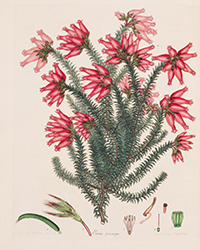
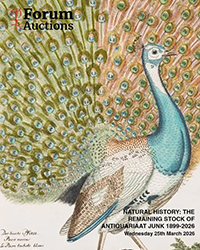
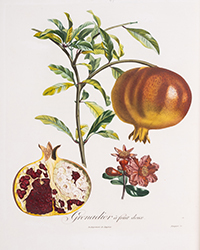
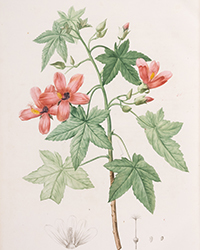
![<b>Forum, Mar. 25:</b> Botany.- [Robin (Jean)]. <i>Histoire des Plantes, nouv...](https://ae-files.s3.amazonaws.com/AdvertisementPhotos/9a2a2dbe-8edf-4091-9a08-800f7aba747e.jpg "<b>Forum, Mar. 25:</b> Botany.- [Robin (Jean)]. <i>Histoire des Plantes, nouvellement trouvées en l'Isle Virgine…,</i>, 1620; with Geoffrey Linocier <i>L'Histoire des plantes,</i> second edition, 1619-20. £3,000 - £4,000.")
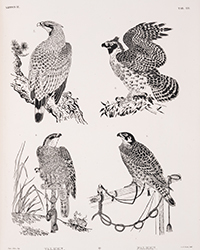
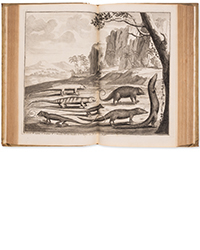
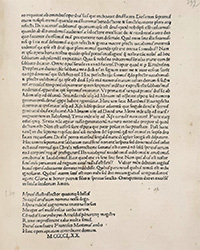
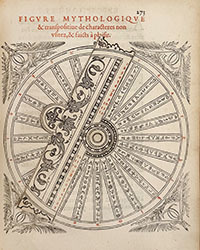
![<b>ALDE, Mar. 11:</b> [REGNART (LE LIVRE DE)]. <i>[Le] Docteur en malice, mai...](https://ae-files.s3.amazonaws.com/AdvertisementPhotos/ddd3b34c-8abc-4eae-8474-6ea05406ccd0.jpg "<b>ALDE, Mar. 11:</b> [REGNART (LE LIVRE DE)]. <i>[Le] Docteur en malice, maistre Regnard, demonstrant les ruzes et cautelles qu'il use envers les personnes…</i> Rouen, 1550. €20,000 - €30,000.")
![<b>ALDE, Mar. 11:</b> HUGO (VICTOR). [Paysage spectral avec une église], [ver...](https://ae-files.s3.amazonaws.com/AdvertisementPhotos/dc734df9-0811-477f-919a-2563b8452855.jpg "<b>ALDE, Mar. 11:</b> HUGO (VICTOR). [Paysage spectral avec une église], [vers 1837]. €20,000 - €30,000.")
![<b>ALDE, Mar. 11:</b> [HERVEY DE SAINT-DENYS (LÉON D')]. <i>Les Rêves et les ...](https://ae-files.s3.amazonaws.com/AdvertisementPhotos/7e769889-43a5-495e-a931-c511da576c2b.jpg "<b>ALDE, Mar. 11:</b> [HERVEY DE SAINT-DENYS (LÉON D')]. <i>Les Rêves et les Moyens de les diriger. Observations pratiques.</i> Paris, Amyot, 1867. €3,000 - €4,000.")
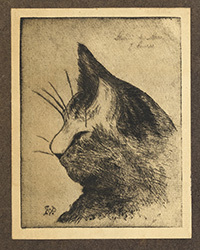
![<b>ALDE, Mar. 11:</b> [REDON (ODILON)]. PICARD (EDMOND). <i>Le Juré. Monodram...](https://ae-files.s3.amazonaws.com/AdvertisementPhotos/b325eb41-450b-4bd6-851c-4125e04dfbe7.jpg "<b>ALDE, Mar. 11:</b> [REDON (ODILON)]. PICARD (EDMOND). <i>Le Juré. Monodrame en cinq actes…</i> Bruxelles, Mme veuve Monnom, 1887. €7,000 - €9,000.")
![<b>ALDE, Mar. 11:</b> [TOULOUSE-LAUTREC (HENRI DE) ET HENRI-GABRIEL IBELS]. M...](https://ae-files.s3.amazonaws.com/AdvertisementPhotos/6588f3a0-90f2-464c-8125-a76866eabe85.jpg "<b>ALDE, Mar. 11:</b> [TOULOUSE-LAUTREC (HENRI DE) ET HENRI-GABRIEL IBELS]. MONTORGUEIL (GEORGES). <i>Le Café-concert.</i> Paris, [1893]. €4,000 - €5,000.")
![<b>ALDE, Mar. 11:</b> [TERRY (EMILIO)]. <i>Projet de fontaine.</i> Dessin ori...](https://ae-files.s3.amazonaws.com/AdvertisementPhotos/0840c8e4-4f35-4c95-b2d3-3d5addd6fd51.jpg "<b>ALDE, Mar. 11:</b> [TERRY (EMILIO)]. <i>Projet de fontaine.</i> Dessin original au stylo et à l'encre noire. 1938. €2,000 - €3,000.")

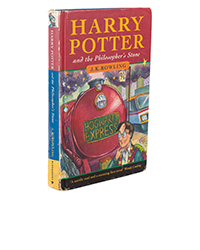
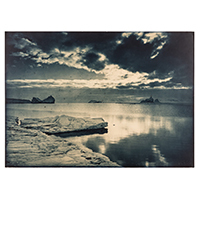
![<b>Chiswick, Mar. 12:</b> Gray [Artist.] India. Album 40 original drawings. 1...](https://ae-files.s3.amazonaws.com/AdvertisementPhotos/004c032b-da4d-428e-811b-e5a8e80376a2.jpg "<b>Chiswick, Mar. 12:</b> Gray [Artist.] India. Album 40 original drawings. 1858 - 1862. £2,000 - £3,000.")