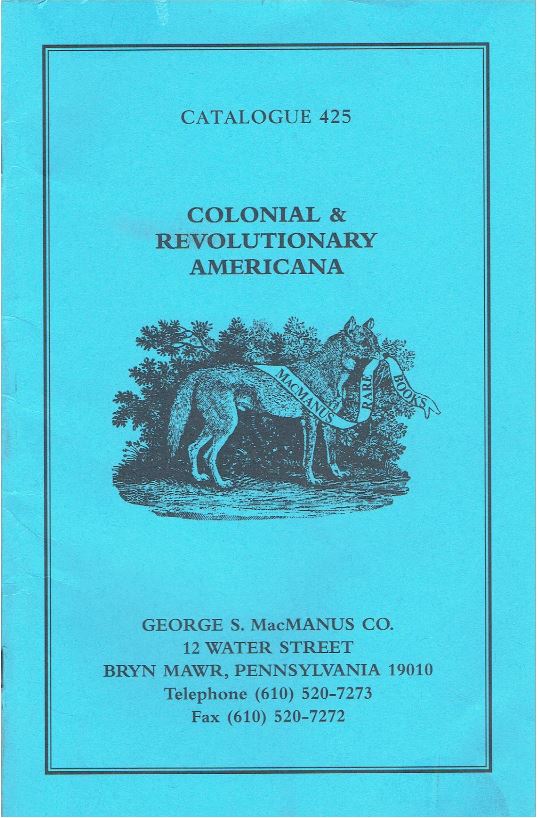
The George S. MacManus Company has released their Catalogue 425 of Colonial & Revolutionary Americana. Most of these books and occasional documents were written contemporaneously with the events described. There is much to be found here concerning America's years as a loyal British colony, then the developing split, and the new nation's independence. There are also many tales of explorations, or visits to the outer reaches of society, along with visits to its more developed areas nearer the coasts. These are a few titles being offered about early America.
We start with one of those visits through America, both its cities and distant countryside along the Blue Ridge Mountains. The title is Travels Through the Middle Settlements in North America, In the Years 1759 and 1760; with Observations Upon the State of the Colonies, by English clergyman Andrew Burnaby. Along with his visits to the more rural middle settlements, Burnaby visited several cities in the Northeast. Among the people he met was George Washington, long before he became a figure of overriding importance, yet even in the 1760 Burnaby was impressed. “I cannot omit this opportunity of bearing testimony to the gallant and public spirit of this gentleman...” he says. Burnaby did not publish his description of America until 1775, though his visit was in 1760. Obviously, a lot had changed in the intervening years. England had gone from being a close ally during the still ongoing French and Indian War in 1760 to a much disliked colonial master against whom the colonists were beginning to rebel in 1775. Burnaby questions the consistency of liberty with taxation without representation, but still expresses hope for a reconciliation between the two sides. He also predicts that the laziness of people he found in the South, which he attributes to climate, will prevent America from ever becoming a major power. Item 56. Priced at $1,750.
John Andre was once the most unpopular poet in America. Actually, his poetry was an aside. Andre was primarily a British spy, Benedict Arnold's contact with the British when he sold out his country. The Americans really wanted Arnold, but he escaped. Andre was not so fortunate. He was captured and Washington reluctantly ordered his execution. Before his capture, Andre wrote some poems, including this one, The Cow Chace. It is a satirical poem about an attack on a supply depot of the British at Nyack by Americans headed by Gen. Anthony Wayne. While the British held onto their depot, the Americans loosed their cows. Andre's poem speaks of the battle, the brave honorable British defenders and low-life Americans, particularly the lowly (in Andre's opinion) Wayne. The poem was originally published in the Rivington's Gazette shortly after Andre's execution, but this is an 1866 republication. Item 13. $500.
Benjamin Franklin was one of America's greatest political leaders of the late Colonial and Revolutionary War period, but unlike most, his skills ranged far beyond those roles. He was a polymath, a diplomat, scientist, printer, writer, inventor, and undoubtedly anything else he wanted to be. In the 1760s, he represented Pennsylvania in London where he made many friends, including lawyer and judge Henry Home, Lord Kames. On January 27, 1762, Franklin wrote a letter to Kames, covering various topics, including Kames' book and one Franklin was writing. He then answers Kames' request for help in dealing with a smoking chimney in his home. Franklin was a natural person to ask, he having invented the Franklin stove many years earlier, the most efficient heater at the time. Franklin did not attempt to give an answer without knowing the details of Kames' situation as there were numerous possible explanations. Instead, he sent Kames a list of 11 questions whose answers would enable Franklin to properly diagnose the issue. He then adds one of those aphorisms for which Franklin was known: “But Workmen, ignorant of Causes, are like Quacks, always tampering; applying the Remedy proper in one Case to another in which it is improper, as well as attempting the Cure of what from the Nature of Things is not to be cured.” Franklin also congratulated Lord and Lady Kames on the marriage of their daughter to the prosperous Patrick Heron. What none of them realized is that Jean would then have affairs with James Boswell and others, finally being divorced and sent by her parents to France, where they supported her but never saw her again. Item 125. $40,000.
Philadelphian Franklin did not live quite long enough to experience the Yellow Fever of the 1790s. Many other Philadelphians didn't live past it. J. Henry Helmuth had an explanation for it which was undoubtedly different from the one scientist Franklin would have given. Minister Helmuth explained it in A Short Account of the Yellow Fever in Philadelphia, for the Reflecting Christian, published in 1794. Helmuth explains that it was the wickedness and dissipation of the city's inhabitants that was responsible for the plague. Item 165. $450.
A certain amount of intolerance has always been the weakness of the American character, despite the ideals on which the nation was founded. Here is a look at it from colonial times, New-England Judged, by the Spirit of the Lord...Containing a Brief Relation of the Sufferings of the People Call'd Quakers in New-England, from the Time of Their First Arrival in the Year 1656... by George Bishop(e). This 1702-03 edition includes Truth and Innocency Defended... by John Whiting. The Quakers endured all kinds of persecution in America, to the point of executions by the state. Howes, in Usiana, summed it up well: “Most exhaustive contemporary indictment of God-fearing Puritans driven by insensate religious fervor to sickening brutalities against other religious fanatics who dared to differ from themselves. Witch-hunting was bad; this was worse.” Item 35. $2,000.
The George S. MacManus Co. may be reached at 610-520-7273 or books@macmanus-rarebooks.com. Their website is www.macmanus-rarebooks.com.
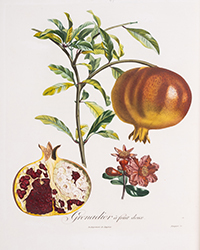
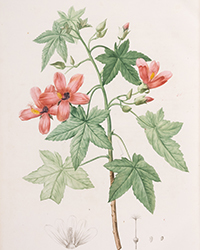
![<b>Forum, Mar. 25:</b> Botany.- [Robin (Jean)]. <i>Histoire des Plantes, nouv...](https://ae-files.s3.amazonaws.com/AdvertisementPhotos/9a2a2dbe-8edf-4091-9a08-800f7aba747e.jpg "<b>Forum, Mar. 25:</b> Botany.- [Robin (Jean)]. <i>Histoire des Plantes, nouvellement trouvées en l'Isle Virgine…,</i>, 1620; with Geoffrey Linocier <i>L'Histoire des plantes,</i> second edition, 1619-20. £3,000 - £4,000.")