

Librairie Camille Sourget prepared a catalogue for their participation in the recent New York Antiquarian Book Fair. Camille Sourget is based in Paris, so many of the books are written in French, though numerous texts are in English and other languages as well. The catalogue, appropriate for New York, is written in English. According to their website, Sourget specializes in travel books, original literary editions, science, history, manuscripts and fine illustrated books. Times range from the 15th to the 20th century. In this particular catalogue, the range is 1498-1947. Here are a few samples from this selection.
We begin with that 1498 incunable, and it is not a book written in French. It is in Greek, as the author intended. The physical book may be a mere 500 years old, but the story comes from almost two millennia earlier. The title is Comoediae novem, its author Aristophenes. Aristophenes lived in Athens during the third and fourth centuries B.C. Some consider him the "father of comedy" because, after all, how many people were writing comedies prior to 400 B.C.? The Pharaohs weren't known for telling jokes on their cuneiform tablets. Aristophanes was a playwright, and his comedies were often biting satires aimed at the leading figures of ancient Athens. This is the first printed edition of Aristophanes comedies, 9 of the 11 still extant (he wrote many more now lost). The printer was one of the best known of that early era – Aldus Manutius of Venice. Aldus published several ancient Greek texts in their original language, obviously targeted to the highest intelligentsia of the Renaissance. Item 1. Priced at $48,000.
Next we have a medical text which is quite outdated. Do not consult it if you are ill. Item 9 is Discorsi sopra il mondo di Sanguinare... a 1586 second edition of Pietro Paolo Magni of Piacentino's book on bloodletting. Magni not only describes the process, but graces us with 11 full-page engravings, nine displaying the process of drawing blood in detail. It is a how-to guide. Magni shows the various parts of the human body from which to let blood and patients in proper positions for the procedure. Physician, barber-surgeon, and family members are displayed in their proper positions. In those days, the physician provided instructions, but the barber-surgeon did the actual cutting. The combining of the professions of barber and surgeon seems odd to us today, but for centuries that was the norm. In the days when medical knowledge was very limited at best, it was believed illness was the result of an imbalance in bodily fluids which required a reduction in the amount of blood. Though it obviously did not work, the practice continued into the 19th century. $9,500.
Here is a book that came out a bit too late to serve its purpose: Le Sacre de S. M. L'Empereur Napoleon Dans L'Eglise Metropolitaine de Paris. That translates to the coronation of the Emperor Napoleon in the metropolitan church of Paris. The metropolitan church of Paris is Notre Dame. This is an exquisite representation of Napoleon's big day, December 2, 1804. It contains 39 beautiful plates of the celebration. Napoleon made sure that the ceremony contained all the pomp and circumstance befitting a man of his stature. Unfortunately, it took a long time to produce this remembrance. It was not published until ten years later. Sadly for Napoleon, that was when he fell. Napoleon met his Waterloo in 1815. The result was most copies of this tribute were seized before the book was officially released. However, a small number were given to artists and a few other people so some copies do survive. Item 41. $10,000.
This is my favorite work of French literature. Admittedly, there is a lot more French literature I have not read than that I have, so perhaps I am not in a position to choose the best, but this one is right up there – Candide ou L'optimisme. This is the true first edition of Voltaire's short, but nevertheless magnum opus. Poor Candide suffers all sorts of horrible tragedies, all the while maintaining his rosy, optimistic outlook, at least until the end when he determines he needs to just tend to his garden and not think too much about deep philosophical concepts. The book was a satire on Leibniz's philosophy that this is the best of all possible worlds. Voltaire mocks that concept with all the tragedies that befell his protagonist. However, Voltaire also ridiculed church, state, and various other institutions along the way, resulting in it being banned in its day (the book was published in 1759). Item 30. $22,000.
Here is a rare, not that well known very early look at the Great Lakes region of North America. The author is Father Gabriel Sagard-Theodat, a Recollet missionary, the book Le grand voyage au pays des Hurons, published in 1632. He had wanted to go on their first mission to Canada in 1615, but permission was denied. In 1623, he was allowed to go. The trip across the Atlantic took three months and Sagard describes it thoroughly. He landed in Quebec, and then joined up with a fur trading party heading for Huron country. When the trading was done, the traders headed back, but Sagard preceded farther inland with the Huron Indians. Somewhat later, he was joined by two other missionaries and they built a small convent, from which they ministered to the Indians' spiritual and other needs. Evidently, Sagard was well-liked. The following spring, he traveled back to Quebec with some traders to obtain supplies for the mission. However, when he arrived, he learned he had been called back to France. His brief time in New France was over. He never returned. In his book, Sagard describes his journey, both to and from Huron country, overseas and overland. He then goes into providing details about the Hurons and their culture, as well as information about the natural history of the area. Sagard has received criticism for being naive, accepting everything he was told uncritically as the truth. Descriptions of episodes people allegedly had with demons is an example, but considering that half a century later our forefathers were still killing witches in Salem, we need to understand the beliefs of the times in which he lived. This book also contains Sagard's Dictionnaire de la langue Huronne, not so much a true dictionary as a collection of Huron words to give future missionaries a head start with the language. He wrote two more books, but later dropped out of the Recollets, and what happened to him after 1636 is unknown. Item 13. $62,000.
Librairie Camille Sourget may be reached at +33 6 13 04 40 72 or contact@camillesourget.com. Their website is found at www.camillesourget.com.

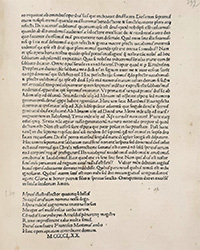
![<b>ALDE, Mar. 11:</b> [REGNART (LE LIVRE DE)]. <i>[Le] Docteur en malice, maistre Regnard, demonstrant les ruzes et cautelles qu'il use envers les personnes…</i> Rouen, 1550. €20,000 - €30,000.](https://ae-files.s3.amazonaws.com/AdvertisementPhotos/ddd3b34c-8abc-4eae-8474-6ea05406ccd0.jpg "<b>ALDE, Mar. 11:</b> [REGNART (LE LIVRE DE)]. <i>[Le] Docteur en malice, maistre Regnard, demonstrant les ruzes et cautelles qu'il use envers les personnes…</i> Rouen, 1550. €20,000 - €30,000.")
![<b>ALDE, Mar. 11:</b> TRITHÈME (JEAN). <i>Polygraphie et universelle escriture cabalistique.</i> Paris, [Benoît Prévost pour] Jacques Kerver, 1561. €8,000 - €10,000.](https://ae-files.s3.amazonaws.com/AdvertisementPhotos/cbc8d1a4-d991-48c7-b788-7554a6774b0e.jpg "<b>ALDE, Mar. 11:</b> TRITHÈME (JEAN). <i>Polygraphie et universelle escriture cabalistique.</i> Paris, [Benoît Prévost pour] Jacques Kerver, 1561. €8,000 - €10,000.")
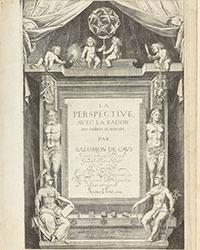
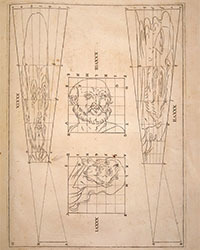
![<b>ALDE, Mar. 11:</b> VONTET (JACQUES). <i>L’Art de trancher la viande et toute sorte de fruits…</i> S.l.n.d. [probablement Lyon, vers 1647]. €20,000 - €30,000.](https://ae-files.s3.amazonaws.com/AdvertisementPhotos/21ad2e05-5544-44aa-887d-76df423e17af.jpg "<b>ALDE, Mar. 11:</b> VONTET (JACQUES). <i>L’Art de trancher la viande et toute sorte de fruits…</i> S.l.n.d. [probablement Lyon, vers 1647]. €20,000 - €30,000.")
![<b>ALDE, Mar. 11:</b> HUGO (VICTOR). [Paysage spectral avec une église], [vers 1837]. €20,000 - €30,000.](https://ae-files.s3.amazonaws.com/AdvertisementPhotos/dc734df9-0811-477f-919a-2563b8452855.jpg "<b>ALDE, Mar. 11:</b> HUGO (VICTOR). [Paysage spectral avec une église], [vers 1837]. €20,000 - €30,000.")
![<b>ALDE, Mar. 11:</b> [HERVEY DE SAINT-DENYS (LÉON D')]. <i>Les Rêves et les Moyens de les diriger. Observations pratiques.</i> Paris, Amyot, 1867. €3,000 - €4,000.](https://ae-files.s3.amazonaws.com/AdvertisementPhotos/7e769889-43a5-495e-a931-c511da576c2b.jpg "<b>ALDE, Mar. 11:</b> [HERVEY DE SAINT-DENYS (LÉON D')]. <i>Les Rêves et les Moyens de les diriger. Observations pratiques.</i> Paris, Amyot, 1867. €3,000 - €4,000.")
![<b>ALDE, Mar. 11:</b> GACHET (PAUL-FERDINAND). <i>Les Chats de Gachet</i> (Manuscrit). S.d. [avant mai 1873]. €6,000 - €8,000.](https://ae-files.s3.amazonaws.com/AdvertisementPhotos/855dc2c0-17e3-4562-a1cc-2e7265c3769c.jpg "<b>ALDE, Mar. 11:</b> GACHET (PAUL-FERDINAND). <i>Les Chats de Gachet</i> (Manuscrit). S.d. [avant mai 1873]. €6,000 - €8,000.")
![<b>ALDE, Mar. 11:</b> [REDON (ODILON)]. PICARD (EDMOND). <i>Le Juré. Monodrame en cinq actes…</i> Bruxelles, Mme veuve Monnom, 1887. €7,000 - €9,000.](https://ae-files.s3.amazonaws.com/AdvertisementPhotos/b325eb41-450b-4bd6-851c-4125e04dfbe7.jpg "<b>ALDE, Mar. 11:</b> [REDON (ODILON)]. PICARD (EDMOND). <i>Le Juré. Monodrame en cinq actes…</i> Bruxelles, Mme veuve Monnom, 1887. €7,000 - €9,000.")
![<b>ALDE, Mar. 11:</b> [TOULOUSE-LAUTREC (HENRI DE) ET HENRI-GABRIEL IBELS]. MONTORGUEIL (GEORGES). <i>Le Café-concert.</i> Paris, [1893]. €4,000 - €5,000.](https://ae-files.s3.amazonaws.com/AdvertisementPhotos/6588f3a0-90f2-464c-8125-a76866eabe85.jpg "<b>ALDE, Mar. 11:</b> [TOULOUSE-LAUTREC (HENRI DE) ET HENRI-GABRIEL IBELS]. MONTORGUEIL (GEORGES). <i>Le Café-concert.</i> Paris, [1893]. €4,000 - €5,000.")
![<b>ALDE, Mar. 11:</b> [TERRY (EMILIO)]. <i>Projet de fontaine.</i> Dessin original au stylo et à l'encre noire. 1938. €2,000 - €3,000.](https://ae-files.s3.amazonaws.com/AdvertisementPhotos/0840c8e4-4f35-4c95-b2d3-3d5addd6fd51.jpg "<b>ALDE, Mar. 11:</b> [TERRY (EMILIO)]. <i>Projet de fontaine.</i> Dessin original au stylo et à l'encre noire. 1938. €2,000 - €3,000.")