

The William Reese Company has released a catalogue of The Federal Era. Reese defines that era as a twenty-year span, beginning with the Treaty of Paris, which ended the American Revolution in 1783. The terminus is set at 1803. The Federalist Party lost the election of 1800 and would never again return to power. Jefferson's Republicans, who favored state power over federal, were in control, but the era extends through the first two and one-half years of Jefferson's administration to capture a major federal expansion – the Louisiana Purchase. It was during this period that America was born and determined what sort of a nation it would be. That answer was a constitutional republic, with a strong Bill of Rights to protect its citizens. Here are a few items from this catalogue of the Federal Era.
There is no better way to start a catalogue of the Federal Era than with the quintessential written advocacy for America's federal system – The Federalist. This book, published in 1788, contains 85 anonymously written essays advocating for ratification of the U. S. Constitution. The anonymous authors, finally officially revealed for the second edition, were Alexander Hamilton, James Madison, and John Jay. The initial purpose was only to convince delegates from New York to support the Constitution. However, the book's influence would go far beyond, many regarding this as the greatest description of and advocacy for America's constitutional republican government. Item 63. Priced at $165,000.
If you seek a first edition of this great treatise, but that price is a bit too dear, here is the first French edition – Le Fédéraliste, published in 1792. France was America's closest ally during its early years, and this might have been an inspiration to the French as it was in the throws of its own revolution in 1792. Unfortunately, things did not turn out so well for France. This first French is actually the second overall edition of The Federalist and is the first to name its authors. Item 66. $6,500.
The picture displayed on the cover of this catalogue is that of one of those authors – Alexander Hamilton. It comes at an unhappy time. Hamilton was shot to death in a duel with Aaron Burr on July 12, 1804. On September 1, this memorial portrait of Hamilton by Archibald Robertson was published. Hamilton is regarded as one of America's great founders, a leading federalist, and savior of America's debt-ridden economy in its early years. It has made him worthy of being the subject of our most popular Broadway play over two centuries later. Burr is remembered as a scoundrel. Item 70. $13,500.
Benjamin Rush was a signer of the Declaration of Independence and strong supporter of adoption of the Constitution. However, his vocation was not politics but medicine. He did serve as Surgeon General of the Continental Army, but his career was more as a professor at the University of Pennsylvania and in medical practice. He was an enlightened man, opponent of slavery, supporter of education, including for women, and a great humanitarian. His bravery was shown during Philadelphia's Yellow Fever Epidemic of 1797. Rush stayed on, seeing countless patients daily at great personal risk, somehow surviving it all. He was not a pioneer in medicine, sticking with the old ways, including bleeding, though he did aggressively promote cleanliness, which certainly would have helped reduce the spread of disease. Item 142 is a letter Rush wrote to his friend and fellow patriot Elisha Boudinot (brother of the better known Elias Boudinot) on September 8, 1797. Boudinot's wife had died in the epidemic, and Rush reveals his sorrow and caring nature in this poignant letter. After expressing his sympathy, Rush writes, "Yes, my dear friend, we live among the dead, and in a valley of human bones. Every newspaper we pick up is an obituary of departed friends, or fellow citizens. At the present awful moment, the passing hearse, the shut up houses, and the silent streets of our city, all proclaim that we are made of dust, & that we are doomed to return to it." However, he ends on a positive note, a religious belief that ultimately, the grave shall be robbed of its prey, Hell shall give up its prisoners, through the grace of Christ. $5,500.
Next we have a first. Item 10 is the first herpetological work printed in America. If you are struggling to recall what herpotology is, it is the study of creepy things, that is, animals that creep. More specifically, it refers to reptiles and amphibians. The writer was Benjamin Smith Barton, and his book is titled A Memoir Concerning the Fascinating Faculty which has been Ascribed to the Rattle-Snake, and Other American Serpents. It was published in 1796. $6,500.
We conclude with only the second printed work by a man who would not gain his notoriety until after the Federal Era was over. When this pamphlet was printed in 1801, Daniel Webster was still a 19-year-old Dartmouth College student. This is A Funeral Oration, Occasioned by the Death of Ephraim Simonds, of Templeton, Massachusetts, a Member of the Senior Class in Dartmouth College; Who Died at Hanover, (N.H.) on the 18th of June 1801. Little is remembered about Ephraim Simonds. He died before having a chance to make his mark, while his friend, Webster, would have another 50 years to make his. That he did, becoming perhaps America's greatest orator ever and one of the giants of the U.S. Senate in the first half of the 19th century. His touching tribute to Simonds reveals the depth of Webster's mastery of words that would be revealed in the years ahead. For Simonds, it is his legacy. The only words of Webster's printed prior to this oration was Webster's Fourth of July speech the previous year. Item 190. $3,750.
The William Reese Company may be reached at 203-789-8081 or amorder@reeseco.com. Their website is www.williamreesecompany.com.

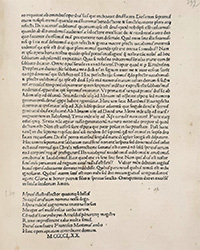
![<b>ALDE, Mar. 11:</b> [REGNART (LE LIVRE DE)]. <i>[Le] Docteur en malice, maistre Regnard, demonstrant les ruzes et cautelles qu'il use envers les personnes…</i> Rouen, 1550. €20,000 - €30,000.](https://ae-files.s3.amazonaws.com/AdvertisementPhotos/ddd3b34c-8abc-4eae-8474-6ea05406ccd0.jpg "<b>ALDE, Mar. 11:</b> [REGNART (LE LIVRE DE)]. <i>[Le] Docteur en malice, maistre Regnard, demonstrant les ruzes et cautelles qu'il use envers les personnes…</i> Rouen, 1550. €20,000 - €30,000.")
![<b>ALDE, Mar. 11:</b> TRITHÈME (JEAN). <i>Polygraphie et universelle escriture cabalistique.</i> Paris, [Benoît Prévost pour] Jacques Kerver, 1561. €8,000 - €10,000.](https://ae-files.s3.amazonaws.com/AdvertisementPhotos/cbc8d1a4-d991-48c7-b788-7554a6774b0e.jpg "<b>ALDE, Mar. 11:</b> TRITHÈME (JEAN). <i>Polygraphie et universelle escriture cabalistique.</i> Paris, [Benoît Prévost pour] Jacques Kerver, 1561. €8,000 - €10,000.")
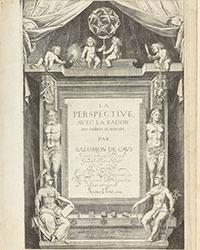
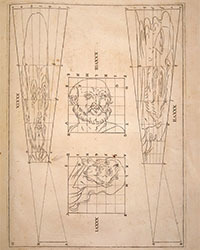
![<b>ALDE, Mar. 11:</b> VONTET (JACQUES). <i>L’Art de trancher la viande et toute sorte de fruits…</i> S.l.n.d. [probablement Lyon, vers 1647]. €20,000 - €30,000.](https://ae-files.s3.amazonaws.com/AdvertisementPhotos/21ad2e05-5544-44aa-887d-76df423e17af.jpg "<b>ALDE, Mar. 11:</b> VONTET (JACQUES). <i>L’Art de trancher la viande et toute sorte de fruits…</i> S.l.n.d. [probablement Lyon, vers 1647]. €20,000 - €30,000.")
![<b>ALDE, Mar. 11:</b> HUGO (VICTOR). [Paysage spectral avec une église], [vers 1837]. €20,000 - €30,000.](https://ae-files.s3.amazonaws.com/AdvertisementPhotos/dc734df9-0811-477f-919a-2563b8452855.jpg "<b>ALDE, Mar. 11:</b> HUGO (VICTOR). [Paysage spectral avec une église], [vers 1837]. €20,000 - €30,000.")
![<b>ALDE, Mar. 11:</b> [HERVEY DE SAINT-DENYS (LÉON D')]. <i>Les Rêves et les Moyens de les diriger. Observations pratiques.</i> Paris, Amyot, 1867. €3,000 - €4,000.](https://ae-files.s3.amazonaws.com/AdvertisementPhotos/7e769889-43a5-495e-a931-c511da576c2b.jpg "<b>ALDE, Mar. 11:</b> [HERVEY DE SAINT-DENYS (LÉON D')]. <i>Les Rêves et les Moyens de les diriger. Observations pratiques.</i> Paris, Amyot, 1867. €3,000 - €4,000.")
![<b>ALDE, Mar. 11:</b> GACHET (PAUL-FERDINAND). <i>Les Chats de Gachet</i> (Manuscrit). S.d. [avant mai 1873]. €6,000 - €8,000.](https://ae-files.s3.amazonaws.com/AdvertisementPhotos/855dc2c0-17e3-4562-a1cc-2e7265c3769c.jpg "<b>ALDE, Mar. 11:</b> GACHET (PAUL-FERDINAND). <i>Les Chats de Gachet</i> (Manuscrit). S.d. [avant mai 1873]. €6,000 - €8,000.")
![<b>ALDE, Mar. 11:</b> [REDON (ODILON)]. PICARD (EDMOND). <i>Le Juré. Monodrame en cinq actes…</i> Bruxelles, Mme veuve Monnom, 1887. €7,000 - €9,000.](https://ae-files.s3.amazonaws.com/AdvertisementPhotos/b325eb41-450b-4bd6-851c-4125e04dfbe7.jpg "<b>ALDE, Mar. 11:</b> [REDON (ODILON)]. PICARD (EDMOND). <i>Le Juré. Monodrame en cinq actes…</i> Bruxelles, Mme veuve Monnom, 1887. €7,000 - €9,000.")
![<b>ALDE, Mar. 11:</b> [TOULOUSE-LAUTREC (HENRI DE) ET HENRI-GABRIEL IBELS]. MONTORGUEIL (GEORGES). <i>Le Café-concert.</i> Paris, [1893]. €4,000 - €5,000.](https://ae-files.s3.amazonaws.com/AdvertisementPhotos/6588f3a0-90f2-464c-8125-a76866eabe85.jpg "<b>ALDE, Mar. 11:</b> [TOULOUSE-LAUTREC (HENRI DE) ET HENRI-GABRIEL IBELS]. MONTORGUEIL (GEORGES). <i>Le Café-concert.</i> Paris, [1893]. €4,000 - €5,000.")
![<b>ALDE, Mar. 11:</b> [TERRY (EMILIO)]. <i>Projet de fontaine.</i> Dessin original au stylo et à l'encre noire. 1938. €2,000 - €3,000.](https://ae-files.s3.amazonaws.com/AdvertisementPhotos/0840c8e4-4f35-4c95-b2d3-3d5addd6fd51.jpg "<b>ALDE, Mar. 11:</b> [TERRY (EMILIO)]. <i>Projet de fontaine.</i> Dessin original au stylo et à l'encre noire. 1938. €2,000 - €3,000.")