
Rare Book Monthly
Book Catalogue Reviews - June - 2005 Issue
American Natural History from William Reese

Audubon's Trumpeter Swan.
Here is another New York item, and it is quite spectacular: Natural History of New York. The New York Natural History and Geological Survey, formed by the state legislature in 1836, commissioned this work. It grew beyond all expectations. By the time it was finished, it consisted of 30 volumes, published over a period of more than 50 years. The first 17 volumes were published from 1842-1854. The final volume was to be paleontology, but, Reese explains, state paleontologist James Hall managed to turn the project into a lifetime career. Instead of one volume, paleontology grew to thirteen, the final one published in 1894 when Hall was 83-years-old. Hall's job security left us with a wonderful record of New York's natural history, but today a complete collection is extremely rare. Item 114. $25,000.
One of the most important narratives of the early American South is found in William Bartram's Travels Through North & South Carolina, Georgia, East & West Florida, The Cherokee Country.... Published in 1791, this first edition recounts Bartram's explorations, telling us much about the region's natural history as well as the Indians who resided in the territory. Howes describes it as, "A work of high character well meriting its wide esteem." Item 23. $20,000. If that's a bit pricey for your budget, item 24 is the first London edition of the same work from 1792. $6,000. Or, providing you understand German, item 25 is the first German edition from 1793, Reisen Durch Nord und Sud Karolina, Georgien.... $2,000.
Sticking to a Southern theme, item 118 is Resources of the Southern Fields and Forests....Being a Medical Botany of the Confederate States.... by Francis Porcher. Porcher was a major figure in southern medical circles, having founded a hospital for slaves in Charleston in 1855. The late 1850s found Porcher involved in using the microscope to find the cause of disease, a very recent development at the time. However, his studies were disrupted by the Civil War. Porcher was needed by the Confederacy to help find medical cures using indigenous plants and local remedies, the South having been cut off from most outside resources. The result was this book, published in 1863. It has been called one of the most important works of the Confederacy. $6,000.
Women shared men's interest in natural history during the 19th century, but their role in society made it hard for them to be treated as equal scientists. One of the results was a genre of books with illustrations of plants and animals by women, but they were accompanied by poetry instead of scientific data. It was okay for women to write or republish poetry; they just couldn't be scientists. An example of such a work is Laura Munson's Flowers from my Garden....with an Introductory Poem by Mrs. L.H. Sigourney. Published in 1864, it contains 18 hand-colored plates, each accompanied by a poem. Item 112. $3,000.
Rare Book Monthly
-

Dominic Winter Auctioneers
Printed Books, Maps & Wisdens, English Bibles
1500-1800
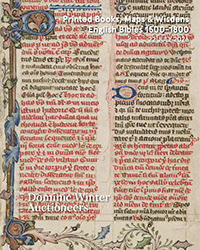
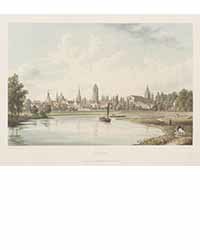
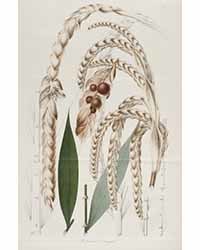
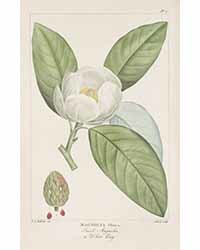
22nd July 2026Dominic Winter, July 22: Lot 83 – Westall & Owen. Picturesque Tour of the River Thames, 1st edition, 1828. £2,000-3,000.Dominic Winter, July 22: Lot 88 – Blume. Rumphia, Botanicae de plantis Indiae Orientalis, 1835-1848. £2,000-3,000.Dominic Winter, July 22: Lot 101 – Michaux. Histoire des arbres forestiers de l'Amérique septentrionale, 1810-1812. £700-1,000.Dominic Winter Auctioneers
Printed Books, Maps & Wisdens, English Bibles
1500-1800
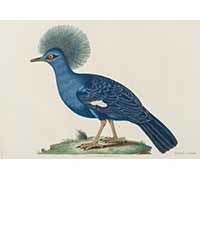
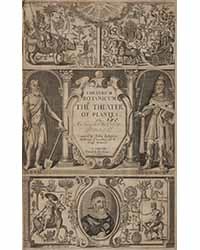
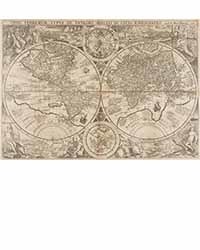
22nd July 2026Dominic Winter, July 22: Lot 102 – Miller & Shaw. Cimelia Physica, 1796 [but c. 1816]. £3,000-5,000.Dominic Winter, July 22: Lot 104 – Parkinson. Theatrum Botanicum: The Theater of Plants, London: Thomas Cotes, 1640. £800-1,200.Dominic Winter, July 22: Lot 159 – Plancius. Orbis Terrarum..., double hemisphere map, 1594-99. £5,000-8,000.Dominic Winter Auctioneers
Printed Books, Maps & Wisdens, English Bibles
1500-1800
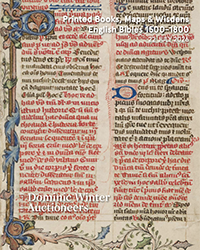
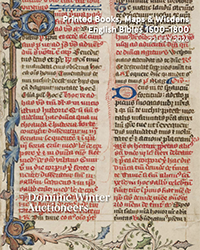
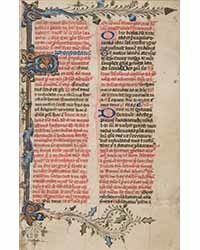
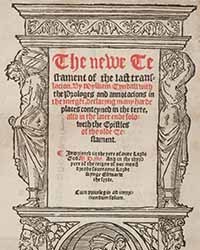
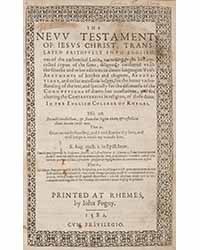
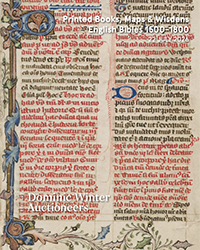
22nd July 2026Dominic Winter, July 22: Lot 217 – Illuminated Medieval Manuscript. From a Breviary, 14th/15th c. £3,000-4,000.Dominic Winter, July 22: Lot 224 – The newe Testament … By Wylliam Tyndall…, 1549. £3,000-5,000.Dominic Winter, July 22: Lot 238 – Douay-Rheims Bible. 3 volumes, 1582/1609/1610. £7,000-10,000.Dominic Winter Auctioneers
Printed Books, Maps & Wisdens, English Bibles
1500-1800
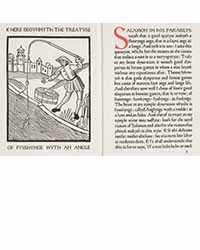
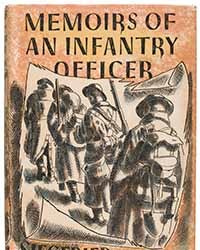
22nd July 2026Dominic Winter, July 22: Lot 336 – Ashendene Press. A Treatyse of Fysshynge with an Angle, 1903. £1,000-1,500.Dominic Winter, July 22: Lot 393 – Sassoon. Memoirs of an Infantry Officer, signed limited edition, 1931. £800-1,200.Dominic Winter, July 22: Lot 402 – Dylan Thomas. Twenty-Five Poems, 1st edition in d.j., 1936. £400-600. -


-

Case Auctions
2026 Summer Auction
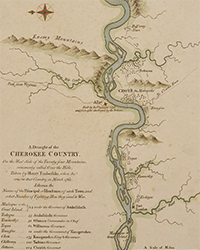
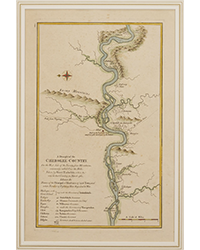
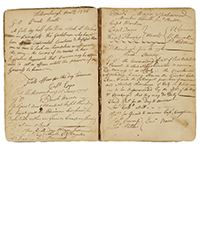
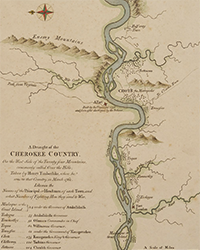
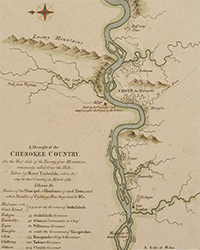
August 1st and 2ndCase Antiques, Aug. 1: Timberlake, Henry: A DRAUGHT OF THE CHEROKEE COUNTRY on the West Side of the Twenty Four Mountains, Commonly Called "Over the Hills". $18,000 to $22,000.Case Antiques, Aug. 1: Manuscript orderly book detailing day to day activities of multiple Virginia regiments in the Continental Army during the Revolutionary,1776-1777. $7,000 to $8,000.Case Antiques, Aug. 1: Cormac McCarthy, The Orchard Keeper, Random House, New York, 1965. Signed 1st Edition. $3,800 to $4,200.Case Auctions
2026 Summer Auction
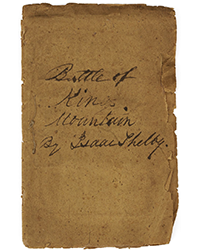
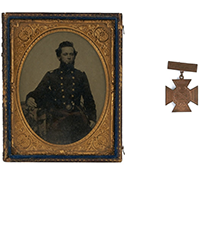
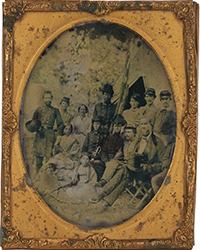
August 1st and 2ndCase Antiques, Aug. 1: Battle of Kings Mountain Pamphlet by Isaac Shelby, April 1823, Signed. $1,800 to $2,200.Case Antiques, Aug. 1: Large Tintype CSA Lt. Col. Thomas Coke Johnson, 19th GA, w/ Southern Cross, Book. $1,400 to $1,800.Case Antiques, Aug. 1: Rare Civil War Ambrotype, 19th GA Infantry with Johnson Family of GA. $800 to $1,200.Case Auctions
2026 Summer Auction
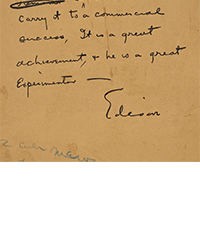
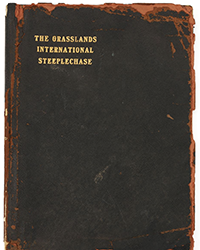
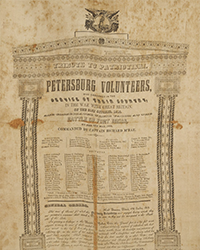
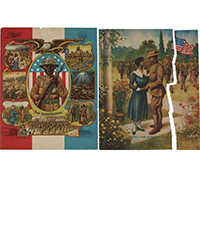
August 1st and 2ndCase Antiques, Aug. 1: A signed note written by Thomas Alva Edison to an unknown recipient, in which he shares his thoughts on Guglielmo Marconi, regarded as the inventor of the radio. $800 to $1,200.Case Antiques, Aug. 1: Rare 1931 TN Grasslands Steeplechase Book, Gallatin. $800 to $1,000.Case Antiques, Aug. 1: War of 1812 related Broadside, Petersburg Volunteers. $700 to $800.Case Antiques, Aug. 1: 2 World War I Posters, “Our Colored Fighters” and “No Slacker”. $800 to $1,000.