
Rare Book Monthly
Articles - October - 2003 Issue
Future Libraries<br>Dreams Madness & Reality<br>By Walt Crawford and Michael Gorman

none
A Review and Perspective by Bruce McKinney
In 1995 Walt Crawford and Michael Gorman wrote this book about the future of libraries. They sought to make the case that the headlong dash into the electronic world was not one that libraries should simply embrace without careful consideration of the efficacy of the changes, their impact on current libraries and the careful evaluation of whether these changes would actually work. To state it another way: new technology rarely supercedes old technologies entirely. They also predicted the future, often getting it wrong, and leaving a potential for the impression that because their predictions miss the mark, the book does too. This isn’t so and these authors should be evaluated like baseball players rather than gymnasts. The standard is not perfection but rather how others have done predicting the future. In that league, batting .400 reaches the level where preserving their corpses may be appropriate.*
In 1995 the internet was becoming a factor, but as we now know, not the factor it is today. Neither was it apparent to these authors how broadly accessible and user friendly the internet would become. They saw exponential growth but not the magnitude of growth the world has since experienced. This of course has compressed the expansion and development of internet services and capabilities into a smaller window.
There was a debate then and there continues to be a debate today as to the role of libraries in a world where information is becoming increasingly accessible from remote locations. It is not very far back into the past that we have to travel to find libraries at the epicenters of places of learning – be they universities, colleges, high schools, middle or elementary schools. The library was not only the central repository of learning but also the symbol of an institution’s commitment to academic excellence. Even today, libraries stand as symbols of academic excellence even as the functionality of libraries is under siege.
There was a time, a hundred years ago, when Andrew Carnegie was single handedly bringing “Carnegie Libraries” to more than 2,500 communities. All through the 19th century literacy was quickly increasing. The building of substantial libraries in thousands of communities was simply the confirmation that literacy had become universal and the need and desire for books would be the natural outgrowth. Literacy, once achieved, would need to be fueled and Mr. Carnegie sought to provide it.
Rare Book Monthly
-

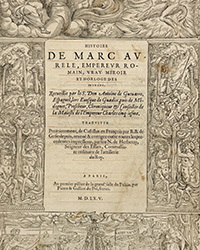
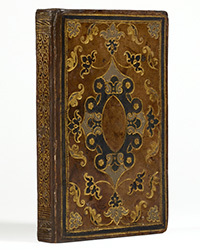
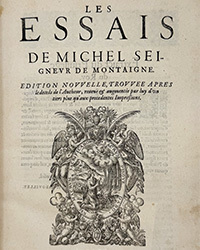

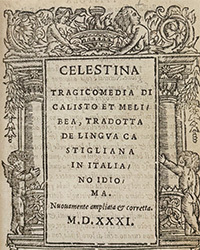
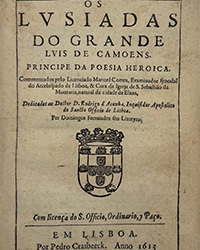
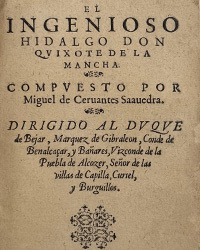

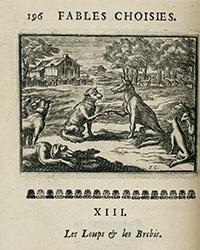
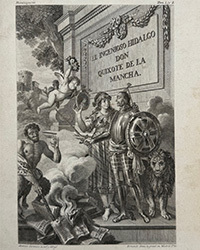
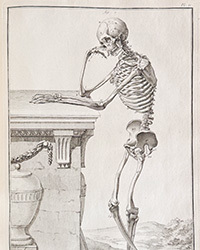

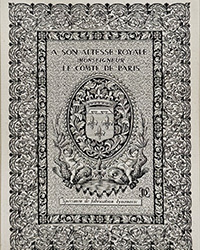
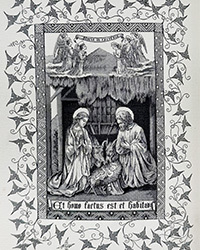 ALDE, Apr. 8: GUEVARA (ANTONIO DE). Histoire de Marc-Aurèle, Empereur Romain, vray miroir et horloge des Princes. Paris, Pierre et Galliot du Pré, frères, 1565. €3,000 to €4,000.ALDE, Apr. 8: HEURES DE LA VIERGE. Horæ in laudem beatissimæ virginis Mariæ ad usum Romanum. Paris, Charles L'Angelier, 1556. €4,000 to €5,000.ALDE, Apr. 8: MONTAIGNE (MICHEL DE). Les Essais. Édition nouvelle, trouvée après le deceds de l'autheur… Paris, Abel L'Angelier, 1595. €6,000 to €8,000.ALDE, Apr. 8: [ROJAS (FERNANDO DE)]. Celestina, tragicomedia di Calisto et Melibea, tradotta de lingua castigliana in italiano idioma… Venise, 1531. €2,000 to €3,000.ALDE, Apr. 8: CAMÕES (LUÍS DE). Os Lusiadas. Lisbonne, Pedro Crasbeeck, 1613. €2,000 to €3,000.ALDE, Apr. 8: CERVANTES (MIGUEL DE). El Ingenioso hidalgo Don Quixote de la Mancha. Bruxelles, Roger Velpius & Huberto Antonio, 1611. €6,000 to €8,000.ALDE, Apr. 8: LA FONTAINE (JEAN DE). Fables choisies, mises en vers. Paris, Denys Thierry et Claude Barbin, 1678-1694. €6,000 to €8,000.ALDE, Apr. 8: CERVANTES (MIGUEL DE). El Ingenioso hidalgo Don Quixote de la Mancha. Madrid, Joaquin Ibarra, 1780. €3,000 to €4,000.ALDE, Apr. 8: DIDEROT (DENIS) ET JEAN LE ROND D'ALEMBERT. Encyclopédie, ou dictionnaire raisonné des sciences, des arts et des métiers. Paris, 1751-1765. €15,000 to €20,000.ALDE, Apr. 8: [LIVRE TISSÉ]. LAMARTINE (Alphonse de). Les Laboureurs. Poème tiré de Jocelyn… Lyon, J. A. Henry, 1883. €8,000 to €10,000.ALDE, Apr. 8: [LIVRE TISSÉ]. Livre de prières tissé d'après les enluminures des manuscrits du XIVe au XVIe siècle. Lyon, [A. Roux], 1886. €5,000 to €6,000.
 -
Sotheby’s
Books, Manuscripts & Objects from Three Important Collections
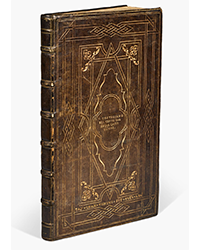
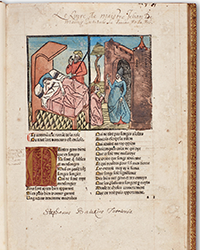
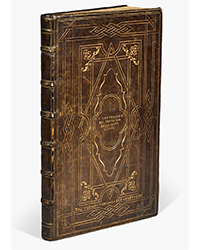
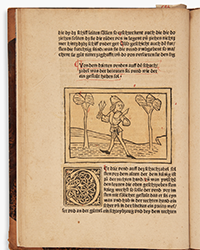
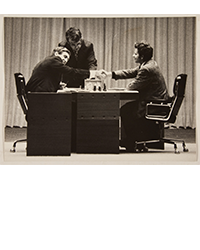
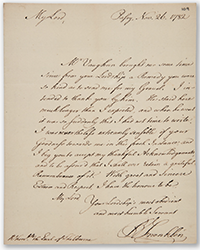
Open for Bidding 2-17 AprilSotheby’s, Apr. 2-17: [Guillaume de Lorris and Jean de Meun]. Le Roman de la Rose, [Geneva or Lyons, c.1481], first printed edition of the most important medieval French vernacular poem. £200,000 to £300,000.Sotheby’s, Apr. 2-17: Castiglione. Il libro del cortegiano. [Venice], April 1528, first edition, in a magnificent binding by Jean Picard for Jean Grolier. £100,000 to £150,000.Sotheby’s, Apr. 2-17: Jacobus de Cessolis. Schachzabelbuch, Strasbourg, 1483, von der Lasa copy. £50,000 to £70,000.Sotheby’s, Apr. 2-17: World Championship, 1972. A collection of 84 press photographs of the famed match between Spassky and Fischer. £2,000 to £3,000.Sotheby’s, Apr. 2-17: Ben Franklin. Autograph letter signed, to Lord Shelburne, British Prime Minister, during peace negotiations, November 1782. £15,000 to £20,000.