
Rare Book Monthly
The Google Books Case: A Bridge Too Far?

4. This is not a serious antitrust case. Opponents claim that the agreement provides access only to Google, but nothing stops others from gaining the same deal, and if Google does somehow interfere, the law can step in. The real problem is that competitors don't like the advantage Google gains in being able to offer more to their customers, but they don't want to invest the money Google has to gain the same advantage.
5. Congress can solve this problem by adjusting the copyright laws and setting whatever other requirements are needed to prevent monopoly behavior by Google. Of course, it won't. See number 3 above. With all the various parties involved on both sides, congressmen and senators can't possibly figure out which group is likely to contribute more to their campaigns. Therefore, they can't be expected to figure out which side of the issue they should be on.
6. There is risk in what could become an effective Google monopoly on old books which needs to be taken seriously. Google's motto may be "do no evil," but what if one day they become a typical large corporation with the motto "do nothing but maximize profits?" One subtle change that is happening, as libraries replace physical books with online access, is that people may be forced to pay to read/research some books. Today, it may be difficult to locate them in a library, but when you do, they are free. And, if you have to pay to read enough of a book to realize it is not relevant to your research, research could be inhibited. The cost structure must be such that libraries can afford to provide digital access to books, as they once could afford to buy physical copies. Only the government can guarantee this.
7. Consumer groups have raised privacy issues, and this, too, is legitimate. Librarians have fought to protect your privacy rights regarding what books you read. Google may not be so concerned. They already gather information about your internet browsing habits, supposedly not connected to your specific name, but I have little doubt they can. People have a right to be free from intrusion into their habits, be it by Google, the government, or anyone else.
To momentarily digress, I have been noticing ads showing up recently on various websites for replacement door handles for 1999 Chevy Prizms. Is there such a large market for these handles to justify such advertising costs? Undoubtedly, anyone with a '99 Prizm will have to replace the door handles. After all, they were made by General Motors. But, do enough people own '99 Prizms to justify mass advertising? Well, it turns out my daughter has one of these, and I recently bought three replacement handles for her (the fourth one had already been replaced. That's why I didn't have to buy four). Now, I'm not naturally a suspicious type, but I suspect someone has somehow connected my recent internet purchase with my internet viewing and that is why I'm seeing ads for these Prizm handles. They don't know the fourth one is not original Chevy equipment and assume it will break soon. I would guess there is some sort of "cookie" (I might think of it more as a virus) that is making these ads show up, but however it is happening, someone knows something about me I had no intention to reveal. How much more will they soon know? This is one area where I don't trust anyone, not even Google.
8. Digital access to books cannot be stopped anyway. Those copyright holders who hope to stop Google should remember the hard lessons of the record industry. When I was young, you could buy a record for a buck. In time, the record companies decided that wasn't enough. They eliminated "singles" and required you to buy a CD for $20 with 11 songs no one wanted to hear to get the one song you liked. So people responded with file sharing. The music industry has fought this for years, and finally agreed to make songs once again available for a buck as a downloadable file. It reduced piracy, but has hardly eliminated it. Once the cow is out of the barn, it is hard to get back in. They may have pushed a leg or two back, but a lot of cow is still outside. Meanwhile, the book cow is watching the action, and if publishers and writers become too greedy, that cow is making its way out the door too (provided the barn door doesn't have handles made by General Motors). People have a good sense of what is a fair price, and will pay it, but if merchants get greedy, people will find ways around them, and they will end up with nothing at all. Ultimately, file sharing will be the alternative if Google Books is stopped.
Rare Book Monthly
-







Dominic Winter Auctioneers
Printed Books, Maps & Wisdens, English Bibles
1500-1800
22nd July 2026Dominic Winter, July 22: Lot 83 – Westall & Owen. Picturesque Tour of the River Thames, 1st edition, 1828. £2,000-3,000.Dominic Winter, July 22: Lot 88 – Blume. Rumphia, Botanicae de plantis Indiae Orientalis, 1835-1848. £2,000-3,000.Dominic Winter, July 22: Lot 101 – Michaux. Histoire des arbres forestiers de l'Amérique septentrionale, 1810-1812. £700-1,000.Dominic Winter Auctioneers
Printed Books, Maps & Wisdens, English Bibles
1500-1800
22nd July 2026Dominic Winter, July 22: Lot 102 – Miller & Shaw. Cimelia Physica, 1796 [but c. 1816]. £3,000-5,000.Dominic Winter, July 22: Lot 104 – Parkinson. Theatrum Botanicum: The Theater of Plants, London: Thomas Cotes, 1640. £800-1,200.Dominic Winter, July 22: Lot 159 – Plancius. Orbis Terrarum..., double hemisphere map, 1594-99. £5,000-8,000.Dominic Winter Auctioneers
Printed Books, Maps & Wisdens, English Bibles
1500-1800
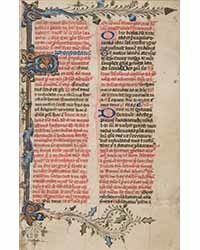
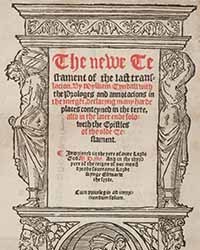
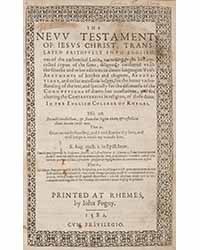
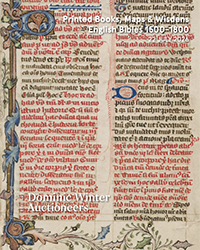
22nd July 2026Dominic Winter, July 22: Lot 217 – Illuminated Medieval Manuscript. From a Breviary, 14th/15th c. £3,000-4,000.Dominic Winter, July 22: Lot 224 – The newe Testament … By Wylliam Tyndall…, 1549. £3,000-5,000.Dominic Winter, July 22: Lot 238 – Douay-Rheims Bible. 3 volumes, 1582/1609/1610. £7,000-10,000.Dominic Winter Auctioneers
Printed Books, Maps & Wisdens, English Bibles
1500-1800
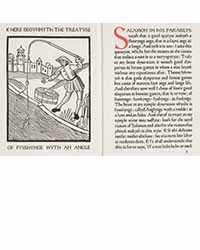
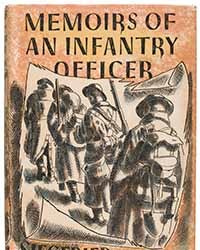
22nd July 2026Dominic Winter, July 22: Lot 336 – Ashendene Press. A Treatyse of Fysshynge with an Angle, 1903. £1,000-1,500.Dominic Winter, July 22: Lot 393 – Sassoon. Memoirs of an Infantry Officer, signed limited edition, 1931. £800-1,200.Dominic Winter, July 22: Lot 402 – Dylan Thomas. Twenty-Five Poems, 1st edition in d.j., 1936. £400-600. -


-


Case Auctions
2026 Summer Auction
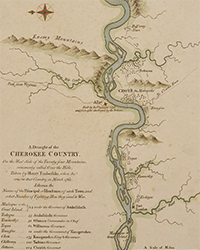
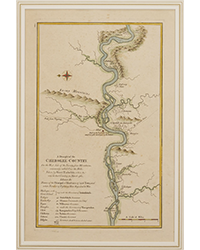
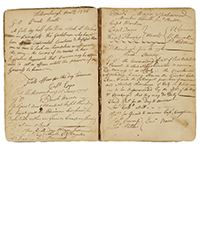
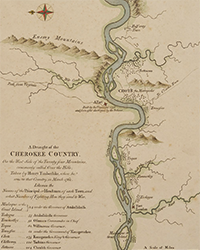
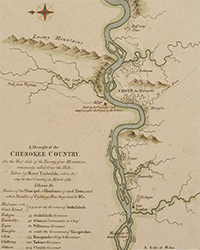
August 1st and 2ndCase Antiques, Aug. 1: Timberlake, Henry: A DRAUGHT OF THE CHEROKEE COUNTRY on the West Side of the Twenty Four Mountains, Commonly Called "Over the Hills". $18,000 to $22,000.Case Antiques, Aug. 1: Manuscript orderly book detailing day to day activities of multiple Virginia regiments in the Continental Army during the Revolutionary,1776-1777. $7,000 to $8,000.Case Antiques, Aug. 1: Cormac McCarthy, The Orchard Keeper, Random House, New York, 1965. Signed 1st Edition. $3,800 to $4,200.Case Auctions
2026 Summer Auction
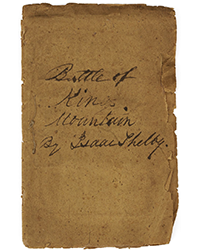
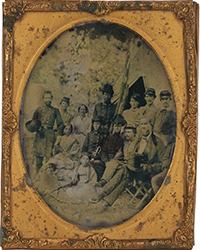
August 1st and 2ndCase Antiques, Aug. 1: Battle of Kings Mountain Pamphlet by Isaac Shelby, April 1823, Signed. $1,800 to $2,200.Case Antiques, Aug. 1: Large Tintype CSA Lt. Col. Thomas Coke Johnson, 19th GA, w/ Southern Cross, Book. $1,400 to $1,800.Case Antiques, Aug. 1: Rare Civil War Ambrotype, 19th GA Infantry with Johnson Family of GA. $800 to $1,200.Case Auctions
2026 Summer Auction
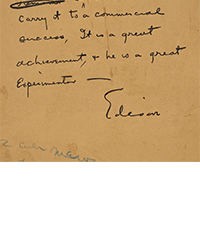
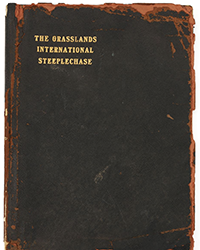
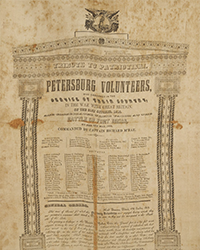
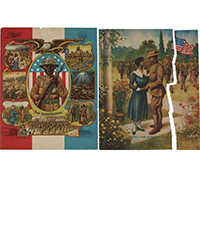
August 1st and 2ndCase Antiques, Aug. 1: A signed note written by Thomas Alva Edison to an unknown recipient, in which he shares his thoughts on Guglielmo Marconi, regarded as the inventor of the radio. $800 to $1,200.Case Antiques, Aug. 1: Rare 1931 TN Grasslands Steeplechase Book, Gallatin. $800 to $1,000.Case Antiques, Aug. 1: War of 1812 related Broadside, Petersburg Volunteers. $700 to $800.Case Antiques, Aug. 1: 2 World War I Posters, “Our Colored Fighters” and “No Slacker”. $800 to $1,000.