
Rare Book Monthly
iPad: Avenue to the Attention Age?

The iPad compared to the iPhone (photo via Engadget)
On the topic of multi-touch and touch-screens, another reason I believe the iPad can succeed is because as a touch-sensitive device, it removes any barrier between the user and the content. You touch what you want. Short of telepathy, this is as simple and basic as it gets for navigation. The multi-touch inputs do add a layer of complexity, but with it comes even more accurate and powerful control over the user's interface.
Navigation is not the only thing made simple by Apple. The iPad does not run the same version of Apple's operating system OS X that its desktop and laptop computers use. Instead, it runs a version of the iPhone system. This is both a good and bad thing for various consumers. First, the good.
The iPhone operating system is incredibly simple and user-friendly. Other than Apple's built-in application multi-tasking, you're limited to running a single application at a time. When I used an iPhone, I did not mind this at all. What it saves you is the hassle of application management - having to remember to quit each application, or let it run and eat battery life needlessly. And again, simplicity reigns supreme. There is a single button on the face of the iPad, as is the case on both the iPhone and iPod Touch, and this serves as a home button. The main menu contains icons for each of your applications, and usually has multiple pages to accommodate all of them. Moving between these pages is as easy as taking a finger, and brushing it from one side to the other in the direction of the page flip you desire. Opening an application means touching a finger to it.
Running the iPhone system also means software is supplied through Apple's iTunes App Store. To start, there are thousands of applications available now in the App Store that were designed for the iPhone and iPod Touch. Apple themselves claim nearly 140,000 applications already in their store. That is a very large base software pool to build off of, and other than running Adobe's Flash animation platform, which it will not run, there is virtually an app for everything the everyday consumer needs already. However, these are apps built for a 3.5" screen and a less powerful processor, so this seems it would only be the beginning. Developers will be able to take advantage of the iPad’s differences from its smaller cousins, and develop software specifically for the iPad. In either case, you can either download applications directly, or download it to your computer through iTunes and install it when docking with it. I imagine the iPad will have most of its software downloaded directly since having access to wi-fi or 3G cellular networks allows for acceptably fast downloads.
On the downside, the iPhone operating system that runs in the iPad cannot entirely replace the functionality of other laptops or netbooks. Some book field-specific applications are Windows only, although more and more, the emphasis is being placed on Internet-based software. One of these Internet software in particular, Adobe's Flash, is not supported by Apple, namely on the basis that if it were included, the iPad's battery life would be reduced from approximately ten hours to 1.5. However, the general shift to web-based software is a positive that Apple's mobile products should have no problem with.
Rare Book Monthly
-



Dominic Winter Auctioneers
Printed Books, Maps & Wisdens, English Bibles
1500-1800
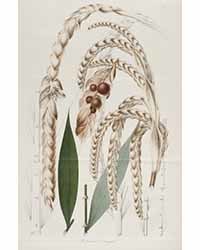
22nd July 2026Dominic Winter, July 22: Lot 83 – Westall & Owen. Picturesque Tour of the River Thames, 1st edition, 1828. £2,000-3,000.Dominic Winter, July 22: Lot 88 – Blume. Rumphia, Botanicae de plantis Indiae Orientalis, 1835-1848. £2,000-3,000.Dominic Winter, July 22: Lot 101 – Michaux. Histoire des arbres forestiers de l'Amérique septentrionale, 1810-1812. £700-1,000.Dominic Winter Auctioneers
Printed Books, Maps & Wisdens, English Bibles
1500-1800
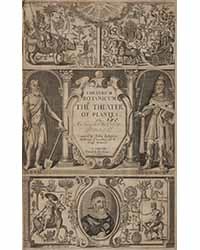
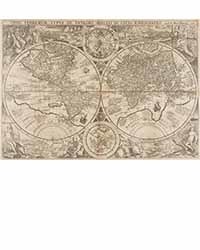
22nd July 2026Dominic Winter, July 22: Lot 102 – Miller & Shaw. Cimelia Physica, 1796 [but c. 1816]. £3,000-5,000.Dominic Winter, July 22: Lot 104 – Parkinson. Theatrum Botanicum: The Theater of Plants, London: Thomas Cotes, 1640. £800-1,200.Dominic Winter, July 22: Lot 159 – Plancius. Orbis Terrarum..., double hemisphere map, 1594-99. £5,000-8,000.Dominic Winter Auctioneers
Printed Books, Maps & Wisdens, English Bibles
1500-1800
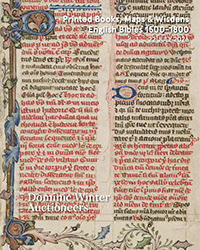
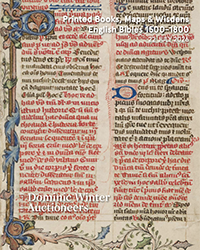
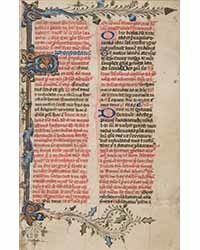
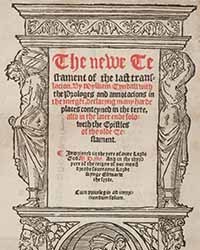
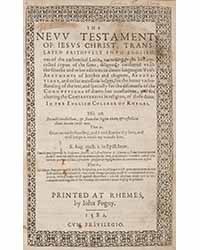
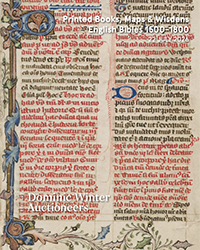
22nd July 2026Dominic Winter, July 22: Lot 217 – Illuminated Medieval Manuscript. From a Breviary, 14th/15th c. £3,000-4,000.Dominic Winter, July 22: Lot 224 – The newe Testament … By Wylliam Tyndall…, 1549. £3,000-5,000.Dominic Winter, July 22: Lot 238 – Douay-Rheims Bible. 3 volumes, 1582/1609/1610. £7,000-10,000.Dominic Winter Auctioneers
Printed Books, Maps & Wisdens, English Bibles
1500-1800
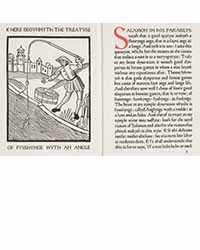
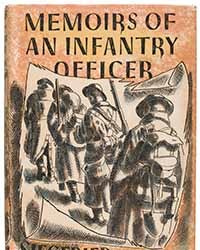
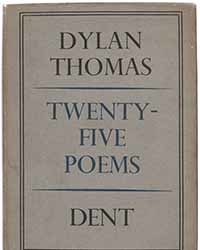
22nd July 2026Dominic Winter, July 22: Lot 336 – Ashendene Press. A Treatyse of Fysshynge with an Angle, 1903. £1,000-1,500.Dominic Winter, July 22: Lot 393 – Sassoon. Memoirs of an Infantry Officer, signed limited edition, 1931. £800-1,200.Dominic Winter, July 22: Lot 402 – Dylan Thomas. Twenty-Five Poems, 1st edition in d.j., 1936. £400-600. -


-
Case Auctions
2026 Summer Auction
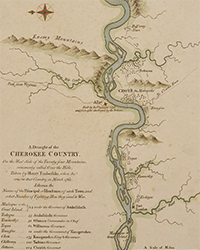
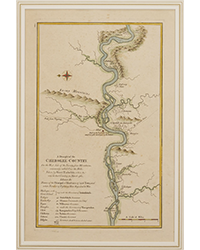
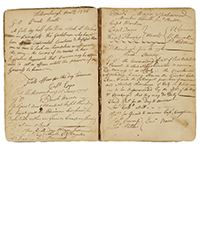
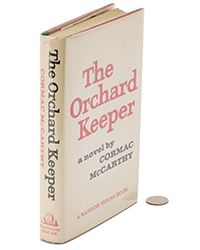
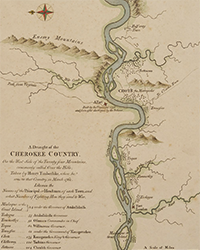
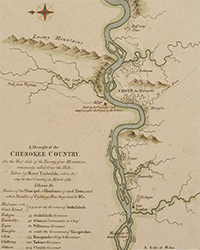
August 1st and 2ndCase Antiques, Aug. 1: Timberlake, Henry: A DRAUGHT OF THE CHEROKEE COUNTRY on the West Side of the Twenty Four Mountains, Commonly Called "Over the Hills". $18,000 to $22,000.Case Antiques, Aug. 1: Manuscript orderly book detailing day to day activities of multiple Virginia regiments in the Continental Army during the Revolutionary,1776-1777. $7,000 to $8,000.Case Antiques, Aug. 1: Cormac McCarthy, The Orchard Keeper, Random House, New York, 1965. Signed 1st Edition. $3,800 to $4,200.Case Auctions
2026 Summer Auction
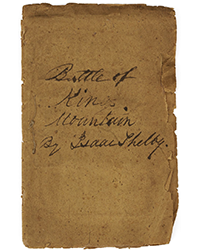
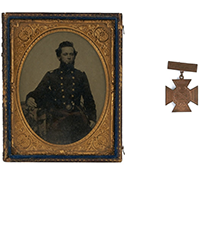
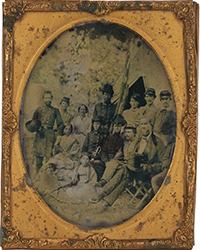
August 1st and 2ndCase Antiques, Aug. 1: Battle of Kings Mountain Pamphlet by Isaac Shelby, April 1823, Signed. $1,800 to $2,200.Case Antiques, Aug. 1: Large Tintype CSA Lt. Col. Thomas Coke Johnson, 19th GA, w/ Southern Cross, Book. $1,400 to $1,800.Case Antiques, Aug. 1: Rare Civil War Ambrotype, 19th GA Infantry with Johnson Family of GA. $800 to $1,200.Case Auctions
2026 Summer Auction
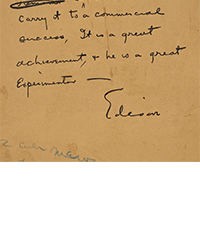
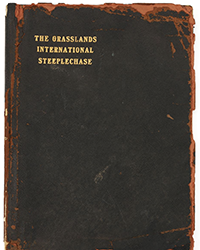
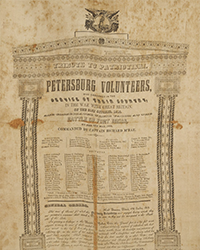
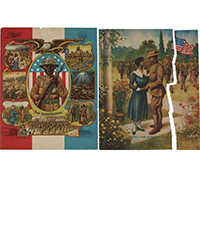
August 1st and 2ndCase Antiques, Aug. 1: A signed note written by Thomas Alva Edison to an unknown recipient, in which he shares his thoughts on Guglielmo Marconi, regarded as the inventor of the radio. $800 to $1,200.Case Antiques, Aug. 1: Rare 1931 TN Grasslands Steeplechase Book, Gallatin. $800 to $1,000.Case Antiques, Aug. 1: War of 1812 related Broadside, Petersburg Volunteers. $700 to $800.Case Antiques, Aug. 1: 2 World War I Posters, “Our Colored Fighters” and “No Slacker”. $800 to $1,000.