
Rare Book Monthly
Articles - November - 2009 Issue
Where Goes the Collectible Book?

Robert Frank's Fish Kill photograph sold for more than double the estimate.
Another news item, from the New York Times, at a time when we know traditional book fairs are struggling, further displays this growing divide. The article begins, "If you harbor even a speck of doubt about the continuing viability of hold-in-your-hand-and turn-the-pages print publications, check out the New York Art Book Fair..." The headline perhaps expresses the issue even more starkly - "All the Books You'll Never Catch on a Kindle." The books that are doing well are more works of art than practical, information-laden texts. These are the books that cannot be translated to a Kindle because it is their artistic virtues that make them valuable. Those that are valued for the knowledge they contain are the ones that can be translated to a Kindle file.
One of the stronger areas of book collecting these days is the private press limited edition, and other books notable more for their appearance than content. These may be editions of great books, but no one is expected to read them. Anyone who wants to actually read the text is expected to buy a "reading copy," not to disturb the pages of the deluxe edition. These are books in form, but not in purpose. They are like commemorative coins that are not meant to be circulated, or beautiful stamps from some obscure island nation never meant to be affixed to postage. They are art, not function. Are they even really "books?" It depends on whether you define "books" in terms of form or function.
What then of traditional, functional antiquarian and rare books, books that were created for their content, not appearance? It is the issue of the age. They do not look as beautiful on a coffee table, or even on a bookshelf. Most don't even look very special when opened. They are victims of the same issue that is starting to lead libraries to dispose of old books - they were created to disseminate the text within, but now that text is becoming more readily accessible through a digital copy.
Of course, there is something else very special about these books, something not even Frank's striking picture possesses - they are a part of our history. They are how we once passed down our collective knowledge, and entertained ourselves (and still do, though many other types of media now compete). We may need to infuse our children with a bit more concern for history to rekindle their interest in older books. We may also need to make book collecting easier to understand and more affordable to average budgets if book collecting is to survive. People collect coins and stamps, even though they will no more use them for their intended purposes of making change and mailing letters than they will use their collectible books for reading. However, coins and stamps have collecting guides that make it easy to know exactly what you (and everyone else) need to complete a collection. Book collecting requires far more thought and research, and often more money too. The positive is that book collecting offers unlimited possibilities, the opportunity to create a collection that is as unique and individual as a collection of quarters is common and impersonal. There is a part of us in books that not even the most expensive coins, stamps, or artwork possesses, but it remains an enormous challenge to get the next generation to understand the magic of books.
Rare Book Monthly
-
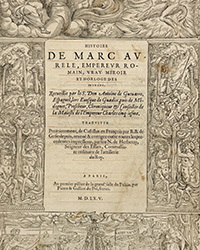
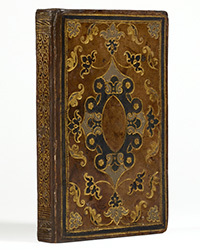
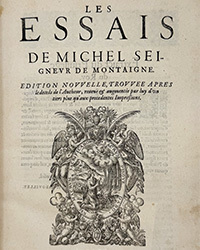
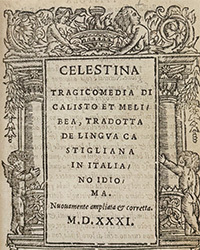
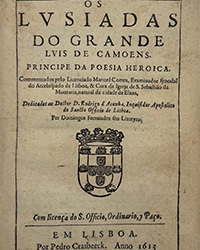
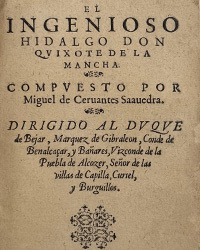
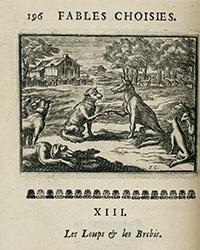
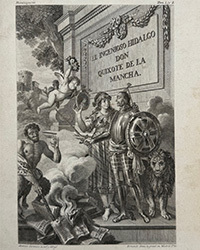
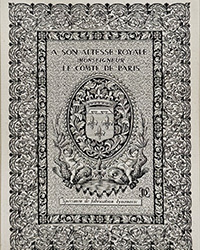
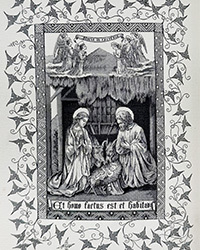 ALDE, Apr. 8: GUEVARA (ANTONIO DE). Histoire de Marc-Aurèle, Empereur Romain, vray miroir et horloge des Princes. Paris, Pierre et Galliot du Pré, frères, 1565. €3,000 to €4,000.ALDE, Apr. 8: HEURES DE LA VIERGE. Horæ in laudem beatissimæ virginis Mariæ ad usum Romanum. Paris, Charles L'Angelier, 1556. €4,000 to €5,000.ALDE, Apr. 8: MONTAIGNE (MICHEL DE). Les Essais. Édition nouvelle, trouvée après le deceds de l'autheur… Paris, Abel L'Angelier, 1595. €6,000 to €8,000.ALDE, Apr. 8: [ROJAS (FERNANDO DE)]. Celestina, tragicomedia di Calisto et Melibea, tradotta de lingua castigliana in italiano idioma… Venise, 1531. €2,000 to €3,000.ALDE, Apr. 8: CAMÕES (LUÍS DE). Os Lusiadas. Lisbonne, Pedro Crasbeeck, 1613. €2,000 to €3,000.ALDE, Apr. 8: CERVANTES (MIGUEL DE). El Ingenioso hidalgo Don Quixote de la Mancha. Bruxelles, Roger Velpius & Huberto Antonio, 1611. €6,000 to €8,000.ALDE, Apr. 8: LA FONTAINE (JEAN DE). Fables choisies, mises en vers. Paris, Denys Thierry et Claude Barbin, 1678-1694. €6,000 to €8,000.ALDE, Apr. 8: CERVANTES (MIGUEL DE). El Ingenioso hidalgo Don Quixote de la Mancha. Madrid, Joaquin Ibarra, 1780. €3,000 to €4,000.ALDE, Apr. 8: DIDEROT (DENIS) ET JEAN LE ROND D'ALEMBERT. Encyclopédie, ou dictionnaire raisonné des sciences, des arts et des métiers. Paris, 1751-1765. €15,000 to €20,000.ALDE, Apr. 8: [LIVRE TISSÉ]. LAMARTINE (Alphonse de). Les Laboureurs. Poème tiré de Jocelyn… Lyon, J. A. Henry, 1883. €8,000 to €10,000.ALDE, Apr. 8: [LIVRE TISSÉ]. Livre de prières tissé d'après les enluminures des manuscrits du XIVe au XVIe siècle. Lyon, [A. Roux], 1886. €5,000 to €6,000.
 -
Sotheby’s
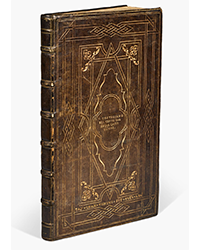
Books, Manuscripts & Objects from Three Important Collections
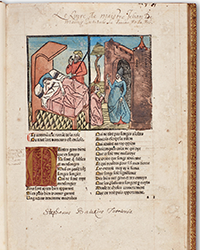
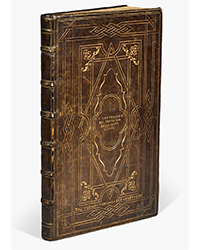
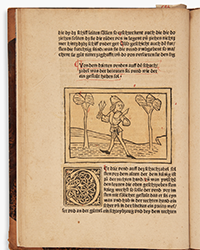
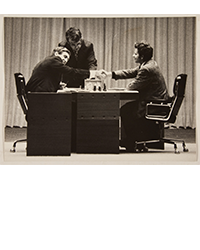
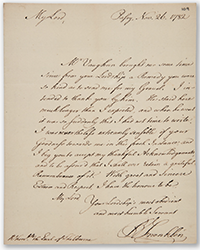
Open for Bidding 2-17 AprilSotheby’s, Apr. 2-17: [Guillaume de Lorris and Jean de Meun]. Le Roman de la Rose, [Geneva or Lyons, c.1481], first printed edition of the most important medieval French vernacular poem. £200,000 to £300,000.Sotheby’s, Apr. 2-17: Castiglione. Il libro del cortegiano. [Venice], April 1528, first edition, in a magnificent binding by Jean Picard for Jean Grolier. £100,000 to £150,000.Sotheby’s, Apr. 2-17: Jacobus de Cessolis. Schachzabelbuch, Strasbourg, 1483, von der Lasa copy. £50,000 to £70,000.Sotheby’s, Apr. 2-17: World Championship, 1972. A collection of 84 press photographs of the famed match between Spassky and Fischer. £2,000 to £3,000.Sotheby’s, Apr. 2-17: Ben Franklin. Autograph letter signed, to Lord Shelburne, British Prime Minister, during peace negotiations, November 1782. £15,000 to £20,000.