
Rare Book Monthly
Articles - November - 2009 Issue
The Google Settlement: Where It Stands, and Our Opinion on the Appropriate Resolution
Google's Chief Legal Officer testifies before Congress.
In that testimony, Mr. Drummond notes, "We are the only company to date that has attempted to digitize the vast in-copyright collections of U.S. libraries. Even so, nothing in the settlement prevents anyone from doing what we have done. The agreement is non-exclusive in every possible respect, and the creation of the registry will make it easier for other companies to enter the market." As for the "orphan books," Drummond says, "To the extent that other providers want a legal framework to re-use orphaned books (without having to defend against a lawsuit like we did), Google would support a legislative solution."
While the debate has focused on competition and the rights of orphan copyright holders, we believe the key to this issue lies in a few other comments in Mr. Drummond's testimony. He notes, "Because the settlement largely deals with out-of-print books, it does little to change the state of competition for new, in-print titles, which comprise 97% of the market." The controversy involves only 3% of the book market, but actually, it is considerably less, since many copyright holders of out-of-print books will have claimed their rights. Presumably, this group would include a concentration of writers of more recently out-of-print books that would be under the greatest market demand. Beyond the "orphans" (right holders cannot be located), Drummond points to an equally difficult group - "neglected books" (copyright holder cannot be determined). He states, "The cost of ascertaining for certain who has the rights to an out-of-print book likely exceeds the economic potential of any given book. The result is that these books, which collectively represent much of our nation's printed cultural heritage, have remained inaccessible."
That is the point. This is much ado about very little financially, but a whole lot culturally and historically. We are arguing about books that were never going to make money for their authors or publishers again, but are filled with information of incalculable value for researchers and others. Why are we fighting over this? The opposition believes there are great principles involved, including free competition and the sanctity of copyrights. Google suspects that some of the opponents may be more concerned that Google's successful entry into the small out-of-print market could lead to their entering the more lucrative in-print market. Whatever the motivation, we believe this issue should be settled on the basis of public policy, and finding a way to make more information available in this digital age is good public policy. Here is our suggestion.
Since what is involved is copyright law, that is, government legislation, it should be resolved with the same, not private deals. For the moment, it is being handled privately because Congress has not acted, but it is Congress' responsibility to act. Old rules do not work well in new times. The legislation should support the independent registry with copyright holders having the right to participate or opt out. As for "orphaned" works, where no claim of ownership is made, they should be treated as in the public domain, with the caveat that rights holders retain the ability to make a claim for their share of future royalties at a later date. As long as no claim is made, Google or anyone else should be free to sell or give away digital or printed copies as if there was no copyright or the copyright had expired. Not just snippets, as Google now offers for these works, but complete copies, as research will be stymied if a book must be purchased before one can even see whether it contains useful information.
Now, some may object that this abuses the copyright holders' rights, but here we need to look at the purpose of copyright law. It was not adopted to protect some high principle of authors' rights, to be preserved even if the authors themselves no longer care. It was adopted to encourage the writing of books. We protect authors' financial interests through copyrights because if we don't, authors will no longer write books. However, protecting abandoned claims provides no incentive to write. No one is going to refuse to write a book on the grounds that while it will be protected for the full term of the copyright if they so desire, it will not be protected if they, or their heirs, stop seeking that protection. Their copyright remains in force as long as they wish. This fully protects the incentive to write books while freeing up works to public access once the copyright becomes a barrier to read, rather than an incentive to write. Indeed, we suspect that many of these authors, some long dead, would rather see their handiwork made accessible to the public once its financial value is gone, rather than be "lost" through pointless enforcement of technical rights. It better respects their work, and their memory, while opening reams of information to the public. Once such legislation is passed, access to "orphan books," so valuable intellectually, but not financially, will no longer be hostage to what we believe are bigger issues opponents may have with Google. Google, and anyone else who so desires, will be free to offer orphan books to the public. This is good public policy.
Rare Book Monthly
-

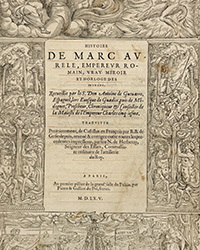
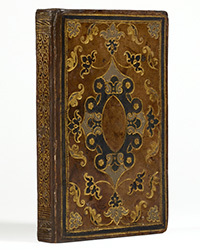
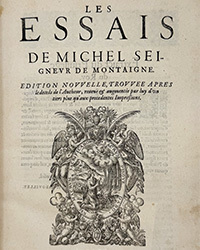

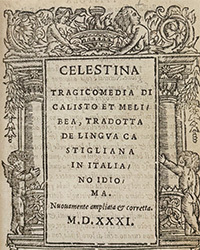
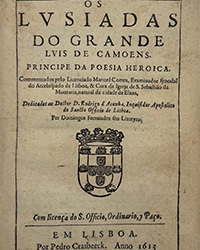
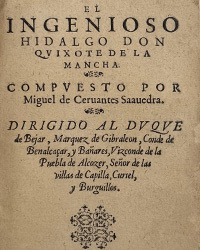

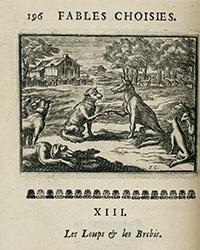
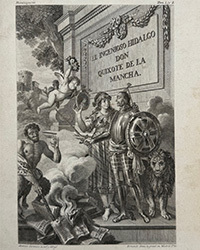
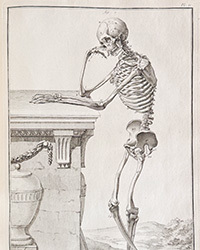

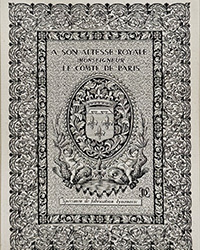
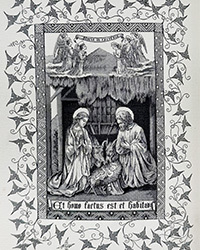 ALDE, Apr. 8: GUEVARA (ANTONIO DE). Histoire de Marc-Aurèle, Empereur Romain, vray miroir et horloge des Princes. Paris, Pierre et Galliot du Pré, frères, 1565. €3,000 to €4,000.ALDE, Apr. 8: HEURES DE LA VIERGE. Horæ in laudem beatissimæ virginis Mariæ ad usum Romanum. Paris, Charles L'Angelier, 1556. €4,000 to €5,000.ALDE, Apr. 8: MONTAIGNE (MICHEL DE). Les Essais. Édition nouvelle, trouvée après le deceds de l'autheur… Paris, Abel L'Angelier, 1595. €6,000 to €8,000.ALDE, Apr. 8: [ROJAS (FERNANDO DE)]. Celestina, tragicomedia di Calisto et Melibea, tradotta de lingua castigliana in italiano idioma… Venise, 1531. €2,000 to €3,000.ALDE, Apr. 8: CAMÕES (LUÍS DE). Os Lusiadas. Lisbonne, Pedro Crasbeeck, 1613. €2,000 to €3,000.ALDE, Apr. 8: CERVANTES (MIGUEL DE). El Ingenioso hidalgo Don Quixote de la Mancha. Bruxelles, Roger Velpius & Huberto Antonio, 1611. €6,000 to €8,000.ALDE, Apr. 8: LA FONTAINE (JEAN DE). Fables choisies, mises en vers. Paris, Denys Thierry et Claude Barbin, 1678-1694. €6,000 to €8,000.ALDE, Apr. 8: CERVANTES (MIGUEL DE). El Ingenioso hidalgo Don Quixote de la Mancha. Madrid, Joaquin Ibarra, 1780. €3,000 to €4,000.ALDE, Apr. 8: DIDEROT (DENIS) ET JEAN LE ROND D'ALEMBERT. Encyclopédie, ou dictionnaire raisonné des sciences, des arts et des métiers. Paris, 1751-1765. €15,000 to €20,000.ALDE, Apr. 8: [LIVRE TISSÉ]. LAMARTINE (Alphonse de). Les Laboureurs. Poème tiré de Jocelyn… Lyon, J. A. Henry, 1883. €8,000 to €10,000.ALDE, Apr. 8: [LIVRE TISSÉ]. Livre de prières tissé d'après les enluminures des manuscrits du XIVe au XVIe siècle. Lyon, [A. Roux], 1886. €5,000 to €6,000.
 -
Sotheby’s
Books, Manuscripts & Objects from Three Important Collections
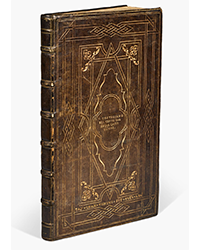
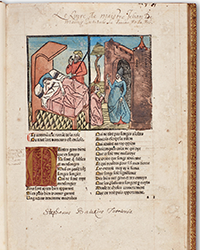
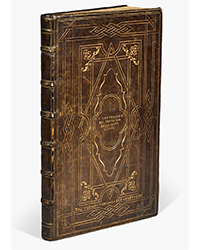
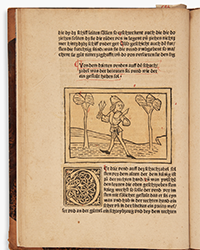
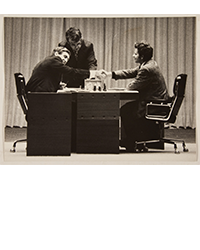
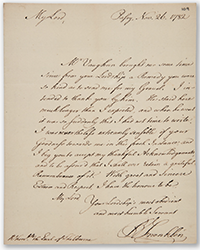
Open for Bidding 2-17 AprilSotheby’s, Apr. 2-17: [Guillaume de Lorris and Jean de Meun]. Le Roman de la Rose, [Geneva or Lyons, c.1481], first printed edition of the most important medieval French vernacular poem. £200,000 to £300,000.Sotheby’s, Apr. 2-17: Castiglione. Il libro del cortegiano. [Venice], April 1528, first edition, in a magnificent binding by Jean Picard for Jean Grolier. £100,000 to £150,000.Sotheby’s, Apr. 2-17: Jacobus de Cessolis. Schachzabelbuch, Strasbourg, 1483, von der Lasa copy. £50,000 to £70,000.Sotheby’s, Apr. 2-17: World Championship, 1972. A collection of 84 press photographs of the famed match between Spassky and Fischer. £2,000 to £3,000.Sotheby’s, Apr. 2-17: Ben Franklin. Autograph letter signed, to Lord Shelburne, British Prime Minister, during peace negotiations, November 1782. £15,000 to £20,000.