
Rare Book Monthly
An Authoritative Guide to Autograph Collecting Published by the Raab Collection

An exceptional guide for the autograph collector.
By Michael Stillman
The Raab Collection has published a book we highly recommend to anyone who collects, or has an interest in collecting autographs. The Raab Collection is the Philadelphia based autograph dealer that handles the highest level of signed items, particularly in the field of Americana. They have created a guide for autograph collectors that is filled with the knowledge and practical experience of Steven Raab, who has been collecting autographed documents for 50 years. That knowledge is essential for those entering this field, as autograph collecting not only has its great rewards, but its particular risks, most notably, forgery.
The title of this book is In The Presence of History, with the subtitle The Authoritative Guide to Historical Autographs For Collectors, History Enthusiasts and Investors. Now, here is one important clarification. "Autographs" don't simply mean signatures, but include letters, manuscripts and documents, signed by or in the hand of the creator. This guide is filled with the information you need to make intelligent choices about what to buy, where to buy, and how to authenticate what you are buying. Along the way, it is also filled with historical information, tales of treasure hunting, and an extensive section on U.S. presidential autographs.
Autograph collecting is particularly exciting for those with a keen sense of history. Not only do they provide a personal connection to the historic figures who wrote their words and names, they provide an insight into their lives unvarnished by the opinions of historians. A historian may interpret what Washington believed about the issues of his day, but an autographed manuscript can tell you what Washington actually said. It once more gives a voice to people who may have been psychoanalyzed, interpreted, and reinterpreted to the point that their actual thoughts have been lost.
Raab opens with a look back in history. One of the earliest to appreciate the autograph was Aristotle, who was a collector. Of course, autographs, in their broader meaning of handwritten documents, were the source of most information before the invention of the press. Alexander the Great founded the great library at Alexandria, which was massively expanded by his successors, the Ptolemys. At its peak, the library may have had as many as 700,000 manuscripts. In time, the library was destroyed, the Roman Empire fell, and every manuscript from antiquity disappeared. That is an astonishing reality, but nothing from the library at Alexandria or ancient Greece survives. Nor do originals from biblical times. All of these works are known only through copies made many centuries later. The oldest surviving manuscript that may have been written by a notable person is a letter from Simon Bar Kochba, leader of the last Jewish revolt against the Romans, which led to their long banishment from the Holy Land. This document goes back only to the 130s AD.
With the fall of Rome and the millennium long Dark Ages, autograph collecting was limited to cloistered monks, who fortunately copied many deteriorating old manuscripts. It was not until well into the Renaissance that collecting picked up again. It rekindled in 17th century Europe. In America, it took longer. There was little interest prior to the 1830s, but collecting became popular during the Jackson administration. Within a few decades the popularity became so great that notable figures, such as presidents, could no longer keep up with the demand. By 1857, Raab notes, Longfellow reported sending out 70 responses in one day to autograph seekers. The field was now well established.
The guide next goes into all of the details of assessing autographs, far too much for us to summarize here. Here is one: the importance of a document is critical to value, though many items may bear the signature of an important person. For example, everyone appreciates the famed signature of John Hancock. The result is even a lesser item such as a signed business receipt of Hancock goes for around $3,500. An appointment by Hancock as Governor of Massachusetts might be worth $6,000, while such an appointment made as President of the Continental Congress in 1776 should sell for $13,000. Finally, there is the extraordinary document, such as Hancock's appointment of Benedict Arnold as a major general, which sold for $75,000 in 2002.
Rare Book Monthly
-
Sotheby’s
Shelf Life: Books, Manuscripts and Works on Paper from the Library of Stanley J. Seeger and Christopher Cone
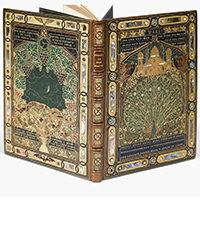
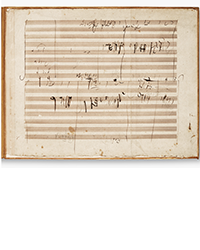
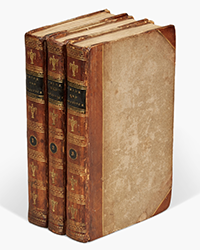
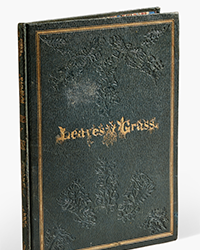
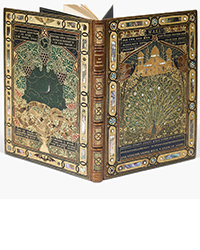
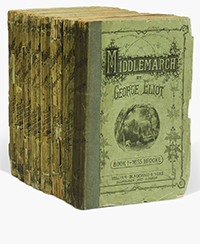
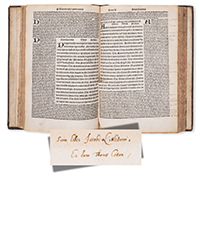
25 June – July 7Sotheby’s, July 7: Ludwig van Beethoven. Autograph sketches for the overture "Die Weihe des Hauses", op.124, [1822], UNPUBLISHED. £150,000 to £200,000.Sotheby’s, July 7: Jane Austen. Pride and Prejudice, 1813, first edition, 3 volumes, contemporary half calf. £50,000 to £70,000.Sotheby’s, July 7: Walt Whitman. Leaves of Grass, Brooklyn, 1855, first edition, first issue, original green cloth, the Doheny copy. £50,000 to £70,000.Sotheby’s, July 7: Binding—Sangorski & Sutcliffe—Omar Khayyam. Rubaiyat, London, 1872, third edition, in a magnificent jewelled Peacock binding. £15,000 to £20,000.Sotheby’s, July 7: George Eliot. Middlemarch, Edinburgh and London, 1871, first edition in the original parts. £20,000 to £30,000. -
Forum Auctions
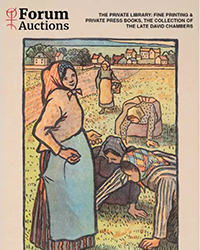
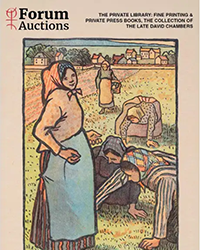
The Private Library:
Fine Printing & Private Press books, the collection of the late David Chambers
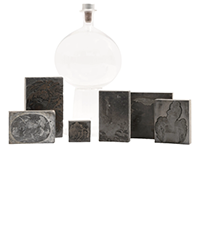
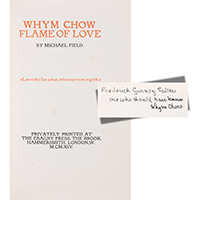
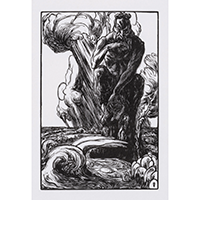
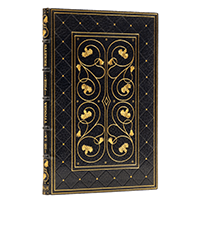
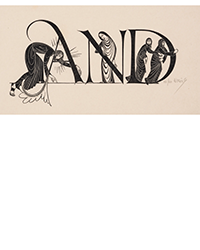
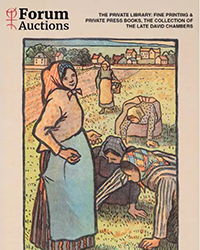
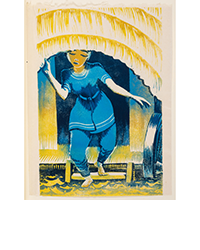
July 9, 2026Forum, July 9: Hassall (Joan) A large collection of over 300 original woodblocks of engravings for various books, v.d., with Hassall's engraver's glass water-globe (Qty) - Est. £10,000-15,000Forum, July 9: Eragny Press.- [Bradley (Katherine Harris) & Edith Emma Cooper], "Michael Field." Whym Chow, Flame of Love, one of only 27 copies, inscribed by Bradley, the rarest book from the press, 1914. - Est. £3,000-4,000Forum, July 9: [Moore (Thomas Sturge)] [Wood Engravings], 71 wood-engravings printed by David Chambers from the original blocks, the only set on Japanese Hosho paper, from an edition of 5 sets, [1970]. - Est. £3,000-4,000Forum Auctions
The Private Library:
Fine Printing & Private Press books, the collection of the late David Chambers
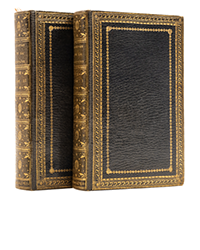
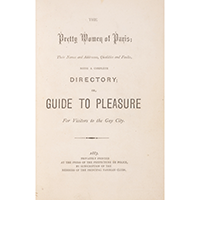
July 9, 2026Forum, July 9: La Fontaine (Jean de) Contes et Nouvelles en vers, 2 vol., engraved plates after Eisen, fine early 19th century blue morocco, gilt, by Bradel l'ainé, Amsterdam [Paris], 1762. - Est. £2,000-3,000Forum, July 9: Erotica.- Prostitution.- Pretty Women of Paris (The); Their Names and Addresses, Qualities and Faults..., [Paris], privately printed at the Press of the Prefecture de Police, 1883. - Est. £3,000-4,000Forum, July 9: Vale Press.- Ricketts (Charles) & Lucien Pissarro. De la Typographie et de l'Harmonie de la Page Imprimée…, [one of 216 copies], bound in dark blue morocco tooled in gilt, by Sarah T.Prideaux, 1898. - Est. £1,000-1,500Forum Auctions
The Private Library:
Fine Printing & Private Press books, the collection of the late David Chambers
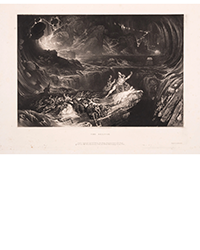
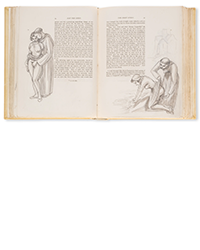
July 9, 2026Forum, July 9: Martin (John) Illustrations of the Bible, complete set of 20 mezzotints, good impressions, rarely found in early states, [c.1831-1835]. - Est. £1,000-1,500Forum, July 9: Golden Cockerel Press.- Four Gospels of the Lord Jesus Christ (The), one of 500 copies, Mary Gill's copy, Waltham St. Lawrence, 1931 with a signed proof of engraving on japon numbered 10/10 (2) - Est. £5,000-7,000Forum, July 9: Boccaccio (Giovanni) The Decameron, 3 vol., vol.1 extra-illustrated by John Buckland Wright with c.150 erotic original drawings in pen & ink and pencil, 1886 [extra-illustrated c.1940]. - Est. £10,000-15,000Forum Auctions
The Private Library:
Fine Printing & Private Press books, the collection of the late David Chambers
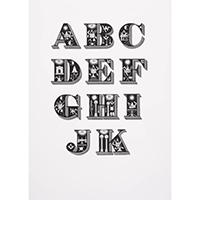
July 9, 2026Forum, July 9: Cox (Morris) Collection of Gogmagog Press Books, 35 vol., rare complete collection of printed books issued by the press, limited editions, most signed by Cox, 1957-83. - Est. £10,000-15,000Forum, July 9: Wynkyn de Worde.- [Terentius Afer (Publius)] [Comedie...], [Paris, Josse Badius: sold in London by Wynkyn de Worde, & others], [15 July 1504]. - Est. £4,000-6,000Forum, July 9: Mosley (James) Ornamented Types. Twenty-Three Alphabets from the Foundry of Louis John Pouchée, 2 vol., one of 10 copies for presentation, from an edition of 210, 1992-93. - Est. £1,000-2,000 -




Forum Auctions
The 10th Anniversary Sale
Fine Books, Manuscripts and Works on Paper
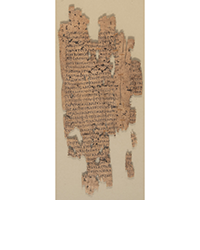
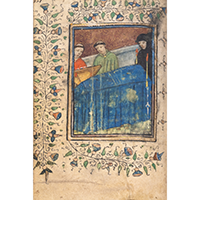
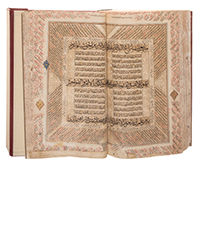
July 16, 2026Forum, July 16: Inundation papyrus. P.Michael 4, the ‘Inundation papyrus’, a geographical account of the Nile near Canopus, in Greek, remains of two columns from a manuscript scroll on papyrus, Egypt, second century CE. £12,000-18,000Forum, July 16: Book of Hours, use of Sarum, manuscript on vellum, 6 full-page miniatures, with famous Middle English inscriptions, Southern Netherlands for the English market, [c.1430]. £30,000-50,000Forum, July 16: Qu'ran, Arabic manuscript on burnished, stencilled, and gold-flecked paper, 447ff., Sultanate Gujarat, Ahmadabad, [after 1411 but no later than 1442]. £15,000-20,000Forum Auctions
The 10th Anniversary Sale
Fine Books, Manuscripts and Works on Paper
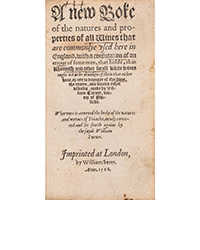
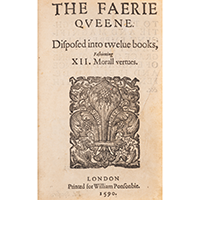
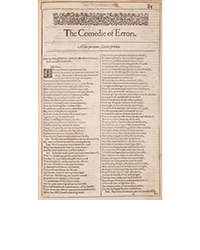
July 16, 2026Forum, July 16: Turner (William). A New boke of the natures and properties of all wines that are commonly vsed here in England, rare first edition of the first English book on wine, By William Seres, 1568. £20,000-£30,000Forum, July 16: Spenser (Edmund). The Faerie Queene. first edition, Printed [by John Wolfe] for William Ponsonbie, 1590. £30,000-40,000Forum, July 16: Shakespeare (William). The Comedie of Errors, extracted from the first folio, Isaac Jaggard and Edward Blount, 1623. £15,000-20,000Forum Auctions
The 10th Anniversary Sale
Fine Books, Manuscripts and Works on Paper
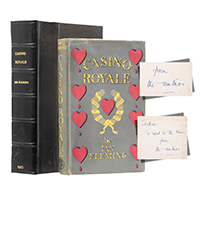
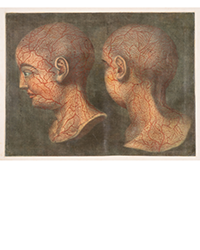
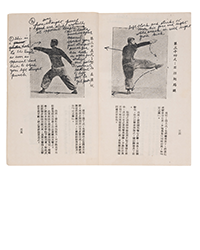
July 16, 2026Forum, July 16: Fleming (Ian). Casino Royale, first edition, signed presentation inscription from the author, 1953. £40,000-60,000Forum, July 16: d'Agoty (Jacques-Fabien Gautier). Anatomie de la Tête, first edition, Paris, chez le Sieur Gautier, 1748. £10,000-15,000Forum, July 16: Martial Arts.- Lee (Bruce). 'Praying Mantis style' Kung Fu book, containing numerous annotations, diagrams and graphs in Bruce Lee's hand, c. 1960. £50,000-70,000Forum Auctions
The 10th Anniversary Sale
Fine Books, Manuscripts and Works on Paper
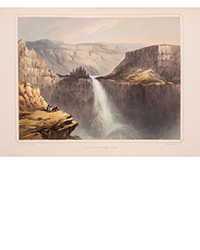
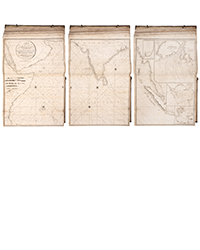
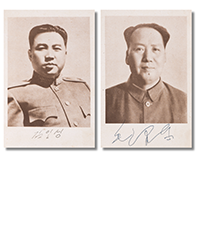
July 16, 2026Forum, July 16: Warre (Capt. Henry James). Sketches in North America and the Oregon Territory, first edition, rare hand-coloured issue, 1848. £30,000-40,000Forum, July 16: Norie (John William). The Marine Atlas, or Seaman's Complete Pilot for all the principal places in the known world..., 1826. £30,000-50,000Forum, July 16: Mao Tse-tung.- Kim Il-sung.-[Note book for visitors from China to Korea], signed by Mao and Kim, [Beijing, 1954]. £10,000-15,000