
Rare Book Monthly
Collector Bests State in Battle for $475,000 Document

The Virginia Supreme Court hands down its decision.
Finally, on the issue of conversion, the Court stated that even if the town "owned" the Declaration by virtue of taking possession of it over 200 years ago (a conclusion it neither reached nor rejected), it said that there was no evidence that Holbrook's family ever converted the document. Of course, you could surmise that this, in effect, happened (though not with any bad intentions), since there was no sign that the town ever intentionally gave the document to Holbrook's family. However, the Court compelled the state to provide evidence that this did not happen, and proving a negative is next to impossible. Strike three for Maine.
So, Mr. Adams is greatly relieved, but the bigger question is, what does this mean for all of the other old government documents out there in private hands, that governmental entities may assert claims for in the years ahead? The answer is, this case tells us very little. The Court, as courts are wont to do, decided it upon the narrowest of grounds. The reality is that this is an unusual case. It is rare that you will have this duality, an original copy plus a government mandated hand copy. These unusual circumstances may not arise again, but here they gave the court a justification for saying the original was not a public record. If Massachusetts in 1776 had said only that the ministers must give the document to the Town Clerk, not that he hand copy it, the decision could have been different. Few future cases are likely to involve this same situation.
As for the statutory "public document" argument, the Virginia Court neatly avoided it on a technicality. However, the implication of the lower court ruling is that if states pass statutes that are clearly intended to apply retroactively, they can turn any old once state-owned documents into public records. In other words, states are free to make the changes to their laws necessary to assure that a result like this never happens again. That's of cold comfort to collectors possessing old government documents.
The Court's final ruling, on conversion, was more surprising to me. Given the unusual circumstances here, I thought Maine's best chance was on conversion. After all, with most such old documents now in private hands, no one has any idea how they got there. They might just as likely have been sold by the governmental authority as unlawfully taken, similar to a library sale. Perhaps even more likely, they were just discarded when there was no longer any practical need for them, no one imagining they might some day be of value (like those old exlibris library books). This is why governments have dumpsters and paper shredders. But unlike the typical case, it appears unlikely this document was ever sold or discarded by the town. It was just given to the Town Clerk for safekeeping. He was never told to discard it. It would appear that for all the years it remained with Holbrook and his daughter, its status was one of safekeeping for the town. If so, there seems to me a reasonable argument that this remained undiscarded state property right up until the point Plumstead's estate sold this document it did not own at auction. At that point, the document was unlawfully "converted."
Why did the Court not rule this way? Courts often, I suspect, try to do what's right. We hear a lot about "strict construction" and that judges should just dispassionately follow the law, whatever that might mean. Anyone who believes this is how it works is either naïve or disingenuous. Few like "strict construction" when it finds for the other party. This has the feel of a case where the court decided where the balance of right and wrong lay and reached a decision accordingly. Leaving aside the legal technicalities of whether this was a "public document," or whether the Maine statute could be applied retroactively, or whether the state could not prove the obvious, that the town never did officially discard the document, it is still understandable that the Court would find for Adams. After all, he found himself in this predicament not because of his wrongdoing, or even his carelessness. He ended up there because of the carelessness of the Town of Wiscasset in managing its possessions. It allowed Adams to purchase this item in good faith because for 200 years it displayed little interest or concern with what happened to this material. To penalize Adams to the tune of $475,000 and reward the state for this damaging negligence seems terribly unfair. I suspect the Court saw it that way too, so they ruled for Adams, but in a way that will afford little precedent for future government-collector disputes.
Rare Book Monthly
-
Sotheby’s
Shelf Life: Books, Manuscripts and Works on Paper from the Library of Stanley J. Seeger and Christopher Cone
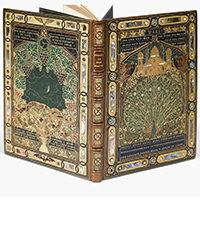
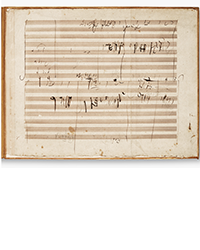
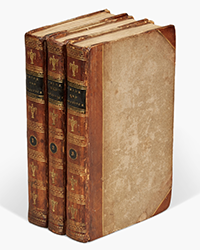
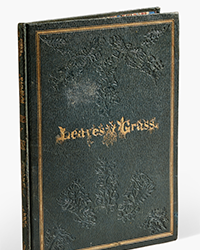
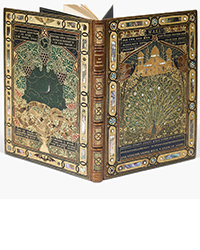
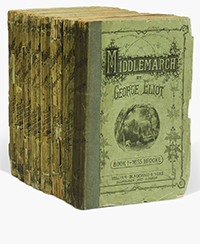
25 June – July 7Sotheby’s, July 7: Ludwig van Beethoven. Autograph sketches for the overture "Die Weihe des Hauses", op.124, [1822], UNPUBLISHED. £150,000 to £200,000.Sotheby’s, July 7: Jane Austen. Pride and Prejudice, 1813, first edition, 3 volumes, contemporary half calf. £50,000 to £70,000.Sotheby’s, July 7: Walt Whitman. Leaves of Grass, Brooklyn, 1855, first edition, first issue, original green cloth, the Doheny copy. £50,000 to £70,000.Sotheby’s, July 7: Binding—Sangorski & Sutcliffe—Omar Khayyam. Rubaiyat, London, 1872, third edition, in a magnificent jewelled Peacock binding. £15,000 to £20,000.Sotheby’s, July 7: George Eliot. Middlemarch, Edinburgh and London, 1871, first edition in the original parts. £20,000 to £30,000. -
Forum Auctions
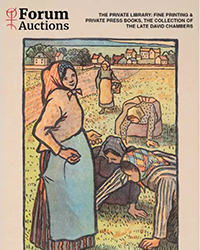
The Private Library:
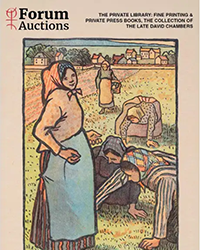
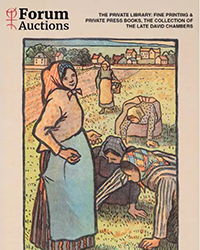
Fine Printing & Private Press books, the collection of the late David Chambers
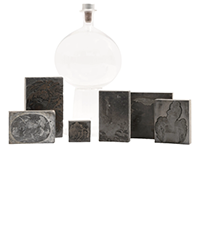
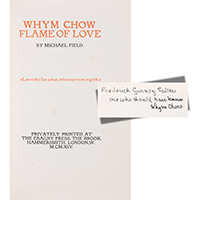
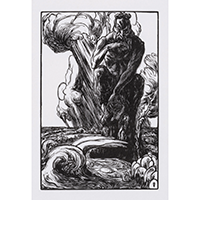
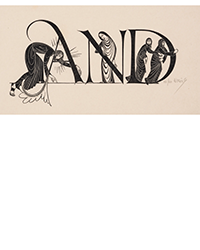
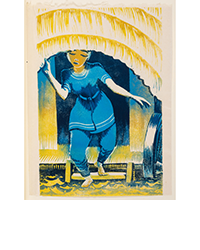
July 9, 2026Forum, July 9: Hassall (Joan) A large collection of over 300 original woodblocks of engravings for various books, v.d., with Hassall's engraver's glass water-globe (Qty) - Est. £10,000-15,000Forum, July 9: Eragny Press.- [Bradley (Katherine Harris) & Edith Emma Cooper], "Michael Field." Whym Chow, Flame of Love, one of only 27 copies, inscribed by Bradley, the rarest book from the press, 1914. - Est. £3,000-4,000Forum, July 9: [Moore (Thomas Sturge)] [Wood Engravings], 71 wood-engravings printed by David Chambers from the original blocks, the only set on Japanese Hosho paper, from an edition of 5 sets, [1970]. - Est. £3,000-4,000Forum Auctions
The Private Library:
Fine Printing & Private Press books, the collection of the late David Chambers
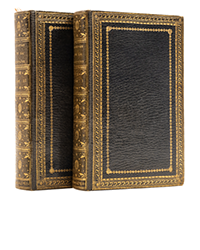
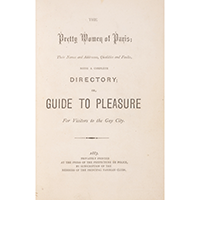
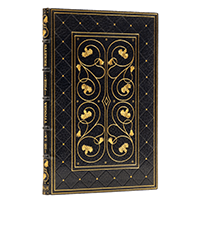
July 9, 2026Forum, July 9: La Fontaine (Jean de) Contes et Nouvelles en vers, 2 vol., engraved plates after Eisen, fine early 19th century blue morocco, gilt, by Bradel l'ainé, Amsterdam [Paris], 1762. - Est. £2,000-3,000Forum, July 9: Erotica.- Prostitution.- Pretty Women of Paris (The); Their Names and Addresses, Qualities and Faults..., [Paris], privately printed at the Press of the Prefecture de Police, 1883. - Est. £3,000-4,000Forum, July 9: Vale Press.- Ricketts (Charles) & Lucien Pissarro. De la Typographie et de l'Harmonie de la Page Imprimée…, [one of 216 copies], bound in dark blue morocco tooled in gilt, by Sarah T.Prideaux, 1898. - Est. £1,000-1,500Forum Auctions
The Private Library:
Fine Printing & Private Press books, the collection of the late David Chambers
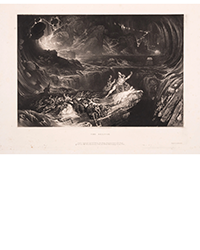
July 9, 2026Forum, July 9: Martin (John) Illustrations of the Bible, complete set of 20 mezzotints, good impressions, rarely found in early states, [c.1831-1835]. - Est. £1,000-1,500Forum, July 9: Golden Cockerel Press.- Four Gospels of the Lord Jesus Christ (The), one of 500 copies, Mary Gill's copy, Waltham St. Lawrence, 1931 with a signed proof of engraving on japon numbered 10/10 (2) - Est. £5,000-7,000Forum, July 9: Boccaccio (Giovanni) The Decameron, 3 vol., vol.1 extra-illustrated by John Buckland Wright with c.150 erotic original drawings in pen & ink and pencil, 1886 [extra-illustrated c.1940]. - Est. £10,000-15,000Forum Auctions
The Private Library:
Fine Printing & Private Press books, the collection of the late David Chambers
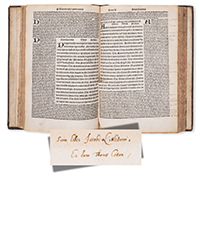
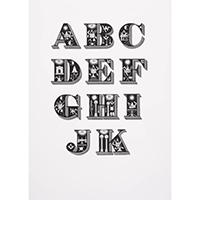
July 9, 2026Forum, July 9: Cox (Morris) Collection of Gogmagog Press Books, 35 vol., rare complete collection of printed books issued by the press, limited editions, most signed by Cox, 1957-83. - Est. £10,000-15,000Forum, July 9: Wynkyn de Worde.- [Terentius Afer (Publius)] [Comedie...], [Paris, Josse Badius: sold in London by Wynkyn de Worde, & others], [15 July 1504]. - Est. £4,000-6,000Forum, July 9: Mosley (James) Ornamented Types. Twenty-Three Alphabets from the Foundry of Louis John Pouchée, 2 vol., one of 10 copies for presentation, from an edition of 210, 1992-93. - Est. £1,000-2,000 -




Forum Auctions
The 10th Anniversary Sale
Fine Books, Manuscripts and Works on Paper
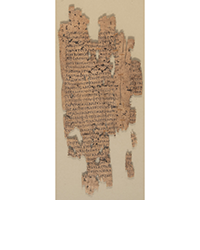
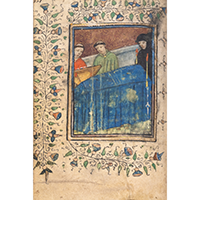
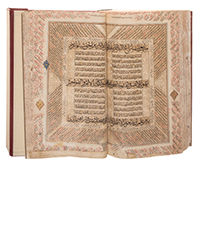
July 16, 2026Forum, July 16: Inundation papyrus. P.Michael 4, the ‘Inundation papyrus’, a geographical account of the Nile near Canopus, in Greek, remains of two columns from a manuscript scroll on papyrus, Egypt, second century CE. £12,000-18,000Forum, July 16: Book of Hours, use of Sarum, manuscript on vellum, 6 full-page miniatures, with famous Middle English inscriptions, Southern Netherlands for the English market, [c.1430]. £30,000-50,000Forum, July 16: Qu'ran, Arabic manuscript on burnished, stencilled, and gold-flecked paper, 447ff., Sultanate Gujarat, Ahmadabad, [after 1411 but no later than 1442]. £15,000-20,000Forum Auctions
The 10th Anniversary Sale
Fine Books, Manuscripts and Works on Paper
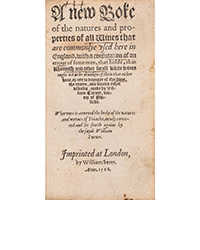
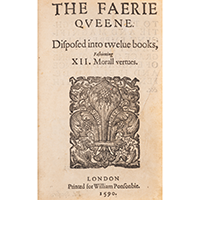
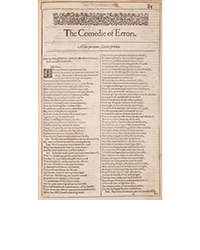
July 16, 2026Forum, July 16: Turner (William). A New boke of the natures and properties of all wines that are commonly vsed here in England, rare first edition of the first English book on wine, By William Seres, 1568. £20,000-£30,000Forum, July 16: Spenser (Edmund). The Faerie Queene. first edition, Printed [by John Wolfe] for William Ponsonbie, 1590. £30,000-40,000Forum, July 16: Shakespeare (William). The Comedie of Errors, extracted from the first folio, Isaac Jaggard and Edward Blount, 1623. £15,000-20,000Forum Auctions
The 10th Anniversary Sale
Fine Books, Manuscripts and Works on Paper
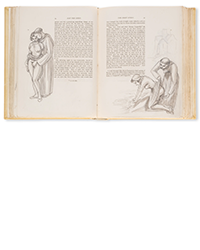
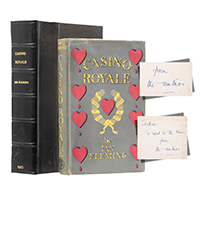
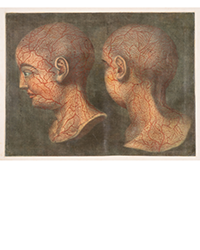
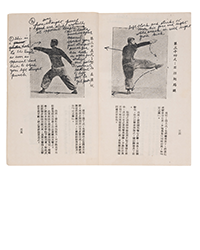
July 16, 2026Forum, July 16: Fleming (Ian). Casino Royale, first edition, signed presentation inscription from the author, 1953. £40,000-60,000Forum, July 16: d'Agoty (Jacques-Fabien Gautier). Anatomie de la Tête, first edition, Paris, chez le Sieur Gautier, 1748. £10,000-15,000Forum, July 16: Martial Arts.- Lee (Bruce). 'Praying Mantis style' Kung Fu book, containing numerous annotations, diagrams and graphs in Bruce Lee's hand, c. 1960. £50,000-70,000Forum Auctions
The 10th Anniversary Sale
Fine Books, Manuscripts and Works on Paper
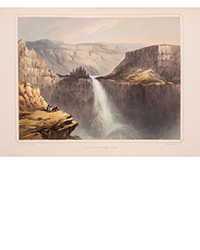
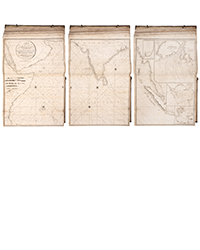
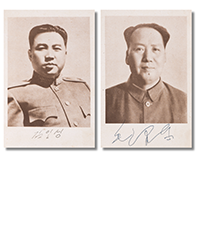
July 16, 2026Forum, July 16: Warre (Capt. Henry James). Sketches in North America and the Oregon Territory, first edition, rare hand-coloured issue, 1848. £30,000-40,000Forum, July 16: Norie (John William). The Marine Atlas, or Seaman's Complete Pilot for all the principal places in the known world..., 1826. £30,000-50,000Forum, July 16: Mao Tse-tung.- Kim Il-sung.-[Note book for visitors from China to Korea], signed by Mao and Kim, [Beijing, 1954]. £10,000-15,000