
Rare Book Monthly
Disappearing Ink: The Word Transformed

Ready or not, newspapers go online
The internet, as an enabling technology, is different in that it is both aggregator and successor for many fields, areas and categories and increasingly unifies them all into a single search. It is sucking the life out of newspapers by providing faster lower cost classified advertising, immediate news, and composite news analysis. And what it does to newspapers it is also doing to books and libraries specifically, media generally, services broadly and information globally. It is an equal opportunity builder and destroyer. It delivers news and entertainment, provides research encompassing some aspects of what were separate and distinct communities and processes in the past. And as it does this, it undermines and destroys the usefulness and viability of many, almost certainly most, traditional forms of delivery. Newspapers are dying every day and in five years most will be trivia questions - can you name...? Every day announcements of more layoffs and shutdowns reach us via the internet, the very agent that is writing the final chapter on the newspaper. Magazines also struggle.
Libraries, the lions of civic pride, that stand in shaded places in towns and cities near their populations ever ready to be helpful, are themselves struggling for budget and to retain the customers who increasingly obtain online more in a blink than they can on the shelves of institutions that have, for generations, met the complex needs of their communities. Many libraries are now in their Andersonvilles, starved for appropriations, hoping for Presidential pardons. They too are disappearing into the internet's maw, they the eggs and flower churned into the great cake mix that is the internet, always increasing, inevitably disappearing.
Two hundred years ago the half life of the next big thing was forty years. It took from 1810 to 1850 for steamboats to dominate American transportation. Railroads, born in the 1830's, hit their stride in the 1860s and extended transportation to the far corners by the end of the century. The first car, a puny sputtering thing in 1894 became all the rage in twenty years and quickly turned America into the grid work of local, county, state and national highways that today is eight, even ten lanes in some places.
Information moved more slowly. Newspapers and books, once invincible only recently have become the inevitable victims of change. Libraries are still being built and may yet transform themselves into a functioning part of the future. They are public institutions and subject to more lenient accounting than corporations. Newspapers and books were permanent until they weren't. For libraries, they are permanent until and unless funding is withdrawn. Certainly, change is upon us now and there will be no going back.
These changes have been huge and we can predict they are nothing compared to the changes that are coming. The half-life of change was until recently measured in decades and is now calculated in years. The very concept of change is now inverse as change has become the constant. The steamboat lasted a hundred years, trains longer through their forms and purposes changed. Books have lasted five hundred and fifty years and libraries almost as long. In the next decade, we'll experience more change than we have seen in the last half millenium.
For those with an interest in the printed word we are left to consider whether the future's relationship to books will be logical, emotional or some combination of both. If entirely logical, there are going to be faster and easier ways to deal with the material. Books aren't going to be competitive as efficient repositories and distributors of knowledge. Only if the magic in the objects is transmittable will significant interest in them continue. In a perverse way, the internet which is at once the Wicked Witch of the North and also its Oz may, by turning printed material into searchable words and phrases provide future generations with a clarity on things past that yields a greater intimacy with older materials than has ever been thought possible. So stay tuned.
Rare Book Monthly
-
Sotheby’s
Shelf Life: Books, Manuscripts and Works on Paper from the Library of Stanley J. Seeger and Christopher Cone
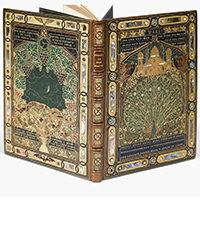
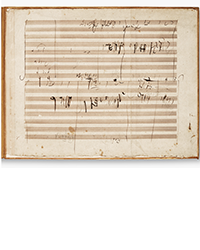
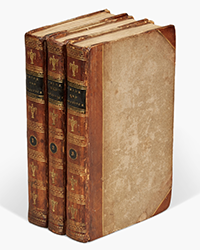
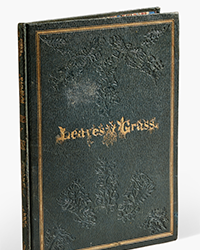
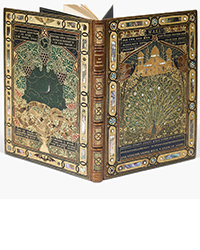
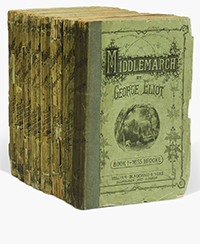
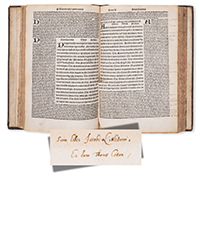
25 June – July 7Sotheby’s, July 7: Ludwig van Beethoven. Autograph sketches for the overture "Die Weihe des Hauses", op.124, [1822], UNPUBLISHED. £150,000 to £200,000.Sotheby’s, July 7: Jane Austen. Pride and Prejudice, 1813, first edition, 3 volumes, contemporary half calf. £50,000 to £70,000.Sotheby’s, July 7: Walt Whitman. Leaves of Grass, Brooklyn, 1855, first edition, first issue, original green cloth, the Doheny copy. £50,000 to £70,000.Sotheby’s, July 7: Binding—Sangorski & Sutcliffe—Omar Khayyam. Rubaiyat, London, 1872, third edition, in a magnificent jewelled Peacock binding. £15,000 to £20,000.Sotheby’s, July 7: George Eliot. Middlemarch, Edinburgh and London, 1871, first edition in the original parts. £20,000 to £30,000. -




Forum Auctions
The Private Library:
Fine Printing & Private Press books, the collection of the late David Chambers
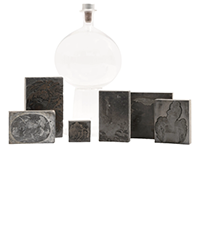
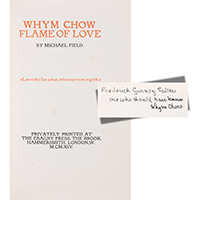
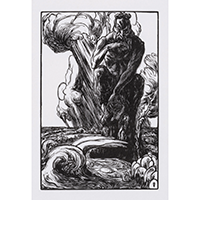
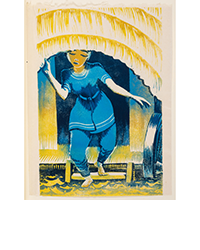
July 9, 2026Forum, July 9: Hassall (Joan) A large collection of over 300 original woodblocks of engravings for various books, v.d., with Hassall's engraver's glass water-globe (Qty) - Est. £10,000-15,000Forum, July 9: Eragny Press.- [Bradley (Katherine Harris) & Edith Emma Cooper], "Michael Field." Whym Chow, Flame of Love, one of only 27 copies, inscribed by Bradley, the rarest book from the press, 1914. - Est. £3,000-4,000Forum, July 9: [Moore (Thomas Sturge)] [Wood Engravings], 71 wood-engravings printed by David Chambers from the original blocks, the only set on Japanese Hosho paper, from an edition of 5 sets, [1970]. - Est. £3,000-4,000Forum Auctions
The Private Library:
Fine Printing & Private Press books, the collection of the late David Chambers
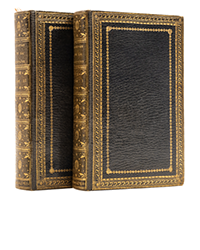
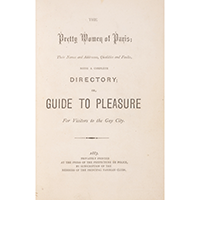
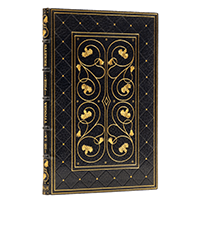
July 9, 2026Forum, July 9: La Fontaine (Jean de) Contes et Nouvelles en vers, 2 vol., engraved plates after Eisen, fine early 19th century blue morocco, gilt, by Bradel l'ainé, Amsterdam [Paris], 1762. - Est. £2,000-3,000Forum, July 9: Erotica.- Prostitution.- Pretty Women of Paris (The); Their Names and Addresses, Qualities and Faults..., [Paris], privately printed at the Press of the Prefecture de Police, 1883. - Est. £3,000-4,000Forum, July 9: Vale Press.- Ricketts (Charles) & Lucien Pissarro. De la Typographie et de l'Harmonie de la Page Imprimée…, [one of 216 copies], bound in dark blue morocco tooled in gilt, by Sarah T.Prideaux, 1898. - Est. £1,000-1,500Forum Auctions
The Private Library:
Fine Printing & Private Press books, the collection of the late David Chambers
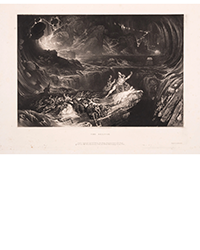
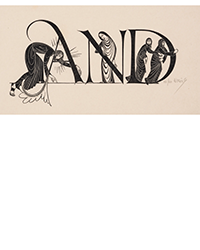
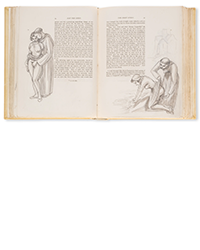
July 9, 2026Forum, July 9: Martin (John) Illustrations of the Bible, complete set of 20 mezzotints, good impressions, rarely found in early states, [c.1831-1835]. - Est. £1,000-1,500Forum, July 9: Golden Cockerel Press.- Four Gospels of the Lord Jesus Christ (The), one of 500 copies, Mary Gill's copy, Waltham St. Lawrence, 1931 with a signed proof of engraving on japon numbered 10/10 (2) - Est. £5,000-7,000Forum, July 9: Boccaccio (Giovanni) The Decameron, 3 vol., vol.1 extra-illustrated by John Buckland Wright with c.150 erotic original drawings in pen & ink and pencil, 1886 [extra-illustrated c.1940]. - Est. £10,000-15,000Forum Auctions
The Private Library:
Fine Printing & Private Press books, the collection of the late David Chambers
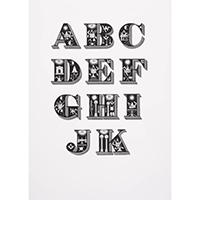
July 9, 2026Forum, July 9: Cox (Morris) Collection of Gogmagog Press Books, 35 vol., rare complete collection of printed books issued by the press, limited editions, most signed by Cox, 1957-83. - Est. £10,000-15,000Forum, July 9: Wynkyn de Worde.- [Terentius Afer (Publius)] [Comedie...], [Paris, Josse Badius: sold in London by Wynkyn de Worde, & others], [15 July 1504]. - Est. £4,000-6,000Forum, July 9: Mosley (James) Ornamented Types. Twenty-Three Alphabets from the Foundry of Louis John Pouchée, 2 vol., one of 10 copies for presentation, from an edition of 210, 1992-93. - Est. £1,000-2,000 -




Forum Auctions
The 10th Anniversary Sale
Fine Books, Manuscripts and Works on Paper
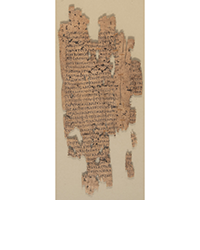
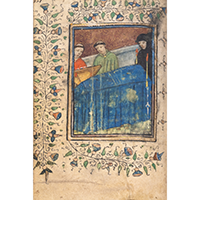
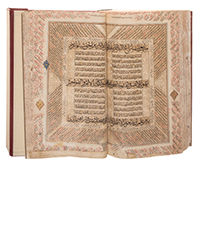
July 16, 2026Forum, July 16: Inundation papyrus. P.Michael 4, the ‘Inundation papyrus’, a geographical account of the Nile near Canopus, in Greek, remains of two columns from a manuscript scroll on papyrus, Egypt, second century CE. £12,000-18,000Forum, July 16: Book of Hours, use of Sarum, manuscript on vellum, 6 full-page miniatures, with famous Middle English inscriptions, Southern Netherlands for the English market, [c.1430]. £30,000-50,000Forum, July 16: Qu'ran, Arabic manuscript on burnished, stencilled, and gold-flecked paper, 447ff., Sultanate Gujarat, Ahmadabad, [after 1411 but no later than 1442]. £15,000-20,000Forum Auctions
The 10th Anniversary Sale
Fine Books, Manuscripts and Works on Paper
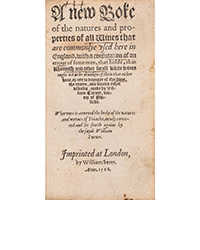
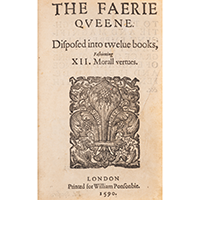
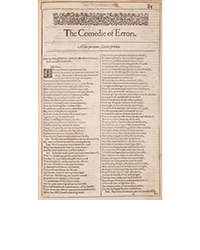
July 16, 2026Forum, July 16: Turner (William). A New boke of the natures and properties of all wines that are commonly vsed here in England, rare first edition of the first English book on wine, By William Seres, 1568. £20,000-£30,000Forum, July 16: Spenser (Edmund). The Faerie Queene. first edition, Printed [by John Wolfe] for William Ponsonbie, 1590. £30,000-40,000Forum, July 16: Shakespeare (William). The Comedie of Errors, extracted from the first folio, Isaac Jaggard and Edward Blount, 1623. £15,000-20,000Forum Auctions
The 10th Anniversary Sale
Fine Books, Manuscripts and Works on Paper
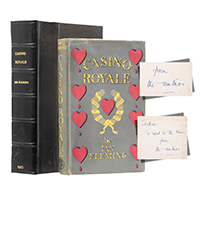
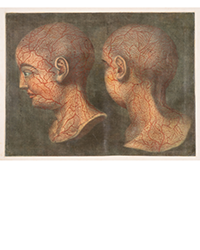
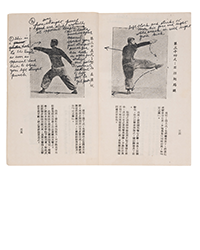
July 16, 2026Forum, July 16: Fleming (Ian). Casino Royale, first edition, signed presentation inscription from the author, 1953. £40,000-60,000Forum, July 16: d'Agoty (Jacques-Fabien Gautier). Anatomie de la Tête, first edition, Paris, chez le Sieur Gautier, 1748. £10,000-15,000Forum, July 16: Martial Arts.- Lee (Bruce). 'Praying Mantis style' Kung Fu book, containing numerous annotations, diagrams and graphs in Bruce Lee's hand, c. 1960. £50,000-70,000Forum Auctions
The 10th Anniversary Sale
Fine Books, Manuscripts and Works on Paper
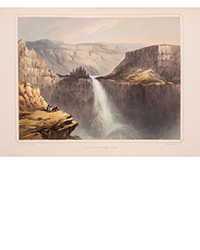
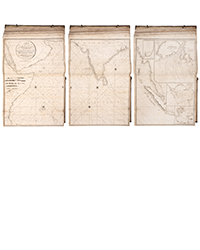
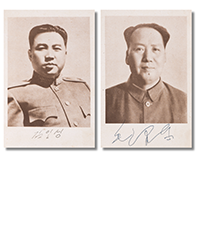
July 16, 2026Forum, July 16: Warre (Capt. Henry James). Sketches in North America and the Oregon Territory, first edition, rare hand-coloured issue, 1848. £30,000-40,000Forum, July 16: Norie (John William). The Marine Atlas, or Seaman's Complete Pilot for all the principal places in the known world..., 1826. £30,000-50,000Forum, July 16: Mao Tse-tung.- Kim Il-sung.-[Note book for visitors from China to Korea], signed by Mao and Kim, [Beijing, 1954]. £10,000-15,000