
Rare Book Monthly
Articles - February - 2009 Issue
Reality Returns to Bookselling

After 2000, increases in home value based on easy money replaced job creation as the fundamental driver in the US economy. And for a while it was possible to periodically refinance real estate to 'borrow' the gain without incurring tax. It was too good to be true. The bubble has since burst and real estate valuation is now trying to find traction at 60 to 70% of peak values. The government is committed to saving homeowners from default. Nevertheless, foreclosures will peak over the next three years. To lessen the crisis primary mortgages will probably fall below 4% later this year.
For book, manuscript and ephemera dealers the issues are further complicated by the un-braided nature of economic priority and its impact on demand. All purchases are not equal. Food, medicine and mortgages come first and books, manuscripts and ephemera somewhere after. For the bookseller who depends on selling for a livelihood, there may be limited options for inducing buyers to purchase other than to offer pricing concessions. The standard approach - lowering prices - however is difficult to use because most booksellers list on sites with thousands of others – where there are often multiple copies in varying condition and where all pricing reference is to other listed copies rather than to present value [auction] calculations. Hence a book listed at $800 on line may transact at auction for $300 but internet buyers not know this. For the seller the dilemma is whether to price based on online competition or against auction realizations and there is no easy answer. Certainly, collectors are moving toward market-based pricing but how many and how quickly, is unclear. Nevertheless, to put bread on the table, some dealers may need to lower prices on-line and hope to do it in a way that attracts buyer interest without incurring seller retaliation. Their reference may be exclusively to other listed copies but it may not be competitive enough to induce the 'auction aware' to buy. If everyone cuts prices no comparative advantage is achieved and theoretically everyone loses. No matter how you figure, it's going to take more sales to make the same income in 2009. How long the downturn lasts is an open question. That books, manuscripts and ephemera though are uniquely vulnerable in this downturn is beyond question for several reasons:
[1] High speed online access, cheap computers and ultra fast online databases everyday link more disparate book inventories into what is becoming essentially a single online search of an ever increasing quantity of material. Excessive availability and selection dilute demand even in the best of times. [2] The world's interest in and need for physical copies is also declining as the next generation looks past physical objects to ultra-fast deep searching of primary text. For many, efficient access to content obviates need for the object. A portion of the buying public will simply disappear. Future generations may read more words but certainly fewer books and inevitably come to see us as the last stone-age barbarians in a world in which the human expectation about information changes so fundamentally it actually restructures thought. [3] The very nature of collecting is changing. It is turning out that books, among the many forms of printed material have been collected, not because they have been preferred, but because they have been possible. As the internet and sprawling databases bring broadsides, pamphlets and ephemera within a single search, books face an additional dilution of demand. This is already very clear on eBay and is spreading into the auction rooms. There are, conservatively estimated, ten million ephemera. Pre-1925 books probably total less than 400,000 titles and editions.
So even without an economic down-turn the book business has faced an uncertain future as millions of printed objects that recently had higher commercial value face increasing competition both from other copies and other collectible forms. In a world of supply and demand, the supply increases, the demand decreases and in some cases simply morphs into new collecting directions.
Rare Book Monthly
-

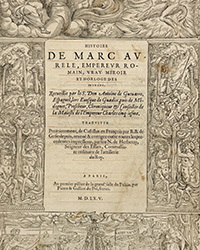
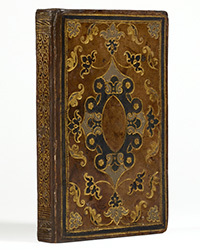
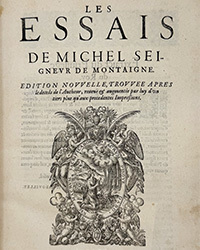

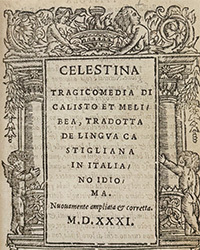
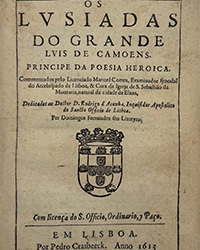
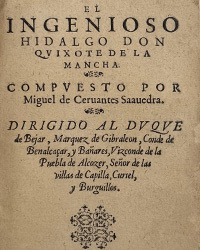

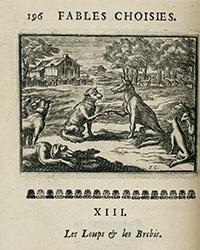
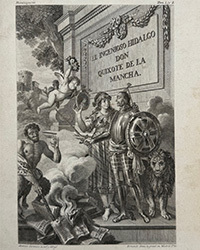

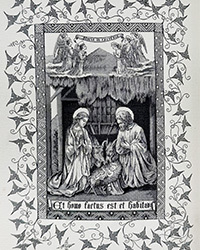 ALDE, Apr. 8: GUEVARA (ANTONIO DE). Histoire de Marc-Aurèle, Empereur Romain, vray miroir et horloge des Princes. Paris, Pierre et Galliot du Pré, frères, 1565. €3,000 to €4,000.ALDE, Apr. 8: HEURES DE LA VIERGE. Horæ in laudem beatissimæ virginis Mariæ ad usum Romanum. Paris, Charles L'Angelier, 1556. €4,000 to €5,000.ALDE, Apr. 8: MONTAIGNE (MICHEL DE). Les Essais. Édition nouvelle, trouvée après le deceds de l'autheur… Paris, Abel L'Angelier, 1595. €6,000 to €8,000.ALDE, Apr. 8: [ROJAS (FERNANDO DE)]. Celestina, tragicomedia di Calisto et Melibea, tradotta de lingua castigliana in italiano idioma… Venise, 1531. €2,000 to €3,000.ALDE, Apr. 8: CAMÕES (LUÍS DE). Os Lusiadas. Lisbonne, Pedro Crasbeeck, 1613. €2,000 to €3,000.ALDE, Apr. 8: CERVANTES (MIGUEL DE). El Ingenioso hidalgo Don Quixote de la Mancha. Bruxelles, Roger Velpius & Huberto Antonio, 1611. €6,000 to €8,000.ALDE, Apr. 8: LA FONTAINE (JEAN DE). Fables choisies, mises en vers. Paris, Denys Thierry et Claude Barbin, 1678-1694. €6,000 to €8,000.ALDE, Apr. 8: CERVANTES (MIGUEL DE). El Ingenioso hidalgo Don Quixote de la Mancha. Madrid, Joaquin Ibarra, 1780. €3,000 to €4,000.ALDE, Apr. 8: DIDEROT (DENIS) ET JEAN LE ROND D'ALEMBERT. Encyclopédie, ou dictionnaire raisonné des sciences, des arts et des métiers. Paris, 1751-1765. €15,000 to €20,000.ALDE, Apr. 8: [LIVRE TISSÉ]. LAMARTINE (Alphonse de). Les Laboureurs. Poème tiré de Jocelyn… Lyon, J. A. Henry, 1883. €8,000 to €10,000.ALDE, Apr. 8: [LIVRE TISSÉ]. Livre de prières tissé d'après les enluminures des manuscrits du XIVe au XVIe siècle. Lyon, [A. Roux], 1886. €5,000 to €6,000.
 -
Sotheby’s
Books, Manuscripts & Objects from Three Important Collections
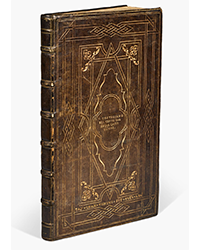
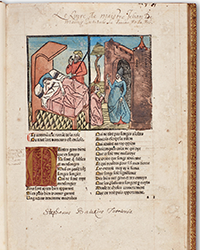
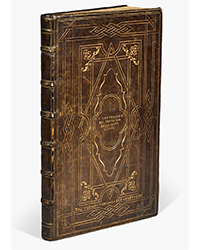
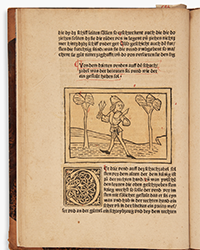
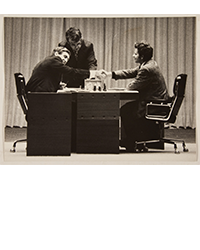
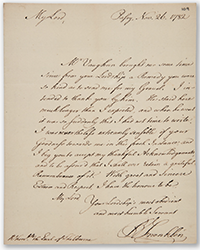
Open for Bidding 2-17 AprilSotheby’s, Apr. 2-17: [Guillaume de Lorris and Jean de Meun]. Le Roman de la Rose, [Geneva or Lyons, c.1481], first printed edition of the most important medieval French vernacular poem. £200,000 to £300,000.Sotheby’s, Apr. 2-17: Castiglione. Il libro del cortegiano. [Venice], April 1528, first edition, in a magnificent binding by Jean Picard for Jean Grolier. £100,000 to £150,000.Sotheby’s, Apr. 2-17: Jacobus de Cessolis. Schachzabelbuch, Strasbourg, 1483, von der Lasa copy. £50,000 to £70,000.Sotheby’s, Apr. 2-17: World Championship, 1972. A collection of 84 press photographs of the famed match between Spassky and Fischer. £2,000 to £3,000.Sotheby’s, Apr. 2-17: Ben Franklin. Autograph letter signed, to Lord Shelburne, British Prime Minister, during peace negotiations, November 1782. £15,000 to £20,000.