
Rare Book Monthly
The Art Of The Book: The Book As Art
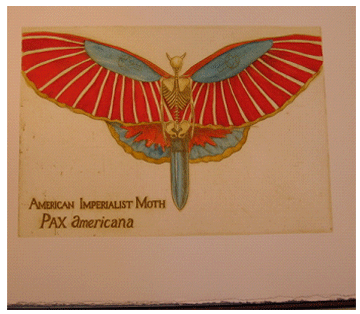
This field: books, bindings, images and artwork
By Bruce McKinney
This article is written to introduce the subject of this month's AE Comet: The Art of the Book. Click here to browse.
Books contain information and have, for more than five hundred years, been information's principal repository and medium of exchange. These printed works primarily convey ideas in words although even the first printed book in the western world, the Gutenberg Bible, included flourishes that embellished the text, enhancing and conveying feeling. Writers, printers, publishers and even collectors have sometimes felt a need to make a statement beyond the words on the page. To do this they in some cases printed elaborate versions and in other cases created elaborate bindings. The human mind is complex and communicates in many ways.
Books were not the first, neither are they the latest way, to convey information. Before printed language there were hand-written texts. Before written texts there were paintings and pictographs. And since the advent of printing there have been further iterations. Within the world of books a small but important category has been the book valued more as object than content: in other words the book itself as exceptional and unusual. This is not a new idea for examples of "the book as exceptional object" that predate printing survive today. Extraordinary bindings, some almost a thousand years old, hand tooled, even bejeweled are today treasured as some of the finest examples of culture expressing veneration for a subject through physical presentation in book form. Through the quality of the cases and bindings we sense an intensity of feeling about the content - pride, respect, veneration, even worship. It isn't always just the words on the page.
These days we read book reviews for insight and the books themselves for knowledge. But for some collectors it is the uniquely printed or bound example that is most appealing and so it has been since the beginning of book collecting. For the few who pursue this material exclusively and the many who acquire the occasional copy it is a way to appreciate a book as an emotional evocation. This is a subset of book collecting but an enormously appealing one. If not to the world, at least for the few for whom such copies matter, it is the only way to collect books.
Rare Book Monthly
-
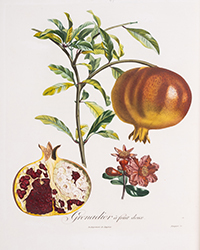
![<b>Forum, Mar. 25:</b> Botany.- [Robin (Jean)]. <i>Histoire des Plantes, nouv...](https://ae-files.s3.amazonaws.com/AdvertisementPhotos/9a2a2dbe-8edf-4091-9a08-800f7aba747e.jpg "<b>Forum, Mar. 25:</b> Botany.- [Robin (Jean)]. <i>Histoire des Plantes, nouvellement trouvées en l'Isle Virgine…,</i>, 1620; with Geoffrey Linocier <i>L'Histoire des plantes,</i> second edition, 1619-20. £3,000 - £4,000.")
Forum Auctions
Natural History: The remaining stock of Antiquariaat Junk, 1899-2026
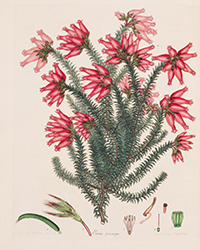
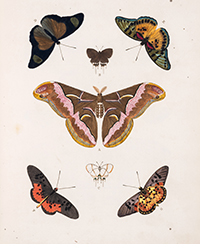
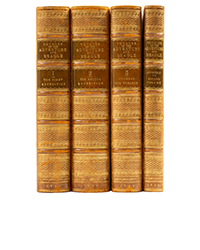
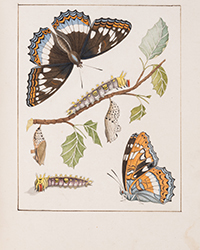
25 March 2026Forum, Mar. 25: Botany.- Andrews (H.C.) Coloured Engravings of Heaths, 4 vol. in 2, first edition, [1710,--94]-1802-1809-[1830]. £10,000 - £15,000.Forum, Mar. 25: Butterflies.- Cramer (Pierre) and Caspar Stoll. De Uitlandsche Kapellen voorkomende in de drie Waereld-Deelen…,, 5 vol., Amsterdam & Utrecht, 1779-91. £8,000 - £12,000.Forum, Mar. 25: Voyages.- Darwin (Charles) and others. Narrative of the Surveying Voyages of His Majesty's Ships Adventure and Beagle, 3 vol. in 4, including Appendix to vol.2, first edition, 1839. £8,000 - £12,000.Forum, Mar. 25: Butterflies.- de Graaf (Willem Diederik Vincent). [Inlandsche Kapellen in beeld], 170 fine original watercolours, [Enkhuizen], [1800-40]. £8,000 - £12,000.Forum Auctions
Natural History: The remaining stock of Antiquariaat Junk, 1899-2026
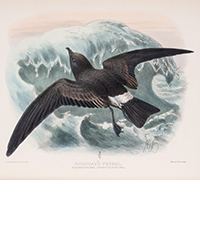
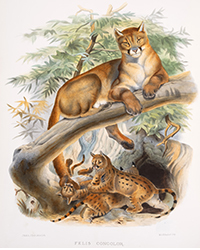
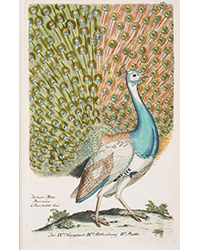
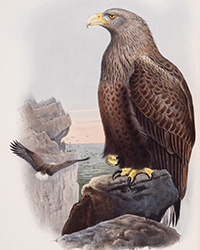
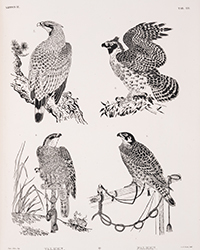
25 March 2026Forum, Mar. 25: Birds.- Dresser (Henry Eeles). A History of the Birds of Europe, 9 vol., including supplement, first edition, by the author, 1871-96. £6,000 - £8,000.Forum, Mar. 25: Zoology.- Felines.- Elliot (Daniel Giraud). A Monograph of the Felidæ or Family of the Cats, first edition, for the Subscribers, by the Author, [1878]-1883. £25,000 - £30,000.Forum, Mar. 25: Birds.- Frisch (Johann Leonard). Vorstellung der Vögel Deutschlandes, 2 vol., first edition, Berlin, Friedr. Wilhelm Birnsteil, [1736]-1763. £40,000 - £60,000.Forum, Mar. 25: Birds.- Gould (John). The Birds of Great Britain, 5 vol., first edition, by the author, 1862-1873. £30,000 - £40,000.Forum Auctions
Natural History: The remaining stock of Antiquariaat Junk, 1899-2026
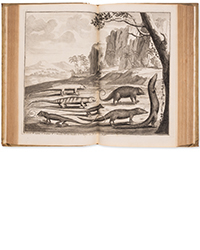
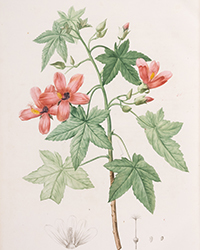
25 March 2026Forum, Mar. 25: Pomology.- France.- Poiteau (A.) Pomologie Française. Recueil des Plus Beaux Fruits cultivés en France, 4 vol., Paris, 1846. £30,000 - £40,000.Forum, Mar. 25: Botany.- [Robin (Jean)]. Histoire des Plantes, nouvellement trouvées en l'Isle Virgine…,, 1620; with Geoffrey Linocier L'Histoire des plantes, second edition, 1619-20. £3,000 - £4,000.Forum, Mar. 25: Asia.- Japan.- Siebold (P.F. von). Nippon. Archiv zur Beschreibung von Japan, 7 parts in 6 vol., first edition, Leyden, [1832]-1852. £35,000 - £45,000.Forum, Mar. 25: Asia.- Valentijn (Francois). Oud en Nieuw Oost-Indiën..., 5 vol. in 8, first edition, Dordrecht [&] Amsterdam, 1724-26. £8,000 - £12,000.Forum, Mar. 25: Botany.- Australia.- Redouté (P.J.).- Ventenat (Étienne Pierre). Jardin de la Malmaison, 2 vol.,, Paris, 1803-04[-05]. £30,000 - £40,000. -
-
Books & Autographs
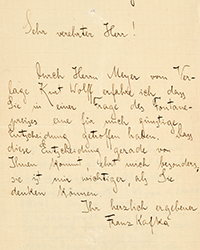
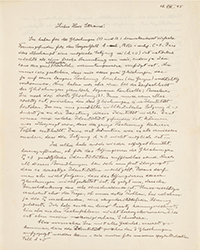
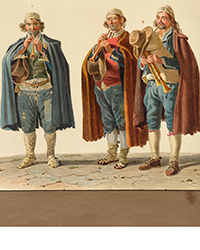
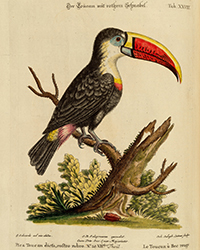
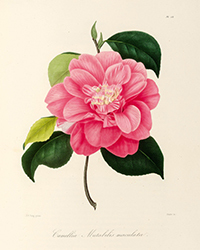
Wednesday 25 MarchKoller, Mar. 25: KAFKA, FRANZ, SCHRIFTSTELLER. Eigenh. Brief mit Unterschrift. Prag, 20. Oktober [19]15. CHF 30,000-40,000.Koller, Mar. 25: EINSTEIN, ALBERT. Zwei eigenhändige Briefe an Ernst Gabor Straus, unterschrieben "A.E" bzw. "A. Einstein". [Princeton], [19]45. und [1950]. CHF 30,000-40,000.Koller, Mar. 25: HORTENSE DE BEAUHARNAIS, MUTTER VON NAPOLEON III. Album aus ihrem Besitz mit 69 Aquarellen und Pinselzeichnungen in Sepia oder Grau… CHF 14,000-18,000.Koller, Mar. 25: ZOOLOGIE - ORNITHOLOGIE - Seligmann, Johann Michael. Verzameling van uitlandsche en zeldzaame Vogelen. Teile 1-8 (von 9) in 2 Bänden. Mit 421 prächtig altkolorierten Kupfertafeln. CHF 14,000-20,000Koller, Mar. 25: BOTANIK - Berlèse, Lorenzo und Johann Jakob Jung. Iconographie du genre camellia... 3 Bände. Mit 300 Farbstichtafeln "a la poupée.” Paris, [1839-]1841-1843. CHF 12,000-18,000.