
Rare Book Monthly
Why Trade Globally?
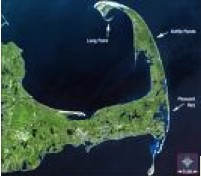
Cape Cod has a seasonal economy.
By Renée Magriel Roberts
We live and work on Cape Cod, a beautiful place, with more temperate weather than most of New England during the year. From an economic perspective, however, the Cape has long been somewhat infamous for its seasonal tourist economy, a kind of boom-or-bust cycle that peaks during the tourist season in July and August, and can drop to depressing levels the rest of the year when the Cape is home to a less affluent year-round population who can't afford the time or money to escape to warmer climes.
Add to this the incredible pressure on bricks-and-mortar stores by the Internet. So when we opened our rare book business after a long stint in the computer technology world, we decided to eschew bricks-and-mortar, saving a ton of monthly overhead, and the uneven local economy and go Web-only. And not only go Web, but go global.
Selling books overseas can be a daunting and somewhat scary business, and it is certainly not without its dangers. Incredibly there is little help to be had from even the largest local banks, the Chamber of Commerce, or the United States Department of Commerce. Nonetheless, from a business perspective, global trading has been very important and certainly now forms a significant amount of our sales and purchases.
We did start with a linguistic advantage. It helps to be able to communicate in more than one language. We have spoken and written French, written Italian, German, and Russian. But even if you skipped out on your high school language classes, you can still sell books overseas.
Most of our books are written in English, although we list books written in any language that uses the Roman alphabet. So, to begin with, we are dealing with customers who by and large can already read English, even if we cannot read their native language. It helps, however, to be able to communicate politely with them.
First of all, and pardon me if this seems overly simplistic, it really helps to understand what niceties are generally expected by customers in different countries. For example, communications in some countries always begin with an English honorific (Mr., Ms.). Our casual American way of addressing new acquaintances by their first names can seem rude to people who live elsewhere. So, even when I receive an order from a website that omits the honorific, I try to add it to my address labels and communications.
Similarly, the way in which we end letters may not be ideal - it can seem rather cold to conclude a note with "yours truly" or nothing at all but your company name. A lot of people like to know with whom they are trading, so I always include a real name, generally mine, as well as anything someone might need to communicate with us, like email address, fax number, telephone, or mailing address. If a country uses a warm closing, I try to emulate it in my English-language closing.
Rare Book Monthly
-
Sotheby’s Geek Week
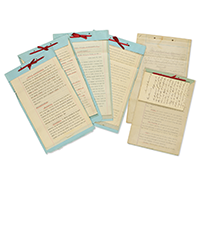
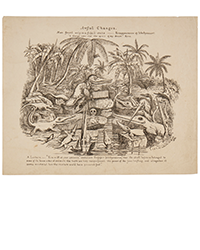
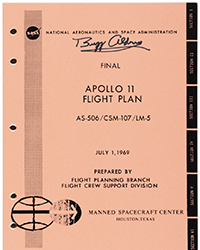
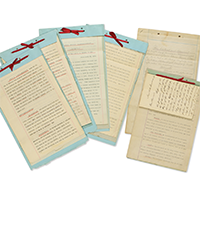
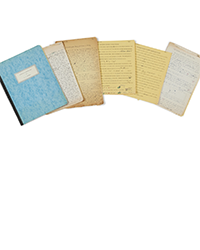
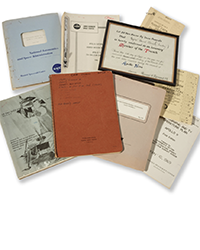
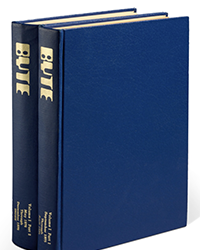
14-15 JulySotheby’s, July 14: Henry De La Beche. "Awful Changes," 1830. $6,000 to $9,000.Sotheby’s, July 15: [Apollo 11]. Flight Plan, Complete Original Printing Signed by Buzz Aldrin. $5,000 to $8,000.Sotheby’s, July 15: Thomas Alva Edison. Documents Establishing and Ending the Edison Electric Railway Company. $20,000 to $30,000.Sotheby’s, July 15: Richard P. Feynman. Feynman's Lectures on Gravitation 1-16, Including the Original Transcriptions of Lectures 12-16 by Morinigo and Wagner, With Richard Feynman's Manuscript Notations, 1971. $12,000 to $18,000.Sotheby’s, July 15: [Apollo 9]. A Group of Manuals and Mission Documents used by Stuart Roosa as a member of the Astronaut Support Crew. $5,000 to $8,000.Sotheby’s, July 15: [BYTE: The Small Systems Journal]. A collection of early foundational issues of Byte: The Small Systems Journal, with rare hardcover editions. $5,000 to $8,000. -
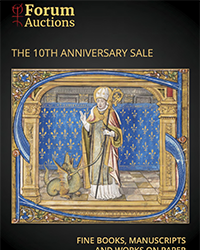
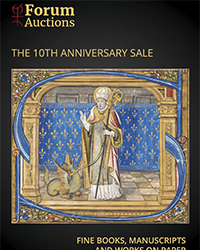
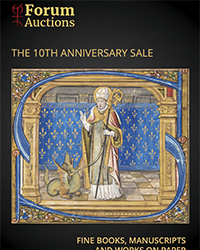
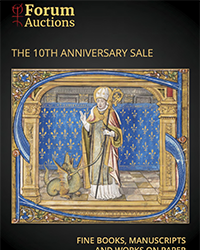
Forum Auctions
The 10th Anniversary Sale
Fine Books, Manuscripts and Works on Paper
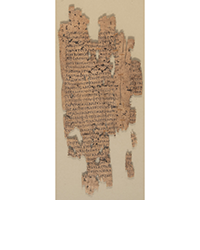
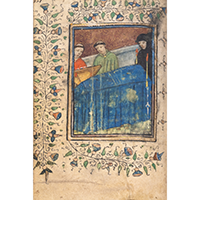
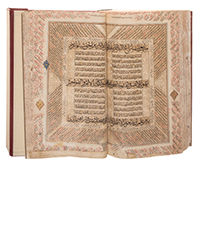
July 16, 2026Forum, July 16: Inundation papyrus. P.Michael 4, the ‘Inundation papyrus’, a geographical account of the Nile near Canopus, in Greek, remains of two columns from a manuscript scroll on papyrus, Egypt, second century CE. £12,000-18,000Forum, July 16: Book of Hours, use of Sarum, manuscript on vellum, 6 full-page miniatures, with famous Middle English inscriptions, Southern Netherlands for the English market, [c.1430]. £30,000-50,000Forum, July 16: Qu'ran, Arabic manuscript on burnished, stencilled, and gold-flecked paper, 447ff., Sultanate Gujarat, Ahmadabad, [after 1411 but no later than 1442]. £15,000-20,000Forum Auctions
The 10th Anniversary Sale
Fine Books, Manuscripts and Works on Paper
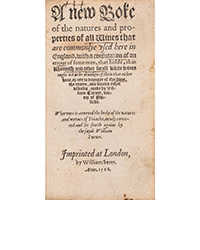
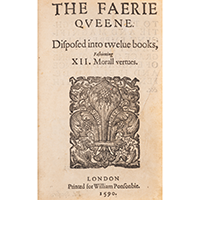
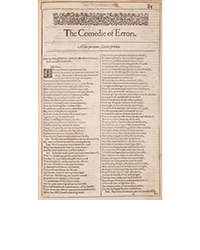
July 16, 2026Forum, July 16: Turner (William). A New boke of the natures and properties of all wines that are commonly vsed here in England, rare first edition of the first English book on wine, By William Seres, 1568. £20,000-£30,000Forum, July 16: Spenser (Edmund). The Faerie Queene. first edition, Printed [by John Wolfe] for William Ponsonbie, 1590. £30,000-40,000Forum, July 16: Shakespeare (William). The Comedie of Errors, extracted from the first folio, Isaac Jaggard and Edward Blount, 1623. £15,000-20,000Forum Auctions
The 10th Anniversary Sale
Fine Books, Manuscripts and Works on Paper
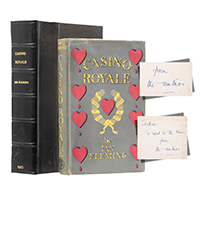
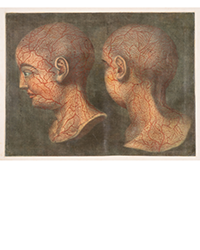
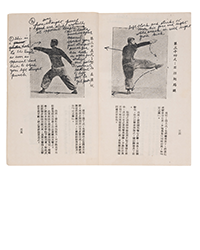
July 16, 2026Forum, July 16: Fleming (Ian). Casino Royale, first edition, signed presentation inscription from the author, 1953. £40,000-60,000Forum, July 16: d'Agoty (Jacques-Fabien Gautier). Anatomie de la Tête, first edition, Paris, chez le Sieur Gautier, 1748. £10,000-15,000Forum, July 16: Martial Arts.- Lee (Bruce). 'Praying Mantis style' Kung Fu book, containing numerous annotations, diagrams and graphs in Bruce Lee's hand, c. 1960. £50,000-70,000Forum Auctions
The 10th Anniversary Sale
Fine Books, Manuscripts and Works on Paper
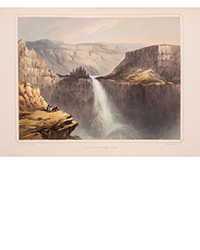
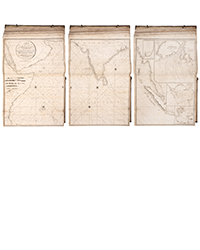
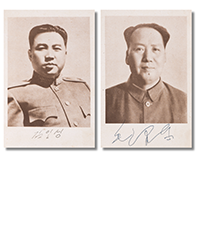
July 16, 2026Forum, July 16: Warre (Capt. Henry James). Sketches in North America and the Oregon Territory, first edition, rare hand-coloured issue, 1848. £30,000-40,000Forum, July 16: Norie (John William). The Marine Atlas, or Seaman's Complete Pilot for all the principal places in the known world..., 1826. £30,000-50,000Forum, July 16: Mao Tse-tung.- Kim Il-sung.-[Note book for visitors from China to Korea], signed by Mao and Kim, [Beijing, 1954]. £10,000-15,000