
Rare Book Monthly
Collecting in the Known and Unknown World

History is in the details.
By Bruce McKinney
This is an article written to accompany this month's issue of the Comet - whose focus is Pamphlets, Broadsides and Ephemera.
History is the imprecise masquerading as the certain. Read history and it always contains opinion dressed as perspective because history is not all the facts, it's specific facts selected by writers. To dress up the text and confer credibility the occasional statement of uncertainty is included implying the rest of what's said is "known." What would history look like without perspective? Possibly something like a Google devoted entirely to all of history's disparate facts. It might tell us everything and nothing. Interpretation is that important. But because history is interpretation it is always subjective. It is also immense in scope and thereby provides finite opportunities for the amateur and the interested to understand specific history uniquely, even perhaps better than experts do. Just don't expect to find consistent confirmation of your research in the big books. The popularizer of history, often an adept story teller, employs an impressionistic approach to tell a coherent story that both explains who we were and by extension who we are. The historian looks intensively into the underlying facts and often clarifies, even debunks conventional wisdom. Between them we have the story leaning toward myth and the facts converted into story. The reader is in the middle.
We of course prefer myth masquerading as fact although it says more about us than it does about the past. When we do confront the past, for safety and convenience, we first separate ourselves from it. It isn't us; it's never us. When confronted we most often omit and what we cannot omit we sometimes deny. Our popular histories hence are more comforting than accurate. It's them. It's not us. Throw a thousand grains of sand into the air and see the sparkle of a few. Writers of popular history write of these while the darker grains are left to academics, lost, forgotten and ignored. What Al Gore characterizes as "inconvenient truths" about a planet under siege it turns out is also applicable to our approach to history. In wilfull ignorance we lose much, not just much of the crucial facts but also the opportunity to understand who we were, what we did, and why we did it. The past wasn't necessarily bad but neither will the future be necessarily better unless we come to terms with it.
This is relevant today because it has become possible, even easy, to reconstruct the past from the enormous volume of ephemera of all types - pamphlets, broadsides, newspapers and magazines, that is increasingly visible. The detailed stories that emerge may confirm, deny or elaborate what we believe. The outcome hardly matters. The principal difference is between believing and knowing. We can learn from what we know. We can only hope from what we believe. Anyone with computer access can do it and the scale and scope of such collecting is always under the control of the collector/researcher. The flow of material is constant. The collector engages and disengages and reengages when time permits.
Looking intently into the past will certainly confirm a substantial portion of mainstream historical narrative be it forms of transportation, demographics or attitudes toward alcohol in the 1840s. At the same time, in the details, the story is always different, perhaps true but not true enough. Other aspects of our understanding and expectation will emerge as fiction. What's compelling today is the opportunity to parse the details in ways inconceivable just a decade ago. And it doesn’t require special access and passes. It simply requires imagination, experience and awareness that unknown material regularly crosses our horizon at unpredictable times, is present briefly and disappears quickly. Those who understand and are interested in aspects of this lost history will pursue such material.
Rare Book Monthly
-
Sotheby’s Geek Week
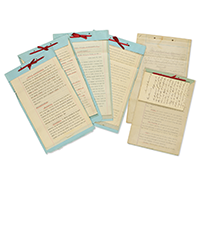
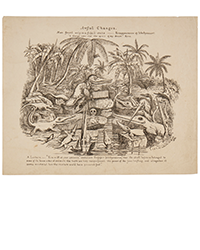
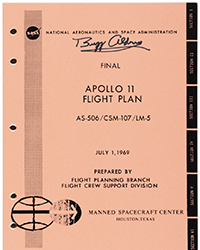
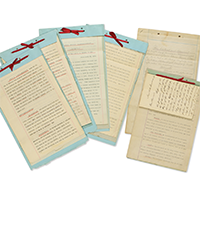
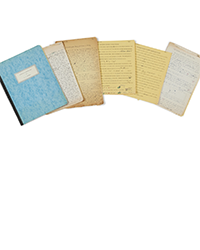
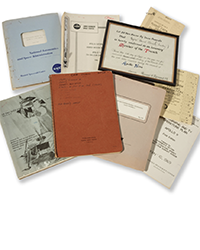
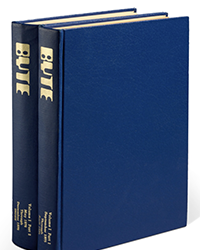
14-15 JulySotheby’s, July 14: Henry De La Beche. "Awful Changes," 1830. $6,000 to $9,000.Sotheby’s, July 15: [Apollo 11]. Flight Plan, Complete Original Printing Signed by Buzz Aldrin. $5,000 to $8,000.Sotheby’s, July 15: Thomas Alva Edison. Documents Establishing and Ending the Edison Electric Railway Company. $20,000 to $30,000.Sotheby’s, July 15: Richard P. Feynman. Feynman's Lectures on Gravitation 1-16, Including the Original Transcriptions of Lectures 12-16 by Morinigo and Wagner, With Richard Feynman's Manuscript Notations, 1971. $12,000 to $18,000.Sotheby’s, July 15: [Apollo 9]. A Group of Manuals and Mission Documents used by Stuart Roosa as a member of the Astronaut Support Crew. $5,000 to $8,000.Sotheby’s, July 15: [BYTE: The Small Systems Journal]. A collection of early foundational issues of Byte: The Small Systems Journal, with rare hardcover editions. $5,000 to $8,000. -




Forum Auctions
The 10th Anniversary Sale
Fine Books, Manuscripts and Works on Paper
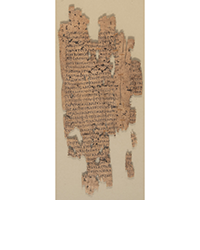
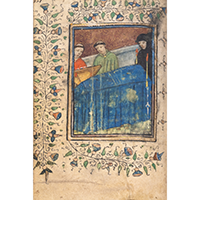
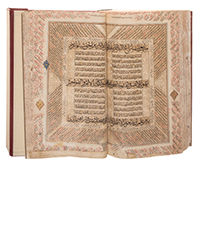
July 16, 2026Forum, July 16: Inundation papyrus. P.Michael 4, the ‘Inundation papyrus’, a geographical account of the Nile near Canopus, in Greek, remains of two columns from a manuscript scroll on papyrus, Egypt, second century CE. £12,000-18,000Forum, July 16: Book of Hours, use of Sarum, manuscript on vellum, 6 full-page miniatures, with famous Middle English inscriptions, Southern Netherlands for the English market, [c.1430]. £30,000-50,000Forum, July 16: Qu'ran, Arabic manuscript on burnished, stencilled, and gold-flecked paper, 447ff., Sultanate Gujarat, Ahmadabad, [after 1411 but no later than 1442]. £15,000-20,000Forum Auctions
The 10th Anniversary Sale
Fine Books, Manuscripts and Works on Paper
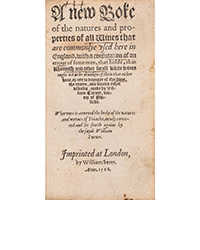
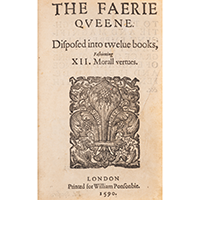
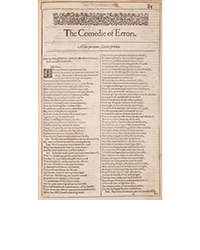
July 16, 2026Forum, July 16: Turner (William). A New boke of the natures and properties of all wines that are commonly vsed here in England, rare first edition of the first English book on wine, By William Seres, 1568. £20,000-£30,000Forum, July 16: Spenser (Edmund). The Faerie Queene. first edition, Printed [by John Wolfe] for William Ponsonbie, 1590. £30,000-40,000Forum, July 16: Shakespeare (William). The Comedie of Errors, extracted from the first folio, Isaac Jaggard and Edward Blount, 1623. £15,000-20,000Forum Auctions
The 10th Anniversary Sale
Fine Books, Manuscripts and Works on Paper
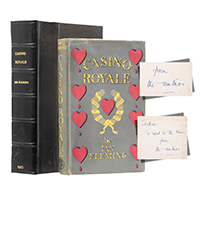
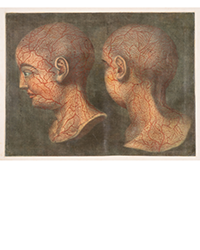
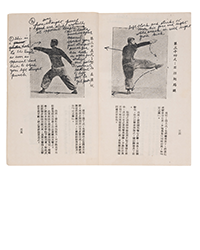
July 16, 2026Forum, July 16: Fleming (Ian). Casino Royale, first edition, signed presentation inscription from the author, 1953. £40,000-60,000Forum, July 16: d'Agoty (Jacques-Fabien Gautier). Anatomie de la Tête, first edition, Paris, chez le Sieur Gautier, 1748. £10,000-15,000Forum, July 16: Martial Arts.- Lee (Bruce). 'Praying Mantis style' Kung Fu book, containing numerous annotations, diagrams and graphs in Bruce Lee's hand, c. 1960. £50,000-70,000Forum Auctions
The 10th Anniversary Sale
Fine Books, Manuscripts and Works on Paper
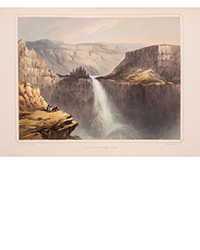
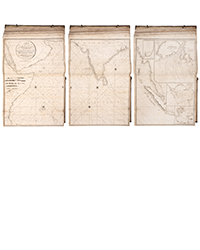
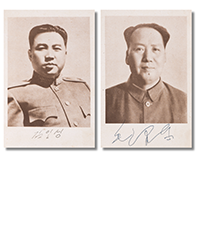
July 16, 2026Forum, July 16: Warre (Capt. Henry James). Sketches in North America and the Oregon Territory, first edition, rare hand-coloured issue, 1848. £30,000-40,000Forum, July 16: Norie (John William). The Marine Atlas, or Seaman's Complete Pilot for all the principal places in the known world..., 1826. £30,000-50,000Forum, July 16: Mao Tse-tung.- Kim Il-sung.-[Note book for visitors from China to Korea], signed by Mao and Kim, [Beijing, 1954]. £10,000-15,000