
Rare Book Monthly
Articles - January - 2008 Issue
Newspapers: Sublimate to Survive
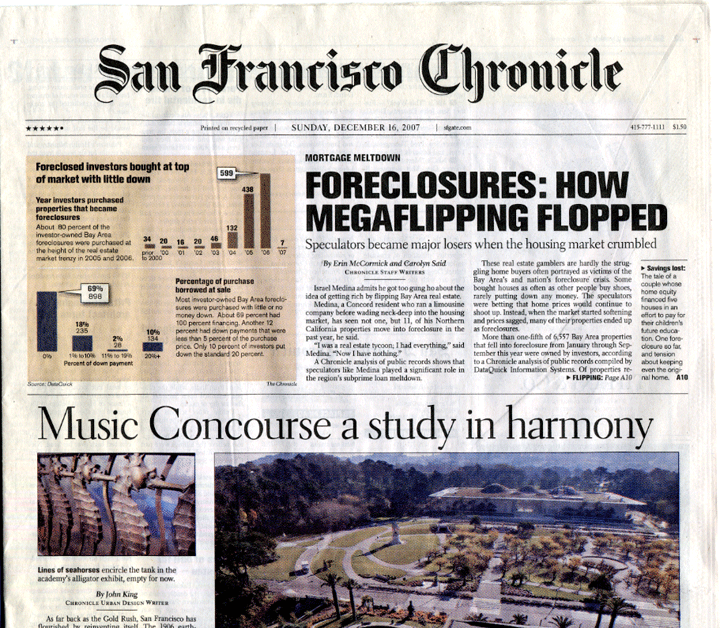
A world without newspapers: unthinkable
In the 1950s and 60s weekly newspapers faced an uncertain future while dailies for the most part looked secure. Their presses ran. They had many Linotype's and didn't live in fear of breakdowns. They had full time pressmen, compositors, people to answer phones and others to prepare bills and deliver newspapers. We had about 15 full and part-time help and almost everyone did 2 or 3 jobs. If the dailies weren't quite Brahmans, they were at least Vaishya [the merchants] while the weeklies rarely reached to Shudra and were not infrequently the untouchables.
New York State Press Association acknowledgements were possible, Pulitzers were not.
The area cities had dailies. Poughkeepsie had its Journal; Newburgh the Evening News; Kingston, the Freeman and Middletown, the Record. The Evening News was the first and to date the only one to take hemlock, the dose administered by the Middletown Record that commanded the morning and left the mourning to the News that published an afternoon paper for decades. Even in the 1950s afternoon papers were in their twilight. Today the other dailies continue although the Freeman is, by linage, a step behind and possibly endangered. Daily newspaper circulation peaked in the United States in 1971, 14 years after it peaked in the United Kingdom. For most of my life then, while population increased, daily newspaper circulation has decreased. In the 50's we spoke of cycles. Twenty years later it was a trend and today it is downward spiral.
Recently I compared December 1957 front pages with recent examples of three regional and national dailies that have prospered in the past five decades: the Wall Street Journal, the New York Times and the San Francisco Chronicle. I thought to see into the future by analysing changes. The differences turned out to be small suggesting that newspapers are newspapers rather than dynamic interfaces that relentlessly maintain relevance. In some sense newspapers are billboards that the population drives by. Older people slow down to read the signs, the middle-aged glance but rely more on television, the next generation barely turns their head, looking more and more to the Internet. Loyalty it turns out is to information, not to the mediums of delivery, so newspapers, like books, are increasingly threatened in a world experiencing sweeping changes in information delivery. Only twenty-five years ago fax machines were the future. Today they are slipping into the past. Technology seems to change everything and for print media this is not encouraging.
Newspapers are made up of parts. On the news side there is local and national news, social, sports and obituaries, Sunday magazines and special sections. On the advertising side there is local, regional and national advertising as well as classified advertisements sold by the pica, inch and line. The news hole, the amount of space devoted to news, is a percentage of the paid space.
Rare Book Monthly
-
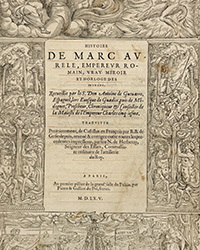
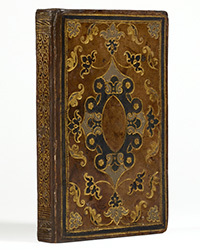
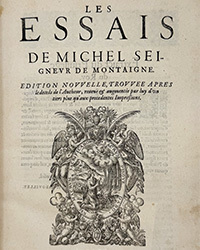
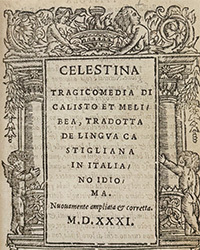
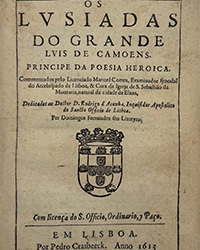
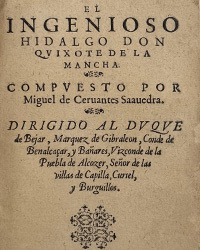
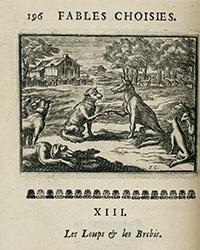
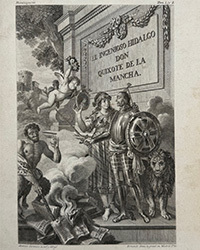
 ALDE, Apr. 8: GUEVARA (ANTONIO DE). Histoire de Marc-Aurèle, Empereur Romain, vray miroir et horloge des Princes. Paris, Pierre et Galliot du Pré, frères, 1565. €3,000 to €4,000.ALDE, Apr. 8: HEURES DE LA VIERGE. Horæ in laudem beatissimæ virginis Mariæ ad usum Romanum. Paris, Charles L'Angelier, 1556. €4,000 to €5,000.ALDE, Apr. 8: MONTAIGNE (MICHEL DE). Les Essais. Édition nouvelle, trouvée après le deceds de l'autheur… Paris, Abel L'Angelier, 1595. €6,000 to €8,000.ALDE, Apr. 8: [ROJAS (FERNANDO DE)]. Celestina, tragicomedia di Calisto et Melibea, tradotta de lingua castigliana in italiano idioma… Venise, 1531. €2,000 to €3,000.ALDE, Apr. 8: CAMÕES (LUÍS DE). Os Lusiadas. Lisbonne, Pedro Crasbeeck, 1613. €2,000 to €3,000.ALDE, Apr. 8: CERVANTES (MIGUEL DE). El Ingenioso hidalgo Don Quixote de la Mancha. Bruxelles, Roger Velpius & Huberto Antonio, 1611. €6,000 to €8,000.ALDE, Apr. 8: LA FONTAINE (JEAN DE). Fables choisies, mises en vers. Paris, Denys Thierry et Claude Barbin, 1678-1694. €6,000 to €8,000.ALDE, Apr. 8: CERVANTES (MIGUEL DE). El Ingenioso hidalgo Don Quixote de la Mancha. Madrid, Joaquin Ibarra, 1780. €3,000 to €4,000.ALDE, Apr. 8: DIDEROT (DENIS) ET JEAN LE ROND D'ALEMBERT. Encyclopédie, ou dictionnaire raisonné des sciences, des arts et des métiers. Paris, 1751-1765. €15,000 to €20,000.ALDE, Apr. 8: [LIVRE TISSÉ]. LAMARTINE (Alphonse de). Les Laboureurs. Poème tiré de Jocelyn… Lyon, J. A. Henry, 1883. €8,000 to €10,000.ALDE, Apr. 8: [LIVRE TISSÉ]. Livre de prières tissé d'après les enluminures des manuscrits du XIVe au XVIe siècle. Lyon, [A. Roux], 1886. €5,000 to €6,000.
 -
Sotheby’s
Books, Manuscripts & Objects from Three Important Collections
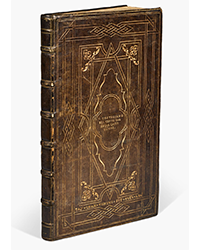
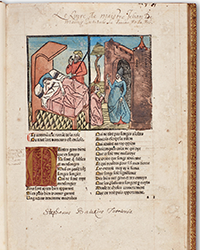
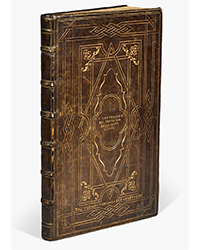
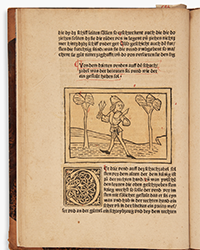
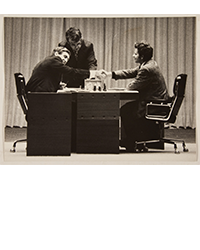
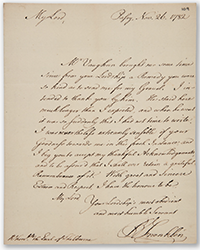
Open for Bidding 2-17 AprilSotheby’s, Apr. 2-17: [Guillaume de Lorris and Jean de Meun]. Le Roman de la Rose, [Geneva or Lyons, c.1481], first printed edition of the most important medieval French vernacular poem. £200,000 to £300,000.Sotheby’s, Apr. 2-17: Castiglione. Il libro del cortegiano. [Venice], April 1528, first edition, in a magnificent binding by Jean Picard for Jean Grolier. £100,000 to £150,000.Sotheby’s, Apr. 2-17: Jacobus de Cessolis. Schachzabelbuch, Strasbourg, 1483, von der Lasa copy. £50,000 to £70,000.Sotheby’s, Apr. 2-17: World Championship, 1972. A collection of 84 press photographs of the famed match between Spassky and Fischer. £2,000 to £3,000.Sotheby’s, Apr. 2-17: Ben Franklin. Autograph letter signed, to Lord Shelburne, British Prime Minister, during peace negotiations, November 1782. £15,000 to £20,000.