
Rare Book Monthly
Articles - December - 2007 Issue
What we can learn about value from history

The Maxwell Code prompted this study.
With the sale in hand I compared the auction descriptions of all lots to descriptions of material posted on Abe using author last name, an important term from the title in the keyword field, and a year in the date range. The results are surprising at many levels. It turns out "rare" was somewhat casually used, at least in hindsight for I found 206 examples of 80 of the items. In other words, one third of the items were recently one click away. These are generally some of the less expensive material in the 1944 sale for their average realization was $15.86. However, the Abe listings are not exclusively the inexpensive material. Eleven of the 80 items on Abe today brought $25 or more in the auction in 1944. Their average price in that sale was $56.78. What wasn't on Abe recently is the super-premium material. In fact the most expensive item on Abe is lot 3, Jacques P. Cornut's Canadensivm Plantarvum, printed in Paris in 1635. The price? $5,290. It brought $90 in 1944. Lot 147 was Daniel Drake's "An Inaugural Discourse on Medical Education..." printed in Cincinnati in 1820. It brought $85 in 1944. The copy online is $3,000. Charles Pinckney's "Observations on the Plan of the Government Submitted to the Federal Convention, a 1787 edition, cost $65 in the NYHS sale. An impaired copy today is available for $800. Lot 188 is "A View of the Controversy between Great Britain and her Colonies..." printed in New York by Rivington in 1774. It brought $65 sixty three years ago. The recent price was $2,750.
Today, on Abe for all 80 items and their 206 individual examples, prices on the average, are 27.7 times higher with the more expensive material in 1944 sale carrying higher multiples today. In other words, the very good has done much better while the simply good generally did less well. This said, for this analysis I excluded duplicate copies from the same seller to simplify the math. Five sellers offered 2 copies and in one case 3 of the same item. Their inclusion would influence the outcomes but not my conclusions.
I have also ignored most references to condition. The copies in the New York Historical sale were often rebound and some of the Abe copies are similarly impaired so there are caveats on both sides. In many cases, the copies on Abe are better. The NYHS was selling its duplicates and by implication their second best copies.
In the AED we believe the appropriate multiple for converting 1944 prices into current value is 55 times based on analysis of almost 1.7 million records. Why are these Abe multiples so much lower? There seem to be three reasons. Much of the higher value material may have never been listed on Abe or any other site so their examples are unavailable to this analysis. After all, such items rarely appear in the auction rooms so there is no reason to think they regularly appear on line. Second, when such material does appear on Abe I believe it tends to be picked up quickly. I've done this myself. You see it, say "wow" and buy it. Said another way, what we see on Abe is what has not yet sold. It's not the whole story but it's the story we can see.
The third reason is that as listing time increases, the number of copies available increases and their prices eventually come down. You can ask $1,000 on Abe but if after five years other copies have come on line, and no one has expressed interest in yours, you are much more likely to reduce your price than to increase it. At minimum sellers in this predicament become negotiable. Asking prices may remain the same but net outcomes fall. For prices to rise significantly demand needs to increase faster than supply. Today the number of items offered ever increases and demand struggles to stay up.
Rare Book Monthly
-



Dominic Winter Auctioneers
Printed Books, Maps & Wisdens, English Bibles
1500-1800
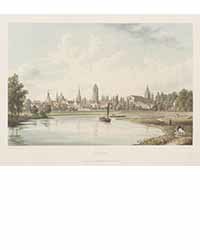
22nd July 2026Dominic Winter, July 22: Lot 83 – Westall & Owen. Picturesque Tour of the River Thames, 1st edition, 1828. £2,000-3,000.Dominic Winter, July 22: Lot 88 – Blume. Rumphia, Botanicae de plantis Indiae Orientalis, 1835-1848. £2,000-3,000.Dominic Winter, July 22: Lot 101 – Michaux. Histoire des arbres forestiers de l'Amérique septentrionale, 1810-1812. £700-1,000.Dominic Winter Auctioneers
Printed Books, Maps & Wisdens, English Bibles
1500-1800
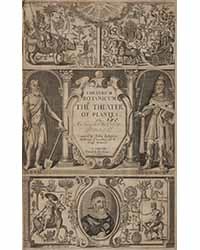
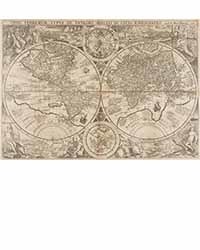
22nd July 2026Dominic Winter, July 22: Lot 102 – Miller & Shaw. Cimelia Physica, 1796 [but c. 1816]. £3,000-5,000.Dominic Winter, July 22: Lot 104 – Parkinson. Theatrum Botanicum: The Theater of Plants, London: Thomas Cotes, 1640. £800-1,200.Dominic Winter, July 22: Lot 159 – Plancius. Orbis Terrarum..., double hemisphere map, 1594-99. £5,000-8,000.Dominic Winter Auctioneers
Printed Books, Maps & Wisdens, English Bibles
1500-1800
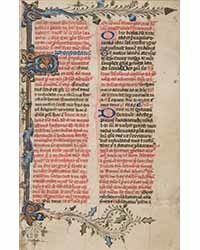
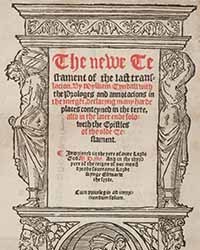
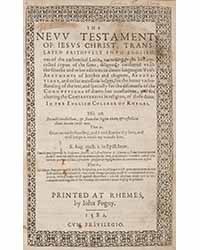
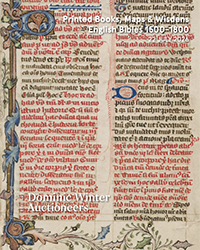
22nd July 2026Dominic Winter, July 22: Lot 217 – Illuminated Medieval Manuscript. From a Breviary, 14th/15th c. £3,000-4,000.Dominic Winter, July 22: Lot 224 – The newe Testament … By Wylliam Tyndall…, 1549. £3,000-5,000.Dominic Winter, July 22: Lot 238 – Douay-Rheims Bible. 3 volumes, 1582/1609/1610. £7,000-10,000.Dominic Winter Auctioneers
Printed Books, Maps & Wisdens, English Bibles
1500-1800
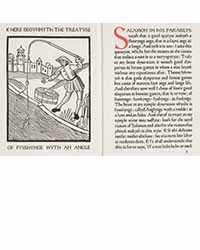
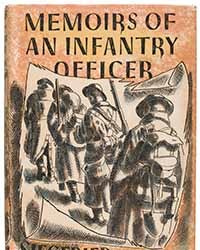
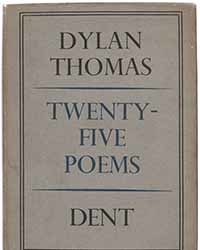
22nd July 2026Dominic Winter, July 22: Lot 336 – Ashendene Press. A Treatyse of Fysshynge with an Angle, 1903. £1,000-1,500.Dominic Winter, July 22: Lot 393 – Sassoon. Memoirs of an Infantry Officer, signed limited edition, 1931. £800-1,200.Dominic Winter, July 22: Lot 402 – Dylan Thomas. Twenty-Five Poems, 1st edition in d.j., 1936. £400-600. -


-

Case Auctions
2026 Summer Auction
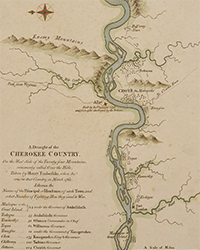
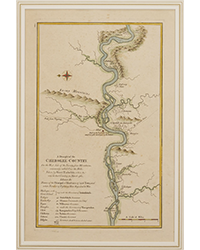
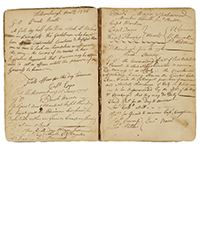
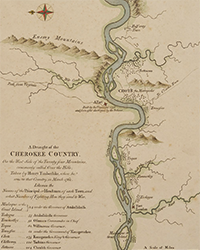
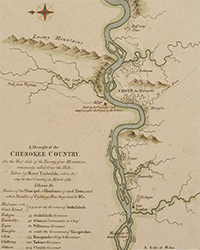
August 1st and 2ndCase Antiques, Aug. 1: Timberlake, Henry: A DRAUGHT OF THE CHEROKEE COUNTRY on the West Side of the Twenty Four Mountains, Commonly Called "Over the Hills". $18,000 to $22,000.Case Antiques, Aug. 1: Manuscript orderly book detailing day to day activities of multiple Virginia regiments in the Continental Army during the Revolutionary,1776-1777. $7,000 to $8,000.Case Antiques, Aug. 1: Cormac McCarthy, The Orchard Keeper, Random House, New York, 1965. Signed 1st Edition. $3,800 to $4,200.Case Auctions
2026 Summer Auction
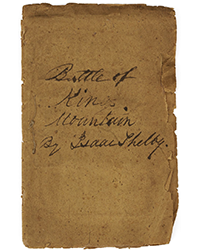
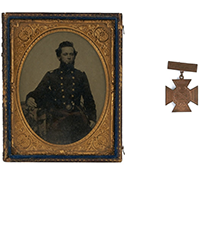
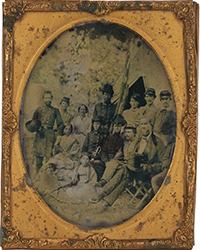
August 1st and 2ndCase Antiques, Aug. 1: Battle of Kings Mountain Pamphlet by Isaac Shelby, April 1823, Signed. $1,800 to $2,200.Case Antiques, Aug. 1: Large Tintype CSA Lt. Col. Thomas Coke Johnson, 19th GA, w/ Southern Cross, Book. $1,400 to $1,800.Case Antiques, Aug. 1: Rare Civil War Ambrotype, 19th GA Infantry with Johnson Family of GA. $800 to $1,200.Case Auctions
2026 Summer Auction
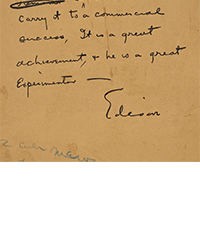
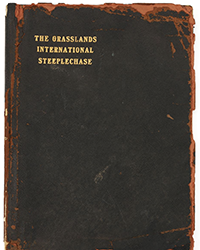
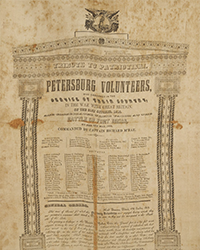
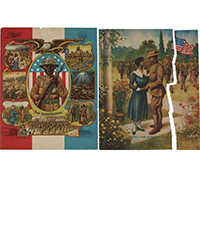
August 1st and 2ndCase Antiques, Aug. 1: A signed note written by Thomas Alva Edison to an unknown recipient, in which he shares his thoughts on Guglielmo Marconi, regarded as the inventor of the radio. $800 to $1,200.Case Antiques, Aug. 1: Rare 1931 TN Grasslands Steeplechase Book, Gallatin. $800 to $1,000.Case Antiques, Aug. 1: War of 1812 related Broadside, Petersburg Volunteers. $700 to $800.Case Antiques, Aug. 1: 2 World War I Posters, “Our Colored Fighters” and “No Slacker”. $800 to $1,000.