
Rare Book Monthly
Articles - August - 2007 Issue
Deconstructing Twinkies: What's in those Things? - <i>A Book Review</i>

none
Or how about cellulose gum? This is a vegetarian item, though it comes from either trees or cotton plants, which few of us eat, and must be treated with lye and other unappetizing chemicals first. Still, it can hold 15-20 times its weight in water, just what is needed to keep that delicious, though strange "creme" perfectly moist.
Then come the pure chemical elements, things that are mined rather than grown. This certainly sounds unappetizing, but most of these are ones that appear in the little feared baking soda, and of course, the mined mineral we all sprinkle on our food -- salt. Perhaps ones that come from petroleum are even more frightening. Sorbic acid is the major preservative, extremely effective at killing mold. Will this petroleum-based ingredient kill you too? Not likely, since the same stuff used to be processed from berries. It's just cheaper to extract it from petroleum, which is, after all, organic material, albeit older than most we consume. Perhaps it's the sorbic acid that preserves petroleum's "freshness" for millions of years.
Along with his study of the source of the ingredients, Ettlinger brings us on a tour through many of the huge manufacturing plants. These products aren't made just for Twinkies, but for numerous other foods as well as non-food products. With a population of 300 million to feed in America alone, the quantities needed are astounding. My favorite is the egg-breaking facility in New Jersey that cracks open 7 million shells a day. Seven million! I cannot conceive of dealing with 7 million eggs every day. A machine splits the eggs open, while cupped hands on each side tilt and shake the eggs' two halves, like a cook's two hands with a cracked egg.
While the chemicals sound the most frightening, Ettlinger does bring up the really dangerous issue -- partially hydrogenated oils. Here is a very simplified, unscientific explanation. Due to the cost and health factors associated with animal fats, vegetable oil was seen as a healthy substitute. However, vegetable oil is a liquid, and a solid form is needed. It was discovered that pumping hydrogen though the oil would result in a solidified form. The hydrogen somehow clings to the molecules and adjusts their form accordingly. Partial hydrogenation, where enough hydrogen is added to cling only to some molecules, produced the ideal balance between liquid and solid form (soft solid). However, partial hydrogenation, for reasons perhaps no one fully understands, creates trans fats, oddly shaped molecules that increase our production of bad cholesterol and decrease the production of good. These things are deadly. These trans fats are no longer found in Twinkies, but their one-time presence, at a time when scientists believed they were a healthy substitute, can make you wonder if there is still more unknown danger lurking in these myriad ingredients that bear little resemblance to what we traditionally think of as food.
Rare Book Monthly
-
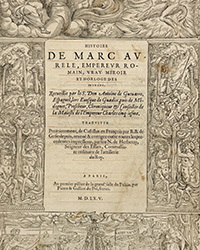
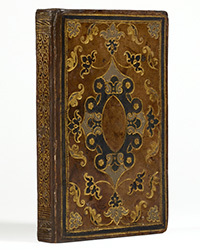
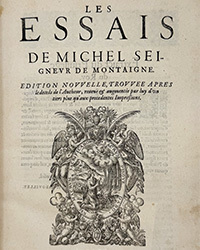
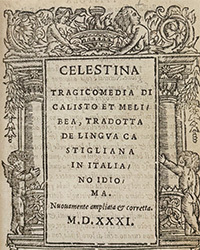
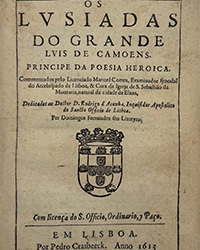
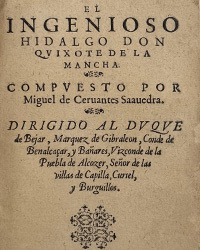
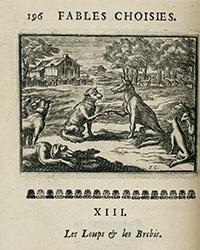
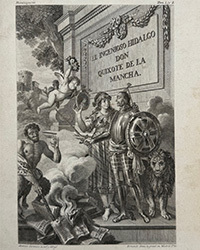
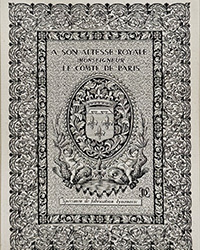
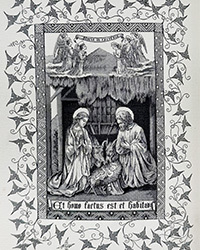 ALDE, Apr. 8: GUEVARA (ANTONIO DE). Histoire de Marc-Aurèle, Empereur Romain, vray miroir et horloge des Princes. Paris, Pierre et Galliot du Pré, frères, 1565. €3,000 to €4,000.ALDE, Apr. 8: HEURES DE LA VIERGE. Horæ in laudem beatissimæ virginis Mariæ ad usum Romanum. Paris, Charles L'Angelier, 1556. €4,000 to €5,000.ALDE, Apr. 8: MONTAIGNE (MICHEL DE). Les Essais. Édition nouvelle, trouvée après le deceds de l'autheur… Paris, Abel L'Angelier, 1595. €6,000 to €8,000.ALDE, Apr. 8: [ROJAS (FERNANDO DE)]. Celestina, tragicomedia di Calisto et Melibea, tradotta de lingua castigliana in italiano idioma… Venise, 1531. €2,000 to €3,000.ALDE, Apr. 8: CAMÕES (LUÍS DE). Os Lusiadas. Lisbonne, Pedro Crasbeeck, 1613. €2,000 to €3,000.ALDE, Apr. 8: CERVANTES (MIGUEL DE). El Ingenioso hidalgo Don Quixote de la Mancha. Bruxelles, Roger Velpius & Huberto Antonio, 1611. €6,000 to €8,000.ALDE, Apr. 8: LA FONTAINE (JEAN DE). Fables choisies, mises en vers. Paris, Denys Thierry et Claude Barbin, 1678-1694. €6,000 to €8,000.ALDE, Apr. 8: CERVANTES (MIGUEL DE). El Ingenioso hidalgo Don Quixote de la Mancha. Madrid, Joaquin Ibarra, 1780. €3,000 to €4,000.ALDE, Apr. 8: DIDEROT (DENIS) ET JEAN LE ROND D'ALEMBERT. Encyclopédie, ou dictionnaire raisonné des sciences, des arts et des métiers. Paris, 1751-1765. €15,000 to €20,000.ALDE, Apr. 8: [LIVRE TISSÉ]. LAMARTINE (Alphonse de). Les Laboureurs. Poème tiré de Jocelyn… Lyon, J. A. Henry, 1883. €8,000 to €10,000.ALDE, Apr. 8: [LIVRE TISSÉ]. Livre de prières tissé d'après les enluminures des manuscrits du XIVe au XVIe siècle. Lyon, [A. Roux], 1886. €5,000 to €6,000.
 -
Sotheby’s
Books, Manuscripts & Objects from Three Important Collections
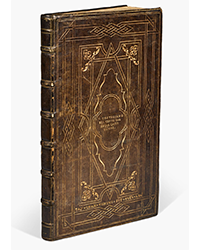
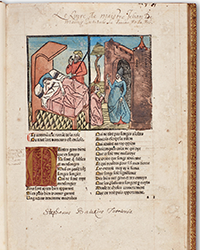
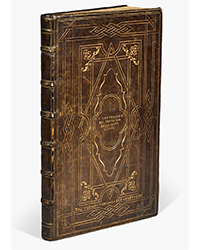
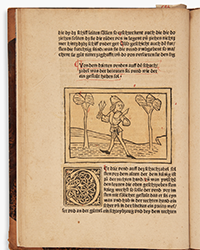
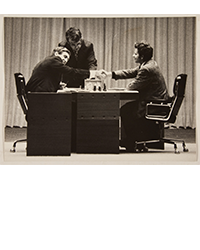
Open for Bidding 2-17 AprilSotheby’s, Apr. 2-17: [Guillaume de Lorris and Jean de Meun]. Le Roman de la Rose, [Geneva or Lyons, c.1481], first printed edition of the most important medieval French vernacular poem. £200,000 to £300,000.Sotheby’s, Apr. 2-17: Castiglione. Il libro del cortegiano. [Venice], April 1528, first edition, in a magnificent binding by Jean Picard for Jean Grolier. £100,000 to £150,000.Sotheby’s, Apr. 2-17: Jacobus de Cessolis. Schachzabelbuch, Strasbourg, 1483, von der Lasa copy. £50,000 to £70,000.Sotheby’s, Apr. 2-17: World Championship, 1972. A collection of 84 press photographs of the famed match between Spassky and Fischer. £2,000 to £3,000.Sotheby’s, Apr. 2-17: Ben Franklin. Autograph letter signed, to Lord Shelburne, British Prime Minister, during peace negotiations, November 1782. £15,000 to £20,000.