And the word of the year is... It's hard to say. Everyone has a word of the year. We will look first to Oxford (University Press) because “Oxford” is a word that says erudite and intellectual things like that. However, they have cheated and given us two words, although they claim them to be the “word” of the year. Oxford should know better since they define “word” as a single unit of language so perhaps they aren't as smart as I give them credit for being. Nonetheless, I will proceed, so here it/they is/are: “rage bait.” Last year they cheated too, selecting “brain rot,” so perhaps they suffer from 2024's word of the year.
The fact that “rage bait” rates being the word of the year is an unfortunate commentary on our times. We have become too divided, too angry at each other. That a term that refers to encouraging us to be angry with each other is used so commonly is sad. Here is how Oxford defines “rage bait” - “Online content deliberately designed to elicit anger or outrage by being frustrating, provocative, or offensive, typically posted in order to increase traffic to or engagement with a particular web page or social media account.” So, there we are. Spending our time on the internet, typing out messages on social media trying to make ourselves angry at each other. Not exactly the best commentary on us that this is our word of the year. Evidently, a year of suffering from rotting brains will do this to you. Better luck next year.
Oxford isn't the only one selecting a word of the year so perhaps we will do better elsewhere. Let's try Dictionary.com. Here we go from the angry to the incomprehensible. And, again, we don't have a word. It's not a phrase they've selected, but rather, a number – 67. That is six-seven, not sixty-seven. Here the meaning is unclear, even if people are saying it all the time. Even Dictionary.com struggles to define their own word of the year. They give a tentative meaning of “so-so” or “maybe this, maybe that.” However, they continue, “Perhaps the most defining feature of 67 is that it’s impossible to define. It’s meaningless, ubiquitous, and nonsensical.” Perhaps it's a good space filler if you have nothing to say.
Here we should note that adults may have heard this “word” from their children but it is not a part of their own lexicon. Adults have their vocabularies set, but the young are inventing new ones, their own “in” language. Maybe it doesn't have a meaning other than young people telling their friends you're one of us. All generations invent their own vocabularies. Just remember, if you adopt this “word,” say “six-seven,” not “sixty-seven,” as that would embarrassingly show how out of it you are with the generation you are trying to emulate.
As for the origin of this word, it is not a recycled old one or combination thereof like “rage bate.” It is a new one from 2025. Its origin is in a song that, if you don't know the expression “67,” you probably don't know it, nor even its artist-creator. That song is “Doot Doot (6 7).” Can you hum a few bars? Maybe not since it's a rap song. The rapper goes by the name “Skrilla,” also known as Jemille Edwards, from Philadelphia. The song was not a big hit but apparently became popular on Tik Tok. But, the origin does not explain its meaning, and not even Skrilla seems able to define it. The lyrics go something like,
“I know he dyin' (oh my, oh my God)
6-7, I just bipped right on the highway (bip, bip)
Skrrt, uh (bip, bip, bip)
I just bipped right on the highway”
Perhaps that will clear up its meaning for you.
Miriam-Webster picked a word that defines all too well what many of us read. Their word of the year is “slop.” This doesn't refer to messy things nor what you were served in school by the cafeteria ladies. They define it as “digital content of low quality that is produced usually in quantity by means of artificial intelligence.” In other words, it is what has replaced content produced by reputable sources. Thank you internet and social media.
The Cambridge Dictionary also announced their word of the year. It is “parasocial.” In case you don't know this one, it means, “involving or relating to a connection that someone feels between themselves and a famous person they do not know, a character in a book, film, TV series, etc., or an artificial intelligence.” “Parasocial” is a word that was invented in 1956 by two social scientists. At that time the word was used in academic writing, not ordinary conversation.
What did these words of the year beat out? Well, for Oxford, which selected “rage bait,” the runners-up were “aura farming” and “biohack.” I don't know what either means let alone having used it. Obviously, younger people talk a lot more than those of us who have been around a while if we don't even know what the word of the year means. Aura farming is not something that goes on in the countryside. Oxford defines it as “the cultivation of an impressive, attractive, or charismatic persona or public image by behaving or presenting oneself in a way intended subtly to convey an air of confidence, coolness, or mystique.” Biohack means “to attempt to improve or optimize one's physical or mental performance, health, longevity, or wellbeing by altering one's diet, exercise routine, or lifestyle, by using other means such as drugs, supplements, or technological services.” If I were to interpret a meaning to the words being used most frequently by what is evidently a younger generation, it would be “it's all about me.”
“Aura farming” was also a runner-up that didn't quite make it on Dictionary.com's short list. Others were agentic, broligarchy, clanker, dynamite emoji (the emoji, not the words), Gen Z stare, kiss cam, overtourism, tariff, and tradwife. The only “real” word I see there is “tariff,” which came into popular use thanks to one 79-year-old man.
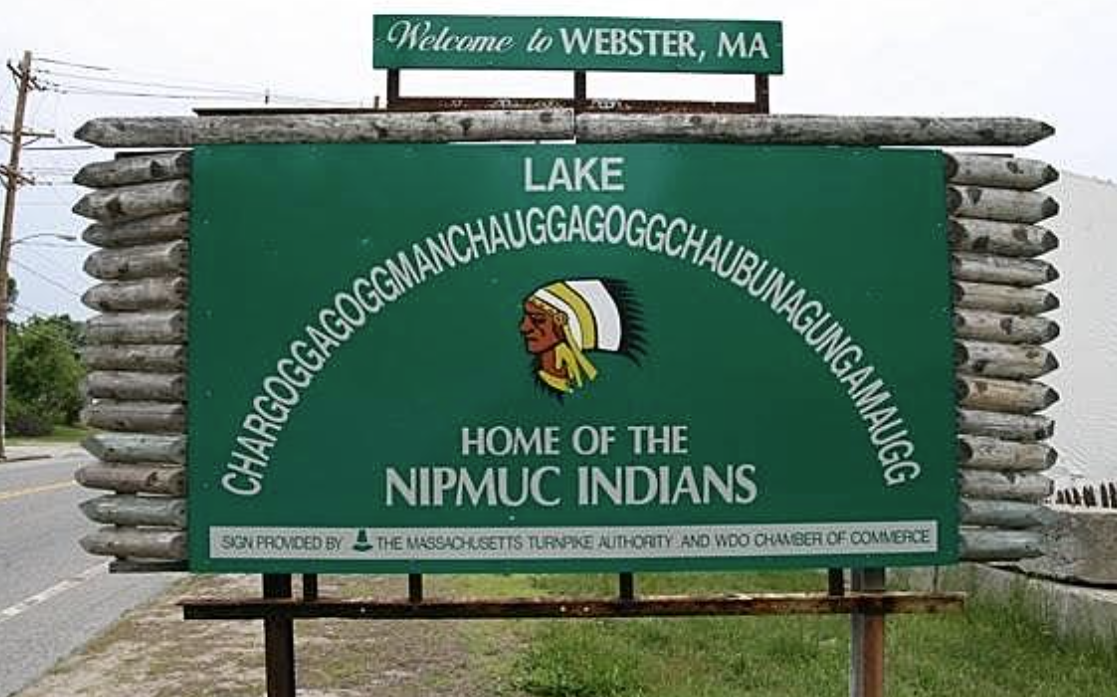
Meriam-Webster also-rans include a couple political words everyone knows - tariff and gerrymander, or for the church-oriented - conclave. More youth-oriented are touch grass, performative, and the ubiquitous six seven. My personal favorite is this final word which might have won if people could pronounce it - Lake Chargoggagoggmanchauggagoggchaubunagungamaugg. There actually is such a place, located near Webster, Massachusetts. It may mean something about fishing boundaries. The lake is more commonly called “Webster Lake” by those struggling with its pronunciation.
Runners-up for the Cambridge Dictionary were memeify, pseudonymization, glazing, bias, vibey, breathwork, and doom spending. Glazing and bias have different meanings from those with which you may be familiar. Glazing refers to excessive flattery and bias to excessive devotion to a singer, band, or media star.
If you are having trouble communicating with the younger generation, or if you are young, with the older generation, now you know why. You speak a different language. They can no more understand your English than you can understand Chaucer's.