Protecting Books and Other Cultural Assets in Time of War
- by Michael Stillman
LT. Col Tim Purbick offers cultural protection course to Estonian Defense Forces (NATO photograph).
These are dangerous times in which we live. War is again in the air. America mostly feels distance, our only recent experience being a one-sided thrashing of Iran from the air. We are far enough away to feel secure, as we did before Pearl Harbor surprised us. Europe does not feel such security, Eastern Europe in particular. Ukraine is under invasion and constant bombardment. It's neighbors know they will be next if the invasion is successful.
America once provided great security to Europe, but the dependability of America is no longer taken for granted. America blows hot and cold. It has sounded more supportive of NATO of late as a result of Iran, but America's support of NATO has been very tentative at times in recent years. Putin knows how to use flattery to divide America from its European allies and that could happen again as the Iran incident blows over.
Of course, the major threat of war is death and destruction. It's hard to think of much else besides your life and habitat when war is in the air. However, there is another risk that while its immediate threat is not as great, its long-term threat can be everlasting. You may not feel it as much when you are fighting for personal survival, but long-term, the destruction of your culture and heritage will be devastating to your children and grandchildren. With this in mind, those nations closest to the firing line, Poland and the Baltic states, are taking precautions to protect their cultural assets if and when the bombs rain down on their lands.
At a recent press conference in Warsaw, Poland's Culture Minister Hanna Wroblewska said the Ministry of Culture is preparing a plan to protect the nation's cultural assets in case of an invasion by Russia. She explained a contingency plan is “absolutely necessary, because the war in Ukraine taught us that [a Russian invasion] would trigger a war not just for territory, not just to destroy our national identity, but also our culture.” They will pattern their plan on the actions of Ukraine as Poland played a major role in protecting Ukraine's culture, along with the lives of many of its people. Russia's actions and government comments indicate they would like to make Ukraine a part of Russia, their culture Russian. Wroblewska pointed out that, in the war in Ukraine, "the Russian side is using culture and works of art as weapons."
Poland is working with other countries to hold parts of collections from 160 state institutions, possibly some private ones, if necessary. Artifacts to be protected include rare books, early printed works, artworks, sculptures, and musical instruments. This will all require a lot of documentation to prepare for the day when Poland's cultural property can be returned. It also regrettably will require triage as there will not be sufficient time and space to relocate all of Poland's cultural assets. Unfortunately, not all such items will survive an invasion. Sadly, the same as is true of Poland's people.
Meanwhile, the Baltic states are taking their own precautions. Latvia, Lithuania and Estonia lived under the Russian thumb before, and being small countries right on the Russian border, they recognize the danger. British Army Lieutenant Colonel Tim Purbrick, a Military Cultural Property Protection Officer, put together a course on protecting cultural assets. He has delivered it to NATO members whose locations would put them on the front lines of a conflict with Russia. He teaches members about legal obligations with regards to cultural property. The 1954 Hague Convention requires that in case of armed conflict, the parties “must protect all cultural property, whether their own or that situated in the territory of other States Parties.”
Of course, if Russia invades these NATO countries, as it did Ukraine, it will display a disregard for international law, but other countries do obey their obligations. The course was given earlier this year in Tallinn, Estonia. Lt. Col Purbrick explained, “Cultural property is the physical and often iconic representation of our cultures – it could be monuments, buildings, fine arts, archives, archaeology or almost anything that the State declares to be cultural property. When we are fighting from a trench, we fight for the comrades alongside us. But, take a step back and the reason why we are in that trench is to protect our freedom, our way of life and our culture – the things which collectively make us the communities and societies that we are.”
Sotheby’s Shelf Life: Books, Manuscripts and Works on Paper from the Library of Stanley J. Seeger and Christopher Cone 25 June – July 7
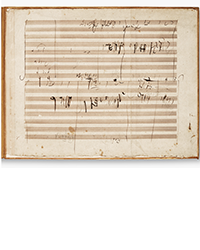
Sotheby’s, July 7: Ludwig van Beethoven. Autograph sketches for the overture "Die Weihe des Hauses", op.124, [1822], UNPUBLISHED. £150,000 to £200,000.
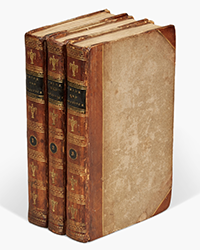
Sotheby’s, July 7: Jane Austen. Pride and Prejudice, 1813, first edition, 3 volumes, contemporary half calf. £50,000 to £70,000.
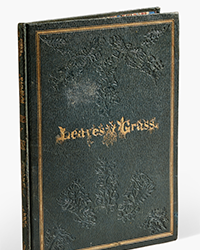
Sotheby’s, July 7: Walt Whitman. Leaves of Grass, Brooklyn, 1855, first edition, first issue, original green cloth, the Doheny copy. £50,000 to £70,000.
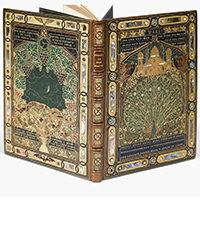
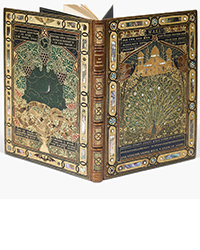
Sotheby’s, July 7: Binding—Sangorski & Sutcliffe—Omar Khayyam. Rubaiyat, London, 1872, third edition, in a magnificent jewelled Peacock binding. £15,000 to £20,000.
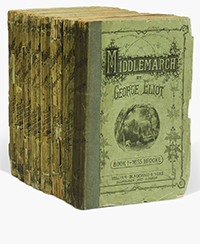
Sotheby’s, July 7: George Eliot. Middlemarch, Edinburgh and London, 1871, first edition in the original parts. £20,000 to £30,000.
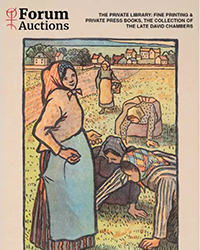
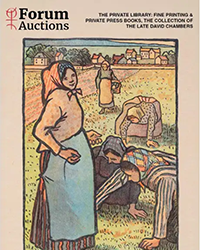
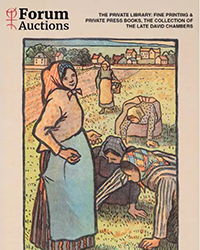
Forum Auctions The Private Library: Fine Printing & Private Press books, the collection of the late David Chambers July 9, 2026
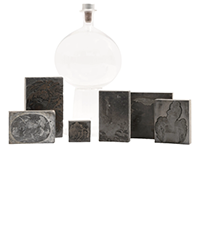
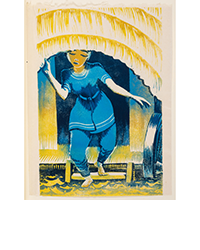
Forum, July 9: Hassall (Joan) A large collection of over 300 original woodblocks of engravings for various books, v.d., with Hassall's engraver's glass water-globe (Qty) - Est. £10,000-15,000
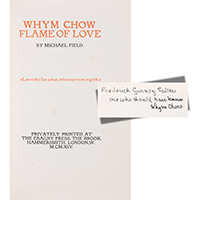
Forum, July 9: Eragny Press.- [Bradley (Katherine Harris) & Edith Emma Cooper], "Michael Field." Whym Chow, Flame of Love, one of only 27 copies, inscribed by Bradley, the rarest book from the press, 1914. - Est. £3,000-4,000
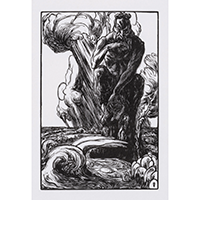
Forum, July 9: [Moore (Thomas Sturge)] [Wood Engravings], 71 wood-engravings printed by David Chambers from the original blocks, the only set on Japanese Hosho paper, from an edition of 5 sets, [1970]. - Est. £3,000-4,000
Forum Auctions The Private Library: Fine Printing & Private Press books, the collection of the late David Chambers July 9, 2026
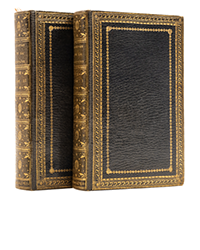
Forum, July 9: La Fontaine (Jean de) Contes et Nouvelles en vers, 2 vol., engraved plates after Eisen, fine early 19th century blue morocco, gilt, by Bradel l'ainé, Amsterdam [Paris], 1762. - Est. £2,000-3,000
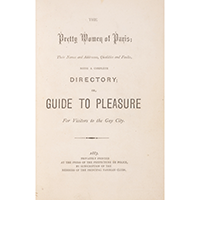
Forum, July 9: Erotica.- Prostitution.- Pretty Women of Paris (The); Their Names and Addresses, Qualities and Faults..., [Paris], privately printed at the Press of the Prefecture de Police, 1883. - Est. £3,000-4,000
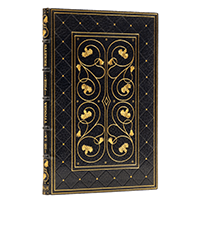
Forum, July 9: Vale Press.- Ricketts (Charles) & Lucien Pissarro. De la Typographie et de l'Harmonie de la Page Imprimée…, [one of 216 copies], bound in dark blue morocco tooled in gilt, by Sarah T.Prideaux, 1898. - Est. £1,000-1,500
Forum Auctions The Private Library: Fine Printing & Private Press books, the collection of the late David Chambers July 9, 2026
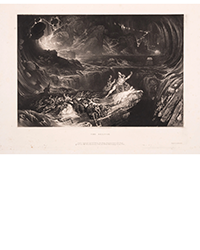
Forum, July 9: Martin (John) Illustrations of the Bible, complete set of 20 mezzotints, good impressions, rarely found in early states, [c.1831-1835]. - Est. £1,000-1,500
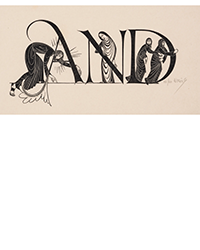
Forum, July 9: Golden Cockerel Press.- Four Gospels of the Lord Jesus Christ (The), one of 500 copies, Mary Gill's copy, Waltham St. Lawrence, 1931 with a signed proof of engraving on japon numbered 10/10 (2) - Est. £5,000-7,000
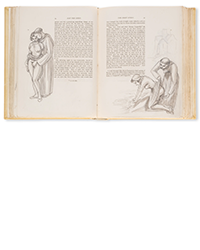
Forum, July 9: Boccaccio (Giovanni) The Decameron, 3 vol., vol.1 extra-illustrated by John Buckland Wright with c.150 erotic original drawings in pen & ink and pencil, 1886 [extra-illustrated c.1940]. - Est. £10,000-15,000
Forum Auctions The Private Library: Fine Printing & Private Press books, the collection of the late David Chambers July 9, 2026
Forum, July 9: Cox (Morris) Collection of Gogmagog Press Books, 35 vol., rare complete collection of printed books issued by the press, limited editions, most signed by Cox, 1957-83. - Est. £10,000-15,000
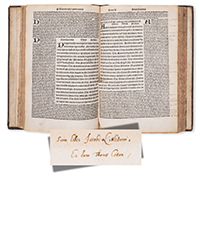
Forum, July 9: Wynkyn de Worde.- [Terentius Afer (Publius)] [Comedie...], [Paris, Josse Badius: sold in London by Wynkyn de Worde, & others], [15 July 1504]. - Est. £4,000-6,000
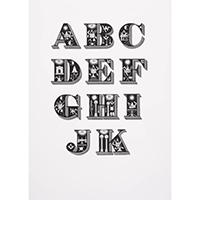
Forum, July 9: Mosley (James) Ornamented Types. Twenty-Three Alphabets from the Foundry of Louis John Pouchée, 2 vol., one of 10 copies for presentation, from an edition of 210, 1992-93. - Est. £1,000-2,000
Forum Auctions The 10th Anniversary Sale Fine Books, Manuscripts and Works on Paper July 16, 2026
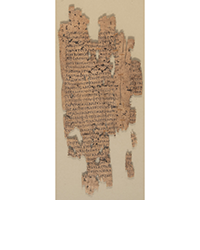
Forum, July 16: Inundation papyrus. P.Michael 4, the ‘Inundation papyrus’, a geographical account of the Nile near Canopus, in Greek, remains of two columns from a manuscript scroll on papyrus, Egypt, second century CE. £12,000-18,000
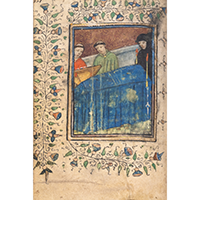
Forum, July 16: Book of Hours, use of Sarum, manuscript on vellum, 6 full-page miniatures, with famous Middle English inscriptions, Southern Netherlands for the English market, [c.1430]. £30,000-50,000
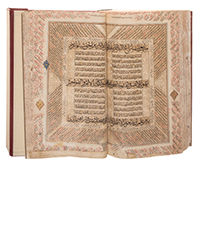
Forum, July 16: Qu'ran, Arabic manuscript on burnished, stencilled, and gold-flecked paper, 447ff., Sultanate Gujarat, Ahmadabad, [after 1411 but no later than 1442]. £15,000-20,000
Forum Auctions The 10th Anniversary Sale Fine Books, Manuscripts and Works on Paper July 16, 2026
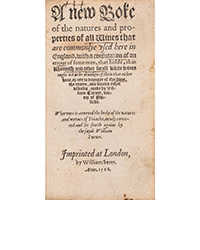
Forum, July 16: Turner (William). A New boke of the natures and properties of all wines that are commonly vsed here in England, rare first edition of the first English book on wine, By William Seres, 1568. £20,000-£30,000
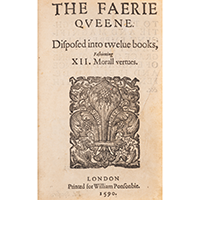
Forum, July 16: Spenser (Edmund). The Faerie Queene. first edition, Printed [by John Wolfe] for William Ponsonbie, 1590. £30,000-40,000
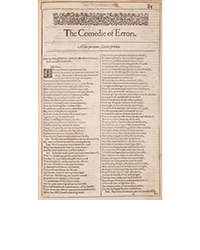
Forum, July 16: Shakespeare (William). The Comedie of Errors, extracted from the first folio, Isaac Jaggard and Edward Blount, 1623. £15,000-20,000
Forum Auctions The 10th Anniversary Sale Fine Books, Manuscripts and Works on Paper July 16, 2026
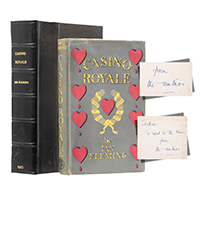
Forum, July 16: Fleming (Ian). Casino Royale, first edition, signed presentation inscription from the author, 1953. £40,000-60,000
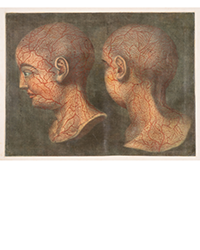
Forum, July 16: d'Agoty (Jacques-Fabien Gautier). Anatomie de la Tête, first edition, Paris, chez le Sieur Gautier, 1748. £10,000-15,000
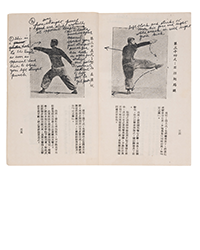
Forum, July 16: Martial Arts.- Lee (Bruce). 'Praying Mantis style' Kung Fu book, containing numerous annotations, diagrams and graphs in Bruce Lee's hand, c. 1960. £50,000-70,000
Forum Auctions The 10th Anniversary Sale Fine Books, Manuscripts and Works on Paper July 16, 2026
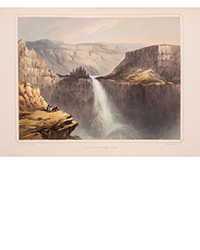
Forum, July 16: Warre (Capt. Henry James). Sketches in North America and the Oregon Territory, first edition, rare hand-coloured issue, 1848. £30,000-40,000
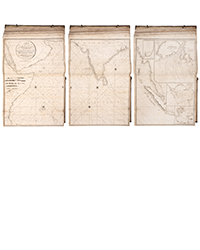
Forum, July 16: Norie (John William). The Marine Atlas, or Seaman's Complete Pilot for all the principal places in the known world..., 1826. £30,000-50,000
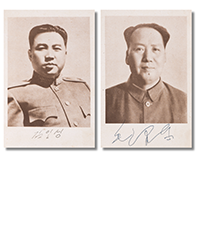
Forum, July 16: Mao Tse-tung.- Kim Il-sung.-[Note book for visitors from China to Korea], signed by Mao and Kim, [Beijing, 1954]. £10,000-15,000