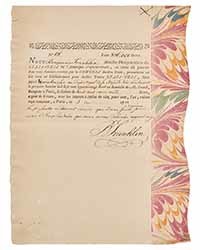
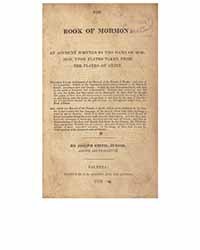
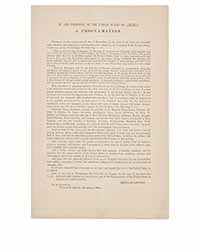
Digitizing Ancient and Fragile Materials is the subject of a recent report by Primary Research Group (PRG), a New York City firm specializing in data analysis related to libraries, higher education, law and other fields. Though the sample was small: 25 mainly American institutions, the participants ranged from some as large as Duke University Libraries, the Jewish Theological Seminary and Brigham Young University, to much smaller repositories such as Ivy Tech Community College in Indianapolis. Those who participated included staffers with the job titles: Library Directors, Archivists/Digital Librarians and Special Collections Directors.
The 112-page study looked at how these libraries are tackling the issue of digitizing materials including ancient manuscripts, fragments of documents and other hard to handle items. The report also provided information on the types of digitizing equipment considered most useful, personnel training budgets and practices, insurance and transport issues. It compared outsourcing vs. in-house digitization, as well as what and how much institutions expect to digitize in the near future.
Data in the report is broken out by type and size of college or university, by public and private status, and by the personal characteristics of the respondent, such as work title, age and gender.
A few of the key findings were:
• No special collections librarian in the sample reported that more than 30% of their stock of ancient, rare or fragile materials had been digitized.
• 44% of respondents are unsure if their institution has insurance for damage incurred during digitization. Only 16% report having insurance that would cover accidents during digitization.
• 60% of respondents in institutions with more than 23,000 students FTE had an in-house training program in digitization skills.
• Respondents from schools with higher tuition ranges were more likely to plan to digitize most of all of their ancient or fragile items.
• 40% of respondents believed that flatbed scanners were almost always important in their digitization efforts.
There were multiple questions about equipment and software preferences. Some of the options mentioned included Overhead Scanners, Flatbed Scanners, Book Scanners, Automated Page Turners, Multispectral or Hyperspectral Imaging, DSLR Cameras, Tesseract (OCR Technology), GIMP (Image Editing Software), ABBYY FineReader, Transkribus (Handwritten Text Recognition).
The perceived importance of Photoshop was high with this sample:
Photoshop is highly regarded, with 36% rating it as almost always important.
- Library Affiliation:
- Special Collections Directors: 62.5% rated Photoshop as almost always important.
- Archivists/Digital Librarians: 40% find it often important.
- By Enrollment: Institutions with 8,000+ students consider Photoshop important, with 57.14% finding it almost always essential.
The overall finding stated,
- None Digitized: 12% of institutions have not digitized any materials.
- Less than 5% Digitized: The largest group, 36%, reported digitizing less than 5% of rare or ancient materials in their collections.
- 5% to 30% Digitized: 44% have digitized between 5% and 30%.
- More than 30%: 8% of libraries have digitized between 30% and 50%, with none reporting over 50%.
Respondents from larger schools in higher tuition ranges were more likely than others to plan to digitize most of all of their ancient or fragile items. All of those planning to digitize the complete collection of such items were private colleges, of which 18.18% had such plans. Also, all of those who planned to digitize everything were men.
It was interesting to note that the level of funding earmarked for digitization efforts varied widely and not surprisingly the bigger schools with higher tuition put more resources into their digitization effort. The data breakout by gender suggested libraries were more likely to invest in training men than women employees and spend more on that training.
“In general,” the report said, “much remains to be done and most ancient or fragile materials remain not accessible through digital means. No library in the sample reported digitizing more than half of their ancient or rare holdings.”
The report also contained comments from a number of Archivists/Digital Librarians. A few examples are:
- Digitization has greatly improved public access to fragile materials, with one library reporting that 70% of its fragile materials are now publicly available. Digitization also facilitates preservation by limiting the physical handling of materials.
- Libraries report digitizing thousands of pages annually, uploading collections to digital repositories, and receiving frequent requests for digitized content from scholars worldwide.
- Digital materials are promoted globally, with some libraries experiencing over two million views per year and regular requests for publication use of digitized items.
Special Collections Directors/Managers mentioned:
- For some, digitization has drastically expanded the reach of their collections, particularly for medical books, which are now accessible to thousands of users worldwide. One institution reported 205 digitized works being downloaded over 200,000 times across nearly 200 countries.
- Others are restarting digitization projects after early initiatives were discontinued or planning future promotions of newly digitized materials.
- During the COVID-19 pandemic, digitization became essential for maintaining access to collections, and libraries saw an increase in both web traffic and user engagement.
James Moses, Research Director for PRG, the firm he founded in 1994, said the company uses both staff and freelancers to compile reports. It issues about 65 new ones each year in their various specialty areas. He said the company currently has licenses for a total of 800-900 reports which are available individually or by subscription.
Two other PRG 2024 publications of possible interest to those in the library world are:
Survey of Academic Library Leadership, Use of Generative Artificial Intelligence,
Survey of Academic Library Leadership 2024, Hiring Practices & Plans
Contact info: James Moses
Primary Research Group Inc.
2585 Broadway #156
New York, New York 10025
212-736-2316 (phone)
212-412-9097 (fax)
Reach writer Susan Halas at [email protected]