Masked and gloved, chemistry student Leila Ais cuts a sample from a book cover. Photo credit: Kristy Jones.
In the 19th century, the average lifespan was only in the 30s, or if you survived infancy, you could hope for 40-something. There were many reasons for this short lifespan, but was reading books one of them? The answer is maybe, though it certainly would have been a minor contributor compared to such causes as the plague and lack of anything resembling modern medicine. Still, many book covers of the time contained toxic chemicals, and if you have such books, they still do. The result is some libraries have taken to quarantining those old tomes, even if they are a couple of centuries late.
It has been known for some time that old book covers sometimes contain toxic chemicals. Publishers wanted bright colors on their covers to entice buyers, but bright colors are often created with poisonous ingredients. Recently, the American Chemistry Society reported on a deeper study conducted at Lipscomb University. It further confirmed the presence of potentially dangerous chemicals. Lipscomb reacted by sealing these books in plastic bags and removing them from the shelves. They have also done the same with other potentially dangerous but not yet tested books.
Previous tests of old books have shown the presence of toxic chemicals, but the Lipscomb researchers added a new one, X-ray diffraction (XRD) to determine the molecules containing the toxic metals. They found the presence of lead chromate, used to create yellow dye. They found six times as much lead as chromium, meaning lead is in other compounds not yet identified as lead chromate contains equal parts of lead and chromium.
They next compared their results with standards issued by the Centers for Disease Control and Prevention. The found that lead was present at twice the level accepted by the CDC and chromium at six times the safe limit. This is for chronic exposure, meaning you aren't going to become deathly ill by handling one of these books, but continued handling over time could result in various illnesses, including lung damage, cancer and infertility. You can think of it like saturated fats or, worse yet, trans fats. One cookie with too much of these fats won't kill you, but consume too many of them over time and it may seriously contribute to conditions that do shorten your life.
The poisons can be absorbed in two manners. One is from direct contact with your hands, the other by inhaling airborne particles.
The report mentions lead and chromium in yellow dye. It did not mention whether they conducted further testing for arsenic, but that had been tested earlier. Arsenic was used to create bright greens, so if your old books have bright green covers, there is a good chance they contain arsenic. It won't quickly kill you like the classic arsenic in your coffee, but it can build up so stay away from those books.
Assistant Chemistry Professor Joseph Weinstein-Webb commented, “I find it fascinating to know what previous generations thought was safe, and then we learn, oh, actually, that might not have been a great idea to use these brilliant dyes.” It makes you really wonder about readers who have a habit of licking a finger with their tongue to make it easier to turn pages. All the while, they are holding the book's cover.
Abigail Hoermann, an undergraduate chemistry student explained, “These old books with toxic dyes may be in universities, public libraries and private collections. So, we want to find a way to make it easy for everyone to be able to find what their exposure is to these books, and how to safely store them.” She pointed out that the XRD process does not require cutting off a sample from the book. “Moving forward, we want libraries to be able to test their collections without destroying them.”
Researchers on this project included Assistant Professor Weinstein-Webb, Hoermann, recent graduate Jafer Aljorani, and undergraduate Leila Ais.
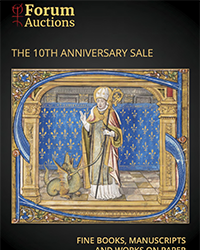
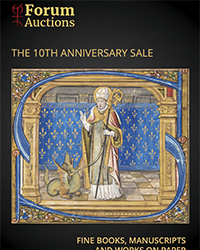
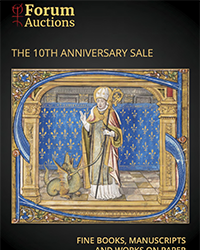
Forum Auctions The 10th Anniversary Sale Fine Books, Manuscripts and Works on Paper July 16, 2026
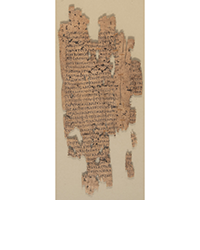
Forum, July 16: Inundation papyrus. P.Michael 4, the ‘Inundation papyrus’, a geographical account of the Nile near Canopus, in Greek, remains of two columns from a manuscript scroll on papyrus, Egypt, second century CE. £12,000-18,000
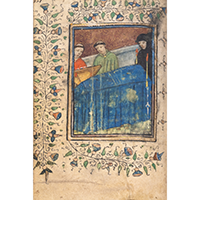
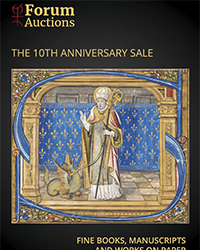
Forum, July 16: Book of Hours, use of Sarum, manuscript on vellum, 6 full-page miniatures, with famous Middle English inscriptions, Southern Netherlands for the English market, [c.1430]. £30,000-50,000
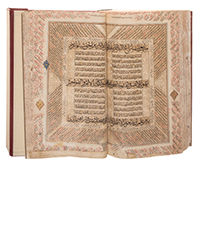
Forum, July 16: Qu'ran, Arabic manuscript on burnished, stencilled, and gold-flecked paper, 447ff., Sultanate Gujarat, Ahmadabad, [after 1411 but no later than 1442]. £15,000-20,000
Forum Auctions The 10th Anniversary Sale Fine Books, Manuscripts and Works on Paper July 16, 2026
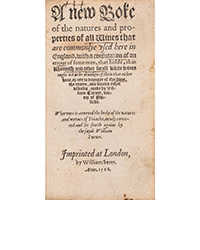
Forum, July 16: Turner (William). A New boke of the natures and properties of all wines that are commonly vsed here in England, rare first edition of the first English book on wine, By William Seres, 1568. £20,000-£30,000
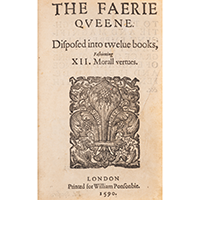
Forum, July 16: Spenser (Edmund). The Faerie Queene. first edition, Printed [by John Wolfe] for William Ponsonbie, 1590. £30,000-40,000
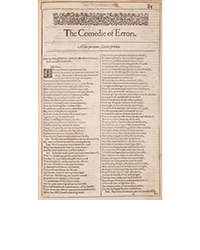
Forum, July 16: Shakespeare (William). The Comedie of Errors, extracted from the first folio, Isaac Jaggard and Edward Blount, 1623. £15,000-20,000
Forum Auctions The 10th Anniversary Sale Fine Books, Manuscripts and Works on Paper July 16, 2026
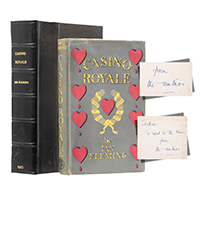
Forum, July 16: Fleming (Ian). Casino Royale, first edition, signed presentation inscription from the author, 1953. £40,000-60,000
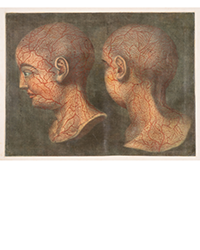
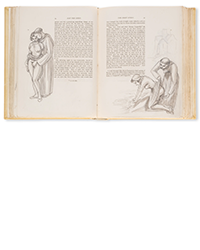
Forum, July 16: d'Agoty (Jacques-Fabien Gautier). Anatomie de la Tête, first edition, Paris, chez le Sieur Gautier, 1748. £10,000-15,000
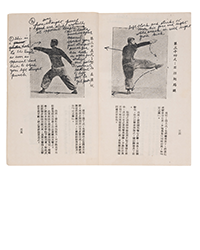
Forum, July 16: Martial Arts.- Lee (Bruce). 'Praying Mantis style' Kung Fu book, containing numerous annotations, diagrams and graphs in Bruce Lee's hand, c. 1960. £50,000-70,000
Forum Auctions The 10th Anniversary Sale Fine Books, Manuscripts and Works on Paper July 16, 2026
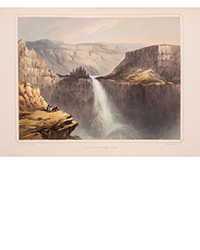
Forum, July 16: Warre (Capt. Henry James). Sketches in North America and the Oregon Territory, first edition, rare hand-coloured issue, 1848. £30,000-40,000
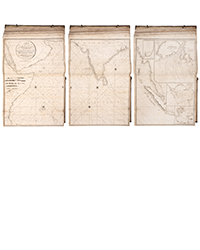
Forum, July 16: Norie (John William). The Marine Atlas, or Seaman's Complete Pilot for all the principal places in the known world..., 1826. £30,000-50,000
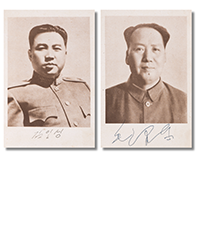
Forum, July 16: Mao Tse-tung.- Kim Il-sung.-[Note book for visitors from China to Korea], signed by Mao and Kim, [Beijing, 1954]. £10,000-15,000
Sotheby’s Shelf Life: Books, Manuscripts and Works on Paper from the Library of Stanley J. Seeger and Christopher Cone 25 June – July 7
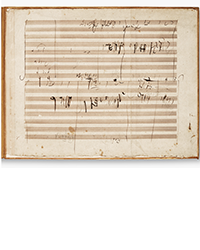
Sotheby’s, July 7: Ludwig van Beethoven. Autograph sketches for the overture "Die Weihe des Hauses", op.124, [1822], UNPUBLISHED. £150,000 to £200,000.
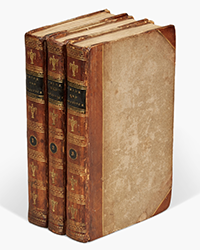
Sotheby’s, July 7: Jane Austen. Pride and Prejudice, 1813, first edition, 3 volumes, contemporary half calf. £50,000 to £70,000.
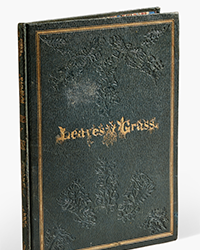
Sotheby’s, July 7: Walt Whitman. Leaves of Grass, Brooklyn, 1855, first edition, first issue, original green cloth, the Doheny copy. £50,000 to £70,000.
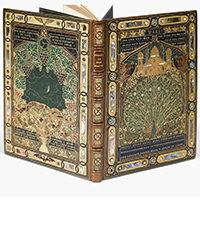
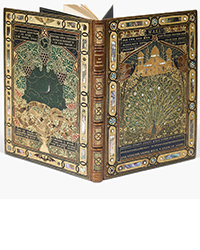
Sotheby’s, July 7: Binding—Sangorski & Sutcliffe—Omar Khayyam. Rubaiyat, London, 1872, third edition, in a magnificent jewelled Peacock binding. £15,000 to £20,000.
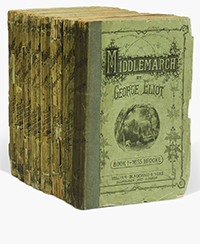
Sotheby’s, July 7: George Eliot. Middlemarch, Edinburgh and London, 1871, first edition in the original parts. £20,000 to £30,000.
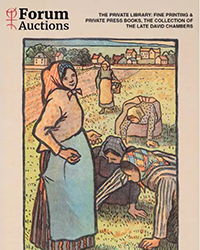
Forum Auctions The Private Library: Fine Printing & Private Press books, the collection of the late David Chambers July 9, 2026
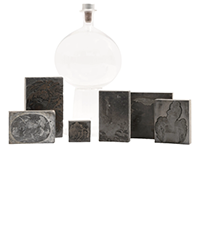
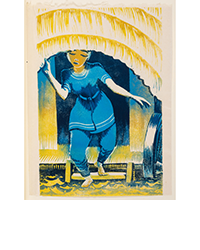
Forum, July 9: Hassall (Joan) A large collection of over 300 original woodblocks of engravings for various books, v.d., with Hassall's engraver's glass water-globe (Qty) - Est. £10,000-15,000
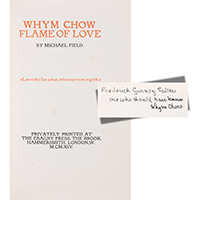
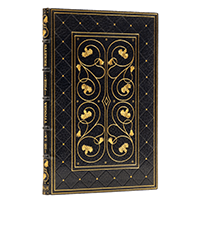
Forum, July 9: Eragny Press.- [Bradley (Katherine Harris) & Edith Emma Cooper], "Michael Field." Whym Chow, Flame of Love, one of only 27 copies, inscribed by Bradley, the rarest book from the press, 1914. - Est. £3,000-4,000
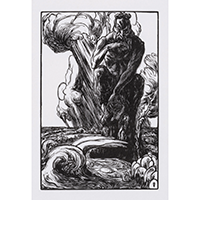
Forum, July 9: [Moore (Thomas Sturge)] [Wood Engravings], 71 wood-engravings printed by David Chambers from the original blocks, the only set on Japanese Hosho paper, from an edition of 5 sets, [1970]. - Est. £3,000-4,000
Forum Auctions The Private Library: Fine Printing & Private Press books, the collection of the late David Chambers July 9, 2026
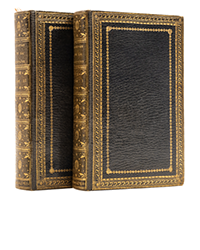
Forum, July 9: La Fontaine (Jean de) Contes et Nouvelles en vers, 2 vol., engraved plates after Eisen, fine early 19th century blue morocco, gilt, by Bradel l'ainé, Amsterdam [Paris], 1762. - Est. £2,000-3,000
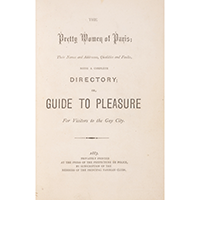
Forum, July 9: Erotica.- Prostitution.- Pretty Women of Paris (The); Their Names and Addresses, Qualities and Faults..., [Paris], privately printed at the Press of the Prefecture de Police, 1883. - Est. £3,000-4,000
Forum, July 9: Vale Press.- Ricketts (Charles) & Lucien Pissarro. De la Typographie et de l'Harmonie de la Page Imprimée…, [one of 216 copies], bound in dark blue morocco tooled in gilt, by Sarah T.Prideaux, 1898. - Est. £1,000-1,500
Forum Auctions The Private Library: Fine Printing & Private Press books, the collection of the late David Chambers July 9, 2026
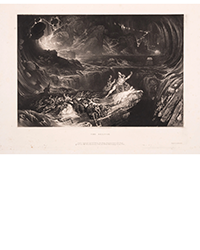
Forum, July 9: Martin (John) Illustrations of the Bible, complete set of 20 mezzotints, good impressions, rarely found in early states, [c.1831-1835]. - Est. £1,000-1,500
Forum, July 9: Golden Cockerel Press.- Four Gospels of the Lord Jesus Christ (The), one of 500 copies, Mary Gill's copy, Waltham St. Lawrence, 1931 with a signed proof of engraving on japon numbered 10/10 (2) - Est. £5,000-7,000
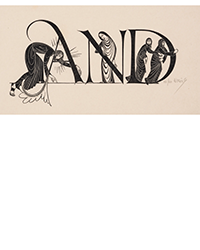
Forum, July 9: Boccaccio (Giovanni) The Decameron, 3 vol., vol.1 extra-illustrated by John Buckland Wright with c.150 erotic original drawings in pen & ink and pencil, 1886 [extra-illustrated c.1940]. - Est. £10,000-15,000
Forum Auctions The Private Library: Fine Printing & Private Press books, the collection of the late David Chambers July 9, 2026
Forum, July 9: Cox (Morris) Collection of Gogmagog Press Books, 35 vol., rare complete collection of printed books issued by the press, limited editions, most signed by Cox, 1957-83. - Est. £10,000-15,000
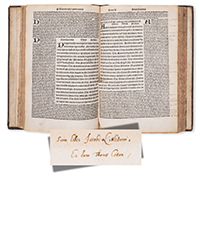
Forum, July 9: Wynkyn de Worde.- [Terentius Afer (Publius)] [Comedie...], [Paris, Josse Badius: sold in London by Wynkyn de Worde, & others], [15 July 1504]. - Est. £4,000-6,000
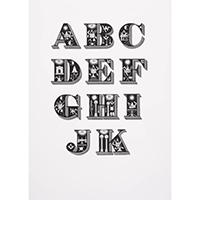
Forum, July 9: Mosley (James) Ornamented Types. Twenty-Three Alphabets from the Foundry of Louis John Pouchée, 2 vol., one of 10 copies for presentation, from an edition of 210, 1992-93. - Est. £1,000-2,000