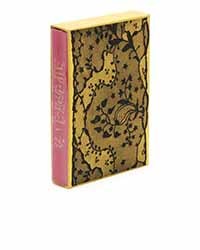
Is the holy French Republic the saint that the French portray? Some books challenge the official narrative, and François Hue’s Dernières années du règne et de la vie de Louis XVI..., is one of them.
A proud son of the French Republic myself, I’ve adored her since I was a kid. I’ve always looked up to her. She’s a caring mother to me, and she’s insured me liberty, equality and fraternity. My bold ancestors died for her; they killed a king for her; they pushed back the Church’s greedy hands for her. Republic is French people’s goddess, and their national motto, liberté, égalité, fraternité, is their Pater Noster. Of course, we’re all aware that national narratives are necessarily built on a few lies— it makes them sound better. Some witness accounts may however introduce a few false notes to the melody. Such is François Hue’s book. A former “officier de la chambre du roi” (a servant), Hue shared some crucial and intimate instants with Louis XVI during the dramatic last events of the king’s life. He hardly escaped death himself, and eventually fled to London where he published his memoirs in 1806. His book is part of the holy Trinity that relates Louis XVI’s last days with Cléry’s Journal de ce qui s’est passé à la tour du Temple... (Londres, 1798), and Firmont’s Mémoires (1815). The former was the King’s servant when he was detained at the Temple prison, in Paris, while the latter was the King’s last confessor, who walked him to the foot of the scaffold, where he allegedly told him: “Son of Saint Louis, ascend to heaven!” Emotion, grief and regrets are at the hearts of those books and it’s very hard to read them without feeling sympathy for Louis XVI—who was a sympathetic man.
Although he relates some upsetting events, François Hue remains in the background of his own relation until the incredible footnote of page 379—here quoting the 1814 edition. Relating the attack on the Palais des Tuileries, in Paris, by an outraged mob on August 10, 1792, Hue confesses in small characters—as if whispering: “Not knowing how to escape myself, I eventually jumped through a window of the Palais, landing in the gardens. I ran through them under heavy fire that took the lives of many Swiss guards. I exited the gardens but some people were still coming after me, leaving me no choice but to jump into the Seine River. I was exhausted, but I miraculously reached a boat—the boatman rescued me, and he saved my life.” That’s how close Hue was to the action! As a matter of fact, he gives larger than life descriptions of a few figures of the Révolution, such as the dreadful “Coupe-tête” (The Beheader), who, among other rejoicing things, severed the heads of two guards on October 5, 1789, after an angry mob swarmed the Château de Versailles: “The head cutter, a man with a long black beard, with a fierce look, his arms bare to the elbows, his wild eyes rolling in his face, and his clothes covered with blood, was shaking his axe (...)! This monster’s name was Nicolas Jourdan, and he was a model at the Academy of Painting. After that, he was called 'Coupe-tête.'” The Beheader was himself beheaded in 1794.
In the yard of Les Feuillants, in Paris, where Louis XVI was held prisoner for a while, Hue caught a glimpse at the famous Théroigne de Mericourt. “This woman, dressed like an Amazon, was wearing the national uniform. Her eyes, her gestures, her words—everything about her was fury.” She’s considered today as the mother of feminism—she was caught by some other revolutionary females in the middle of the Assemblée Nationale in 1793, who stripped her naked and spanked her in public! She died a lunatic at the public hospital in 1817. Such were the heroes of the Republic. What about the sanguinary Marat? “Naming Marat is naming crime. This man, previous to the Révolution, was but a charlatan. After that, he was living on his periodical poison (Marat was the chief editor of the famous newspaper L’Ami du peuple). His mediocre height and his pale and sinister face revealed, through the most hideous appearance, an even more hideous spirit!” Charlotte Corday murdered him in his bath in July 1793—a relief for mankind (see our article: www.rarebookhub.com/articles/3425). Hue’s only comfort was probably to add footnotes to the names of his enemies. They all read the same: he was guillotiné such or such day... The Révolution turned a slaughterhouse. Among the many victims was Philippe d’Orléans, the prince of blood who spent his life plotting the Révolution so he could take the king’s place. He changed his name into Philippe Egalité and voted for the King’s death—he was himself executed in 1793.
Hue also draws the portrait of the main character of these events, the people! Manipulated, vile, ignorant, insulting the sacred symbols of the royalty, bloodthirsty, humiliating the Queen before executing her, slowly driving Louis’ five-year old son to death in his cell through ill-treatment and humiliation. Meet your holy revolutionary people, France! Indeed, some terrible things happened in the name of the Republic at the time, and Hue was disgusted: “To add insult to injury, they wrote on their prisons, the words: liberté, égalité, fraternité...” Yes, they did. More than 200 years ago, the sufferings are gone; so are the regrets—but the words remains. N’en déplaise à Monsieur Hue, the Republic has prevailed.
Hue remembers his sad and lonely master in the Temple prison, reading the life of Charles I, or obstinately refusing to fight back, losing this crucial battle day by day, out of benevolence and cowardice. He was probably sad to “ascend to heaven”, but he was certainly glad about one thing: it was over—at last! This man would have given anything to be somewhere else, to be someone else. François Hue, just like Cléry or Firmont told us the sad story of the man who wouldn’t be king.
Thibault Ehrengardt