Are you ready for another theory concerning the mysterious Voynich Manuscript? This is the early 15th century manuscript written in a language no one has been able to decipher, not even the greatest cryptographers. It's sections can be identified based on the illustrations. There are sections on botany, an herbal, zodiac stuff, and drawings of naked women frolicking around in pools of water. There are combinations of letters, obviously words, that are repeated, and are used consistently within the various sections. Based on dating of the vellum pages, it was created between 1403-1438. No one knows where or by whom.
It is known as the Voynich Manuscript as it first appeared in the possession of Polish bookseller Wilfrid Voynich in 1912. It was purchased by another bookseller, H. P. Kraus, who gave it to Yale University in 1969. It is still in Yale's possession today.
Of course, it has been speculated that the whole thing is a fraud but that seems unlikely. It took a lot of work to create this book, especially what appears to be a consistent language. The 15th century dating of its pages has been determined by carbon dating. While Voynich or someone before him could conceivably have used blank 15th century vellum to create the apparent age, they would have had no reason to do so before 1912. Carbon dating had not been discovered or even imagined then so there would have been no point to rounding up unused vellum from so long ago. No one would have known the difference from something more recent.
For the past century, many have tried to decipher the Voynich Manuscript. Some of the greatest cryptographers have tried but no one has succeeded. Considering how well people have done in translating hieroglyphics and some of the most sophisticated secret codes, particularly during wartime, it is almost as much of a mystery why no one has succeeded. Theories about its language have been put forward, but their shortcomings have repeatedly been revealed by the fact that no one has ever been able to decipher what it says.
This latest theory is not an attempt to crack the code. Rather, it is an attempt to trace its ownership farther back in time, closer to its origin. It is known to have belonged to Holy Roman Emperor Rudolf II in the early 17th century. He was fascinated by things rare and unusual. Rudolf was a logical collector of it. His ownership has been traced through a letter written by 17th century physician Johannes Marci von Kronland to Jesuit scholar Athanasius Kircher, saying that Rudolf had purchased it for 600 ducats. Kircher was unable to decipher it, after which the manuscript disappeared into the Jesuit collections, not to be seen again until Voynich came up with it.
There is no record of from whom Rudolf obtained the manuscript. Stefan Guzy, from the University of Arts Bremen in Bremen, Germany, did some sleuthing. He looked through a voluminous number of records to see if any books had been purchased by Rudolf that had cost 600 ducats. Among the lists of 7,000 transactions, he found 126 of buying books or manuscripts. One was for 600 ducats. The sale was made in 1597. It did not say what books were in the purchase, simply a “barrel of books.” Apparently, books were transported in barrels in those days. Since 600 ducats, a gold coin, was a lot of money, it is unlikely the Voynich Manuscript or any other single book would have cost this much.
Next, he looked at who the seller was. It was a physician and alchemist named Carl Widemann. Widemann was himself a manuscript collector. He regularly sold, or attempted to sell manuscripts to various sovereigns. Widemann was the city physician for Augsburg. He lived in a house owned by his predecessor as city physician, Dr. Leonhard Rauwolf. Rauwolf was was not only a physician but an extensive traveler. He was also interested in botanical and herbal subjects. Rauwolf is credited with introducing coffee to Europe, which he described in 1583 after a long trip around the Near East. It would not be surprising that he might have picked up a book such as this.
Rauwolf died in 1596, his wife in 1597. That was when Rudolf purchased the manuscript. Rauwolf's heirs sold the house and all the belongings in it. Guzy points out that it would be logical for Rauwolf's heirs to have turned over his books to Widemann to sell. That would explain this manuscript, if it were owned by Rauwolf, being in the barrel of books Widemann sold to Emperor Rudolf II.
Naturally, there are several speculations in this thesis. More research will be needed before this can be said to be more than a reasonable theory. Even if it is true, it does not answer the question of the origin of the book, let alone what its words mean. Nor does it tell us why it was written in a secret language so obscure that no experts have ever been able to break the code. However, it would bring us a step closer to its creation. An interest in the book by Rauwolf would support the belief that it is primarily some sort of herbal, a book of interest to a physician. If this timeline is true, we don't know where in his travels Rauwolf picked it up, whether he knew its origin, or if he understood its meaning better than anyone else since. The mystery goes on, but maybe Guzy has taken us one step closer to the solution.
You can read Guzy's report at the following link: ceur-ws.org/Vol-3313/paper16.pdf


![<b>Scandinavian Art & Rare Books Auctions, Dec. 4:</b> ROALD AMUNDSEN: «Sydpolen» [ The South Pole] 1912. First edition in jackets and publisher's slip case.](https://ae-files.s3.amazonaws.com/AdvertisementPhotos/0a99416d-9c0f-4fa3-afdd-7532ca8a2b2c.jpg "<b>Scandinavian Art & Rare Books Auctions, Dec. 4:</b> ROALD AMUNDSEN: «Sydpolen» [ The South Pole] 1912. First edition in jackets and publisher's slip case.")
![<b>Scandinavian Art & Rare Books Auctions, Dec. 4:</b> AMUNDSEN & NANSEN: «Fram over Polhavet» [Farthest North] 1897. AMUNDSEN's COPY!](https://ae-files.s3.amazonaws.com/AdvertisementPhotos/a077b4a5-0477-4c47-9847-0158cf045843.jpg "<b>Scandinavian Art & Rare Books Auctions, Dec. 4:</b> AMUNDSEN & NANSEN: «Fram over Polhavet» [Farthest North] 1897. AMUNDSEN's COPY!")
![<b>Scandinavian Art & Rare Books Auctions, Dec. 4:</b> ERNEST SHACKLETON [ed.]: «Aurora Australis» 1908. First edition. The NORWAY COPY.](https://ae-files.s3.amazonaws.com/AdvertisementPhotos/6363a735-e622-4d0a-852e-07cef58eccbe.jpg "<b>Scandinavian Art & Rare Books Auctions, Dec. 4:</b> ERNEST SHACKLETON [ed.]: «Aurora Australis» 1908. First edition. The NORWAY COPY.")
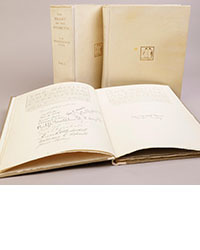
![<b>Scandinavian Art & Rare Books Auctions, Dec. 4:</b> SHACKLETON, BERNACCHI, CHERRY-GARRARD [ed.]: «The South Polar Times» I-III, 1902-1911.](https://ae-files.s3.amazonaws.com/AdvertisementPhotos/3ee16d5b-a2ec-4c03-aeb6-aa3fcfec3a5e.jpg "<b>Scandinavian Art & Rare Books Auctions, Dec. 4:</b> SHACKLETON, BERNACCHI, CHERRY-GARRARD [ed.]: «The South Polar Times» I-III, 1902-1911.")
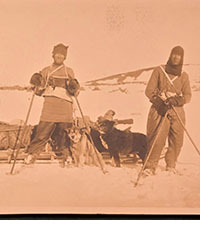
![<b>Scandinavian Art & Rare Books Auctions, Dec. 4:</b> [WILLEM BARENTSZ & HENRY HUDSON] - SAEGHMAN: «Verhael van de vier eerste schip-vaerden […]», 1663.](https://ae-files.s3.amazonaws.com/AdvertisementPhotos/d5f50485-7faa-423f-af0c-803b964dd2ba.jpg "<b>Scandinavian Art & Rare Books Auctions, Dec. 4:</b> [WILLEM BARENTSZ & HENRY HUDSON] - SAEGHMAN: «Verhael van de vier eerste schip-vaerden […]», 1663.")
![<b>Scandinavian Art & Rare Books Auctions, Dec. 4:</b> TERRA NOVA EXPEDITION | LIEUTENANT HENRY ROBERTSON BOWERS: «At the South Pole.», Gelatin Silver Print. [10¾ x 15in. (27.2 x 38.1cm.) ].](https://ae-files.s3.amazonaws.com/AdvertisementPhotos/fb024365-7d7a-4510-9859-9d26b5c266cf.jpg "<b>Scandinavian Art & Rare Books Auctions, Dec. 4:</b> TERRA NOVA EXPEDITION | LIEUTENANT HENRY ROBERTSON BOWERS: «At the South Pole.», Gelatin Silver Print. [10¾ x 15in. (27.2 x 38.1cm.) ].")
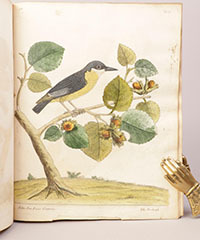
![<b>Scandinavian Art & Rare Books Auctions, Dec. 4:</b> PAUL GAIMARD: «Voyage de la Commision scientific du Nord, en Scandinavie, […]», c. 1842-46. ONLY HAND COLOURED COPY KNOWN WITH TWO ORIGINAL PAINTINGS BY BIARD.](https://ae-files.s3.amazonaws.com/AdvertisementPhotos/a7c0eda0-9d8b-43ac-a504-58923308d5a4.jpg "<b>Scandinavian Art & Rare Books Auctions, Dec. 4:</b> PAUL GAIMARD: «Voyage de la Commision scientific du Nord, en Scandinavie, […]», c. 1842-46. ONLY HAND COLOURED COPY KNOWN WITH TWO ORIGINAL PAINTINGS BY BIARD.")
![<b>Sotheby’s, Dec. 11:</b> Darwin and Wallace. On the Tendency of Species to form Varieties..., [in:] <i>Journal of the Proceedings of the Linnean Society,</i> Vol. III, No. 9., 1858, Darwin announces the theory of natural selection. £100,000 to £150,000.](https://ae-files.s3.amazonaws.com/AdvertisementPhotos/00d5fd41-2542-4a80-b119-4886d4b9925f.png "<b>Sotheby’s, Dec. 11:</b> Darwin and Wallace. On the Tendency of Species to form Varieties..., [in:] <i>Journal of the Proceedings of the Linnean Society,</i> Vol. III, No. 9., 1858, Darwin announces the theory of natural selection. £100,000 to £150,000.")