Google is Using Old Books and New Technology to Combat Disease
- by Michael Stillman
A recent story on the Google Research blog quickly caught my eye: Using new technology and old books to combat disease. We tend to think of old books as a source of information about the past, which they certainly are, but the headline indicated the people at Google Brain were using them to solve today's major problems.
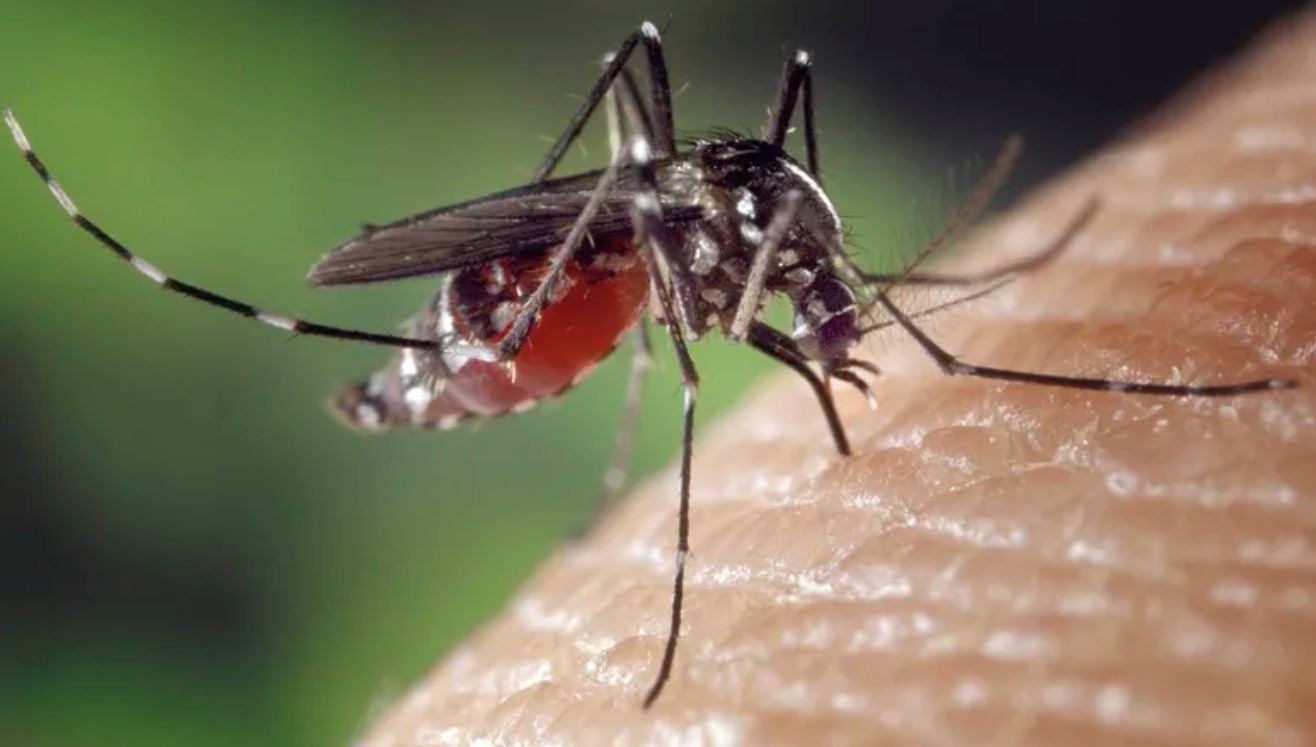
The issue they were tackling concerned insect-borne diseases. Mosquitoes and ticks spread dangerous diseases such as malaria and lyme disease. Add to that how annoying the itching bites can be and there is good reason to seek new ways to repel these pests. The most common repellent for mosquitoes, the active ingredient in many of the repellents you find in the store, is Deet (technically, N,N-diethyl-meta-toluamide). It was discovered 80 years ago after extensive government research. However, it does have certain drawbacks, such as damaging some types of fabrics, not working with all pests, and possibly some negative effects on people.
What the Google researchers discovered was the government had carried on extensive testing in the 1940s when they selected Deet, but what they tested and what were the results was virtually impossible to find. It was stashed away in various places with no practical way to locate it all. However, these were Google researchers and they were aware that Google had scanned and preserved reams of this old stuff as part of Google Books. This allowed them to locate these old reports and review them. What they found was surprising. The government had tested thousands of potential repellents.
Exactly how Google Brain used all this data is beyond the scope of this article, which is another way of saying the computer functions and science are beyond my understanding. The computers are using AI (Artificial Intelligence) to do comparisons of promising molecules to find others that may be useful. Eventually, they came up with a list of 10 molecules that may be more effective than Deet. Further testing will be needed. Hopefully, they will find better repellents that will save lives in areas plagued by disease-bearing insects while making our picnics more pleasant.
The issue for us is old books, and the application of new technology to them. Google Books now has 40 million volumes scanned into their database. This is definitely the information age and that is a lot of data. The issue now is making connections, using the existing data to learn things no one realized was there, and applying it to questions we want to answer today. That is where AI comes in. It can “think” at computer speed, not human speed, and it can sort through voluminous amounts of data in split seconds. Perhaps you've had a chance to ask questions of, or even get stories or poems written on demand for you by ChatGPT. Maybe you have created some unique images through Stable Diffusion. What they can do with AI and data is astonishing, at least to those of us who grew up in the age of pencils and paper. They are fun to play around with, but as Google Brain is proving, AI is serious business. Combine it with data from old books and other sources, and there is no telling what you may discover.
In our own case, over the past 20 years we have put together a database of over 12.5 million records from auctions and other sources pertaining to sales of old books. It has enabled us to not only find descriptions and prices from the past, but to create a scale for estimating the current value of old prices based on an index generated strictly from book sales. We recently developed a method of using the database to estimate the value of entire collections, not just one book at a time. We can estimate how frequently a particular title is likely to come up at auction in the future. We can determine how frequently certain words are used in descriptions of a particular title. Still, there is much more to be learned, not only about books but about the interests of people at various times, and which changes predict our interests in the future. As long as the data has been accumulated, AI will enable us to learn much more than we ever dreamed possible. These are exciting times.
SD Scandinavian Art & Rare Book Auctions The Odfjell Collection Polar – History – Ornithology – Colour Plate Books Ending December 4th
Scandinavian Art & Rare Books Auctions, Dec. 4: ROALD AMUNDSEN: «Sydpolen» [ The South Pole] 1912. First edition in jackets and publisher's slip case.
Scandinavian Art & Rare Books Auctions, Dec. 4: AMUNDSEN & NANSEN: «Fram over Polhavet» [Farthest North] 1897. AMUNDSEN's COPY!
Scandinavian Art & Rare Books Auctions, Dec. 4: ERNEST SHACKLETON [ed.]: «Aurora Australis» 1908. First edition. The NORWAY COPY.
Scandinavian Art & Rare Books Auctions, Dec. 4: ERNEST SHACKLETON: «The heart of the Antarctic» + SUPPLEMENT «The Antarctic Book», 1909.
Scandinavian Art & Rare Books Auctions, Dec. 4: SHACKLETON, BERNACCHI, CHERRY-GARRARD [ed.]: «The South Polar Times» I-III, 1902-1911.
SD Scandinavian Art & Rare Book Auctions The Odfjell Collection Polar – History – Ornithology – Colour Plate Books Ending December 4th
Scandinavian Art & Rare Books Auctions, Dec. 4: [WILLEM BARENTSZ & HENRY HUDSON] - SAEGHMAN: «Verhael van de vier eerste schip-vaerden […]», 1663.
Scandinavian Art & Rare Books Auctions, Dec. 4: TERRA NOVA EXPEDITION | LIEUTENANT HENRY ROBERTSON BOWERS: «At the South Pole.», Gelatin Silver Print. [10¾ x 15in. (27.2 x 38.1cm.) ].
Scandinavian Art & Rare Books Auctions, Dec. 4: ELEAZAR ALBIN: «A natural History of Birds.» + «A Supplement», 1738-40. Wonderful coloured plates.
Scandinavian Art & Rare Books Auctions, Dec. 4: PAUL GAIMARD: «Voyage de la Commision scientific du Nord, en Scandinavie, […]», c. 1842-46. ONLY HAND COLOURED COPY KNOWN WITH TWO ORIGINAL PAINTINGS BY BIARD.
Scandinavian Art & Rare Books Auctions, Dec. 4: JAMES JOYCE: «Ulysses», 1922. FIRST EDITION IN ORIGINAL WRAPPERS.
Sotheby’s Book Week December 9-17, 2025
Sotheby’s, Dec. 11: Darwin and Wallace. On the Tendency of Species to form Varieties..., [in:] Journal of the Proceedings of the Linnean Society, Vol. III, No. 9., 1858, Darwin announces the theory of natural selection. £100,000 to £150,000.
Sotheby’s, Dec. 11: J.K. Rowling. Harry Potter and the Philosopher's Stone, 1997, first edition, hardback issue, inscribed by the author pre-publication. £100,000 to £150,000.
Sotheby’s, Dec. 11: Wolfgang Amadeus Mozart. Autograph sketchleaf including a probable draft for the E flat Piano Quartet, K.493, 1786. £150,000 to £200,000.
Sotheby’s, Dec. 12: Hooke, Robert. Micrographia: or some Physiological Descriptions of Minute Bodies made by Magnifying Glasses. London: James Allestry for the Royal Society, 1667. $12,000 to $15,000.
Sotheby’s, Dec. 12: Chappuzeau, Samuel. The history of jewels, first edition in English. London: T.N. for Hobart Kemp, 1671. $12,000 to $18,000.
Sotheby’s, Dec. 12: Sowerby, James. Exotic Mineralogy, containing his most realistic mineral depictions, London: Benjamin Meredith, 1811, Arding and Merrett, 1817. $5,000 to $7,000.
Rare Book Hub is now mobile-friendly!
Swann Maps & Atlases, Natural History & Color Plate Books December 9, 2025
Swann, Dec. 9: Lot 156: Cornelis de Jode, Americae pars Borealis, double-page engraved map of North America, Antwerp, 1593.
Swann, Dec. 9: Lot 206: John and Alexander Walker, Map of the United States, London and Liverpool, 1827.
Swann, Dec. 9: Lot 223: Abraham Ortelius, Typus Orbis Terrarum, hand-colored double-page engraved world map, Antwerp, 1575.
Swann Maps & Atlases, Natural History & Color Plate Books December 9, 2025
Swann, Dec. 9: Lot 233: Aaron Arrowsmith, Chart of the World, oversize engraved map on 8 sheets, London, 1790 (circa 1800).
Swann, Dec. 9: Lot 239: Fielding Lucas, A General Atlas, 81 engraved maps and diagrams, Baltimore, 1823.
Swann, Dec. 9: Lot 240: Anthony Finley, A New American Atlas, 15 maps engraved by james hamilton young on 14 double-page sheets, Philadelphia, 1826.
Swann Maps & Atlases, Natural History & Color Plate Books December 9, 2025
Swann, Dec. 9: Lot 263: John Bachmann, Panorama of the Seat of War, portfolio of 4 double-page chromolithographed panoramic maps, New York, 1861.
Swann, Dec. 9: Lot 265: Sebastian Münster, Cosmographei, Basel: Sebastian Henricpetri, 1558.
Swann, Dec. 9: Lot 271: Abraham Ortelius, Epitome Theatri Orteliani, Antwerp: Johann Baptist Vrients, 1601.
Swann Maps & Atlases, Natural History & Color Plate Books December 9, 2025
Swann, Dec. 9: Lot 283: Joris van Spilbergen, Speculum Orientalis Occidentalisque Indiae, Leiden: Nicolaus van Geelkercken for Jodocus Hondius, 1619.
Swann, Dec. 9: Lot 285: Levinus Hulsius, Achtzehender Theil der Newen Welt, 14 engraved folding maps, Frankfurt: Johann Frederick Weiss, 1623.
Swann, Dec. 9: Lot 341: John James Audubon, Carolina Parrot, Plate 26, London, 1827.