Collections, random or life-long pursuits are often given away or forgotten because there aren’t many alternatives for selling them for meaningful amounts of money. This is easy to be misunderstand when you look on the internet. Everything has a price and therefore there must be a buyer. After all, you have been buying that way so there must be others equally interested. Sometimes yes, sometimes no.
In fact, listing sites are a kind of a mirage suggesting liquidity. Certainly sellers are willing to part with their prizes for the prices they offer but no listing sites have had the courage to report and track listing history because that history would be dispiriting to sellers, acknowledging it’s much tougher to sell than to buy.
Said this way, when you look for real estate don’t you usually ask, how long has it been available? If no one has wanted it for 30 days, should you be mindful of this? Yes.
Would you pay the asking price if the book you found has been listed for 5 years? Emotionally, possibly yes, logically no, not at least until a negotiation. A longer length of time listed implies it hasn’t sounded appealing at that price to browsers for a long, long time. The same is true about collectible paper offered on line.
More concerning, your copy or example, if ever listed again, may be equally difficult to sell online for the price you paid. If so, if you someday offer your copy online at the price you paid expect it may take you the same 5 years, it took your seller.
Collecting is deeply personal and collectors and their eventual heirs both will hope to find financial success at the end of the day but more often than not that’s not the way it works out. Many collections and remnants, probably a strong MOST are given away or forgotten without regret because for the collector, collecting has been an emotional enterprise, not a financial pursuit, a reward for hard work, luck or both, the opportunity to unfurl the flag, conveying intelligence, discernment, sophistication and often success. Collecting has long had an honored place in human experience.
To limit a collection’s downside, be mindful of both price and value. They are not the same thing. Professional advice, careful comparison, and use of Transactions+ all help. Done well, you can be one of the collectors whose passion turns into profit.
Someday a listing site will require and capture selling history. They will be attacked and later worshipped.
Sotheby’s Shelf Life: Books, Manuscripts and Works on Paper from the Library of Stanley J. Seeger and Christopher Cone 25 June – July 7
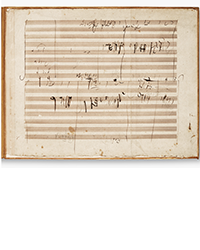
Sotheby’s, July 7: Ludwig van Beethoven. Autograph sketches for the overture "Die Weihe des Hauses", op.124, [1822], UNPUBLISHED. £150,000 to £200,000.
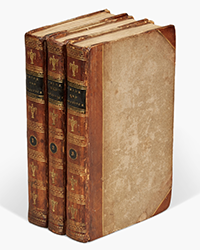
Sotheby’s, July 7: Jane Austen. Pride and Prejudice, 1813, first edition, 3 volumes, contemporary half calf. £50,000 to £70,000.
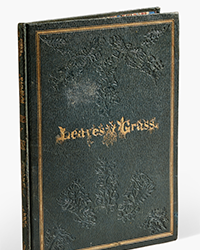
Sotheby’s, July 7: Walt Whitman. Leaves of Grass, Brooklyn, 1855, first edition, first issue, original green cloth, the Doheny copy. £50,000 to £70,000.
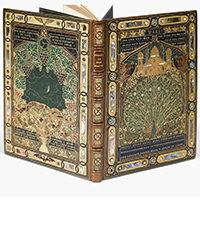
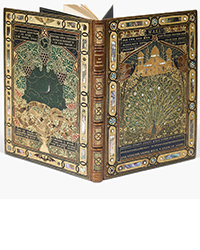
Sotheby’s, July 7: Binding—Sangorski & Sutcliffe—Omar Khayyam. Rubaiyat, London, 1872, third edition, in a magnificent jewelled Peacock binding. £15,000 to £20,000.
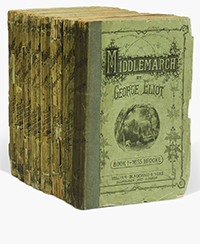
Sotheby’s, July 7: George Eliot. Middlemarch, Edinburgh and London, 1871, first edition in the original parts. £20,000 to £30,000.
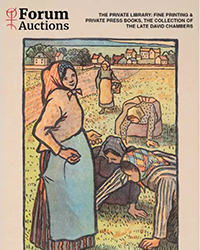
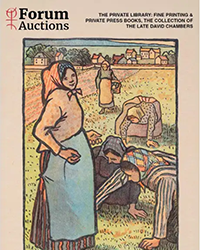
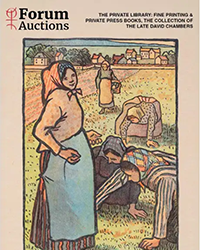
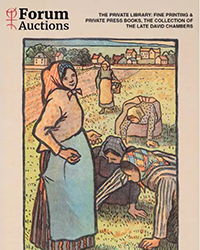
Forum Auctions The Private Library: Fine Printing & Private Press books, the collection of the late David Chambers July 9, 2026
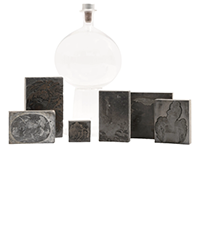
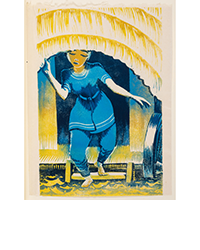
Forum, July 9: Hassall (Joan) A large collection of over 300 original woodblocks of engravings for various books, v.d., with Hassall's engraver's glass water-globe (Qty) - Est. £10,000-15,000
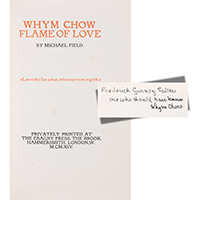
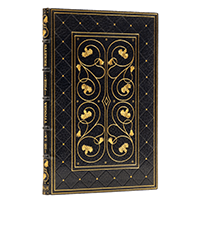
Forum, July 9: Eragny Press.- [Bradley (Katherine Harris) & Edith Emma Cooper], "Michael Field." Whym Chow, Flame of Love, one of only 27 copies, inscribed by Bradley, the rarest book from the press, 1914. - Est. £3,000-4,000
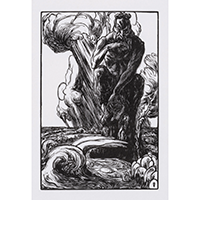
Forum, July 9: [Moore (Thomas Sturge)] [Wood Engravings], 71 wood-engravings printed by David Chambers from the original blocks, the only set on Japanese Hosho paper, from an edition of 5 sets, [1970]. - Est. £3,000-4,000
Forum Auctions The Private Library: Fine Printing & Private Press books, the collection of the late David Chambers July 9, 2026
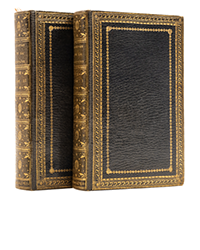
Forum, July 9: La Fontaine (Jean de) Contes et Nouvelles en vers, 2 vol., engraved plates after Eisen, fine early 19th century blue morocco, gilt, by Bradel l'ainé, Amsterdam [Paris], 1762. - Est. £2,000-3,000
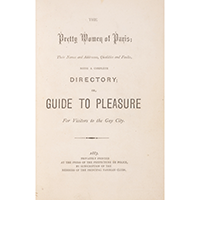
Forum, July 9: Erotica.- Prostitution.- Pretty Women of Paris (The); Their Names and Addresses, Qualities and Faults..., [Paris], privately printed at the Press of the Prefecture de Police, 1883. - Est. £3,000-4,000
Forum, July 9: Vale Press.- Ricketts (Charles) & Lucien Pissarro. De la Typographie et de l'Harmonie de la Page Imprimée…, [one of 216 copies], bound in dark blue morocco tooled in gilt, by Sarah T.Prideaux, 1898. - Est. £1,000-1,500
Forum Auctions The Private Library: Fine Printing & Private Press books, the collection of the late David Chambers July 9, 2026
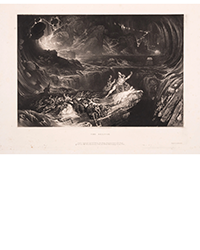
Forum, July 9: Martin (John) Illustrations of the Bible, complete set of 20 mezzotints, good impressions, rarely found in early states, [c.1831-1835]. - Est. £1,000-1,500
Forum, July 9: Golden Cockerel Press.- Four Gospels of the Lord Jesus Christ (The), one of 500 copies, Mary Gill's copy, Waltham St. Lawrence, 1931 with a signed proof of engraving on japon numbered 10/10 (2) - Est. £5,000-7,000
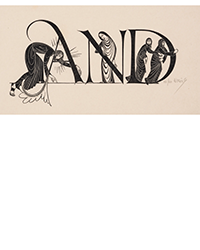
Forum, July 9: Boccaccio (Giovanni) The Decameron, 3 vol., vol.1 extra-illustrated by John Buckland Wright with c.150 erotic original drawings in pen & ink and pencil, 1886 [extra-illustrated c.1940]. - Est. £10,000-15,000
Forum Auctions The Private Library: Fine Printing & Private Press books, the collection of the late David Chambers July 9, 2026
Forum, July 9: Cox (Morris) Collection of Gogmagog Press Books, 35 vol., rare complete collection of printed books issued by the press, limited editions, most signed by Cox, 1957-83. - Est. £10,000-15,000
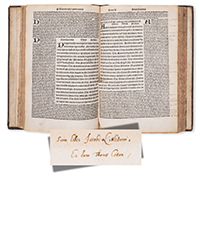
Forum, July 9: Wynkyn de Worde.- [Terentius Afer (Publius)] [Comedie...], [Paris, Josse Badius: sold in London by Wynkyn de Worde, & others], [15 July 1504]. - Est. £4,000-6,000
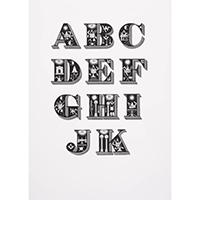
Forum, July 9: Mosley (James) Ornamented Types. Twenty-Three Alphabets from the Foundry of Louis John Pouchée, 2 vol., one of 10 copies for presentation, from an edition of 210, 1992-93. - Est. £1,000-2,000
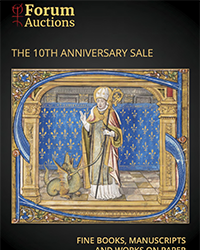
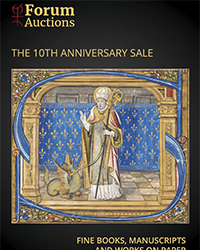
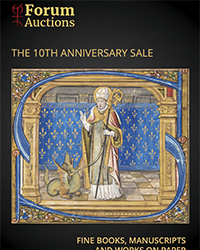
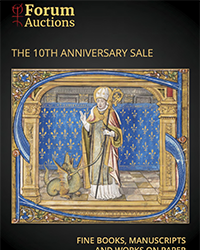
Forum Auctions The 10th Anniversary Sale Fine Books, Manuscripts and Works on Paper July 16, 2026
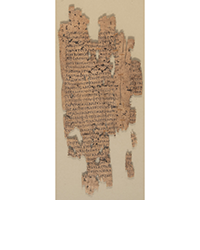
Forum, July 16: Inundation papyrus. P.Michael 4, the ‘Inundation papyrus’, a geographical account of the Nile near Canopus, in Greek, remains of two columns from a manuscript scroll on papyrus, Egypt, second century CE. £12,000-18,000
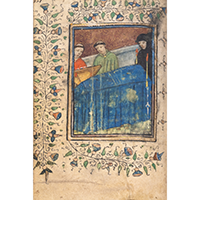
Forum, July 16: Book of Hours, use of Sarum, manuscript on vellum, 6 full-page miniatures, with famous Middle English inscriptions, Southern Netherlands for the English market, [c.1430]. £30,000-50,000
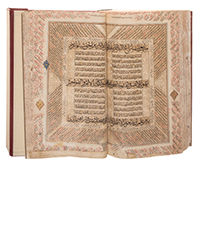
Forum, July 16: Qu'ran, Arabic manuscript on burnished, stencilled, and gold-flecked paper, 447ff., Sultanate Gujarat, Ahmadabad, [after 1411 but no later than 1442]. £15,000-20,000
Forum Auctions The 10th Anniversary Sale Fine Books, Manuscripts and Works on Paper July 16, 2026
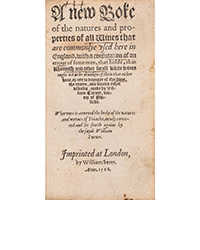
Forum, July 16: Turner (William). A New boke of the natures and properties of all wines that are commonly vsed here in England, rare first edition of the first English book on wine, By William Seres, 1568. £20,000-£30,000
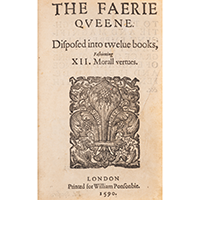
Forum, July 16: Spenser (Edmund). The Faerie Queene. first edition, Printed [by John Wolfe] for William Ponsonbie, 1590. £30,000-40,000
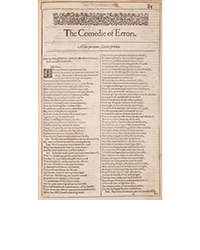
Forum, July 16: Shakespeare (William). The Comedie of Errors, extracted from the first folio, Isaac Jaggard and Edward Blount, 1623. £15,000-20,000
Forum Auctions The 10th Anniversary Sale Fine Books, Manuscripts and Works on Paper July 16, 2026
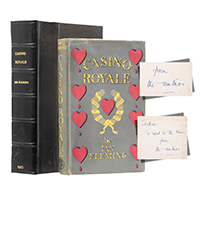
Forum, July 16: Fleming (Ian). Casino Royale, first edition, signed presentation inscription from the author, 1953. £40,000-60,000
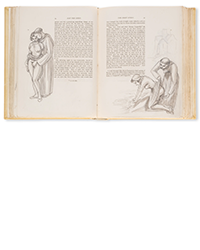
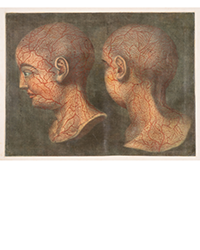
Forum, July 16: d'Agoty (Jacques-Fabien Gautier). Anatomie de la Tête, first edition, Paris, chez le Sieur Gautier, 1748. £10,000-15,000
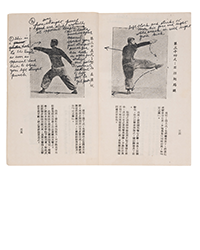
Forum, July 16: Martial Arts.- Lee (Bruce). 'Praying Mantis style' Kung Fu book, containing numerous annotations, diagrams and graphs in Bruce Lee's hand, c. 1960. £50,000-70,000
Forum Auctions The 10th Anniversary Sale Fine Books, Manuscripts and Works on Paper July 16, 2026
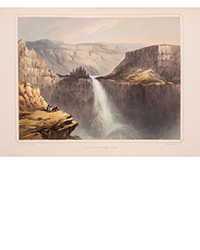
Forum, July 16: Warre (Capt. Henry James). Sketches in North America and the Oregon Territory, first edition, rare hand-coloured issue, 1848. £30,000-40,000
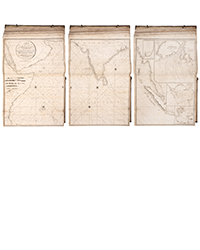
Forum, July 16: Norie (John William). The Marine Atlas, or Seaman's Complete Pilot for all the principal places in the known world..., 1826. £30,000-50,000
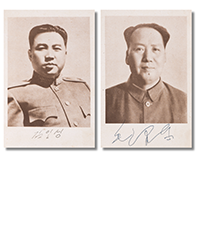
Forum, July 16: Mao Tse-tung.- Kim Il-sung.-[Note book for visitors from China to Korea], signed by Mao and Kim, [Beijing, 1954]. £10,000-15,000