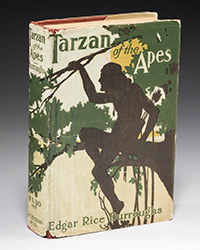
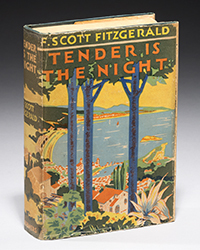
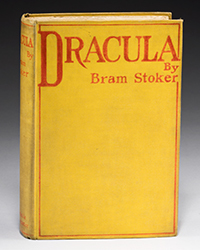
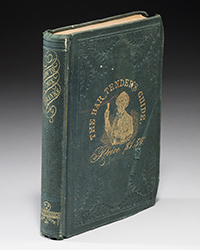
The 19th Century Rare Book and Photograph Shop, has just issued its Catalogue 190, Magnificent Books and Manuscripts, celebrating its 37th year in business. The business was established in 1984 by Stephan Loewentheil to specialize in 18th & 19th-century American books and manuscripts. Over the years the business has grown dramatically and now offers landmark works on paper representing humankind’s greatest achievements in literature, science, philosophy, economics, early photography, and other fields from the dawn of printing to the present.
The firm’s latest annual catalogue presents highlights from its latest acquisitions.
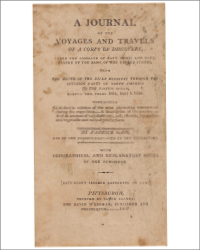
The shop has long handled first editions of landmark books, and this catalogue is no exception, with fine copies of Walt Whitman’s Leaves of Grass, Johnson’s Dictionary of the English Language, John Locke’s Essay on Humane Understanding, the official account of the Lewis and Clark expedition, and others.
The 19th Century Rare Book and Photograph Shop offerings of important scientific books and manuscripts remain a specialty, spanning the era of Copernicus to Einstein and other 20th-century figures. This anniversary catalogue offers an Albert Einstein letter discussing relativity and the speed of light to a science fiction aficionado who inquired about the problem of interstellar travel.
The history of space travel is another specialty here chronicled in three stellar objects: a rocket diagram by Robert Goddard (father of rocket propulsion), a drawing of a spaceship by Wernher Von Braun (father of the American space program), and a drawing of the Apollo 11 mission by Neil Armstrong (first man to walk on the Moon).
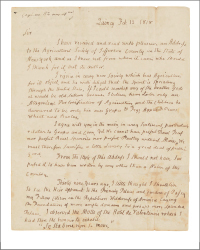
As Americans revisit and reevaluate the nation’s complicated history, collectors and institutions have sought to better understand and document the place of underrepresented people. Two objects in the catalogue stand out for centering the place of Black Americans in United States history. George Washington purchased young enslaved Will Lee in 1767 to be his valet at Mount Vernon. A highlight of the catalogue is the document formalizing that transaction, signed by Washington and his brother, who helped manage the estate. Lee, an enslaved person, went on to serve by Washington’s side for decades as his valet, and aide throughout the Revolutionary War, as well as his huntsman. When Washington died, Lee was the only enslaved person immediately set free under the terms of the will.
Washington declared, "this [freedom] I give him as a testimony of my sense of his attachment to me, and for his faithful services during the revolutionary war.”
The question of American slavery would be settled with the Civil War, but it was not until 1863 that Blacks were permitted to fight in that war, and then only under Black officers. Early in 1865 the Black abolitionist Martin Delany met with Abraham Lincoln and presented his plan to recruit Black soldiers to serve under Black officers, penetrating the South and freeing enslaved people wherever they went. Lincoln replied, “This is the very thing I have been looking and hoping for; but nobody offered it; I hoped and prayed for it; but till now it has never been proposed. … When I issued my Emancipation Proclamation, I had this thing in contemplation.” He then gave Delany a card instructing Secretary of War Edwin Stanton to meet with him. A week later Delany was commissioned the first Black field officer in the United States Army and charged with recruiting and training the force he envisioned. The very card that Lincoln gave to Delany, setting these momentous events in motion, is offered in the new catalogue.
Other manuscripts include a series of Walt Whitman manuscripts relating to Leaves of Grass, a series of Edward Albee letters connected with his discovery as a playwright, a long James Baldwin letter on the place of the Black intellectual in American life, a collection of John Jacob Astor letters on fur trading and finance, and more.
The history of photography is of ever-increasing interest to collectors and institutions for its importance as an art form, for revolutionizing communication, and for its documentary value. Talbot and Daguerre independently invented photography in 1839, and Talbot, inventor of photography on paper, quickly recognized the implications of the technology.
In 1844-46 Talbot published The Pencil of Nature, which has been called "the first commercially published book illustrated with photographs–a milestone in the art of the book greater than any since Gutenberg’s invention of moveable type” (Metropolitan Museum of Art). Talbot saw that the replicability of photographs would have far-reaching effects in communication. That discovery echoes down to us in the Internet age. The shop’s new catalogue offers a complete set of The Pencil of Nature, the only complete set to surface for sale in decades.
Collections of landmark photographs are critical to illuminate American history. A series of ten rare photographs by James Mooney show the Ghost Dance being performed, documenting a key moment in the late 19th-century American Indian effort to assert control in the face of oppression. Alexander Gardner’s 1865 photographs of the execution of the Lincoln assassination conspirators is often considered a founding event in the history of photojournalism. The series photographs documenting the hangings has been called "the most shocking set of American historical photographs ever made.”
Carleton Watkins, the greatest 19th-century photographer of the American West, brought a group of forty exhibition prints to Philadelphia for display at the Centennial Exposition in 1876. That intact set of forty mammoth plate photographs chosen by the artist for exhibition is offered here.
Some buyers lament the increasing scarcity of important material, but the day will come, Loewentheil says, when collectors will look back on our time as a golden age for collectors, when amazing treasures are still available for private collectors to own. The printed catalogue is available on request or can be downloaded here: www.19thshop.com/catalogues.



![<b>Sotheby’s, Dec. 16:</b> [Austen, Jane]. A handsome first edition of <i>Sense and Sensibility,</i> the author's first novel. $60,000 to $80,000.](https://ae-files.s3.amazonaws.com/AdvertisementPhotos/9a74d9ff-42dd-46a1-8bb2-b636c4cec796.png "<b>Sotheby’s, Dec. 16:</b> [Austen, Jane]. A handsome first edition of <i>Sense and Sensibility,</i> the author's first novel. $60,000 to $80,000.")
![<b>Heritage, Dec. 15:</b> John Donne. <i>Poems, By J. D. With Elegies on the Author's Death.</i> London: M[iles]. F[lesher]. for John Marriot, 1633.](https://ae-files.s3.amazonaws.com/AdvertisementPhotos/8caddaea-4c1f-47a7-9455-62f53af36e3f.jpg "<b>Heritage, Dec. 15:</b> John Donne. <i>Poems, By J. D. With Elegies on the Author's Death.</i> London: M[iles]. F[lesher]. for John Marriot, 1633.")