Bookwallets – a New Bookish Way to Hide Your Money
- by Michael Stillman
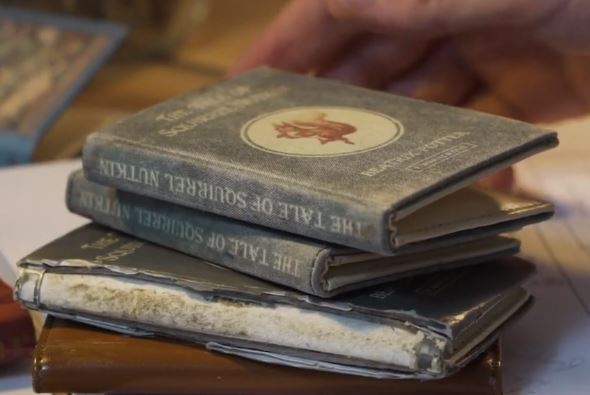
No, they aren't books. They're wallets.
Hollowed out books in which you could hide your valuables have been made for centuries. I guess the idea was that no one would want to open a book, let alone steal it, so what could offer a safer hiding place? Now, a new twist has been created based on that same assumption, who would want to steal a book?
According to founder Westley Coleman of Portland, Oregon, he left his wallet behind on the driver's seat of his car one night, presumably it having slipped from his pocket. He said it wasn't the first time. When he peered in the window the next morning, he realized the danger of someone seeing the wallet and stealing it. It occurred to him that the risk would be less if his wallet didn't look like a wallet, but instead something thieves were less likely to steal. Thereupon came the inspiration for a new business. He would create a “bookwallet,” a wallet that looked like an old novel. The business now goes by the name “Novel Bookwallet.”
They have come up with almost three dozen designs, each being the cover of some old book. Classic books have the advantage of being familiar, plus, being out of copyright, the creator won't have to worry about a copyright holder trying to empty his bookwallet.
Portland is known as a city where people are environmentally friendly. Novel Bookwallet doesn't disappoint. Its wallets are made from cloth and natural resins, which create a leather-like appearance. There is no plastic, and no animal hides are used. If you are vegan and find yourself starving out in the woods, one of those situations where people had to eat their shoe leather, you can eat your wallet with a clear conscience.
The novels as which the wallets are disguised are ones you know, Huckleberry Finn, The Tale of Peter Rabbit, Alice in Wonderland (a later edition since “Adventures” is left out of the title), Les Miserables, Little Women, The Three Little Pigs, Dracula, and many more. You can even get a bible, appropriate since many people used to hide money in a bible, believing no thief would ever open that book. Since full-size books won't fit in most people's pockets, these are necessarily smaller than a typical book. Perhaps large miniature, if there is such a size classification, would be descriptive.
The wallets are surprisingly inexpensive. Most are priced in the $15-$25 range. They have been selling them in groups of two or more, so the total may be a bit higher, but this way, even if you run out of money, you will never run out of wallets.
So, how has this novel idea been received? The creator put them out on a Kickstarter page, allowing people to pre-order them. In the first run, 4,754 supporters pledged $263,522 to buy them. Sounds like he has a winner here.
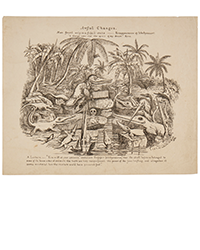
Sotheby’s, July 14: Henry De La Beche. "Awful Changes," 1830. $6,000 to $9,000.
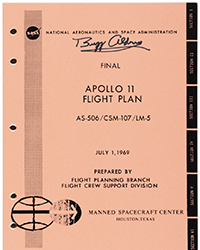
Sotheby’s, July 15: [Apollo 11]. Flight Plan, Complete Original Printing Signed by Buzz Aldrin. $5,000 to $8,000.
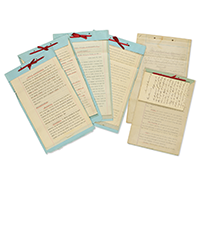
Sotheby’s, July 15: Thomas Alva Edison. Documents Establishing and Ending the Edison Electric Railway Company. $20,000 to $30,000.
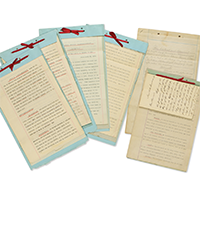
Sotheby’s, July 15: Richard P. Feynman. Feynman's Lectures on Gravitation 1-16, Including the Original Transcriptions of Lectures 12-16 by Morinigo and Wagner, With Richard Feynman's Manuscript Notations, 1971. $12,000 to $18,000.
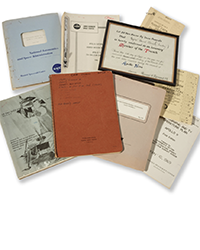
Sotheby’s, July 15: [Apollo 9]. A Group of Manuals and Mission Documents used by Stuart Roosa as a member of the Astronaut Support Crew. $5,000 to $8,000.
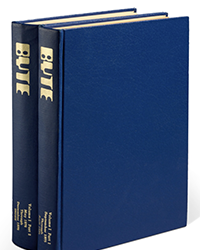
Sotheby’s, July 15: [BYTE: The Small Systems Journal]. A collection of early foundational issues of Byte: The Small Systems Journal, with rare hardcover editions. $5,000 to $8,000.
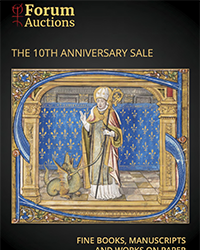
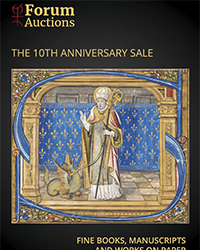
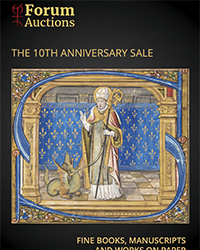
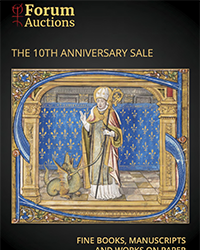
Forum Auctions The 10th Anniversary Sale Fine Books, Manuscripts and Works on Paper July 16, 2026
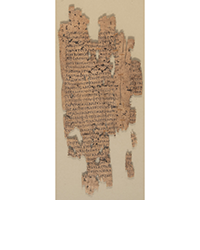
Forum, July 16: Inundation papyrus. P.Michael 4, the ‘Inundation papyrus’, a geographical account of the Nile near Canopus, in Greek, remains of two columns from a manuscript scroll on papyrus, Egypt, second century CE. £12,000-18,000
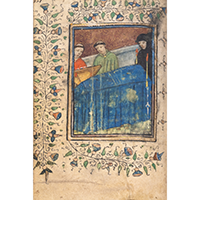
Forum, July 16: Book of Hours, use of Sarum, manuscript on vellum, 6 full-page miniatures, with famous Middle English inscriptions, Southern Netherlands for the English market, [c.1430]. £30,000-50,000
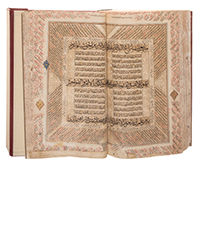
Forum, July 16: Qu'ran, Arabic manuscript on burnished, stencilled, and gold-flecked paper, 447ff., Sultanate Gujarat, Ahmadabad, [after 1411 but no later than 1442]. £15,000-20,000
Forum Auctions The 10th Anniversary Sale Fine Books, Manuscripts and Works on Paper July 16, 2026
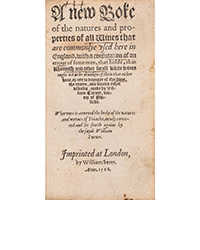
Forum, July 16: Turner (William). A New boke of the natures and properties of all wines that are commonly vsed here in England, rare first edition of the first English book on wine, By William Seres, 1568. £20,000-£30,000
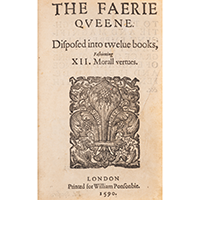
Forum, July 16: Spenser (Edmund). The Faerie Queene. first edition, Printed [by John Wolfe] for William Ponsonbie, 1590. £30,000-40,000
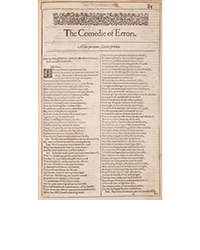
Forum, July 16: Shakespeare (William). The Comedie of Errors, extracted from the first folio, Isaac Jaggard and Edward Blount, 1623. £15,000-20,000
Forum Auctions The 10th Anniversary Sale Fine Books, Manuscripts and Works on Paper July 16, 2026
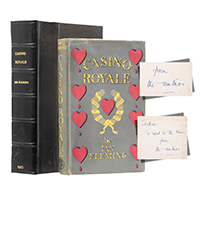
Forum, July 16: Fleming (Ian). Casino Royale, first edition, signed presentation inscription from the author, 1953. £40,000-60,000
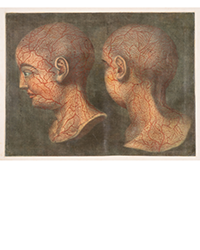
Forum, July 16: d'Agoty (Jacques-Fabien Gautier). Anatomie de la Tête, first edition, Paris, chez le Sieur Gautier, 1748. £10,000-15,000
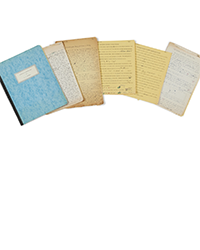
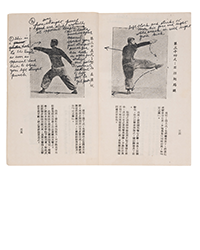
Forum, July 16: Martial Arts.- Lee (Bruce). 'Praying Mantis style' Kung Fu book, containing numerous annotations, diagrams and graphs in Bruce Lee's hand, c. 1960. £50,000-70,000
Forum Auctions The 10th Anniversary Sale Fine Books, Manuscripts and Works on Paper July 16, 2026
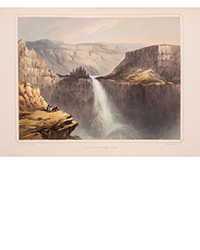
Forum, July 16: Warre (Capt. Henry James). Sketches in North America and the Oregon Territory, first edition, rare hand-coloured issue, 1848. £30,000-40,000
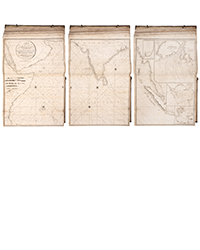
Forum, July 16: Norie (John William). The Marine Atlas, or Seaman's Complete Pilot for all the principal places in the known world..., 1826. £30,000-50,000
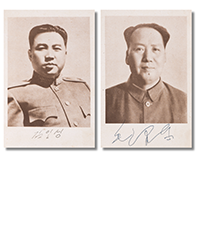
Forum, July 16: Mao Tse-tung.- Kim Il-sung.-[Note book for visitors from China to Korea], signed by Mao and Kim, [Beijing, 1954]. £10,000-15,000