Rare Book Monthly
Articles - August - 2005 Issue
Introducing an Index of American Magazines: 1741:1826

The Columbian Phenix: Mott 80
By January 1800 Frank Luther Mott in his "A History of American Magazines" counts seventy-nine publications as having been born and by the close of 1810 adds another sixty-eight while also admitting he ignored some. With increasing numbers came specialization and in the first twenty-five years of the 19th century a panoply of fields were surveyed: European and American literature, women, history, weekly, local, religion, theater and drama, children's, political, poetry, missionary, medical, literary, and philosophy. Within a few years education, math, sciences, the law, pharmacy, mineralogy and humor have also found their publishers if not their audiences. The urge to publish was strong even if the reading public was small.
Complicating the publications' situation were severe delivery problems. The road system was poor, in many areas non-existent, and the cost of delivery high. Perspective in printed media tended to be narrow because news was not easily collected or dispersed. Circulations were small as the initial publishing model did not comfortably include advertising. People didn't have disposable income and frequently the income they did have was in barter-able material, not cash. Franklin could accept eggs in trade but he could not be paid in eggs entirely. The reliable currency we take for granted today was something still in the future as in the early part of the 19th century there wasn't even agreement about the appropriateness of a central bank. So magazines, like all the trades that would later flourish in an environment of universal currency and growing consumerism were, at the outset, primarily dependent on the highly enthusiastic for support, as small a market then as they generally are today.
The dawn of the magazine age was approaching although full bloom would not occur until the end of the nineteenth century. By then, in a single year more magazines would be launched than in the first 60 years of American magazine publishing.
Looking back what comes into view are a limited number of small circulation periodicals that acted as intermediary between the immediacy of the newspaper and the perspective of the book. And they look to be a very interesting and currently under-appreciated way to augment collections and aid the researcher and their institutions in building a clearer record of emerging American culture and incremental historical events. Toward that end this month we are adding a bibliographical source in the AED: North American Magazines that will aid the interested in finding information about them.
Click Submit above to take a look at what Mott describes as the first American magazines. We include the first 254 of them beginning with the American Magazine in 1741 and continuing through 1826.
Try some keywords that reflect your interests. Here are some examples of matches: Ohio 4, Boston 50, New York 61 and Philadelphia 73. In the year ahead we will build resources to support dealers, librarians and collectors who appreciate the importance of this material.
Rare Book Monthly
-
![<b>Forum, Mar. 25:</b> Botany.- [Robin (Jean)]. <i>Histoire des Plantes, nouv...](https://ae-files.s3.amazonaws.com/AdvertisementPhotos/9a2a2dbe-8edf-4091-9a08-800f7aba747e.jpg "<b>Forum, Mar. 25:</b> Botany.- [Robin (Jean)]. <i>Histoire des Plantes, nouvellement trouvées en l'Isle Virgine…,</i>, 1620; with Geoffrey Linocier <i>L'Histoire des plantes,</i> second edition, 1619-20. £3,000 - £4,000.")
Forum Auctions
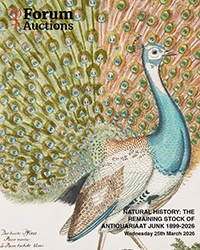
Natural History: The remaining stock of Antiquariaat Junk, 1899-2026
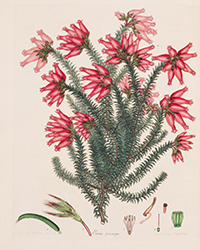
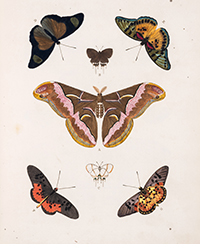
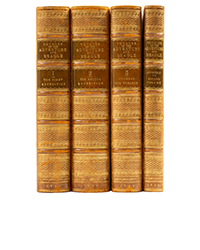
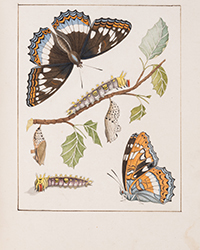
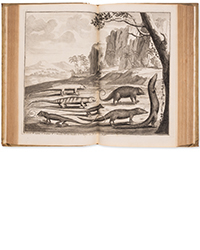
25 March 2026Forum, Mar. 25: Botany.- Andrews (H.C.) Coloured Engravings of Heaths, 4 vol. in 2, first edition, [1710,--94]-1802-1809-[1830]. £10,000 - £15,000.Forum, Mar. 25: Butterflies.- Cramer (Pierre) and Caspar Stoll. De Uitlandsche Kapellen voorkomende in de drie Waereld-Deelen…,, 5 vol., Amsterdam & Utrecht, 1779-91. £8,000 - £12,000.Forum, Mar. 25: Voyages.- Darwin (Charles) and others. Narrative of the Surveying Voyages of His Majesty's Ships Adventure and Beagle, 3 vol. in 4, including Appendix to vol.2, first edition, 1839. £8,000 - £12,000.Forum, Mar. 25: Butterflies.- de Graaf (Willem Diederik Vincent). [Inlandsche Kapellen in beeld], 170 fine original watercolours, [Enkhuizen], [1800-40]. £8,000 - £12,000.Forum Auctions
Natural History: The remaining stock of Antiquariaat Junk, 1899-2026
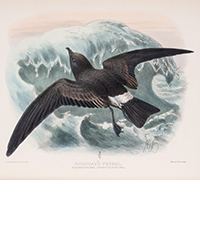
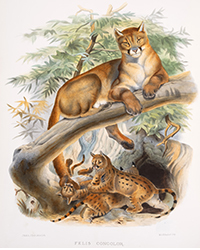
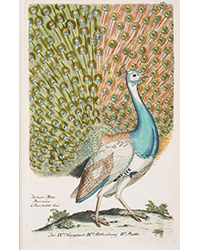
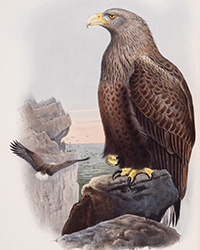
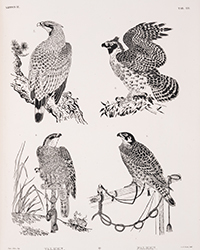
25 March 2026Forum, Mar. 25: Birds.- Dresser (Henry Eeles). A History of the Birds of Europe, 9 vol., including supplement, first edition, by the author, 1871-96. £6,000 - £8,000.Forum, Mar. 25: Zoology.- Felines.- Elliot (Daniel Giraud). A Monograph of the Felidæ or Family of the Cats, first edition, for the Subscribers, by the Author, [1878]-1883. £25,000 - £30,000.Forum, Mar. 25: Birds.- Frisch (Johann Leonard). Vorstellung der Vögel Deutschlandes, 2 vol., first edition, Berlin, Friedr. Wilhelm Birnsteil, [1736]-1763. £40,000 - £60,000.Forum, Mar. 25: Birds.- Gould (John). The Birds of Great Britain, 5 vol., first edition, by the author, 1862-1873. £30,000 - £40,000.Forum Auctions
Natural History: The remaining stock of Antiquariaat Junk, 1899-2026
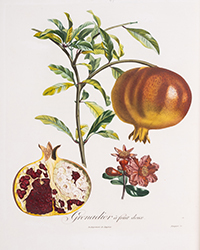
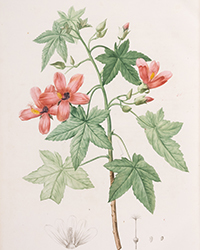
25 March 2026Forum, Mar. 25: Pomology.- France.- Poiteau (A.) Pomologie Française. Recueil des Plus Beaux Fruits cultivés en France, 4 vol., Paris, 1846. £30,000 - £40,000.Forum, Mar. 25: Botany.- [Robin (Jean)]. Histoire des Plantes, nouvellement trouvées en l'Isle Virgine…,, 1620; with Geoffrey Linocier L'Histoire des plantes, second edition, 1619-20. £3,000 - £4,000.Forum, Mar. 25: Asia.- Japan.- Siebold (P.F. von). Nippon. Archiv zur Beschreibung von Japan, 7 parts in 6 vol., first edition, Leyden, [1832]-1852. £35,000 - £45,000.Forum, Mar. 25: Asia.- Valentijn (Francois). Oud en Nieuw Oost-Indiën..., 5 vol. in 8, first edition, Dordrecht [&] Amsterdam, 1724-26. £8,000 - £12,000.Forum, Mar. 25: Botany.- Australia.- Redouté (P.J.).- Ventenat (Étienne Pierre). Jardin de la Malmaison, 2 vol.,, Paris, 1803-04[-05]. £30,000 - £40,000. -
![<b>ALDE, Mar. 11:</b> [REGNART (LE LIVRE DE)]. <i>[Le] Docteur en malice, mai...](https://ae-files.s3.amazonaws.com/AdvertisementPhotos/ddd3b34c-8abc-4eae-8474-6ea05406ccd0.jpg "<b>ALDE, Mar. 11:</b> [REGNART (LE LIVRE DE)]. <i>[Le] Docteur en malice, maistre Regnard, demonstrant les ruzes et cautelles qu'il use envers les personnes…</i> Rouen, 1550. €20,000 - €30,000.")
![<b>ALDE, Mar. 11:</b> HUGO (VICTOR). [Paysage spectral avec une église], [ver...](https://ae-files.s3.amazonaws.com/AdvertisementPhotos/dc734df9-0811-477f-919a-2563b8452855.jpg "<b>ALDE, Mar. 11:</b> HUGO (VICTOR). [Paysage spectral avec une église], [vers 1837]. €20,000 - €30,000.")
![<b>ALDE, Mar. 11:</b> [HERVEY DE SAINT-DENYS (LÉON D')]. <i>Les Rêves et les ...](https://ae-files.s3.amazonaws.com/AdvertisementPhotos/7e769889-43a5-495e-a931-c511da576c2b.jpg "<b>ALDE, Mar. 11:</b> [HERVEY DE SAINT-DENYS (LÉON D')]. <i>Les Rêves et les Moyens de les diriger. Observations pratiques.</i> Paris, Amyot, 1867. €3,000 - €4,000.")
![<b>ALDE, Mar. 11:</b> [REDON (ODILON)]. PICARD (EDMOND). <i>Le Juré. Monodram...](https://ae-files.s3.amazonaws.com/AdvertisementPhotos/b325eb41-450b-4bd6-851c-4125e04dfbe7.jpg "<b>ALDE, Mar. 11:</b> [REDON (ODILON)]. PICARD (EDMOND). <i>Le Juré. Monodrame en cinq actes…</i> Bruxelles, Mme veuve Monnom, 1887. €7,000 - €9,000.")
![<b>ALDE, Mar. 11:</b> [TOULOUSE-LAUTREC (HENRI DE) ET HENRI-GABRIEL IBELS]. M...](https://ae-files.s3.amazonaws.com/AdvertisementPhotos/6588f3a0-90f2-464c-8125-a76866eabe85.jpg "<b>ALDE, Mar. 11:</b> [TOULOUSE-LAUTREC (HENRI DE) ET HENRI-GABRIEL IBELS]. MONTORGUEIL (GEORGES). <i>Le Café-concert.</i> Paris, [1893]. €4,000 - €5,000.")
![<b>ALDE, Mar. 11:</b> [TERRY (EMILIO)]. <i>Projet de fontaine.</i> Dessin ori...](https://ae-files.s3.amazonaws.com/AdvertisementPhotos/0840c8e4-4f35-4c95-b2d3-3d5addd6fd51.jpg "<b>ALDE, Mar. 11:</b> [TERRY (EMILIO)]. <i>Projet de fontaine.</i> Dessin original au stylo et à l'encre noire. 1938. €2,000 - €3,000.") ALDE, Mar. 11: AUGUSTIN (Saint). De civitate Dei. Rome, Konrad Sweynheym et Arnold Pannartz, 1470. €20,000 - €30,000.ALDE, Mar. 11: [REGNART (LE LIVRE DE)]. [Le] Docteur en malice, maistre Regnard, demonstrant les ruzes et cautelles qu'il use envers les personnes… Rouen, 1550. €20,000 - €30,000.ALDE, Mar. 11: TRITHÈME (JEAN). Polygraphie et universelle escriture cabalistique. Paris, [Benoît Prévost pour] Jacques Kerver, 1561. €8,000 - €10,000.ALDE, Mar. 11: CAUS (SALOMON DE). La Perspective, avec la raison des ombres et des miroirs. Londres, John Norton, 1612.ALDE, Mar. 11: NICERON (JEAN-FRANÇOIS). La Perspective curieuse ou magie artificielle des effets merveilleux de l'optique. Paris, Pierre Billaine, 1638. €6,000 - €8,000.ALDE, Mar. 11: VONTET (JACQUES). L’Art de trancher la viande et toute sorte de fruits… S.l.n.d. [probablement Lyon, vers 1647]. €20,000 - €30,000.ALDE, Mar. 11: HUGO (VICTOR). [Paysage spectral avec une église], [vers 1837]. €20,000 - €30,000.ALDE, Mar. 11: [HERVEY DE SAINT-DENYS (LÉON D')]. Les Rêves et les Moyens de les diriger. Observations pratiques. Paris, Amyot, 1867. €3,000 - €4,000.ALDE, Mar. 11: GACHET (PAUL-FERDINAND). Les Chats de Gachet (Manuscrit). S.d. [avant mai 1873]. €6,000 - €8,000.ALDE, Mar. 11: [REDON (ODILON)]. PICARD (EDMOND). Le Juré. Monodrame en cinq actes… Bruxelles, Mme veuve Monnom, 1887. €7,000 - €9,000.ALDE, Mar. 11: [TOULOUSE-LAUTREC (HENRI DE) ET HENRI-GABRIEL IBELS]. MONTORGUEIL (GEORGES). Le Café-concert. Paris, [1893]. €4,000 - €5,000.ALDE, Mar. 11: [TERRY (EMILIO)]. Projet de fontaine. Dessin original au stylo et à l'encre noire. 1938. €2,000 - €3,000.
ALDE, Mar. 11: AUGUSTIN (Saint). De civitate Dei. Rome, Konrad Sweynheym et Arnold Pannartz, 1470. €20,000 - €30,000.ALDE, Mar. 11: [REGNART (LE LIVRE DE)]. [Le] Docteur en malice, maistre Regnard, demonstrant les ruzes et cautelles qu'il use envers les personnes… Rouen, 1550. €20,000 - €30,000.ALDE, Mar. 11: TRITHÈME (JEAN). Polygraphie et universelle escriture cabalistique. Paris, [Benoît Prévost pour] Jacques Kerver, 1561. €8,000 - €10,000.ALDE, Mar. 11: CAUS (SALOMON DE). La Perspective, avec la raison des ombres et des miroirs. Londres, John Norton, 1612.ALDE, Mar. 11: NICERON (JEAN-FRANÇOIS). La Perspective curieuse ou magie artificielle des effets merveilleux de l'optique. Paris, Pierre Billaine, 1638. €6,000 - €8,000.ALDE, Mar. 11: VONTET (JACQUES). L’Art de trancher la viande et toute sorte de fruits… S.l.n.d. [probablement Lyon, vers 1647]. €20,000 - €30,000.ALDE, Mar. 11: HUGO (VICTOR). [Paysage spectral avec une église], [vers 1837]. €20,000 - €30,000.ALDE, Mar. 11: [HERVEY DE SAINT-DENYS (LÉON D')]. Les Rêves et les Moyens de les diriger. Observations pratiques. Paris, Amyot, 1867. €3,000 - €4,000.ALDE, Mar. 11: GACHET (PAUL-FERDINAND). Les Chats de Gachet (Manuscrit). S.d. [avant mai 1873]. €6,000 - €8,000.ALDE, Mar. 11: [REDON (ODILON)]. PICARD (EDMOND). Le Juré. Monodrame en cinq actes… Bruxelles, Mme veuve Monnom, 1887. €7,000 - €9,000.ALDE, Mar. 11: [TOULOUSE-LAUTREC (HENRI DE) ET HENRI-GABRIEL IBELS]. MONTORGUEIL (GEORGES). Le Café-concert. Paris, [1893]. €4,000 - €5,000.ALDE, Mar. 11: [TERRY (EMILIO)]. Projet de fontaine. Dessin original au stylo et à l'encre noire. 1938. €2,000 - €3,000. -

![<b>Chiswick, Mar. 12:</b> Gray [Artist.] India. Album 40 original drawings. 1...](https://ae-files.s3.amazonaws.com/AdvertisementPhotos/004c032b-da4d-428e-811b-e5a8e80376a2.jpg "<b>Chiswick, Mar. 12:</b> Gray [Artist.] India. Album 40 original drawings. 1858 - 1862. £2,000 - £3,000.")
Chiswick Auctions
Books & Works on Paper
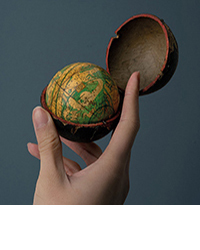
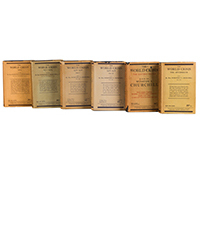
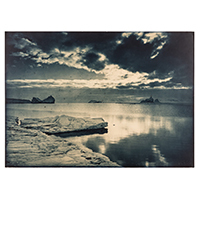
12th March 2026Chiswick, Mar. 12: Churchill: The World in Crisis. Inscribed in 4 vols. 1923-31. £18,000 - £22,000.Chiswick, Mar. 12: Rowling. Harry Potter and the Philosopher's Stone. Inscribed. £6,000 to £8,000.Chiswick, Mar. 12: Ponting. Polar Photographs (2) 1910-11. £3,000 - £4,000.Chiswick, Mar. 12: Gray [Artist.] India. Album 40 original drawings. 1858 - 1862. £2,000 - £3,000.Chiswick, Mar. 12: Lane’s Celestial Globe, 1811. £600 - £800. -