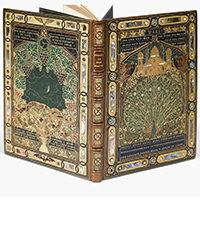
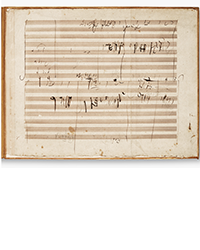
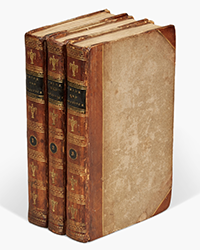
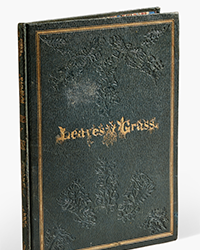
The world is in flux. Books have a history but do they have a future? Let’s consider the perspectives.
Change has always been part of the human experience but rarely have the changes been so significant and rapid. Data access converts general understanding into detailed confirmation in a matter of moments. For those looking for readable content there are, for many printed items, Google Books and others. Viewing content this way is easier and quicker than reading printed text. It is also increasingly the norm for text books to be electronically accessible so the next generation of collectors in college today is learning to access full text electronically. Not to mention Amazon that releases e-versions and printed texts simultaneously. Net-net, I wouldn’t be investing in newspaper and book printing presses.
For the collector of printed paper in its myriad forms, most of what they’ll want is not going to be in Google books because it’s too local or specific, and often too rare, fragile, or valuable to be causally digitally converted. Consequently this material is handled differently.
To identify and build a digital map for a collection the collector composes a list of search terms and runs them against the book listing sites. The results will generally be overwhelming. Not a problem. Narrow your searches in the advanced search. George Washington on Abebooks finds 135,709 items. Add in his years alive [1732-1799] and a site with 170,000,000 posted items shrinks to 681 related offers. Is this the whole story? For the smaller community that wants original source material it is just the beginning.
Establishing parameters for collecting subjects by relevance requires access to large databases, the Transaction History Database on Rare Book Hub, at 9.4 million records, the largest of them. Such databases provide overviews of any search to see what and how many records come up. Can I build a collection about tepees (166)? Yes, but the collection will be small and take years to develop. Or Indian treaties? There are more than 3,000 referenced lots from which to further narrow a collection focus. The same is true for steamboats (4,000), railroads (33,000) and medicine (161,000). These numbers change how we think about collecting because they make very focused collecting immediately understandable.
If you stayed with the George Washington search on Rare Book Hub there are 51,131 records. Adding the date range 1732 – 1799 reduces this number to 7,358. These are the items that others have thought to be important enough in the context of Washington to include a date within this range so you are piggybacking on their logic. At the same time, now seeing that material regularly appears in the Transaction History you can also select the upcoming auctions search results for any lots worldwide that also contain your search terms. And yes, you can also see what material matching your terms is on Biblio. Any search on the site searches all 3 databases simultaneously. They are the highlighted links on every search. It’s an effective way to both look back 150 years and forward over the next 120 days.
And important because clarity about terms such as phrases, subjects, dates and place names creates an acquisition flow that can be evaluated periodically.
On the listing sites each item is priced while at auction all lots are estimated with the ability in the Transaction History Database on Rare Book Hub to estimate both current value and probability of reappearance. So deciding what to go for now becomes clearer. Those things that come into the rooms typically every two years will be coming up again soon enough, while items whose probability of reappearance is 7 years or greater may not reappear for quite some time.
So now you have something to think about. You can see the way the world of historical paper is organized and you can run random searches on other subjects for comparison. In time you’ll find an appealing combination of subject, availability and cost.
For libraries it’s a different story
Moving in the other direction are libraries, long the greatest collectors of printed materials, who have built collections to aggregate against its disappearance as well as to provide access to those who can visit. But much of what the library has done for more than a hundred years now happens online and this has prompted a reevaluation of what the library’s future role will be. They will succeed but their paths will take them into new approaches that recreate the idea of community electronically and make additional general acquisitions less important while shifting acquisition money to specialist collections. If so, there may be fewer institutional bidders in the auction rooms.
Dealers too face challenges. Their open shops have now been closed for most of 10 years and they, for the most part, have learned to post online on the large listing sites; Amazon, Abe Books, Biblio and Rare Book Hub where tens of thousands of other dealers have also posted. There we can see how many copies are for sale and compare condition and prices among the listed examples. The more determined browsing buyer will also then compare the history of such material at auction to see the range of examples and frequency of reappearance to understand the differences between auction and dealer prices. Dealer prices reflect immediate availability, auctions future possibilities and every serious collector buys from both.
It turns out that you have to both know what you want and understand its value and frequency of reappearance because collecting, to be successful, needs to be both brave and prudent. In other words, you need to avoid the potholes of overpayment because, while such collections are emotion-desire based, there is no saying that when you decide to exit that there will be others to pay up for what you, over many years, have come to realize are gems and rarities. The value at exit will be market determined so it’s important to know how the market has reacted to examples coming Into the rooms.
Collecting is the long game that rewards the intellectually gifted. It will be a journey, a quiet one if you collect material about teepees, a busy one if about medicine, and an expensive one if you collect railroads. The beauty of collecting is that there are thousands of obscure niches identifiable through searches that will only yield interesting material occasionally and others that will find opportunities every week. You get to choose and in choosing collectible papers you are joining a well-organized field that offers a very fair and rewarding experience.