
Rare Book Monthly
Devil in the White City by Erik Larson
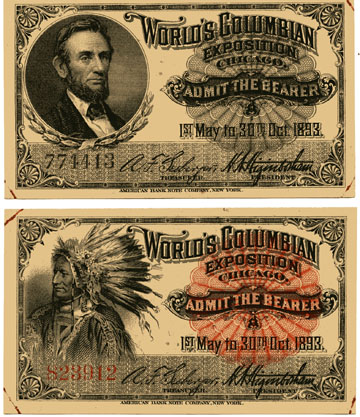
Columbian Exposition tickets reflected American history
A review by Bruce McKinney
In 1893 Chicago hosted the World's Columbian Exposition. To obtain the designation the windy city competed before a national board that considered the applications of four interested venues: Chicago, New York, St. Louis, and Washington. World's fairs had been more or less regular events since the Crystal Palace fair in London in 1851. Philadelphia hosted the Centennial Exhibition in 1876 and Paris the Exposition Universalle in 1889. The Columbian Exposition would honor the 400th anniversary of the landing of Columbus in the New World, highlight the host city and convey the headlong progress and gathering potential of the United States, just then emerging as the foremost world power of the twentieth century. At the same time Dr. Herman W. Mudgett was, like a mantis in a cocoon, stretching his legs in New England and preparing for a new life and identity in Chicago as Henry H. Holmes. In Chicago he would emerge, over a period of years as America's first psychopathic mass murder. His story and the story of the fair are told in alternating chapters.
It is now lost to most people that it was at the Chicago Exposition, at the beginning of the American century, where both the nation and world first peered into the dawning "American era" and saw the future. Many of the seven million visitors who visited during its six months run saw their first artificial lighting, what we know today as electric lights. Those who tasted Cracker Jacks and Shredded Wheat did so for the first time because these treats were introduced here. For many their first glimpse of the just invented Ferris Wheel was the strongest and most lasting impression. America was moving from its agricultural underpinnings toward the industrial power that would define it in the 20th century and the full sense of its burgeoning strength was on display.
That Henry Holmes, a psychopath, would occupy the same time and space was simply the random bad luck that anyone watching television news sees confirmed every few hours somewhere in America or overseas. Where there are people there is mischance and it is only ever a matter of time, never a matter of "if." This book reconstructs the circumstances and events of that mischance in Chicago precisely at the time the Columbian Exposition was being organized, built and run. That the fair somehow provoked Holmes' fantasies of death and sent him into a spasm of continuing murder seems certain although the book never touches on this. Like railroad rails, always together, but never touching, these two stories run side by side. What connections and conclusions may be drawn is left to the reader. In some sense this story telling approach, without conclusions, is the polar opposite of the afternoon television talk shows today that often start with conclusions and present facts and perspectives to lead the viewer to simply accept the host's view.
Rare Book Monthly
-
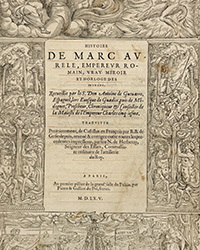
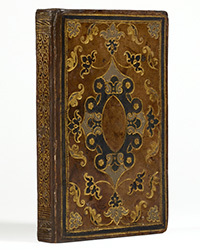
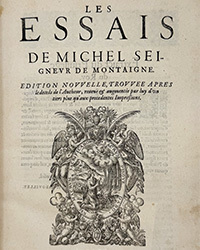
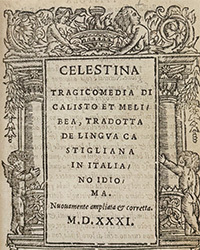
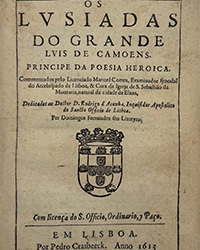
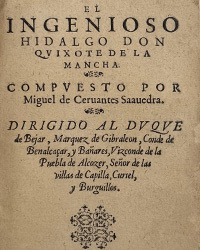
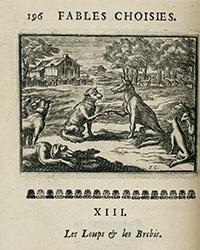
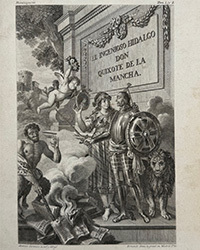
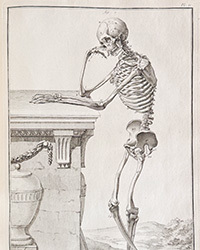
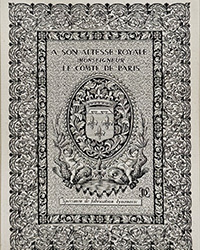
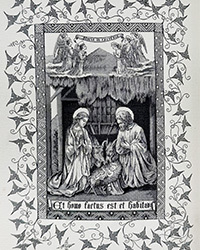 ALDE, Apr. 8: GUEVARA (ANTONIO DE). Histoire de Marc-Aurèle, Empereur Romain, vray miroir et horloge des Princes. Paris, Pierre et Galliot du Pré, frères, 1565. €3,000 to €4,000.ALDE, Apr. 8: HEURES DE LA VIERGE. Horæ in laudem beatissimæ virginis Mariæ ad usum Romanum. Paris, Charles L'Angelier, 1556. €4,000 to €5,000.ALDE, Apr. 8: MONTAIGNE (MICHEL DE). Les Essais. Édition nouvelle, trouvée après le deceds de l'autheur… Paris, Abel L'Angelier, 1595. €6,000 to €8,000.ALDE, Apr. 8: [ROJAS (FERNANDO DE)]. Celestina, tragicomedia di Calisto et Melibea, tradotta de lingua castigliana in italiano idioma… Venise, 1531. €2,000 to €3,000.ALDE, Apr. 8: CAMÕES (LUÍS DE). Os Lusiadas. Lisbonne, Pedro Crasbeeck, 1613. €2,000 to €3,000.ALDE, Apr. 8: CERVANTES (MIGUEL DE). El Ingenioso hidalgo Don Quixote de la Mancha. Bruxelles, Roger Velpius & Huberto Antonio, 1611. €6,000 to €8,000.ALDE, Apr. 8: LA FONTAINE (JEAN DE). Fables choisies, mises en vers. Paris, Denys Thierry et Claude Barbin, 1678-1694. €6,000 to €8,000.ALDE, Apr. 8: CERVANTES (MIGUEL DE). El Ingenioso hidalgo Don Quixote de la Mancha. Madrid, Joaquin Ibarra, 1780. €3,000 to €4,000.ALDE, Apr. 8: DIDEROT (DENIS) ET JEAN LE ROND D'ALEMBERT. Encyclopédie, ou dictionnaire raisonné des sciences, des arts et des métiers. Paris, 1751-1765. €15,000 to €20,000.ALDE, Apr. 8: [LIVRE TISSÉ]. LAMARTINE (Alphonse de). Les Laboureurs. Poème tiré de Jocelyn… Lyon, J. A. Henry, 1883. €8,000 to €10,000.ALDE, Apr. 8: [LIVRE TISSÉ]. Livre de prières tissé d'après les enluminures des manuscrits du XIVe au XVIe siècle. Lyon, [A. Roux], 1886. €5,000 to €6,000.
 -
Sotheby’s
Books, Manuscripts & Objects from Three Important Collections
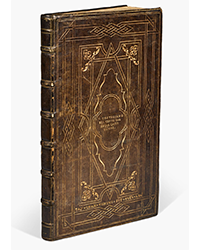
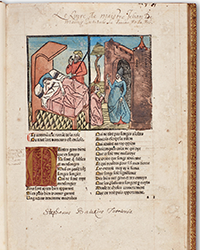
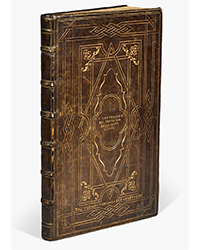
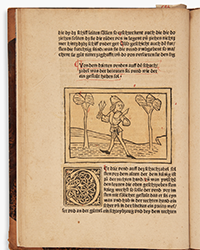
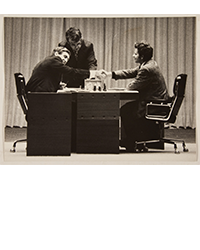
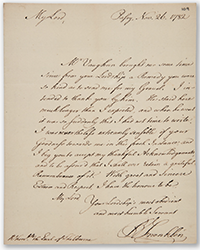
Open for Bidding 2-17 AprilSotheby’s, Apr. 2-17: [Guillaume de Lorris and Jean de Meun]. Le Roman de la Rose, [Geneva or Lyons, c.1481], first printed edition of the most important medieval French vernacular poem. £200,000 to £300,000.Sotheby’s, Apr. 2-17: Castiglione. Il libro del cortegiano. [Venice], April 1528, first edition, in a magnificent binding by Jean Picard for Jean Grolier. £100,000 to £150,000.Sotheby’s, Apr. 2-17: Jacobus de Cessolis. Schachzabelbuch, Strasbourg, 1483, von der Lasa copy. £50,000 to £70,000.Sotheby’s, Apr. 2-17: World Championship, 1972. A collection of 84 press photographs of the famed match between Spassky and Fischer. £2,000 to £3,000.Sotheby’s, Apr. 2-17: Ben Franklin. Autograph letter signed, to Lord Shelburne, British Prime Minister, during peace negotiations, November 1782. £15,000 to £20,000.