Conversing with Mr. Americana: Talking Books With Bill Reese
William Reese Co.Catalogue No. 200
Then something decisive happened: I got an offer from Peter to become an antiquarian book dealer. A customer of his had died, leaving behind a huge collection of Western Americana books that his wife wanted nothing to do with. They were asking for $40,000 in total for all of the books in this collection. There were 20 tons of books in this collection, largely double shelved. Peter enforced upon me the idea that this was a terrific bargain and a terrific chance for me. I was 19 at this time, a sophomore in college and I had a big decision to make. But it wasn’t a difficult decision. I went to my parents and asked to borrow $40,000 so that I could acquire this rare book collection and start off in the business. (One of the most difficult things about being a dealer, I later discovered, is getting access to the books, getting your inventory directly into your hands.) I bought the collection, started my business, and was able to pay my parents back within six months. I made a bunch of mistakes along the way, but I had room to make mistakes back then.
What I did was I became partners with Fred White Jr., a friend of mine who’s now deceased. I sold the collection with him. We did not have an open shop. We issued catalogues and sold by appointment only. I think frankly that we were ahead of our time with this model. To run an open shop you need staff, location, and all the expenses that go with them. The old model of the antiquarian bookseller is the generalist with a walk in shop. This is pretty much the way that the majority of book sellers operated up through World War II. We were specialists with a closed shop. This is more and more how things are being done today. Especially with the advent of the internet, the closed shop run by a specialist (not a generalist) is simply a more efficient model. We veered towards the closed shop in part because of the huge role that institutions played in book buying during the 1950s through the 1970s. Institutions don’t and didn’t want walk in shops; they especially veered towards the specialist model.
AT: Why do books and manuscripts appeal to you?
BR: What appeals to me is the sense that when one has a book or manuscript in your hands one has an artifact putting you into that past era. This is especially true with historical-related material. In terms of literature, I’m most interested in associative material, where you get a feeling of immediacy in terms of the author and the author’s relationship to the material. To sum it up, I guess I’d say that what attracts me to books and manuscripts is the sense of being in touch with a past era and thereby having or gaining a broader understanding of the evolution of human thought and society, of intellectual history and content as it were.
AT: Why collect American books and manuscripts? What about Americana draws you to it as a subject?
BR: The interest in history. In this country, people are interested in the history of the country. We see this on a popular level in terms of the works by Ken Burns or Steven Ambrose.
Swann Maps & Atlases, Natural History & Color Plate Books December 9, 2025
Swann, Dec. 9: Lot 156: Cornelis de Jode, Americae pars Borealis, double-page engraved map of North America, Antwerp, 1593.
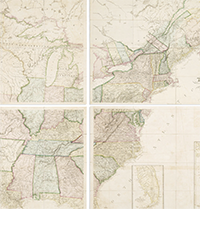
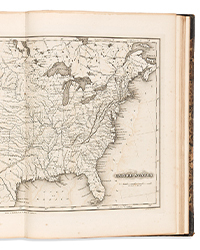
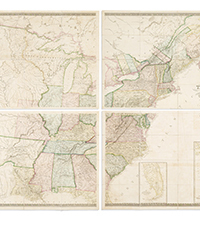
Swann, Dec. 9: Lot 206: John and Alexander Walker, Map of the United States, London and Liverpool, 1827.
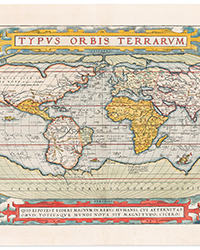
Swann, Dec. 9: Lot 223: Abraham Ortelius, Typus Orbis Terrarum, hand-colored double-page engraved world map, Antwerp, 1575.
Swann Maps & Atlases, Natural History & Color Plate Books December 9, 2025
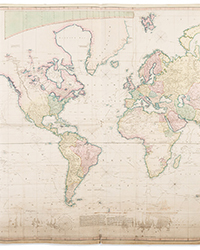
Swann, Dec. 9: Lot 233: Aaron Arrowsmith, Chart of the World, oversize engraved map on 8 sheets, London, 1790 (circa 1800).
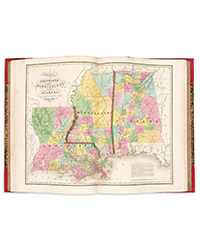
Swann, Dec. 9: Lot 239: Fielding Lucas, A General Atlas, 81 engraved maps and diagrams, Baltimore, 1823.
Swann, Dec. 9: Lot 240: Anthony Finley, A New American Atlas, 15 maps engraved by james hamilton young on 14 double-page sheets, Philadelphia, 1826.
Swann Maps & Atlases, Natural History & Color Plate Books December 9, 2025
Swann, Dec. 9: Lot 263: John Bachmann, Panorama of the Seat of War, portfolio of 4 double-page chromolithographed panoramic maps, New York, 1861.
Swann, Dec. 9: Lot 265: Sebastian Münster, Cosmographei, Basel: Sebastian Henricpetri, 1558.
Swann, Dec. 9: Lot 271: Abraham Ortelius, Epitome Theatri Orteliani, Antwerp: Johann Baptist Vrients, 1601.
Swann Maps & Atlases, Natural History & Color Plate Books December 9, 2025
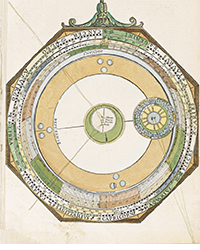
Swann, Dec. 9: Lot 283: Joris van Spilbergen, Speculum Orientalis Occidentalisque Indiae, Leiden: Nicolaus van Geelkercken for Jodocus Hondius, 1619.
Swann, Dec. 9: Lot 285: Levinus Hulsius, Achtzehender Theil der Newen Welt, 14 engraved folding maps, Frankfurt: Johann Frederick Weiss, 1623.
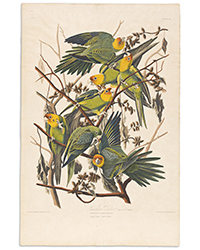
Swann, Dec. 9: Lot 341: John James Audubon, Carolina Parrot, Plate 26, London, 1827.
Sotheby’s Book Week December 9-17, 2025
Sotheby’s, Dec. 11: Darwin and Wallace. On the Tendency of Species to form Varieties..., [in:] Journal of the Proceedings of the Linnean Society, Vol. III, No. 9., 1858, Darwin announces the theory of natural selection. £100,000 to £150,000.
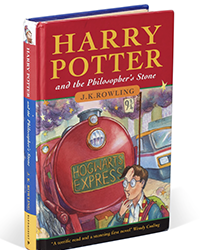
Sotheby’s, Dec. 11: J.K. Rowling. Harry Potter and the Philosopher's Stone, 1997, first edition, hardback issue, inscribed by the author pre-publication. £100,000 to £150,000.
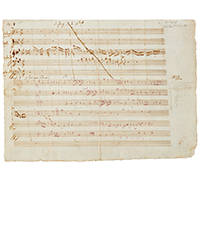
Sotheby’s, Dec. 11: Wolfgang Amadeus Mozart. Autograph sketchleaf including a probable draft for the E flat Piano Quartet, K.493, 1786. £150,000 to £200,000.
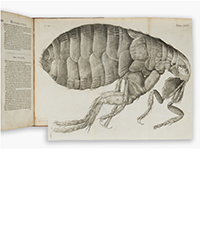
Sotheby’s, Dec. 12: Hooke, Robert. Micrographia: or some Physiological Descriptions of Minute Bodies made by Magnifying Glasses. London: James Allestry for the Royal Society, 1667. $12,000 to $15,000.
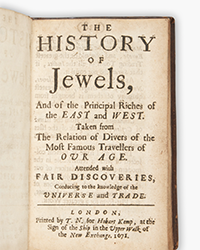
Sotheby’s, Dec. 12: Chappuzeau, Samuel. The history of jewels, first edition in English. London: T.N. for Hobart Kemp, 1671. $12,000 to $18,000.
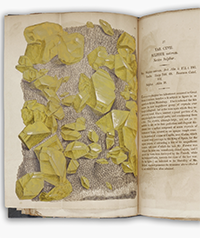
Sotheby’s, Dec. 12: Sowerby, James. Exotic Mineralogy, containing his most realistic mineral depictions, London: Benjamin Meredith, 1811, Arding and Merrett, 1817. $5,000 to $7,000.



![<b>Sotheby’s, Dec. 11:</b> Darwin and Wallace. On the Tendency of Species to form Varieties..., [in:] <i>Journal of the Proceedings of the Linnean Society,</i> Vol. III, No. 9., 1858, Darwin announces the theory of natural selection. £100,000 to £150,000.](https://ae-files.s3.amazonaws.com/AdvertisementPhotos/00d5fd41-2542-4a80-b119-4886d4b9925f.png "<b>Sotheby’s, Dec. 11:</b> Darwin and Wallace. On the Tendency of Species to form Varieties..., [in:] <i>Journal of the Proceedings of the Linnean Society,</i> Vol. III, No. 9., 1858, Darwin announces the theory of natural selection. £100,000 to £150,000.")