Rare Book Monthly

Articles - August - 2019 Issue

A Deep-dive Database of Local History, Attitudes, and Ideas

Ulster County documents

Ulster County documents

Recently I purchased a small group of mid-Hudson Valley material that I found useful as examples of what would logically be included in a deep-dive experimental database for the New York State counties mid-way between New York City and Albany.  A what?  A deep-dive-database is a full text searchable database, something like what Google does in its Books section.  Whether it is a d3 or a FTSD or something else remains to be seen, but it is the future.


Databases of the printed word have generally been confined to brief descriptions and details of books and printed documents.  To see an actual copy, for example if you are using the OCLC, you are provided locations where such copies, physical and electronic, are found.   On RBH we focus on auction records and dealer descriptions to illuminate the emerging understanding of an example’s importance and value.  Such databases are potentially very large as ours is, more than 9 million full text records. 


But what is now emerging are full text databases.  That is, they capture the complete contents of a document in word searchable form, not only as a scan but as a word document.  Some efforts currently look for references in text but they have generally been dull instruments, in some cases because the references need to be dug out and in others because they are behind paywalls.    This will change and with this change there will be full text readable versions searchable online – and in many cases, searchable for free.


This experimental free database for the mid-Hudson Valley will include the standard reference materials, town and county histories, maps that convey changes, appropriate books by local authors, broadsides, pamphlets and ephemera – all in full searchable text.


The search will be different because the most common form posted will be ephemera that will outnumber books and pamphlets somewhere between a thousand and ten thousand to one.


Books usually include the title, author, publisher/printer, place and date printed.  When even one of these facts is missing it can complicate searches.  For ephemera you might be lucky to have three of these factors.  The others will require associated factors such as “they are among a group of letters in the same hand”.  Here’s an example.  A collection of letters from A.M. to B. R.  dated by day and month but not by year.  However, one envelope is dated 1863 and the events mentioned suggest the Battle at Chancellorsville.  Can this be figured out?  Probably.  As this example suggests, judgments will be made.


Here are some of the fields needed to identify and contextualize such letters.


Date or date range stated or implied

Names implied or known

Subject[s] such as events and places

Regimental references and information including cross-references


In addition, other fields will sometimes play a part:


Watermarks

Context of the document [among a group of similar items or with other related materials]


References gleaned from genealogical sites


References from online searches on Google and others


Altogether it will often, but not always, be possible to contextualize material, thus creating a deeper perspective – a perspective I believe that will change our understanding of the past.


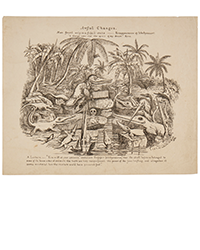
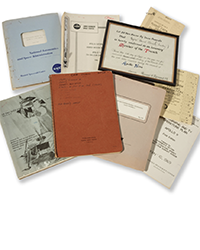
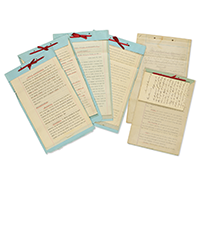
Here are some other examples:  Ulster Mine at Ellenville, Ulster County, New York, a series of 5 printed documents, many with illustrations, that relate to this mine from 1852 to 1855 that include:


A 16 page report dated July 1st, 1852


An abbreviated broadside version dated July 1st, 1852


A 12 page report dated December 10th, 1852


A broadside, brief financial statement dated 15th December, 1852


A 16 page report dated January 3, 1854 titled Official Reports of the Ulster Company for the year 1853


This mine was located a short distance from the Delaware & Hudson Canal and was opened in 1852 during a period when Americans were looking everywhere for gold because of the stories emerging about the gold strikes in California.  In Ellenville they found lead while in Kingston some 20 miles away they believed they found gold that, when assayed, turned out to be pyrite or fool’s gold.  Such documents are so much more interesting than a title, date, author and print date.


Among the other documents I purchased is a stock receipt for the Hobart Branch Railroad Company signed by Thomas Cornell, who was a man of wealth whose steam boats coursed the Hudson River in the latter half of the 19th century.  He was based in Rondout but his influence reached in every direction.


Another is a menu for the Hotel Kaaterskill at Catskill for Thursday August 24, 1899.  Tastes have changed!


A small one is an 1857 7.625” x 5” broadside circular calling on teachers in Orange County to participate in a quarterly meeting to be instructed on new teaching approaches.  The teachers were expected to pay their own way but a handwritten note suggests the costs may be shared.


These are a few of the many documents that will contribute to an understanding of what life was like and altogether convey the changing assumptions and understanding people generally had.  Life has never been a paved highway and in the mid-Hudson Valley it seems more like a gravel path; every spec of gravel evidence of unique personal history.


An intensely focused, full text searchable database will bring these details to light.


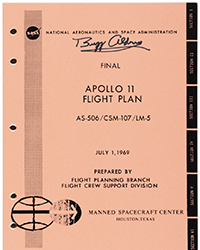
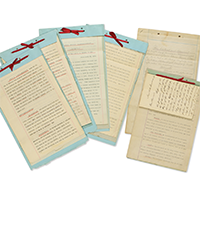
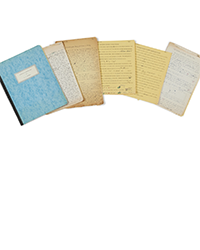
Images of some of the examples are included with this article. 

Posted On: 2019-08-09 17:16
User Name: certainbooks

Hello Bruce: How would this proposed database differ from the current OCLC search fields, for instance? These search fields allow for choices in access method, accession number, author, author phrase, corporate or conference name, corporate and conference name phrase, personal name, personal name phrase, language type, material type, material type phrase and 18 more choices, per each search line - including a half-dozen under 'subject' alone. The search fields in OCLC offer these options, in three separate possible boxes, multiplying the search-ability by all those permutations. Additionally, there are year date, language and number of libraries searches as separate boxes. Limitation fields below go even further and allow for type of material: books, visual materials, computer files, internet resources, serial publications, sound recordings, archival materials, continually updated resources, articles, musical scores, maps allow for a narrowing of the field of search even further. There are additional limitations for availability possibilities too. Sincerely, George Krzyminski at Certain Books


Posted On: 2019-08-10 18:17
User Name: adminb

The OCLC, which I use but may not fully understand, shows how many copies are held among the more than 30,000 members of OCLC. So, for example I looked up “Art Work of Ulster County” recently and found 5 locations: LOC, NYPL, SUNY New Paltz, UCCC and Penn State. None of these copies are searchable online. Neither did I find it in Google Books.

To see the entire volume all pages including text and images will to be scanned and then converted into one or more word documents that random keywords searches can find. That’s the approach I’ll take to all material uploaded to this database.

In addition to books, all printed forms as well as manuscript material will be included.

This full text will be wide open to Google so that random terms and phrases found in this local database will create matches.

At a guess, and it’s strictly a guess, about 15% of the U. S. population has some connection to the mid-Hudson Valley.


Rare Book Monthly

  • Aste Bolaffi, June 17-18: Galileo Galilei. Dialogo sopra i due massimi sistemi del mondo tolemaico, e copernicano. Firenze, 1632
    Aste Bolaffi, June 17-18: Saverio Manetti. Storia naturale degli uccelli. Firenze, 1771-76
    Aste Bolaffi, June 17-18: Fortunato Depero. Depero futurista. Rovereto, 1927
    Aste Bolaffi, June 17-18: Nicolas Visscher. Atlas minor sive totius orbis terrarum contracta delineat ex conatibus. Amsterdam, circa 1649-95
    Aste Bolaffi, June 17-18: Andreas Vesalius. Anatomia. Addita nunc. Antiquorum Anatome. Venezia, 1604
    Aste Bolaffi, June 17-18: Tristan Tzara and Salvador Dalì. Grains et Issues. Parigi, 1935
  • June 25, 2026
    Doyle, June 25: Houdini's biography, boldly signed. $3,000 to $5,000.
    Doyle, June 25: A volume from Abraham Lincoln's library, signed just before heading to Washington for his inauguration. $20,000 to $30,000.
    Doyle, June 25: A very early Confederate recruiting manual belonging to the chief commissary in Lee's Army. $600 to $800.
    Doyle, June 25: Rare hand-colored lithographs of the life of Napoleon. $20,000 to $30,000.
    Doyle, June 25: The "Holster Atlas" of the American Revolution. $5,000 to $8,000.
    Doyle, June 25: Jewish ceremonies in fine hand-colored engravings. $7,000 to $10,000.
    Doyle, June 25: A very rare work on Turkish military costume. $1,000 to $1,500.
    June 25, 2026
    Doyle, June 25: The most important illustrated work on the Mexican-American War. $10,000 to $15,000.
    Doyle, June 25: The finest illustrated book on Afghanistan. $10,000 to $15,000.
    Doyle, June 25: Henry Justice Ford St. George rescues the Princess from the horrible Dragon. $2,000 to $3,000.
    Doyle, June 25: A rare work of Prussian Army uniforms under Frederick William II, with exquisite hand-colored engravings. $800 to $1,200.
    Doyle, June 25: Lenny Bruce typed letter signed to a Village bohemian during his obscenity trials, with a manuscript note and drawing. $300 to $500.
    Doyle, June 25: Schiff's scarce Shanghai Sketchbook. $300 to $500.
    Doyle, June 25: The first accurate published representation of the American flag. $2,000 to $4,000.
  • Old World Auctions (June 17): Lot 123. Celebrate 250 Years of Independence with Original Stars and Stripes (1790) Est. $1,400 - $1,700
    Old World Auctions (June 17): Lot 20. Keulen's Spectacular Chart of the World Featuring California as an Island (1728) Est. $12,000 - $15,000
    Old World Auctions (June 17): Lot 42. Schedel's Ancient World Map with Fantastic Humanoid Creatures (1493) Est. $14,000 - $17,000
    Old World Auctions (June 17): Lot 591. Matching Set of 3 Stunning Globe Gores of Eastern Asia from Coronelli's 3.5 Foot Globe (1688) Est. $5,500 - $7,000
    Old World Auctions (June 17): Lot 9. Speed's Popular World Map with Allegorical Representations of the Elements (1651) Est. $14,000 - $17,000
    Old World Auctions (June 17): Lot 168. First Separate Map of Kansas & Nebraska Territories (1854) Est. $5,500 - $7,000
    Old World Auctions (June 17): Lot 43. Only Macrobius Map with Britain Attached to Europe (1515) Est. $800 - $950
    Old World Auctions (June 17): Lot 250. Rare Map of Boston and One of the Earliest Maps of the Revolutionary War (1775) Est. $2,000 - $2,300
    Old World Auctions (June 17): Lot 79. Schenk's Uncommon Map Featuring Two Figurative Title Cartouches (1696) Est. $1,200 - $1,500
    Old World Auctions (June 17): Lot 681. Hand-Colored Image of the Annunciation to the Shepherds (1502) Est. $800 - $950
  • Sotheby's Book Week
    2 June - 9 July
    Sotheby’s, June 25: Smith, Adam. The Wealth of Nations, on its 250th anniversary. $180,000 to $250,000.
    Sotheby’s, June 17: Fontana, Lucio. Concetto Spaziale. 1967. Leporello en papier doré. Bel exemplaire signé. €4,000 to $€,000.
    Sotheby’s, June 25: Fitzgerald, F. Scott. "So we beat on, boats against the current, borne back ceaselessly into the past”. $150,000 to $200,000.
    Sotheby’s, June 25: Washington, George (as First President). Washington decries “an ostentatious imitation, or mimickry of Royalty” in his Presidency. $250,000 to $500,000.
    Sotheby’s, June 17: Lope de Vega. Rare manuscrit autographe signé de la préface dédicatoire de "El Cardenal de Belen" (le cardinal de Bethléem), pièce composée en 1610. €40,000 to €60,000.

Article Search

Archived Articles