In my capacity as a private collector, I recently received a set of consignment documents from Christie’s and found increasing clarity as to their consignment rates after first misreading the document.
In my experience, there are three parties to an auction sale: the consignor, the auction house and the buyer. Each party has responsibility for their part:
The consignor to have clear title and willingness to consign,
The auction house, to receive, photograph and describe, then market, sell and collect payment, then care for and later deliver the item to the new buyer or, if unsold, return to the consignor;
The buyer, to pay the hammer price plus commissions.
This sounds straightforward.
In my experience the three parties are: consignor, auction house, and buyer but in the Christie’s term sheet “consignor” is replaced by “seller” and the term consignor not even used. The agreement itself is clear as all responsibilities of the consignor are enumerated under Charges “for selling the property.”
I can’t speak for what consignors’ fees were previously, but now the highest commission charged for consignments with a hammer price equal or less than $15,000 is lower than most of their competitors at this value, even including smaller regional houses. The commission decreases as the hammer price increases. However, this probably means that they will be even more selective as to what they agree to take. In other words, you can consign lower value material, subject to the specialists’ willingness to take it on, but the consignment fee percentage will be higher when the realized price is lower.
The big difference compared to consigning last year is that Christie’s has eliminated their fee schedule, streamlining the consignment process. They know that consignors have clamored for simplicity and now, for most sellers of books and manuscripts, the only costs are the seller’s commission and packing and shipping to and from a Christie’s saleroom.
When consigning, bring a fresh perspective. Past is not prologue. The rules and terms are always changing. Selling at auction costs real money but works because, on the day appointed, much more often than not, the auction house finds buyers.
For those of you, and I am among them, who recently won lots at Christie’s there is also a graded list of buyer’s commissions that decline as higher levels of purchase are reached:
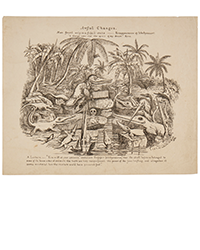
Sotheby’s, July 14: Henry De La Beche. "Awful Changes," 1830. $6,000 to $9,000.
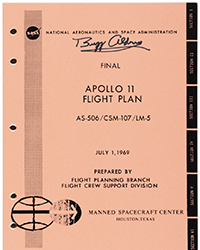
Sotheby’s, July 15: [Apollo 11]. Flight Plan, Complete Original Printing Signed by Buzz Aldrin. $5,000 to $8,000.
Sotheby’s, July 15: Thomas Alva Edison. Documents Establishing and Ending the Edison Electric Railway Company. $20,000 to $30,000.
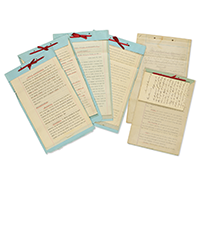
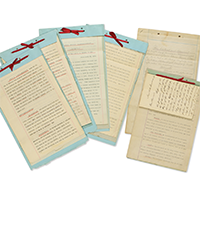
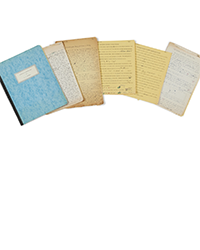
Sotheby’s, July 15: Richard P. Feynman. Feynman's Lectures on Gravitation 1-16, Including the Original Transcriptions of Lectures 12-16 by Morinigo and Wagner, With Richard Feynman's Manuscript Notations, 1971. $12,000 to $18,000.
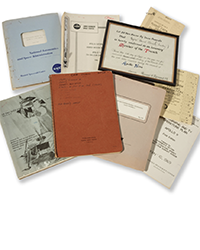
Sotheby’s, July 15: [Apollo 9]. A Group of Manuals and Mission Documents used by Stuart Roosa as a member of the Astronaut Support Crew. $5,000 to $8,000.
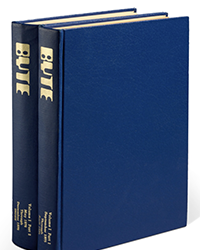
Sotheby’s, July 15: [BYTE: The Small Systems Journal]. A collection of early foundational issues of Byte: The Small Systems Journal, with rare hardcover editions. $5,000 to $8,000.
Forum Auctions The 10th Anniversary Sale Fine Books, Manuscripts and Works on Paper July 16, 2026
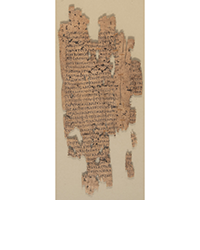
Forum, July 16: Inundation papyrus. P.Michael 4, the ‘Inundation papyrus’, a geographical account of the Nile near Canopus, in Greek, remains of two columns from a manuscript scroll on papyrus, Egypt, second century CE. £12,000-18,000
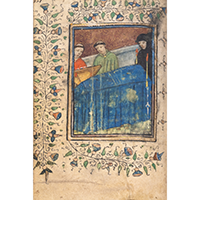
Forum, July 16: Book of Hours, use of Sarum, manuscript on vellum, 6 full-page miniatures, with famous Middle English inscriptions, Southern Netherlands for the English market, [c.1430]. £30,000-50,000
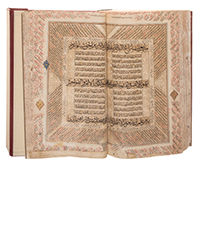
Forum, July 16: Qu'ran, Arabic manuscript on burnished, stencilled, and gold-flecked paper, 447ff., Sultanate Gujarat, Ahmadabad, [after 1411 but no later than 1442]. £15,000-20,000
Forum Auctions The 10th Anniversary Sale Fine Books, Manuscripts and Works on Paper July 16, 2026
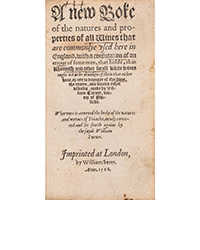
Forum, July 16: Turner (William). A New boke of the natures and properties of all wines that are commonly vsed here in England, rare first edition of the first English book on wine, By William Seres, 1568. £20,000-£30,000
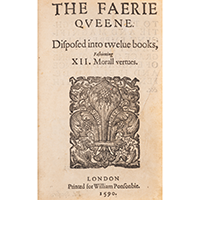
Forum, July 16: Spenser (Edmund). The Faerie Queene. first edition, Printed [by John Wolfe] for William Ponsonbie, 1590. £30,000-40,000
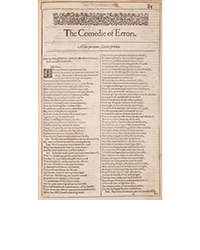
Forum, July 16: Shakespeare (William). The Comedie of Errors, extracted from the first folio, Isaac Jaggard and Edward Blount, 1623. £15,000-20,000
Forum Auctions The 10th Anniversary Sale Fine Books, Manuscripts and Works on Paper July 16, 2026
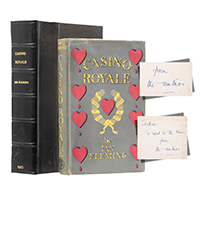
Forum, July 16: Fleming (Ian). Casino Royale, first edition, signed presentation inscription from the author, 1953. £40,000-60,000
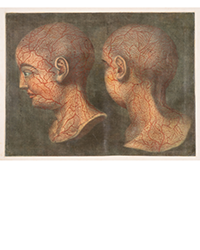
Forum, July 16: d'Agoty (Jacques-Fabien Gautier). Anatomie de la Tête, first edition, Paris, chez le Sieur Gautier, 1748. £10,000-15,000
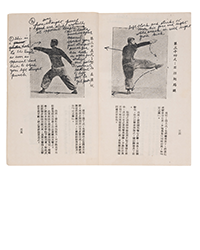
Forum, July 16: Martial Arts.- Lee (Bruce). 'Praying Mantis style' Kung Fu book, containing numerous annotations, diagrams and graphs in Bruce Lee's hand, c. 1960. £50,000-70,000
Forum Auctions The 10th Anniversary Sale Fine Books, Manuscripts and Works on Paper July 16, 2026
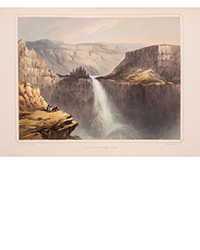
Forum, July 16: Warre (Capt. Henry James). Sketches in North America and the Oregon Territory, first edition, rare hand-coloured issue, 1848. £30,000-40,000
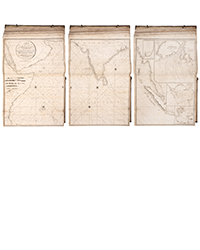
Forum, July 16: Norie (John William). The Marine Atlas, or Seaman's Complete Pilot for all the principal places in the known world..., 1826. £30,000-50,000
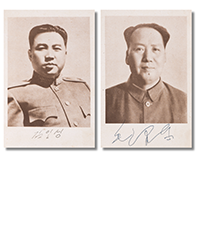
Forum, July 16: Mao Tse-tung.- Kim Il-sung.-[Note book for visitors from China to Korea], signed by Mao and Kim, [Beijing, 1954]. £10,000-15,000