F.A. Hayek's The Road to Serfdom is an economics and social philosophy classic that seems to take on new meaning as we go into the 2020 elections and cries of “socialism” ricochet across the political spectrum. Socialism, after all, is the book’s primary focus - and though the lens has become a little cloudy with the passage of time - it may be relevant to the present situation to revisit this 75 year old treatise.
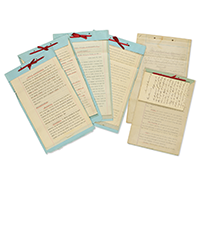
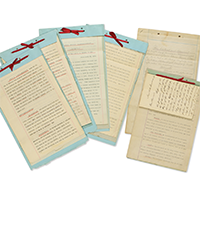
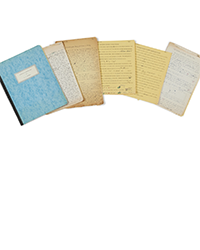
Hayek was a noted academic from Vienna who shared the Nobel Prize in Economics in 1974. He wrote The Road to Serfdom during the war years and published it in England (Routledge) in 1944. It was followed by the first American edition (University of Chicago) a little later the same year.
Though its message was directed at wartime Britain it was quickly taken up by US readers and went through multiple printings. Its popularity was helped along by a Reader’s Digest condensation which gave the work an enormous mass audience. Reduced to a sentence the message is that socialism and collective planning designed to create utopias can ultimately have the opposite effect and lead to chilling authoritarian regimes. Or as Wikipedia puts it: “Hayek challenged the general view among British academics that fascism (including National Socialism)was a capitalist reaction against socialism. He argued that fascism, National Socialism and socialism had common roots in central economic planning and empowering the state over the individual.”
Whether or not history ultimately sustains that verdict The Road to Serfdom is often cited as an extremely influential book: Modern Library ranked it #16 in a reader survey of the hundred best non-fiction book of the twentieth century. In 2010 it briefly surged to the top of the Amazon best seller list following airplay from right wing radio personality Glenn Beck. Since then the interest has diminished somewhat, but is still significant. Presently Amazon pegs it at #120 in the 'political economy' category.
Typically The Road to Serfdom travels in the same circles as Atlas Shrugged and usually clutched to the bosom of the those with strong Libertarian leanings. I find myself reading it because of the demonization of the so-called “socialist” agenda is currently gaining momentum in the upcoming American elections and I’m intrigued by its analysis of "intellectuals" aka teachers, writers, media types (and probably book dealers by extension) as "tools of the state." So it is not without considerable trepidation that I - your quintessential elderly old school Humanities grad aka left-leaning liberal intellectual - advise you to crack out a copy and ponder its message given the current political climate.
As the saying goes, “Everything old is new again.”
Under the heading ‘The Great Utopia’ Hayek writes “It is rarely remembered now that socialism in its beginnings was frankly authoritarian. It began quite openly as a reaction against the liberalism of the French Revolution. The French writers who laid its foundation had no doubt that their ideas could be put into practice only by a strong dictatorial government … To make this argument sound plausible, the word ‘freedom’ was subjected to a subtle change in meaning.
“The word had formerly meant freedom from coercion, from the arbitrary power of other men. Now it was made to mean freedom from necessity, release from the compulsion of the circumstances which inevitably limit the range of choice of all of us. Freedom in this sense is, of course, merely another name for power or wealth. The demand for the new freedom was thus only another name for the old demand for a redistribution of wealth.”
In Hayek’s view centralized planning is the great villain: He asserted, ”Planning leads to dictatorship because dictatorship is the most effective instrument of coercion and, as such, essential if central planning on a large scale is to be possible.” Moving on to ‘Why the Worst Get on Top’ he comes up with some insights which seem prophetic, but perhaps not in the sense originally intended.
To wit: “Just as the democratic statesman who sets out to plan economic life will soon be confronted with the alternative of either assuming dictatorial powers or abandoning his plans, so the totalitarian leader would soon have to choose between disregard of ordinary morals and failure. It is for this reason that the unscrupulous are likely to be more successful in a society tending toward totalitarianism.
“The totalitarian leader must collect around him a group which is prepared voluntarily to submit to that discipline they are to impose by force upon the rest of the people. …
“There are three main reasons why such a numerous group, with fairly similar views, is not likely to be formed by the best but rather by the worst elements of any society. First, the higher the education and intelligence of individuals become, the more their tastes and views are differentiated. If we wish to find a high degree of uniformity in outlook, we have to descend to the regions of lower moral and intellectual standards where the more primitive instincts prevail. This does not mean that the majority of people have low moral standards; it merely means that the largest group of people whose values are very similar are the people with low standards.
“Second, since this group is not large enough to give sufficient weight to the leader’s endeavours, he will have to increase their numbers by converting more to the same simple creed. He must gain the support of the docile and gullible, who have no strong convictions of their own but are ready to accept a ready-made system of values if it is only drummed into their ears sufficiently loudly and frequently. It will be those whose vague and imperfectly formed ideas are easily swayed and whose passions and emotions are readily aroused who will thus swell the ranks of the totalitarian party.
“Third, to weld together a closely coherent body of supporters, the leader must appeal to a common human weakness. It seems to be easier for people to agree on a negative programme – on the hatred of an enemy, on the envy of the better off – than on any positive task.”
Referring to socialism in Britain in the 1940s Hayek writes: “Advancement within a totalitarian group or party depends largely on a willingness to do immoral things … Once you admit that the individual is merely a means to serve the ends of the higher entity called society or the nation, most of those features of totalitarianism which horrify us follow of necessity... intolerance and brutal suppression of dissent, deception and spying, the complete disregard of the life and happiness of the individual are essential and unavoidable. Acts which revolt all our feelings, such as the shooting of hostages or the killing of the old or sick, are treated as mere matters of expediency; the compulsory uprooting and transportation of hundreds of thousands becomes an instrument of policy approved by almost everybody except the victims. … “It is not difficult to deprive the great majority of independent thought. But the minority who will retain an inclination to criticize must also be silenced. Public criticism or even expressions of doubt must be suppressed because they tend to weaken support of the regime.”
It is interesting that these brief excerpts about the perceived shortcomings of socialism eerily echo the tone set by the present administration, which has apparently adopted all the defining “socialistic” characteristics which Hayek thinks lead inevitably to despotism, while at the same time denouncing “socialism” itself as “unAmerican.”
But what about now? While Googling around trying to find a non-Libertarin take on this retro view of economics I happened upon a stunning essay by John Lanchester in the July 1, 2018 issue of the London Review of Books titled After the Fall. Though he might not have a Nobel Prize, Lanchester’s analysis on where we really are now and who is really calling the shots is much more on target (and a lot easier to read) than Hayek.
Forget about socialist bogeyman, think the banks.
“Napoleon said something interesting: “that to understand a person, you must understand what the world looked like when he was twenty, I think there’s a lot in that,” Lanchester writes. “When I was twenty, it was 1982, right in the middle of the Cold War and the Thatcher/Reagan years. Interest rates were well into double digits, inflation was over 8 per cent, there were three million unemployed, and we thought the world might end in nuclear holocaust at any moment.
“At the same time, the underlying premise of capitalism was that it was morally superior to the alternatives. Mrs. Thatcher was a philosophical conservative for whom the ideas of Hayek and Friedman were paramount: capitalism was practically superior to the alternatives, but that was intimately tied to the fact that it was morally better.”
Lanchester starts off observing that “odds were long” on many unexpected leaders and events “following the crash a decade ago,” but adds without irony, “5000 to 1 pales in comparison with the odds you would have got in 2008 on a future world in which Donald Trump was president.”
“The most important component of the intellectual landscape of 2008 was a widespread feeling among elites that things were working fine. Not for everyone and not everywhere, but in aggregate: more people were doing better than were doing worse. People had lived through crises before – but what happened in those cases was that capital fled from one place to another. No one had ever lived through, and no one thought possible, a situation where all the credit simultaneously disappeared from everywhere and the entire system teetered on the brink.
“The first weekend of October 2008 was a point when people at the top of the global financial system genuinely thought, in the words of George W. Bush, ‘This sucker could go down.’“
Lanchester turns his attention to the meaning of “impunity:”
“Impunity, he writes, is the sense that these things had consequences for us but not for the people who caused the crisis, has been central to the story of the last ten years. It has also been central to the public anger generated by the crash and the Great Recession. Speaking on a book tour in 2010 he observed, “All the questions were about whose fault the crash was, who should be punished, how it was possible that this could have happened and how outrageous it was that the people responsible had got away with it and the rest of society was paying the consequences. ...
“By now we’re eight years into that public anger. Remember that remark made by Robert Lucas, the macroeconomist, that the central problem of depression prevention had been solved? How’s that been working out? How it’s been working out here in the UK is the longest period of declining real incomes in recorded economic history. ‘Recorded economic history’ means as far back as current techniques can reach, which is back to the end of the Napoleonic Wars. Worse than the decades that followed the Napoleonic Wars, worse than the crises that followed them, worse than the financial crises that inspired Marx, worse than the Depression, worse than both world wars. That is a truly stupendous statistic and if you knew nothing about the economy, sociology or politics of a country, and were told that single fact about it – that real incomes had been falling for the longest period ever – you would expect serious convulsions in its national life.
“We thus arrive at the topic that more than any other sums up the decade since the crash: inequality. For students of the subject there is something a little crude about referring to inequality as if it were only one thing. Inequality of income is not the same thing as inequality of wealth, which is not the same as inequality of opportunity, which is not the same as inequality of outcome, which is not the same as inequality of health or inequality of access to power. In a way, though, the popular use of inequality, although it may not be accurate in philosophical or political science terms, is the most relevant when we think about the last ten years, because when people complain about inequality they are complaining about all the above: all the different subtypes of inequality compacted together.
“The sense that there are different rules for insiders, the one per cent, is global. Everywhere you go people are preoccupied by this widening crevasse between the people at the top of the system and everyone else. It’s possible of course that this is a trick of perspective or a phenomenon of raised consciousness more than it is a new reality: that this is what our societies have always been like, that elites have always lived in a fundamentally different reality, it’s just that now, after the last ten difficult years, we are seeing it more clearly. I suspect that’s the analysis Marx would have given.
“The one per cent issue is the same everywhere … In the US there is enormous anger at oblivious, entitled, seemingly invulnerable financial and technological elites getting ever richer as ordinary living standards stay flat in absolute terms, and in relative terms, dramatically decline. And everywhere, more than ever before in human history, people are surrounded by images of a life they are told they should want, yet know they can’t afford.”
I submit that discussions of socialism vs. capitalism in today’s world are totally irrelevant, the reddest of red herrings. Lanchester is correct: what we're really dealing with is raw anger: despite prosperity for a few, the true picture is an economic death spiral for the many.
I’d never read a word of John Lanchester before dipping into Hayek, but if we’re looking for prophecy disguised as economic theory may I suggest that it is Lanchester not Hayek who has the pole position.
Whether you agree or not, I strongly suggest you read his essay (link below).
Read the entire After the Fallessay by John Lanchester published in the London Review of Books 2018 at https://www.lrb.co.uk/v40/n13/john-lanchester/after-the-fall
Find the Reader’s Digest condensation of Hayek’s Road to Serfdomat https://mises.org/sites/default/files/Road%20to%20serfdom.pdf