
Rare Book Monthly
The Most Important Book You Will Ever Read - The Oil Endgame.

none
So, then, what is the plan, and does it require enormous sacrifices in our lifestyles to achieve? Listen to Lovins and all again: "Americans have also been too ready to accept dismissive claims, often from those whom change may discomfit, that any improvement will be decades away, crimp lifestyles and freedoms, and require intrusive interventions and exorbitant taxation." Don't accept that anymore! As they note, "Consumer electronics every month get smaller, better, faster, cheaper; why can't anything else?"
There is a two-pronged attack, alternative fuels and greater efficiency. They are intractably tied together. Most people think that sources such as biomass fuels are too limited to solve our problem. Perhaps they are, but if we can substantially reduce demand through greater efficiency, suddenly these potential sources become very large.
But, we have all said it, how can we ever gain enough more in efficiency to make a serious dent in oil imports, particularly since worldwide demand is rising? Leaving aside the fact that the Japanese have already made huge strides, the authors examine what happens when gasoline is burned in an automobile engine. What they tell us is, "Only an eighth of that fuel energy ever reaches the wheels, a sixteenth accelerates the car, and less than one percent ends up moving the driver." Think about it. Less than one percent of the energy in the fuel goes to accomplishing the desired task, moving you from point A to point B. What if we could raise that to some "enormous number," like 2% or 3%? We could so reduce our need for oil that we could replace it with biofuels and/or hydrogen cells. We could free ourselves of our narcotic foreign dependence.
This issue implies what may be their most important means of increasing mileage, vehicle weight. Once you have finished cursing out their plan to stick you in a tiny, unsafe minicar, you'll want to read about modern polymers that weigh a fraction of steel but are stronger and more durable. They quote Henry Ford that one of the biggest fallacies of the business is that heavier weight means more strength. They then point to a racecar accident where a lightweight, polymer car crashed into a wall at 220 mph. The driver did break a few bones, but recovered to race again. Don't try this with your heavyweight SUV! What they dub "ultralightweights" have the potential to increase mileage by enormous amounts while being roomy, comfortable and safer. Combine this with other advances such as hybrid technology, and/or efficient hydrogen fuel cells, and the potential is astonishing.
There are many other steps too numerous to go into here. Some cars employ more aerodynamic designs, but most don't, and few have paid attention to the drag caused by the bottom of the car. Engines can certainly be more efficient, and fuel cells can convert other fuels to far more efficient hydrogen. Tires can be designed to save fuel. Automotive air conditioners can be more efficient. And, we are only talking about cars. Power plants and home furnaces that burn oil can be more efficient. And gas burning and other fuel plants and appliances can be made more efficient, freeing up more of these fuels to replace oil burned in power plants. There are changes that can be made in highways, traffic lights, and such to reduce fuel consumption. The list goes on and on, but hopefully, you can see the point. Astonishingly, these are all based on technologies available today. Does anyone not believe that further advancements will be made in the years ahead that will enable us to increase efficiency even more?
Rare Book Monthly
-
Sotheby’s
Shelf Life: Books, Manuscripts and Works on Paper from the Library of Stanley J. Seeger and Christopher Cone
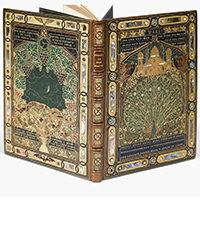
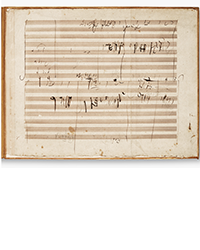
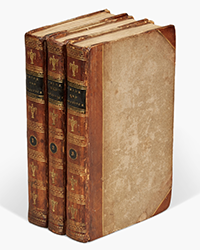
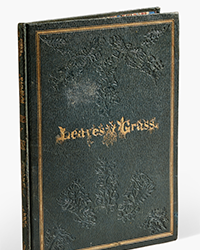
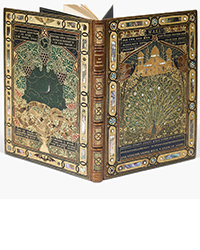
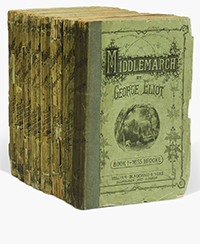
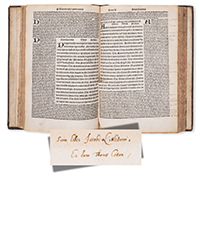
25 June – July 7Sotheby’s, July 7: Ludwig van Beethoven. Autograph sketches for the overture "Die Weihe des Hauses", op.124, [1822], UNPUBLISHED. £150,000 to £200,000.Sotheby’s, July 7: Jane Austen. Pride and Prejudice, 1813, first edition, 3 volumes, contemporary half calf. £50,000 to £70,000.Sotheby’s, July 7: Walt Whitman. Leaves of Grass, Brooklyn, 1855, first edition, first issue, original green cloth, the Doheny copy. £50,000 to £70,000.Sotheby’s, July 7: Binding—Sangorski & Sutcliffe—Omar Khayyam. Rubaiyat, London, 1872, third edition, in a magnificent jewelled Peacock binding. £15,000 to £20,000.Sotheby’s, July 7: George Eliot. Middlemarch, Edinburgh and London, 1871, first edition in the original parts. £20,000 to £30,000. -





Forum Auctions
The Private Library:
Fine Printing & Private Press books, the collection of the late David Chambers
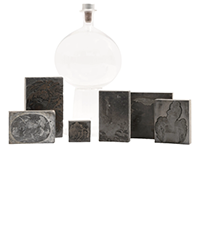
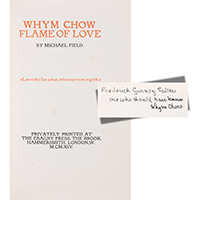
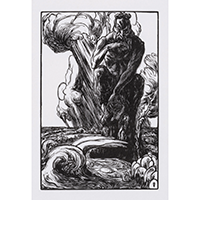
July 9, 2026Forum, July 9: Hassall (Joan) A large collection of over 300 original woodblocks of engravings for various books, v.d., with Hassall's engraver's glass water-globe (Qty) - Est. £10,000-15,000Forum, July 9: Eragny Press.- [Bradley (Katherine Harris) & Edith Emma Cooper], "Michael Field." Whym Chow, Flame of Love, one of only 27 copies, inscribed by Bradley, the rarest book from the press, 1914. - Est. £3,000-4,000Forum, July 9: [Moore (Thomas Sturge)] [Wood Engravings], 71 wood-engravings printed by David Chambers from the original blocks, the only set on Japanese Hosho paper, from an edition of 5 sets, [1970]. - Est. £3,000-4,000Forum Auctions
The Private Library:
Fine Printing & Private Press books, the collection of the late David Chambers
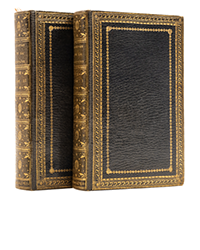
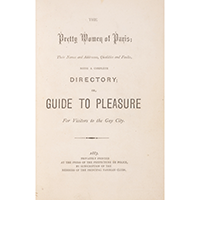
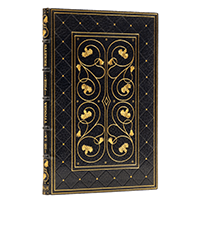
July 9, 2026Forum, July 9: La Fontaine (Jean de) Contes et Nouvelles en vers, 2 vol., engraved plates after Eisen, fine early 19th century blue morocco, gilt, by Bradel l'ainé, Amsterdam [Paris], 1762. - Est. £2,000-3,000Forum, July 9: Erotica.- Prostitution.- Pretty Women of Paris (The); Their Names and Addresses, Qualities and Faults..., [Paris], privately printed at the Press of the Prefecture de Police, 1883. - Est. £3,000-4,000Forum, July 9: Vale Press.- Ricketts (Charles) & Lucien Pissarro. De la Typographie et de l'Harmonie de la Page Imprimée…, [one of 216 copies], bound in dark blue morocco tooled in gilt, by Sarah T.Prideaux, 1898. - Est. £1,000-1,500Forum Auctions
The Private Library:
Fine Printing & Private Press books, the collection of the late David Chambers
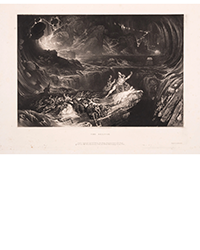
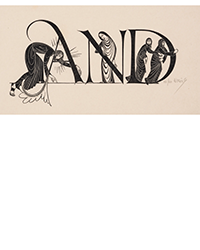
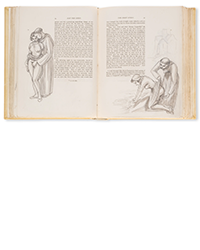
July 9, 2026Forum, July 9: Martin (John) Illustrations of the Bible, complete set of 20 mezzotints, good impressions, rarely found in early states, [c.1831-1835]. - Est. £1,000-1,500Forum, July 9: Golden Cockerel Press.- Four Gospels of the Lord Jesus Christ (The), one of 500 copies, Mary Gill's copy, Waltham St. Lawrence, 1931 with a signed proof of engraving on japon numbered 10/10 (2) - Est. £5,000-7,000Forum, July 9: Boccaccio (Giovanni) The Decameron, 3 vol., vol.1 extra-illustrated by John Buckland Wright with c.150 erotic original drawings in pen & ink and pencil, 1886 [extra-illustrated c.1940]. - Est. £10,000-15,000Forum Auctions
The Private Library:
Fine Printing & Private Press books, the collection of the late David Chambers
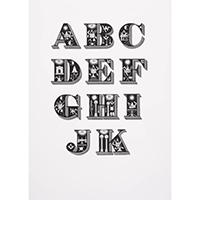
July 9, 2026Forum, July 9: Cox (Morris) Collection of Gogmagog Press Books, 35 vol., rare complete collection of printed books issued by the press, limited editions, most signed by Cox, 1957-83. - Est. £10,000-15,000Forum, July 9: Wynkyn de Worde.- [Terentius Afer (Publius)] [Comedie...], [Paris, Josse Badius: sold in London by Wynkyn de Worde, & others], [15 July 1504]. - Est. £4,000-6,000Forum, July 9: Mosley (James) Ornamented Types. Twenty-Three Alphabets from the Foundry of Louis John Pouchée, 2 vol., one of 10 copies for presentation, from an edition of 210, 1992-93. - Est. £1,000-2,000 -




Forum Auctions
The 10th Anniversary Sale
Fine Books, Manuscripts and Works on Paper
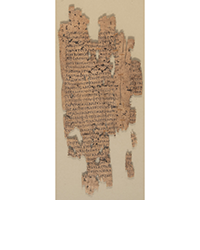
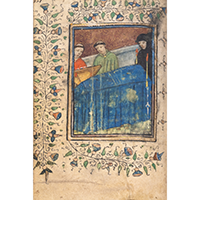
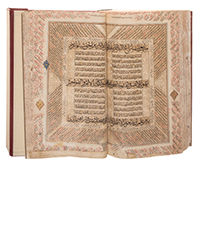
July 16, 2026Forum, July 16: Inundation papyrus. P.Michael 4, the ‘Inundation papyrus’, a geographical account of the Nile near Canopus, in Greek, remains of two columns from a manuscript scroll on papyrus, Egypt, second century CE. £12,000-18,000Forum, July 16: Book of Hours, use of Sarum, manuscript on vellum, 6 full-page miniatures, with famous Middle English inscriptions, Southern Netherlands for the English market, [c.1430]. £30,000-50,000Forum, July 16: Qu'ran, Arabic manuscript on burnished, stencilled, and gold-flecked paper, 447ff., Sultanate Gujarat, Ahmadabad, [after 1411 but no later than 1442]. £15,000-20,000Forum Auctions
The 10th Anniversary Sale
Fine Books, Manuscripts and Works on Paper
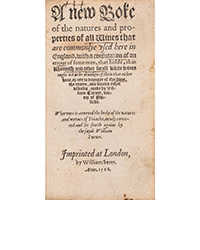
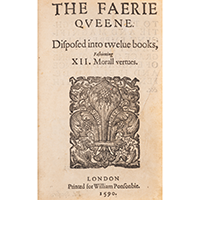
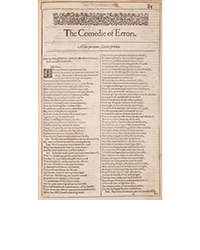
July 16, 2026Forum, July 16: Turner (William). A New boke of the natures and properties of all wines that are commonly vsed here in England, rare first edition of the first English book on wine, By William Seres, 1568. £20,000-£30,000Forum, July 16: Spenser (Edmund). The Faerie Queene. first edition, Printed [by John Wolfe] for William Ponsonbie, 1590. £30,000-40,000Forum, July 16: Shakespeare (William). The Comedie of Errors, extracted from the first folio, Isaac Jaggard and Edward Blount, 1623. £15,000-20,000Forum Auctions
The 10th Anniversary Sale
Fine Books, Manuscripts and Works on Paper
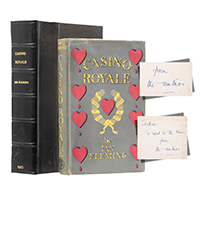
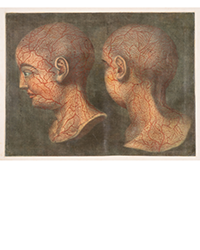
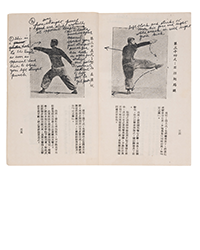
July 16, 2026Forum, July 16: Fleming (Ian). Casino Royale, first edition, signed presentation inscription from the author, 1953. £40,000-60,000Forum, July 16: d'Agoty (Jacques-Fabien Gautier). Anatomie de la Tête, first edition, Paris, chez le Sieur Gautier, 1748. £10,000-15,000Forum, July 16: Martial Arts.- Lee (Bruce). 'Praying Mantis style' Kung Fu book, containing numerous annotations, diagrams and graphs in Bruce Lee's hand, c. 1960. £50,000-70,000Forum Auctions
The 10th Anniversary Sale
Fine Books, Manuscripts and Works on Paper
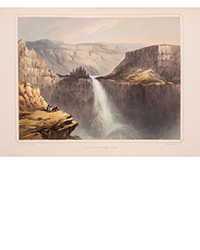
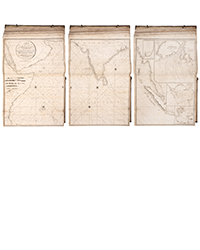
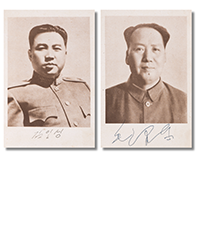
July 16, 2026Forum, July 16: Warre (Capt. Henry James). Sketches in North America and the Oregon Territory, first edition, rare hand-coloured issue, 1848. £30,000-40,000Forum, July 16: Norie (John William). The Marine Atlas, or Seaman's Complete Pilot for all the principal places in the known world..., 1826. £30,000-50,000Forum, July 16: Mao Tse-tung.- Kim Il-sung.-[Note book for visitors from China to Korea], signed by Mao and Kim, [Beijing, 1954]. £10,000-15,000